fbpx Skip to content
Named Best Museum 2022 by Miami New Times

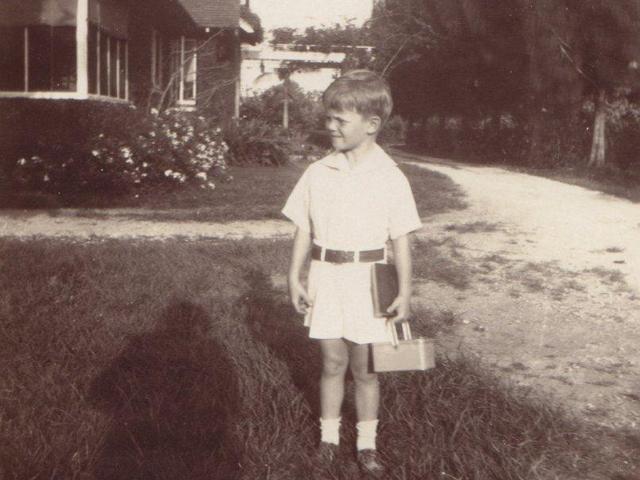
The air was, by season, fragrant with tiny white citrus blossoms; or pungent with fallen mangos, swollen with grey squalls; or heavy with the stink of seaweed that floated in from Biscayne Bay and stagnated in the canal. I woke into a world where rain thrummed on the fans of palm fronds. Mockingbirds sang operettas from the treetops and bees built massive hives that hung from poinciana branches like the dewlaps on Brahmin cows. I had no idea my first steps were taken in a paradise. It was the only world I knew; and that world was my great-grandfather’s garden.

My first four years were spent on The Kampong, the estate my great-grandfather David Fairchild bought and planted for horticultural research. My parents and I lived in one of the buildings on that expansive property. It was a tiny efficiency with one common space that served as half living room, half art and architectural studio. There was also a sleeping area and a galley kitchen. Beyond that uncluttered, unwired, and uncomplicated shelter was a playground of sun-dappled growing things.

Avocados came in a variety of shapes and densities, from light and lemony to oily and nutty. I learned to swim in a dark un-chlorinated pool festooned with sweet ylang-ylang flowers that dropped from trees above. Tiny red ants built mounded homes in the soft earth and carpenter ants swarmed up the trunks of banyans. The roads were completely covered with the occasional undulating carpet of blue crabs. A gardener from the Bahamas, working the trees with fingers the same size but darker than the cigars he smoked, used to joke with me. With the flash of his star-shaped tooth cap he’d say, “I’m gonna marry you some day, little girl.” I can remember thinking “Okay.” Because his gentle and knowing way with trees already had won him the respect of my entire family, we belonged together in that garden.

Somewhere inside, there should be, there must be, the memory of my great-grandmother’s arms. I have a faded Kodacolor print of her gazing down on my 4-month-old wrinkled little face that manages to appear,amusingly, older than hers; like a balding little old man. In the entrance to the main property, I also have a (scandalous nowadays, no doubt) snap of me playing naked in the fountain at the entrance to the main house. The expression on my face is one of sheer joy.

But every paradise has its provisos. There were sandburs that dug into the soft flesh of your toes, and ants that surrounded your ankles before their coordinated attack. There was a rabid raccoon once, and the occasional rotten something you stepped in, and several heavy hurricanes that darkened the world and mangled the garden. There were plants that were poisonous and penalties for picking every last one of your parents’ orchid collection for a bouquet. These were simply part of the balance of things.

After four years, I moved closer to the Grove. I grew up walking to school through the psychedelic hippie culture of shops hawking black lights, waterbeds, cheap incense and Indian print clothing. I daydreamed through school; staring out the windows of historic 1911 Coconut Grove Elementary, where my grandmother had also gone.

In those days I could walk home by myself, dawdling to explore the scents of handmade leather sandals and head shops comfortably juxtaposed to the camphor and candy-tinged air-conditioned interiors of the pharmacy and the Five & Dime. Before heading out into the world at large, I worked in the box office at The Coconut Grove Playhouse and in a health food store. I watched the gentrification and glitz of a new era nibble away at the greenery and vibe that made the Grove so wonderful.

I didn’t stay to fight for it, so I can hardly complain about the developmental damage my hometown went through. Instead, I skipped off in search of damage, as it were. I thought that grime and dumpsters and burnt brick facades soaring upward, the packed and excessively loud cells of cement on cement and person on person, and even (don’t laugh) cities in snow were the things which real writers needed to experience. Almost everywhere I went, however, I noticed trees, or the lack of them. When they were part of the urban landscape at all, it was as afterthoughts inside wire enclosures, spindly urban pit stops for dogs or places to chain your bike. Always in the back of my mind was the garden.

I now live in Japan, thousands of miles from The Kampong. My great-grandfather actually visited Japan twice by boat, and he fell in love with the flowering cherry trees here. They are blooming as I write this. Fairchild imported and planted Japanese cherry trees on his estate in Maryland, vigorously promoting them as the perfect candidates to beautify the Potomac area of Washington D.C. Through his efforts, and the generosity of many others, Japan and the U.S. share gifts of seedlings back and forth to this day; a trade agreement of flowers.

Like those trees going back and forth, I come back to my childhood home every year because, to a large degree, it still exists. Thankfully The Kampong has not become a Disney-like pseudo-garden attraction. Today, I am a poet who specializes in haiku, a highly condensed Japanese poetic form. As children, we learn that haiku has a 5-7-5 format, but (sorry) this is not a good place to start teaching the form. The most crucial part of haiku is that it situates the poet’s existence within the cycles of nature. In haiku, human passions, desires, constructs, and ego are not meant to be the poem’s main subject. The position of the poet is meant to be on a par with, say, an ant, heron, or cloud, observant of nature and involved with it, but not its constant brutal master. I come back to the garden to remember what that looks like.
My immediate family consisted of my mother, father, three brothers and two sisters. My father, Bishop Henry Curtis, came to Miami in 1910 from Port Howe, Cat Island, Bahamas. My father had been a farmer in the Bahamas. Since he had no land to farm in Miami, he used his knowledge of farming to become a gardener. He was fortunate to work for wealthy white people in Miami Beach. The pay was good. He was also a minister. My mother, Lenora Clark Curtis, was from Exuma, Bahamas. She was a maid.

My father’s employers only stayed in Miami during the winter. They required my father to live on their premises while they lived up north during the summer. I was born in Overtown in the house my parents owned at 1827 N.W. Fifth Court; my brother was born on Miami Beach at 4609 Pine Tree Dr., where my parents worked and lived in the servants’ quarters. The Bureau of Vital Statistics, however, refused to put Miami Beach on his birth certificate because he was black. Likewise, my brother and I were not allowed to live with our parents in Miami Beach. This meant that my grandmother, Melvina Clark, and her daughter, my aunt Beulah Clark, had to move to our home in Overtown so we could have adult supervision and attend Dunbar Elementary School.

My parents were proud of their Bahamian heritage and brought us up in Bahamian traditions and culture. They were not interested in becoming American citizens until they found out that they could get a tax exemption as citizens. They took citizenship classes and passed the test to become American citizens.

My father studied the United States Constitution and was quick to share his knowledge. One night when we were driving home from church on State Road 9, the police stopped us for driving with bright lights. One of the policemen ordered my father out of the car and to take off his hat. My father asked the policeman what law he was violating by keeping his hat on. Incensed by the question, the officer slapped my father, knocking his hat off! My father stooped down, picked up his hat, put it back on his head, and told the policeman, “I’m the last black man you’re ever going to slap.”

Shocked by my father’s response, the officer turned to my poor mother and persuaded her to calm my father down, but she couldn’t. The policeman said he would have to arrest my father because of his lack of respect for an officer, and they took him away, leaving us on State Road 9 not knowing how we were going to get home. My father told the officers that he knew he had the right to make one telephone call and he wanted to call his boss. Rather than going through the trouble, they brought him back to where they left us, and my father drove us home.

Our lives centered on church, school, neighborhood and family. We attended the Church of God of Prophecy on a regular basis and participated in all activities in the church including Sunday school and youth group activities. At Booker T. Washington High School, I participated in plays and organizations. My brother, Isreal, played football and sang in the school chorus. I served as president of the student council during my senior year, which gave me the opportunity to meet and greet celebrities such as Bill “Bojangles” Robinson and boxer Joe Louis. I was even asked to participate in a Brotherhood Week radio broadcast with white students from other communities.

Afterward, I was mentioned in an article that came out in the Miami Herald about a cross burning in front of the house of one of the white students in Coral Gables who had invited me to speak.

My family and friends feared for my safety and said I should stop following Ms. Marie Roberts, my civics teacher, who frequently attended integrated meetings despite segregation and Jim Crow. My father refused to be intimidated and did not stop me from going with Ms. Roberts. His courage and fortitude for justice continues to live within me and motivates much of what I do today.

My parents had strong values and expectations for their children, but the sustaining elements in our home were always love and pride. We were told that we were special because we were a Curtis, and our name became a source of pride and belonging for my brother and me. Our name represented the best within us and we had to live up to it. This meant that we had to finish high school and further our education.

After high school, my brother went to the Air Force. He received an honorable discharge and began working for the Miami Herald, where he was the first black pressman. I went on to study social science at Talladega College in Alabama, earning a bachelor of arts degree. I returned to Miami and became a teacher at Dorsey Junior High and a counselor at Edison Senior High School. I earned a Master of Science degree in guidance and counseling from Barry University and became assistant principal at South Miami Junior High School, where I retired in 1991.

I served as a board member and the first African-American president of both Dade Heritage Trust and Natives of Dade and Pioneers of Miami. As a dedicated historic preservationist, I uncovered research showing that African Americans were buried at the City of Miami Cemetery, and I led efforts to preserve the Miami Circle, the Historic Hampton House Motel, the Lemon City Cemetery, and a unit of Liberty Square, one of the nation’s oldest public housing complexes. I have been awarded honorary Doctorate of Humane Letters degrees from St. Thomas University and Talladega College.

Above all, I credit my achievements to my parents and the example they set with their strong values, commitment to family, and involvement in church and community activities. I am married to Frank Pinkney.

“En San Jose, Nohemí Alarcón, Noticias 14.” I wouldn’t go to sleep until I heard those words. That was Moder’s signature signoff.

Moder was my nickname for her, if you were to pronounce the word “mother” with a Hispanic accent. I was her biggest fan! She was a reporter at Univision’s local affiliate in San Jose, California, a job she got just months after graduating with a degree in mass communications from Santa Clara University. After three years in that role, she wanted a bigger challenge and a bigger audience. She set her sights on Miami, “the capital of Latin America,” the perfect place to move her burgeoning career forward.

In 1996, my father, mother and I made the transnational move to the Magic City.

The move was difficult. The challenges, unexpected. As welcoming as Miami was for so many, the same could not be said of the city’s media market. The airwaves had a Cuban stronghold and she was a Venezuelan newcomer with no insider connections. Let’s just say the job offers were not trickling in.

Only one thing guided my mother, though, and that was her vocation for communicating on behalf of her community. If that passion didn’t find a place in Miami, she would find it elsewhere. That unstoppable drive led her to a gig with The Weather Channel in Atlanta. I worried about our future. I was happy in Miami, just starting second grade, making new friends. Would we have to move again?

But we didn’t give up on Miami and Miami didn’t give up on us.

After that year of uncertainty, my mother got her big break and started working at el Nuevo Herald. She was a general assignment reporter and had a weekly column dedicated to issues relevant to the Venezuelan diaspora. She also became the public face of el Nuevo Herald with her own segment on Telemundo 51 and then Univision 23, where she would give a rundown of the most important stories folks could find in the next edition of the paper.

That was just the beginning. Bien tempranito, bright and early, her new signature signoff, was more than a tagline — it became a way of life. She was up bright and early dashing all over Miami, finding the story that had to be told. Her talent was finally being recognized and opportunities came pouring in. She started her day on the radio with Cuban journalist Agustin Acosta on WQBA 1140-AM with a morning show appropriately titled, “Good Morning, Miami!” From there she would head to the Herald and end the day at the TV station. She was covering stories she had only dreamed of, including interviewing Fidel Castro and Hugo Chávez. And most important for her, she was a voice for Miami’s growing Venezuelan community.

It was all happening! And I was along for the ride! I grew up in Miami’s newsrooms as Moder’s most trusted production assistant. Between homework and book reports I helped her research her stories, practice her script, and of course, choose her outfits. Layered between the bustle of the news world were my most important life lessons. Moder always said the most rewarding aspect of her career was being able to convey the stories of all kinds of people, from presidents to homeless families, sometimes all in one day. And she treated each with the same respect and dignity.

Those values are what made her such a beloved figure in our community. Everywhere she went, from the ventanita in Hialeah to the supermarket in Miami Lakes, someone had a kind word for her. Her charisma was infectious, her journalism chops, among the best. What folks did not see on screen or read between her lines were the pains of a difficult divorce from my father, who eventually became estranged, the struggle of raising me alone while her whole family was back in Venezuela, and the challenge of advancing a career in journalism as newspapers were in rapid decline.

Eventually, Moder left journalism, but never Miami. In 2006 she became the regional director for community relations at Aetna, serving our city by providing grants and resources to organizations advancing health and wellness in the Magic City.

Ironically, after surviving a battle with cancer, post-surgical health complications took Moder’s life too soon.

Since her passing in 2013, the Miami Herald building on Biscayne Bay has been torn down and local news viewership is not what it used to be, but the mark she made on both will never be forgotten.

Before she was Nohemí Alarcón, she was Nohemí Torrealba. Hailing from Altagracia de Orituco, a small town in the plains of Venezuela, she was the fourth child and only daughter of Dora Lopez and Amador Torrealba. After 23 years growing up in Caracas, she married Federico Alarcón and followed him to the United States, mostly for love, but also led by the dream of going to an American university to study what she loved the most, journalism. The rest, as they say, is history.

As I look back at her life I cannot help but make so many parallels to my own. Two years ago my then-fiancé and I decided to leave our exciting life in Washington, D.C., to move back home. Like my family’s trajectory, our move to Miami also didn’t go according to plan.

But as fate would have it, we’re proud residents of “Doralzuela,” living not even a mile away from my first home in Miami, from John I. Smith Elementary, my first school in Florida, and from that same Univision station where I grew up. In so many ways I am my mother’s daughter.

Today would have been Moder’s 51st birthday. The best birthday gift I can give her is remembering her Miami story, our Miami story, and renewing that pledge we made over two decades ago to never give up on Miami just as it continues to not give up on us.

Happy Birthday, Moder. I hope to keep making you proud.

I was born on Nov. 5, 1956, in Long Island, New York, to a family of seven kids. My dad is an ex-New York Giant and ex-military from West Point.

We came down to Miami originally in 1975. My first job was at the Castaways as a bellhop. It was up on 163rd Street and Collins Avenue.

I just kind of knocked around Florida for a while and wound up going to culinary school at Florida International University’s school of hospitality here in South Florida. When I came back down for school in late November, I saw Santa Claus in Bermuda shorts and realized I’m not going back up north. I stayed ever since.

Now I’m the general manager of Joe’s Stone Crab restaurant here in Miami Beach, although the Miami Herald once printed my job title as “chief cook and bottle washer.” They printed it, so it’s got to be true.

I started in 1980 as a waiter. In 1982 I was on the door as a seating captain and I was the youngest seating captain ever put on the door. Then I proceeded to be the relief maitre d’. I did the job for a while.

I did leave for two years to take a job running a restaurant in New York City at Rockefeller Center. But I decided I wanted to come back. So when I returned, I started off again as a waiter, then captain, then relief maitre d’. Then I also became a part-time manager. And then, approximately 19 years ago, took on the job as general manager.

Over the years Joe’s has grown. The best way I can explain it is when I first started in 1980, there were 92 employees and we now employ about 400. The operation itself really does get quite busy during season, especially for stone crabs. Stone crab season runs from Oct. 15 to May 15. During the summer months we close the market. And on the restaurant side we do dinner only. This allows our chef and sous chef to play with the menu and be creative with certain food products that are only available fresh during the summer. Our guests and our locals are then able to have something besides crabs and realize Joe’s is not just crabs.

We also have multiple languages spoken on the floor. That’s important, especially in Miami. It’s such a melting pot.

During season I’ve got about three staffers who speak Russian, two who speak Chinese and two who speak Japanese. One of them is a short Italian guy who speaks perfect Japanese. It’s great. Of course we also have a bunch of staff that speak Portuguese, Spanish, German and French. It puts the guests at ease and gives them a better experience.

You need the diversity in this day and age, and in Miami especially because there are so many different nationalities now. Many years ago it was just Spanish. It’s not just Spanish anymore. It’s everything.

The best example I can give of diversity is from a trip I took to Italy eight years ago where I went looking for wine. As I was leaving, I stopped at a gas station going into Florence.

The guy at the station turned around and asked me where I was from in the U.S. I told him Miami Beach, and he goes, “Oh, Joe Stone Crab! South Beach!” The guy said those two words and I was blown away. This was south of Florence in Italy!

There are people who come here that remember coming here with their grandparents. It’s just one of those things that a lot of people identify with Miami Beach. Joe’s is even a year older than Miami Beach. I will see people coming in the door who say they haven’t been here in 40 years.

So we’ve been around here for a little while, and if everything goes right Joe’s will be here for another 100 years.

Miami of years prior was extremely transient. People would come and go. I don’t see that happening anymore. They’re staying planted longer. Miami has grown into more of a business hub. I’m seeing more international business here than I’ve ever seen before, which I think is a great thing.

People come in who don’t really speak English but they’re able to get through it, and they’re enjoying it. That’s what Miami’s about. You’re here to enjoy it.

This story was transcribed from an interview between Brian Johnson, general manager of Joe’s Stone Crab in South Beach and the HistoryMiami South Florida Folklife Center as part of a research project exploring the question “What Makes Miami Miami?” The Florida Folklife Program, a component of the Florida Department of State’s Division of Historical Resources, directed the project.

I was born in Miami in 1966 and raised in Hialeah. When I got older I moved down to Kendall, where I live now.

My mother and my father came from Cuba when they were young, 8 and 12 years old. They were born in Cuba but their parents were from Puerto Rico, so I have both places in my heritage.

Growing up, salsa was a huge part of my life. When my parents would have parties at home, they and my grandparents always played salsa music and it was something that was always heard and liked. I love disco and I love the freestyle music, but salsa had a flavor to it that I liked. My mother, my sister and my dad before he passed away were all great dancers. But I’m the one that took it to the next level.

I got involved in salsa music and salsa dancing when I was about 24 years old.

I was looking for a part-time job to go to college and I opened up a newspaper and saw they were asking for salsa instructors at a ballroom studio called Dance City. I applied, and through that I got into salsa and other dances.

After I started taking classes in the ballroom studio, I learned that to teach dancing you need structure. It’s not something you could just teach off the street. When I started doing the ballroom dancing is when I noticed that the instructors really break down the steps.

So then I started breaking down all the salsa steps and creating my own syllabus for salsa. Soon enough, I had a little group of salsa students and they followed me from venue to venue.

I left the ballroom studio and started teaching on the side. Then it just kept growing and growing and growing, and one day I said I’m going to give it a name, Salsa Lovers. And now it’s been 22 years.

I first noticed the Casino Rueda-style of salsa when I walked into a club called Club Mystique in 1992 and saw them dancing salsa in a circle and was blown away.

Casino Rueda is something that came in strong in Miami in the1980s during the Mariel boatlift. That’s when all these good dancers started coming in to Miami. But then people like myself took it and we structured it. I cleaned it up so people could learn fast and that’s what we do today.

There is a Cuban style and a Miami style. If you go to Cuba, it’s a little bit more street, what we call a little bit more raw. In Miami, it’s become a little bit more flashy. Here we created more turns and gave it a disco look so it looks more freestyle.

The differences are noticed in the way the girl places her arms; the turn patterns look a little more disco-like compared to all over the place.

The men in Cuba, like my dad, tend to bend over and get down and dirty in it, whereas a male dancer in Miami holds his chest up. It’s a cleaner feel.

A lot of those old disco dancers influenced the Casino Rueda today. You’ll see it in the turn patterns that look a little disco and flashier. But the Cuban doesn’t care for that. They’re more about doing more patterns in the casino and getting more creative with the circle.

In Miami, you’ll see a lot of parties and a lot of clubs doing salsa nights. But there are not as many as people would think. Many people come to Miami and think they’ll get off the plane and start dancing salsa right away. But it’s not like that. I had a client from Canada who asked me if there was anywhere to go dance on a Sunday, Monday or Tuesday. I couldn’t recommend a place.

There are little hotspots here and there but not many. One place I like to host parties at is Yuca (Young Urban Cuban American) on Lincoln Road. We get salsa DJs and people just start showing up.

When I first opened up shop, Casino Rueda was a fad, but since then I’ve been fortunate enough to come up with a teaching structure that keeps business alive and well.

A majority of my customers are recently divorced. Some people are married for many years and they need a new activity in their life. They come here to find some excitement. Some people just come because they go to Ball & Chain or Blue Martini and they see us dancing. Some of them are in their 20s and realize the dancers their same age are doing amazing things and they get inspired.

Now I mostly produce events. I produce with the Adrienne Arsht Center and I also produce the Salsa Congress, a big event in Miami Beach with over 5,000 people in attendance. That’s my new favorite role, but I do still love to teach when I can. My daughter is almost 3 years old and I’ve been teaching her how to salsa since she could walk.

I think salsa is never going to die. My grandparents danced salsa and I’m 50 now and it’s still going strong. It’s in my Latin roots.

When I was raised in Hialeah it was all Anglos at that time. Now it’s little Cuba. Miami was built on this Cuban culture and when you think of Cuba you think of salsa. So I think salsa just fits perfectly into Miami. That’s why I would not leave.

Twenty years ago, Calle Ocho in Miami was where you went to get mugged. Now you walk along there and see restaurants and clubs. When I tell people about Miami, I always talk about the nightlife. We’re like the little New York, the town that never sleeps. And we really don’t sleep. It’s such a cultural city and I love it. This is where I was raised and I’m going to die here.

This story was transcribed from an interview between Rene Gueits, founder of Salsa Lovers dance studio and the HistoryMiami South Florida Folklife Center, as part of a research project exploring the question “What Makes Miami Miami?” The Florida Folklife Program, a component of the Florida Department of State’s Division of Historical Resources, directed the project.

Salsa Lovers is located at 1405 SW 107th Ave., #201D, Miami. The studio and Miami Salsa Scene are sponsoring Bachateando Dance Festival March 29 to April 2 at the Deauville Beach Resort in Miami Beach.

My name is Alvin Lee, but my nephews call me Uncle Al, and my mom always called me Big Al growing up. I was born in Miami, Florida, on Nov. 25, 1966, and raised in a little sub-city called Richmond Heights.

I have seven brothers and sisters. We were introduced to music as a family with my father and my mother. My father was a minister at the House of God Church in Perrine. All my parents did was music. My father sang jubilee songs in the church, played the guitar, piano and trombone.

But what I remember most was him playing the steel guitar.

The sacred tradition was part of our family, all our lives. We grew up in a church and the steel guitar was the focal instrument. He played it every time we went to church. It was a traditional style of music that became a part of us.

He had three girls and five boys. The girls were older, so our older sisters were like second moms. Out of his boys, he wanted to know who wanted to play the steel guitar. That was a tradition — he was taught by my Uncle Lorenzo.

He gave my older brothers, Robert Jr. and Keith, the steels, but they just were not interested. Keith really wanted to sing. Glenn and I were the middle kids, and we were the ones who were interested in guitar lessons. I played bass and Glenn played the guitar. That’s kind of where our musical introduction got started from.

Glenn had such a good ear. He actually was known for bringing the pedal steel to our church. We both took lessons and learned how to read music, but it just kind of went from there to the next level.

The Lee Boys get their name from Lee boy No. 1, my father. My dad used to always say, “Come on my Lee boys, come on” in broken English.

My brother who passed early, Robert Jr., was Lee boy No. 2. Keith was 3, I was 4, and so on.

Then the nephews came from my sisters. And they started giving themselves numbers. And then the boys had boys. So my sons had a number and so we gave them the rest of the numbers down. It became this tradition that we did. So my father gave us the name and when I started the music, I just said we had to be named The Lee Boys.

Growing up, Miami had about eight House of God churches. Not all of them had prominent steel bands. There was this other guy that played with a church in Florida City. His name was Elder Rump, Reverend Rump I think at that time. And man, we got so much stuff from him. We loved to watch this guy play.

We had two churches in Liberty City with some very great steel players, as well.

There were a lot of steel players who played here. You know that you move in the rankings when you get to play a state assembly. Sacred steel came from House of God churches. The bigger gigs at state and national level were sacred steel assemblies and festivals that were taking place outside of the church, since the music had taken off. Now you really know you’re going up when you get to play in Nashville. That’s where all the churches within the organization meet once a year.

Way back in the ’80s, my father convinced the head Florida guy to get us to play. We were like 12. We got our chance cause we were so young, and we rocked it. The next time we got to play on the stage, then we moved to nationals. Then Glenn became a minister of music over the state of Florida. Afterward, he became one of the ministers of music over the national assembly.

He was able to open the door for the rest of us to form a band. I played bass. And my brothers played drums, guitar and everything. We would all switch around, too, and it was real fun.

What I play in band is the guitar, but I grew up playing the bass. I played drums all throughout high school. I was the percussion section leader in Miami Killian High School.

Glenn and I were both in Killian marching band. He played the saxophone.

There, we met a lot of people outside of what was considered a traditional gospel music scene. Some of their music influenced our music, especially a lot of the Spanish influence. Growing up, we had a lot of Cuban friends. There were also a lot of Jewish people. They were all our closest friends. A lot of the elements of the music we use today are intertwined with theirs. The mix of people really helped shape the influence of what we did. It all came from the Miami population.

From this church in Perrine, we were able to shed light on this style of music that’s always been a part of Miami. We grew up here, went to school here. It’s just that now the tradition of what we did is coming out. We’ve helped shape a big scene now.

We’ve all spread out a little now, but we still keep our Miami roots. A lot of us play around here at different churches and concerts. That’s how The Lee Boys give back to Miami after getting so much from the city. It’s a lot of different worlds within one small city.

In February of 2000 my father passed, then we lost Glenn in October of 2000.

Our church audience is one of the hardest audiences to play for. A lot of them look at this music as a tradition. But when we took our music out of the church, a lot of people seemed like they appreciated it more. This one guy came up to us after a gig at a bar and said, “Man, you don’t know what you are doing for my soul. When I heard that music, I felt like turning my whole life over.”

And that’s what I want. I think we can reach so many more people by not trying to throw up a particular situation at them and just letting them enjoy music, which is all the healing you need.

In all honesty, I do what I do to help fill a void of my brother and father. Music was such a big part of our lives. A lot of your biggest influences come at the tender age, like between 8 and 18. We got that at an early age. A lot of kids were playing outside, but we were in the room practicing, studying tapes and building our own creativity.

We have to move on with life, but I was fortunate enough to be able to keep a little part of work that connects me to my family and my city.

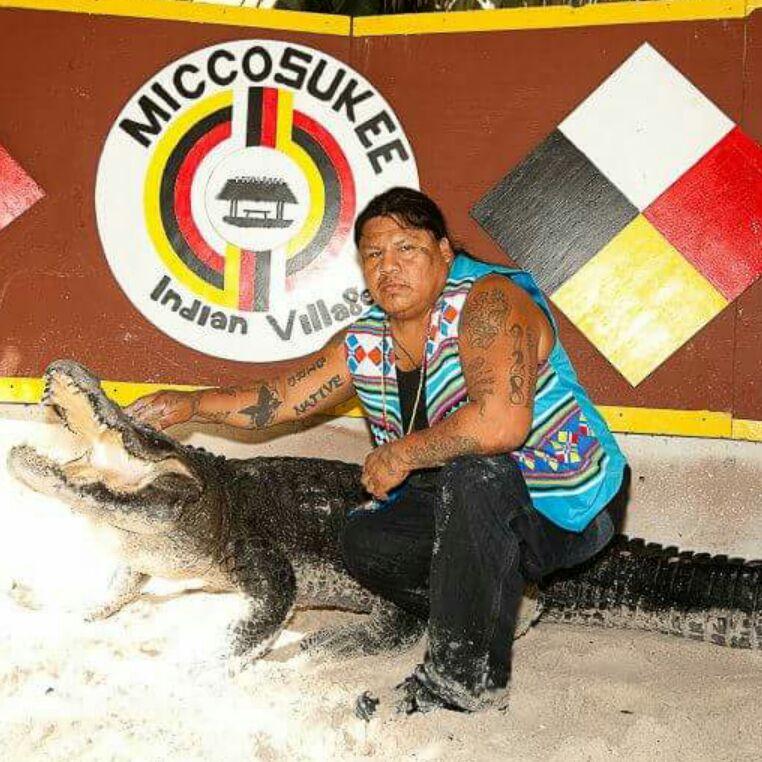
My name is Rocky Jim Jr. and I was born in Miami on July 23, 1971. I grew up on the Miccosukee reservation in Miami for about 95 percent of my life.

Around five years ago, I left because I needed a little change. Up until then, I was an alligator wrestler at the reservation.

The first time I worked with an alligator I was about 13. I was fishing with my late dad and I saw him moving gators around with his bare hands. I was kind of surprised when he asked me whether I wanted to do it. I hesitated and said no. But the next time he did it I just told myself “OK, I’m gonna do it.”

So I jumped in the canal and moved that gator. I just pushed him away and jumped out of the water real quick.

At first it was not something I was ready for, but [my dad] calmed me down by telling me that they wouldn’t do anything to me.

So I just kept doing it with smaller ones until I got used to it. My dad’s advice was simply “Don’t get bit.”

He taught me a few other things, like how to stay away from the alligator’s head.

He told me to just go under the water, look at the gator and grab it from the tail softly and slowly. Then, just pull it and go under its neck, hold it and push it away. That’s it.

The reason my dad told me to go underwater was to look at the way the gator’s positioned. Part of what I do is looking at its body language.

I never really asked how my dad learned how to do this. I’m assuming he learned from his dad.

I know my dad did it for a long time, and he did it mostly when he was fishing.

I looked up to other wrestlers like my late grandpa and my uncles. My grandpa’s name was Bobby Tiger. He worked at the reservation for a long while. Every time I got a chance, I’d go over there and see the way he wrestled alligators.

There were alligator wrestlers on both sides of my family.

Before I got into it myself, I played other sports, like basketball, football and baseball.

One of the most challenging things about wrestling is that you’ve got to have a lot of patience with the gators. They’ve got a mind of their own and pretty smart brains. So they’re stubborn.

We also have to try to work with them instead of hurting them. It’s called “wrestling” but we try not to be aggressive with them. It’s more like a conversation than a fight.

You’ve got to position yourself in a good angle with enough separation, or they’ll hiss and try to bite you. The reason I retired from wrestling was because I was bit one too many times.

They can’t see in front of them or behind them. But when I first approach one from the front and try to go to the back, the gator would be able to see me and follow me around. So I had to learn to move slowly. If I moved real quick, they’d react real quick. I used to move around slowly so don’t they wouldn’t be threatened by my movements.

I grabbed gators from the front, usually under their jaw so I can lift their head up. When their head’s up, they’re kind of almost paralyzed.

Most gators, if I grabbed them by the under the jaw, they’d shake around and let loose. But that’s where the patience comes in. So if it didn’t shake, I’d move them up and close their eyes. When I close their eyes, it kind of relaxes them. And when they can’t see me, they aren’t gonna move. Then I closed my legs around their back so they wouldn’t try to move.

Obviously the mouth is the most dangerous part, but their tails are strong too. It’s kind of like a muscle.

If it hit me real good on the leg, it could break my leg or shatter my bones.

Plus, the tip of the tail is like getting slapped with a leather belt. Their scales can also leave a mark on my sides. They’re kind of sharp, but some of them are kind of rounded.

Common injuries are hits from the tail, bites and fingers getting jammed on the gator’s head. There’s also their claws, which they normally use for digging. Those can hurt, as well.

I started doing shows at the reservation because we were short of workers. A friend of mine was doing it but he had to leave. So he asked me if I wanted to do it and I said nope. I was working in maintenance at the time. Nobody knew I could even alligator wrestle.

But he said, “Come on, help us out!”

I did it. Everyone was kind of surprised that I could do it, and it kinda stuck with me ever since.

Most of the shows go the same. I’ve gotten used to how to do it, especially working with the same gators. We tried different things with different gators, but that’s about as different as we got.

We did travel with the gators. We got to do shows at different parks like the Fruit and Spice Park in Homestead and in schools around the city.

It’s one of the ways I would see the city when I was on the reservation. I also liked seeing the people who live in the city and would come and see us.

I don’t really feel like the reservation is separate from the city of Miami. Since we’re on Tamiami Trail, I think a lot of people have access to us and come and visit. But I see why they would feel like tourists when they go to the reservation. I also sometimes feel like a tourist going into a McDonald’s or Burger King. Especially when I’m in the Miami traffic trying to get there.

I was born in Jackson Memorial Hospital where my mother recalls laboring while Seminole Indian women squatted to deliver their babies. In the late 1940s through the ’60s, we lived in the Shenandoah neighborhood in a modest home where the police often patrolled around on horseback. We shopped at Katz’s Kosher Meat Market as well as Food Fair on Coral Way. We also filled in groceries by selecting fresh produce from a truck that came around, the milkman who delivered to our door, or by walking to Willingham’s Grocery on Southwest 22 Avenue and 16th Street.

Miami was a quiet, clean, safe, small and segregated town. We had a party line at home or could make a phone call from a telephone booth for a dime. Children walked to school unattended. We rode the buses alone and my friends and I often went downtown by bus to shop, eat at Burdines’ Tea Room or go to the Olympia Theater. In elementary school, we took our salami sandwiches to the Tower, Trail, Tivoli, Miracle or Parkway theaters to attend movies for 25 cents. We spent a lot of time at Shenandoah Park where we had a library, swimming pool, tennis courts and a free kindergarten. I was a Brownie and Girl Scout in elementary school and we camped out at Camp Mahachee near Matheson Hammock.

My family often went to Policeman’s Park on Sunday afternoons where there were various rides. Sometimes, we drove across the Rickenbacker Causeway to Crandon Park. While crossing it, we always noticed Virginia Beach (the only beach where “colored “people could swim). We would grill or swim at Crandon Park and sometimes visit the zoo which was located there. Our schools were not air-conditioned and neither were most homes. We were so thrilled when my parents won a room air conditioner at an auction.

At Shenandoah Elementary, the principal, Miss Eloise Hatfield, read from the New Testament every morning over the PA. We were to recite psalms and sing Christmas carols even if we were Jewish. Girls had to wear dresses no matter what the weather. There was a green bench near a staircase in front of the principal’s office where children, usually boys, sat when they misbehaved. We were not allowed to chew gum, smoking was for the “hoods” and parents were involved in the PTA. I never had a “colored” classmate, teacher or neighbor. I did, however, march during the civil rights movement at the University of Florida in 1963-64. Also, when Dade County schools were integrated in 1970, I was sent to teach at all-black Frank C. Martin elementary.

My family attended synagogue at Beth Kodesh on Southwest 12th Avenue and 12th Street. On a few occasions, I remember the sounds of bombs that were thrown on the “shul.” We would go and see the broken chandeliers and windows and the fear in our parents’ eyes. My father emigrated from Poland in February 1939, six months before Hitler marched in and killed the rest of his family.

I went to Shenandoah Junior High where we had P.E. every day and girls had to take up home economics and the boys took shop. Students that misbehaved were paddled by “Mr. K.”

I will always remember the teachers crying during class after they learned on TV that the Russians had launched Sputnik. We had subsequent duck-and-cover drills where we had to get under our desks and cover our heads. Years later, during the Cuban missile crisis, we were terrified as we witnessed American troops marching down Flagler Street.

By high school, most of the Jews at Miami High (approximately 20 percent to 30 percent of the student body) stuck together. The service clubs at the school were predominately Christian, but we had our own clubs through the “Y” on Southwest 17th Avenue or the B’nai B’rith Organization. We hung out before and after school on the east outdoor patio known as “L.J.” (Little Jerusalem). We rarely dated outside our religion and although most of our parents were not college educated, most all of my friends finished college.

One of my painful recollections at Miami High was that the High Holy Days for Jews were unexcused absences. (They later made them teacher work days.) Sometimes, the rabbi at Beth David would write notes asking the teachers to not penalize us for observing our holidays. My friend Miriam and I were in the same Spanish class and were each given an F on a test that was administered on one of the holidays. We went to the department chair and pleaded our case and were permitted to take a make-up exam.

Overall, these were the best of times. Innocent in every way (no birth control yet), we had a blast at the Red Diamond Inn, Jahn’s Ice Cream Parlor and formal dances at famous hotels on Miami Beach. We saw Johnny Mathis, Steve Lawrence and Eydie Gorme among other star performers. We went to drive-in movies and often stuffed some friends in the trunk to avoid paying for entry for all of us. I met my husband, Steve, in 11th grade TV history class. He was a great athlete for Miami High and is in the Miami High Sports Hall of Fame. We had pep rallies before football games, which were held at the Orange Bowl. Unfortunately, it was later demolished. At Miami High, the school spirit in that architectural giant of an auditorium was unforgettable. We wore jinx dolls to spook the opposing teams and took pride in our school, which won a national championship. The Stingarees won big in sports and while there, we actually had the first Jewish homecoming queen. We were required in our senior year to take a course called Americanism vs. Communism, which reflected the fears that eventually took many of our classmates to Vietnam, some of whom never came back. However, being kids, our life was simple, people were respectful and we had no clue that almost one-third of our graduating class was made up of newly arrived Cubans.

I love this cosmopolitan city with its beautiful beaches and diverse culture. I also feel so grateful to have raised both of my wonderful sons here. Additionally, I have been blessed with teaching ESOL (English for Speakers of Other Languages) both in Dade County Schools and now at Miami Dade College for over 40 years. My students from all over the world and many different cultures have taught me so much. Miami has changed a lot, but my heart is still here in this balmy metropolis with ocean breezes and life-long friends and memories.

In early 1941, Europe and Asia were at war and the threat of United States involvement was growing exponentially. Not to be deterred, the Bennett family (Mom, Dad and 5-year-old Billy) stuffed its belongings into a cream-colored 1937 Packard convertible and set sail for the land of coconut palms and sea breezes.

With Miami the ultimate destination, the odyssey launched from Upper Montclair, New Jersey, but was impeded by a six-month hiatus in Wilmington, Delaware, for Dad to work and refurbish the family fortune.

On the move again, the 1,161 mile-trip south dictated two motel stops; it was not unusual in 1941 to travel all night and not find an open gasoline station, even on U.S. 1. The first morning, motoring below the Mason-Dixon line, I savored, for the first time, grits for breakfast (I never made that mistake again).

Mission completed, the trip terminated in the Magic City in August 1941, where we immediately checked into a Miami Beach hotel. And what was the first thing a red-blooded American kid would do next? HIT THE BEACH! And Mom and I did — for more than five hours.

All the exposed parts of our bodies were lobster red and we were splotched head to toe with Noxzema and looked like a couple of cherries jubilee. Welcome to Florida.

After a month on the beach, we found a house in Coral Gables, Mom and Dad got jobs, I was enrolled in school and we settled in as Miamians — for the next 50 plus years.

The first marine went over the fence, parlez vous

The second marine went over the fence, parlez vous

The third marine went over the fence

And milked the cow with a monkey wrench.

Hinky, dinky, parlez vous!

Mozart it wasn’t, but this little ditty was an integral part of my musical education in the summer of 1942.

I was 7 years old, living in Miami Beach at 87th and Harding Avenue, one block from Collins Avenue, hotel row and the Atlantic Ocean. The world was at war and the military had commandeered all the hotels on Miami Beach.

Each day, I arose early, ensuring an opportunity to march with the Army soldiers down Collins Avenue. What a thrill and what an experience. I learned all their march cadences, sang their songs and, though young, shared a sense of belonging and camaraderie with them as well. Also, it didn’t hurt that those same soldiers treated the “marching kids” like gems.

The nights, black as charcoal, were marked by darkened street lights, the few cars running with only slits of headlights visible, blackout shades in every home drawn and constant rumors of Nazi subs offshore. A small light from your house earned a visit from the air-raid warden.

A trip to the movies? Gasoline rationed, we walked the several blocks to the Surf Theatre. Of course, in those days we enjoyed a feature, a newsreel, a cartoon and maybe a sing-along where we followed the bouncing ball over the onscreen lyrics.

I lived the remaining years in Miami proper — without blackouts, military exercises and the rumors and much of the fears. But I missed being a part of the training and excitement of our United States military — and, of course, my unparalleled musical education.

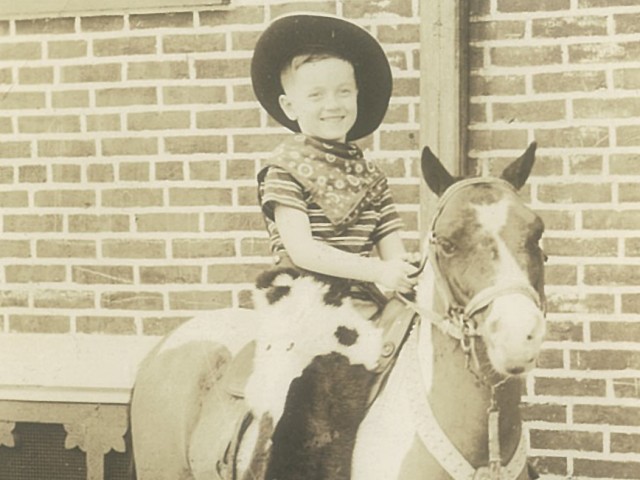
I moved 12 times during my 12 years of public school in Miami. The year 1947 found me living with my parents on a wooden 31-foot cabin cruiser at Pier 4 1/2, adjacent to Bayfront Park in downtown Miami. That location placed me smack dab next to Pier 5 where the charter boats plied their trade, taking tourists deep-sea fishing in the nearby waters of the Atlantic Ocean. In the late afternoon, when the fishing fleet had returned, I would walk over to Pier 5 and check out the various small fish tossed on the dock. Occasionally, Mom would purchase a dolphin for that evening’s dinner.

Just as you entered Pier 5, and a little to the left, sat the Tradewinds Restaurant. I remember one night I was perched on a bollard at the end of a dock listening to the Tradewinds’ juke box with strains of “Heartaches,” played by the Ted Weems orchestra, drifting across the shimmering moonlit water. Other nights, I would walk over to the Bandshell in Bayfront Park and join the crowd enjoying a free concert. Not a bad life for a 12 year old.

My only other year living on the boat was up the Miami River just below Musa Isle Indian village and tourist attraction. Not my finest hour, but I would row to the river side of the village, sneak in and without benefit of an admission ticket, watch the alligator wrestling.

Boat living? Bittersweet. Lots of fun going out on Biscayne Bay most weekends and rowing on the Miami River — but little privacy, miniscule closet space, midget head and, regardless of the season, icy cold on-dock showers. Fun for a while but, truth be told, kind of glad to get back in a house.

In the late ‘40s and early ‘50s, the Citrus Grove older elementary and junior high kids, when not playing school sports, played park ball at the Annex. Annex Park, located on the south parking lot of the Orange Bowl, housed a softball field and a basketball court. A well-hit softball to left field might tag an Orange Bowl ticket booth.

Depending upon the season, we played football, basketball and softball, doing fierce battle against other City of Miami parks. Uniforms? Pants, T-shirts, and most of the time, bare feet.

The park supervisor, a local character, answered to (I kid you not) “Itchy.” The kids loved Itchy Schemer, but his greatest claim to fame was probably his brother, “Lefty.” Lefty Schemer played briefly in the “bigs” (New York Giants). Occasionally, Lefty would drop by the park and, farther than we had ever seen, rocket some balls out to right field which was deep and where the Orange Bowl wasn’t. Of course, we were in absolute awe.

The Annex eventually yielded to the need for more Orange Bowl space and the Orange Bowl itself would, not long ago, disappear from the Miami skyline. But for many of us, what will never fade is the memory, in a simpler time, of those youthful and playful Annex Park Days.

Growing up in South Dade in the early years was a great time. I was born in 1923 at home in Redland. My father came to Florida from West Virginia in about 1917. My mother came from Massachusetts.

My father tried tomato farming for about a year, and failed. He then began growing avocadoes. We had about 25 acres where our home was built. My brother John was born in 1920. When I was 5 years old I was sent to Redland Elementary School. They put me in the first grade class, and when I transferred to the Homestead Elementary the next year, I was put in second grade.

We took the bus from Redland to Homestead. We walked about a fourth of a mile to catch the bus. I had great teachers; including Neva King Cooper, who was my sixth grade teacher.

We used to swim in the many rock pits around Homestead. There was a particularly good one west of Avocado Drive. They kept digging out more coral rock for construction, making the pit larger. The town also had a pool east of of Eighth Street.

On weekends, we would go to the beaches around Miami. A favorite was Tahiti Beach. I think it was near Coconut Grove. There was an admission charge, but it was a great place for us little ones. We also swam at the Venetian Pool in Coral Gables.

My aunt lived in the Gables. When I was about 5, we spent a few weeks on Miami Beach in an apartment near Eighth Street. It was a short walk to the beach. When I was six, I was sent to summer camp in Alabama with my brother. The camp was owned by L.B. Sommers, who was the principal of Homestead High School. Later he founded the Miami Country Day School with C.W. “Doc” Abele.

In 1938, we rented a house on 88th Street in Surfside. We were a few blocks from the Surf Club. It is hard to believe that in those days so many places, including large hotels in Miami Beach, were restricted based on religion or race. Key Biscayne and Crandon Park came a little later. Virginia Beach was created for the non-white residents.

We had an annual festival in the Spring in Homestead. The fairgrounds were west of Route 1 off of Campbell Street. A lot of the farmers and growers had exhibits, as well as the commercial establishments. There were sideshows, rides and other amusements for the younger crowd.

My father always had a booth to show his nursery and grove planting business. (He, like many others, became a real estate dealer during the boom years of the 1920s. He had an office in Miami at 28 S.E. First Ave. It, of course, closed at the end of 1929). This festival in Homestead lasted for many years, and I think it was replaced by the festival at Fruit & Spice Park.

When I entered seventh grade, I moved across the street to Homestead High School. When I became a freshman I got a job at Brown’s Drug Store. I worked there after school and weekends until I graduated from Homestead High in 1940. My brother and I took music lessons for several years. I played the clarinet, while he played the trumpet.

I was in the high school band. We always marched in the Orange Bowl Parade and played at the Orange Bowl games. This was quite an honor for us kids from Homestead.

In 1935, one of the worst hurricanes struck the Florida Keys. There were many fatalities and the railroad to Key West was destroyed. The roadbed and the bridges were converted into a highway that was opened in 1940.

My Aunt & Uncle and my Mother and I drove to Key West and spent the night at the La Concha Hotel. We also went to the Aquarium, and that was about all there was to see. It was a very small town in those days. It was quite a trip.

I spent one year at college and returned to Homestead. I worked at the Dixie Drug until 1942. A friend and I went to a camp to study sheet metal work, so that we could get a job in the aircraft industry. We got a job with an aircraft company in Miami. I lived in a boarding house on Southwest First Street.

I enlisted in the Army Air Corps in 1942, and spent three years in the service. I was in North Africa and Italy. I was discharged in 1945 in Boise, Idaho, and went to Connecticut to visit an old classmate.

I stayed in Connecticut after I found employment with a department store. I retired in 1980. We still go to Florida in the winter. We rent a condo in Venice. I still visit Homestead now and then. I plan to go down there again soon.

The Homestead High School still has a reunion every year. The last class was in 1950, so it probably will end soon. I miss my old classmates, and each year there are fewer. It is true that everything changes with time, but that is the same all over this country.

Translate »