fbpx Skip to content
Named Best Museum 2022 by Miami New Times

From 1964 until 1984 Toby the Robot was the lovable character on Channel 7’s kid shows and a household name among tens of thousands of South Florida children and families. Toby first appeared on Superheroes with Charlie Baxter as host. Then, as sidekick to Charlie Baxter on Charlie Reads the Comics (Miami Herald comics). After Baxter left Channel 7 Toby was sidekick to Wayne Chandler on The Sunday Funnies Show.

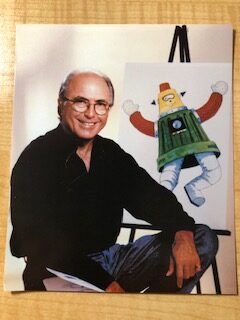
The robot costume was created out of a garbage can, laundry bucket, heater hosing, aluminum legs and various other parts purchased at a local hardware store. A lot of the parts were created by materials Folds obtained from Orange Blossom Hobbies in Miami. The famous robot costume was painted with bright red, green and yellow colors.

Toby communicated through a series of “beeps”. The sounds were actually made by an inexpensive Radio Shack alarm/flashlight that Folds wired to a push button switch. Interestingly, children and adults alike believed they could understand what the robot was communicating.

Folds created a character than came alive through antics, gestures and actions that intrigued children and adults alike. Children could not wait until Sunday so they could tune into the show or if fortunate enough, to be part of the live audience at the TV station. Toby’s fans sent in fan mail, pictures of Toby and families would attend his grand openings for various businesses in South Florida.

Charlie and I have been married over fifty years. It seems like yesterday that I walked into Channel 7’s studios and was introduced to a vampire wearing sunglasses! We seem to hit it off and I began being his assistant for his many appearances. I dated him when he was Countdown the Vampire and the Mysterious Stranger, engaged to him when he was Duffo the Clown on 7’s Circus and then married a robot named Toby (named after the station’s owner, Toby Ansin). We have raised four children and ten grandchildren and one great grandchild. One grandchild is at West Point and another one an airline pilot (it is the robot power!). While he entertained children of all ages, I completed my doctorate in early childhood education and traveled to many states and countries to share early childhood professional training techniques and publish books, as well as teaching as a university professor for many years. One of our daughters followed in my footsteps and became an early childhood educator.

Charlie retired the robot character at the Dade County Youth Fair in 1984 to become director of Community and Public Relations for WSVN Channel 7 and officially retired after 46 years of service to the television station. We currently reside in Palm City. Shortly after retirement Charlie contracted Parkinson’s Disease so our life took a different course with weekly therapies, doctor visits and hospital stays. I retired to devote my time taking care of him. It is the hardest and most important job I’ve ever had.

He inspires me every day with his strong commitment to his faith, his positive spirit, and devotion to his family.

People still come up to him if we are out and we begin a conversation. If they are from Miami eventually they discover he is Toby the Robot and recall and share so many memories of learning how to read while watching Toby the Robot on television.
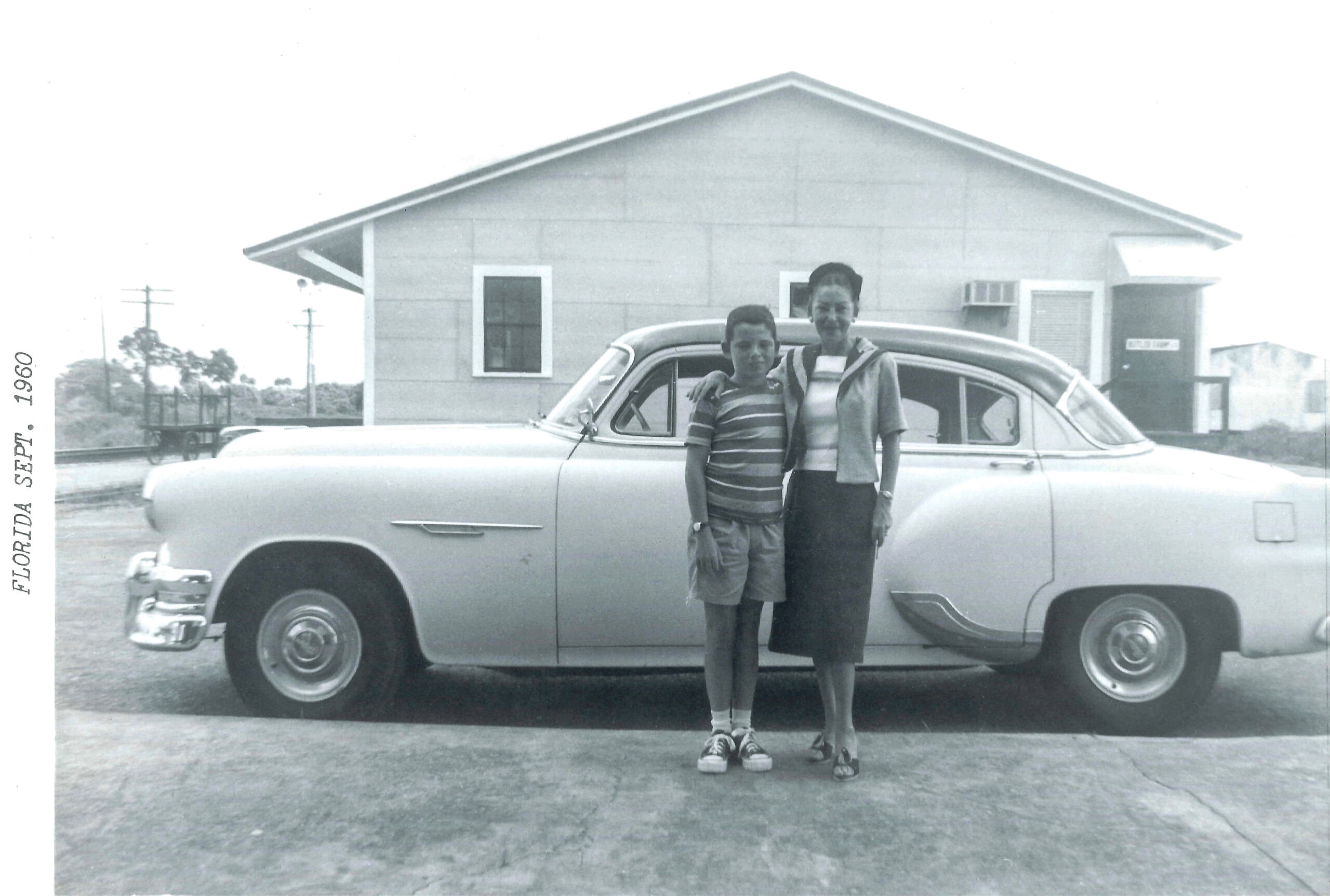
Dodge Island in the 1950s was very much like living on the frontier. We got there by boat and had no neighbors and few visitors. We had no phone service or TV; in fact, we had no electricity at all except a generator that worked for short time when we brought gas from Texaco near the Coast Guard station. We had the only house on the island built from Dade County pine. Our social center was the dock and the living room with a Ben Franklin stove built into the big fireplace. Our shower was outside. I was the only kid on the island with 77 acres to explore.

John, my stepfather, was in charge of the 40-foot crash boats that served as the rescue boats at the Miami Beach Coast Guard station.

We went on many rescue missions for boats in distress. Huge yachts and large sailboats were in need of assistance every weekend as well as small fishing boats and families on fun day trips. Toward the end we would find small boats in poor shape with Cubans fleeing Batista and, later, Castro. We would frequently pull boats off sandbars and give them gas and water. The most dangerous task was getting the skippers of big sail boats to sign permission slips during rough seas.

It was fun to go to South Beach Elementary school during 1950s. The Coasties would pick me up on Dodge Island and take me to school each morning. What a fun way to start the day!

One time a group of Coasties joined us on the dock. We always had great fishing there, mostly snapper. Over several days we lost a lot of hooks and bait to a mysterious fish. It became a challenge to find out what was beating the attempts of sailors and fishing folks to catch it. One night I jokingly suggested trying to catch the mysterious thief by loading up an anchor with bait. We threw it in and then we waited. After a while we saw the wire rope move and soon it got taut. Then we heard a loud noise and the dock started shaking. We all ran for our lives off the dock. Whatever was hooked pulled the end of the dock into the dark water, never to be seen again. And we never learned what it was.

We originally moved to Dodge Island at the invitation of “Wild Bill,” a long-time friend of my parents’ and the lease holder for the island. His wife was pregnant and she feared living on an island with no phone and uncertain ways to get to the hospital. Wild Bill then asked us to take over the 99-year lease for the two Dodge Islands. Later, in 1960, the City of Miami informed us that they were breaking the lease with 66 years left on it and gave us two months to move and no compensation.

It was sad for us as this was the only home we ever had. It was an environmental disaster for Biscayne Bay because the island’s mangrove trees provided a nursery for fishing. And it was an economic boon for Miami as our former home became the Port of Miami. Cruise ships now visit the world from where our dock once stood.

One of my most exciting adventures happened after the City of Miami forced us off the island. My Boy Scout troop wanted to go on a camping trip. I suggested Dodge Island. John got permission to visit the island and for the Coast Guard to provide transportation. We went to the island on the Coast Guard boats and all went well at first. Then some of the boys wanted to leave, so I led them to the water where we noticed the weather acting up.

John appeared in his boat and said an unexpected hurricane was approaching and it was too dangerous to pick us up. He said we were safer on the island than we would be in the city. The hurricane came while we were on the island. Then it seemed over and we walked to the shore of Government Cut. The water had drained and I saw some interesting items on the floor of the Cut. I walked out into the now-dry Cut and picked up a sea fan. Then I realized we were in the eye of the hurricane and ordered everyone to run back to shore and into the woods. After the hurricane passed everyone returned safely to Miami Beach with stories to tell of our great adventure.

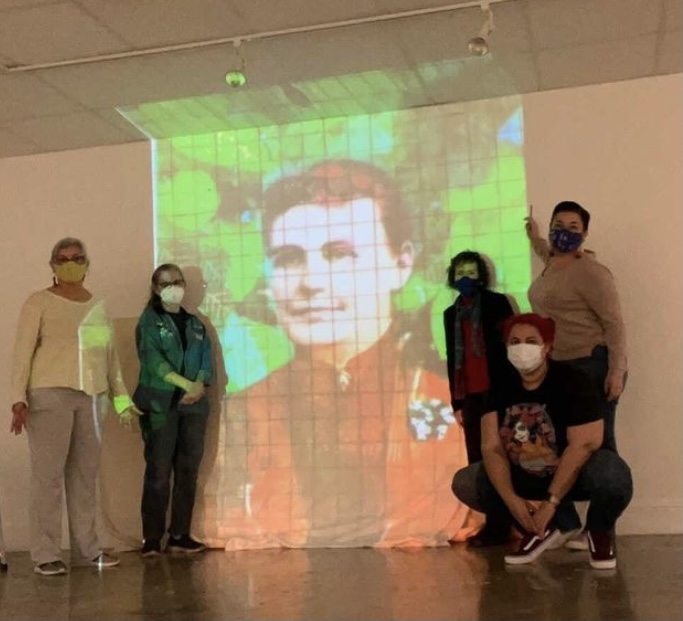
When Covid hit in March of 2020, I was full throttle into organizing a community project, a monumental textile mural to honor Julia Tuttle, the Mother of Miami, for the 125th anniversary of her founding of the City of Miami. The mural was designed as a crochet project of her, billboard size, and was a project of PLY-Miami Fiber Art Collective. Then came the lockdown, the quarantine, the Big Pause, and my interest in the project waned. I am not so much a crochet artist, it was too big, and the community partnerships I had forged were also on pause. The future was certainly uncertain. Even the present was uncertain.

When I launched PLY-Miami in 2015, I set our mission statement as “Making the world a nicer place, one thread at a time.” I feel it is so important for art to benefit others. During the Big Pause, I shifted the focus away from Julia Tuttle to smaller, more immediate group projects. I provided purposeful, creative outlets for the membership. Art has a way of keeping us focused and positive, even during a pandemic.

Nests, the first Covid project, came to mind in early spring of 2020. Pelican Harbor Seabird Station was in need of nests for rescued baby birds and small mammals in their care. Knitting and crocheting nests are simple, fun, and quick projects to do at home. For added incentive, I awarded 3 prizes (my own tiny tapestry woven artworks) – 1 for the most unusual, 1 for the most beautiful, and 1 for whoever made the most nests. We sent in over 100 nests!

Next, we embraced the artsy mask making trend using our creativity to embrace Covid. Then, in September, Ruth Bader Ginsburg passed away. As we mourned her loss, we also celebrated her remarkable life with jabots, some crocheted and some vintage, from our own textile collections. We wore our jabots in honor of RBG to the polls in November and at our monthly zoom meetings.

Julia Tuttle continued to call to me throughout 2020. Miami is the only city in the US founded by a woman yet she receives scant recognition for her incredible accomplishments. She founded a city in 1896 and could not even vote for its passage, being a woman. That takes determination. I really wanted this mural project to come to fruition. I brainstormed with my members and we reinvented our project.

We reduced the size by nearly half. It is now fiber-inclusive rather than only crochet. My vision has become a vibrant, multi layered, textural fiber art collage. Components are being knitted, quilted, and crocheted by PLY-Miami members, with green leaves and orange flowers for the City of Miami colors. I am creating Julia’s face with embroidery thread.

The reinvented Mother of Miami is surrounded by the verdant tropical jungle of old Miami. She is wearing an orange floral dress with a lacy white jabot. A white orange blossom is pinned to her bodice as she beckons, “Come Henry, bring us your railroad.”

HistoryMiami Museum has generously partnered with PLY-Miami throughout this process since 2020. The museum will house the mural in its Folklife Gallery as it is being completed and assembled. The public is invited to participate in making components. Details TBA.

Julia Tuttle: The Mother of Miami will be unveiled at the Museum’s opening reception of It’s a Miami Thing on July 28, 2021, marking the 125th anniversary of the founding of our city by Julia Tuttle.

Pamela Palma is an artist/designer who works primarily with textiles. She is the founding director of PLY-Miami Fiber Art Collective. See her work at www.pamelapalmadesigns.com and on Facebook and Instagram.

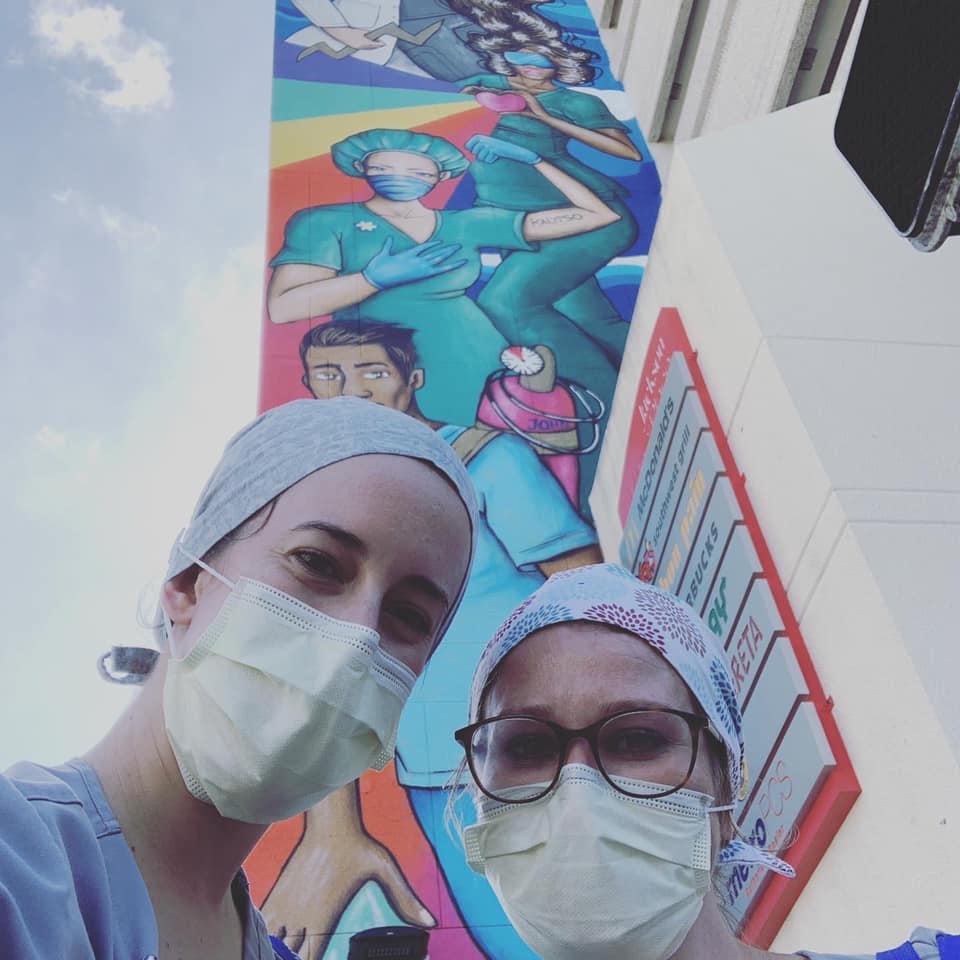
In March of 2020 as the pandemic began to take over our attention and our hospital, a small group of physical and occupational therapists at Jackson Memorial, myself included, volunteered to work with our Covid positive patients. Not much was known at the time, there was fear aplenty in our unit, but I felt that it was the right thing to do, that our profession had a place in the healing process. I’ve been working there ever since. Everyday is a unique challenge; both physically from our suits and gear, and emotionally as we are witness to both tragedies and miracles. Our profession is not included in the ongoing “salutes to healthcare workers,” we aren’t the oft mentioned doctors and nurses whom people seem to think are the only disciplines working in hospitals. This is not to mitigate the wondrous work and leadership they provide but if I have a hope and a wish, it is that the contributions of all the other diverse disciplines from therapy to housekeeping who toil the same long hours in the Covid units receive recognition as well. It can be a lonely and arduous job, there’s not that many of us physical and occupational therapists on our Covid unit. However, I wouldn’t trade it. It can be as momentous as a patient taking their first steps toward home, or as simple as charging a phone so that someone may connect to a loved one, or making someone smile through their oxygen mask. To be able to bring a small ray of light into the isolated Covid patient’s light is something I don’t wish to give up.

2020 was quite a year; life changed almost overnight because of the pandemic. The newspapers and television were reporting horrifying stories and statistics about a deadly disease that spread in the air. Thousands of people were dying and hospitals were filled to capacity and more. People started wearing masks, quarantining at home, staying six feet away from each other, working from home. Restaurants, schools, theaters, libraries, and nonessential businesses closed, and going into a grocery store began to seem like a dangerous adventure.

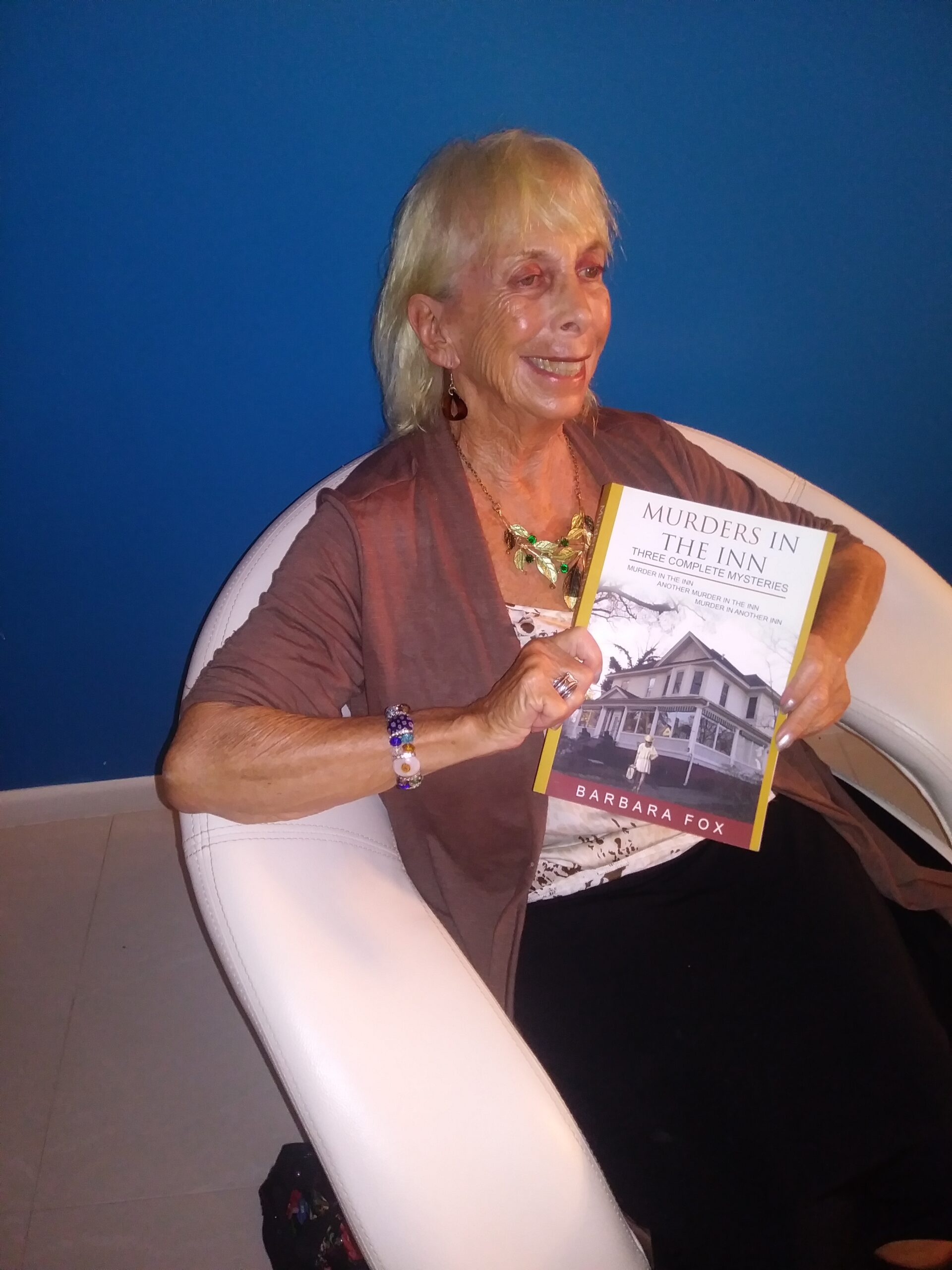
Writing has always been my way of dealing with life, and with all these changes and staying at home, I wrote more than ever: essays, poems, and several plays, many of which were produced virtually by local theater companies. I decided to save them, put them into a book, and I wondered if other writers were also writing about coping and dealing with life during the Pandemic. I thought about collecting plays, stories, articles, etc. and putting them into a book along with my plays and essays. I posted a notice on a few online sites, and people responded with essays, poems and plays.

The plays include my plays “Fast Forward to 2040,” “The Visit” (about a couple that is reluctant to have company), “QuickMeet” (about a virtual dating service), and “Mothers, Daughters, Friends” (about homeschooling). Stephen Olson submitted a play about a virtual office meeting, and Marla Schwartz wrote a one-minute play about people affected by the virus.

Sharon Baker, Mitchell Ball, John Harpin, Natalie Cobo, Benito Perri, Pamela Salem, and Greg McDaniel offered advice, suggestions, and feelings about everything: from appreciating nature to trying new recipes, making new friends and staying connected with family and friends through social media, exercising, meditating, practicing gratitude, and more. Mitchell Berkman contributed a rap, Venessa McCaffrey offered poetic tributes, Barry Katz’s poems provided a little humor, and Luis Roberto Herrera summed it all up with “Keep Running.”

Viewpoints on 2020 also has “mini views,” short statements like, “If I’d known last March that it was the last time I would eat in a restaurant, I would have ordered dessert,” and, “The swimming pools are open but, due to social distancing, there will be no water in lanes 1, 3 and 5,” and many more which point out that, while the pandemic is a serious problem, there is still humor in the ways people deal with it.

“Viewpoints on 2020” is available as both an e-book and a print version from Amazon.com and many other online bookstores. Any profits from the book are going to be donated to a food bank in Hollywood, FL.

MINI-VIEWS

During the middle ages they celebrated the end of the plague with wine and orgies.

Does anyone know if there is anything planned when this one ends?

Having plans sounds like a good idea

until you actually have to get out of your pajamas

and leave the house.

FAST FORWARD TO 2040

When I was a little girl, I liked to hear my mother talk about the days when she was growing up and then, when I was “Up” my children liked to hear stories about my younger days. Children always like to hear stories about their parent’s lives so, I’ve been thinking about what mothers or grandmothers will tell children about life before 2020. Life has changed so much in the last few months, the ordinary things we did last summer seem almost unbelievable now. Would children in 2040 even believe that we used to hug and kiss friends and go to buffet restaurants and sit next to strangers in movies? I imagined myself as a grandmother in 2040 talking to my six-year-old granddaughter, I’ll call her Jenny.

We would be curled up on the sofa, the requisite six feet apart. She would say,

“Tell me about when you were a little girl Grammy.”

I would tell her that I used to sit on my mother’s lap and she would hug me a lot.

“What’s a hug”? Jenny would ask.

“It’s when two people put their arms around each other and sort of squeeze.”

“Doesn’t it hurt?”

“No, it feels wonderful. Stand up for a minute and I’ll show you.”

Jenny stood perfectly still as I wrapped my arms around her and hugged. “It does feel good,” she said, “Why don’t we do this all the time?”

“Well, I guess we could do it at home sometimes, if your mommy and daddy say it’s all right but never, ever outside. And never hug anyone else.” I said. “I used to hug lots of people; sometimes, we would even kiss each other.”

“Oooh,” Jenny said, “Why would you do that?”

Read the story and more plays, articles, and poems in “Viewpoints on 2020.”

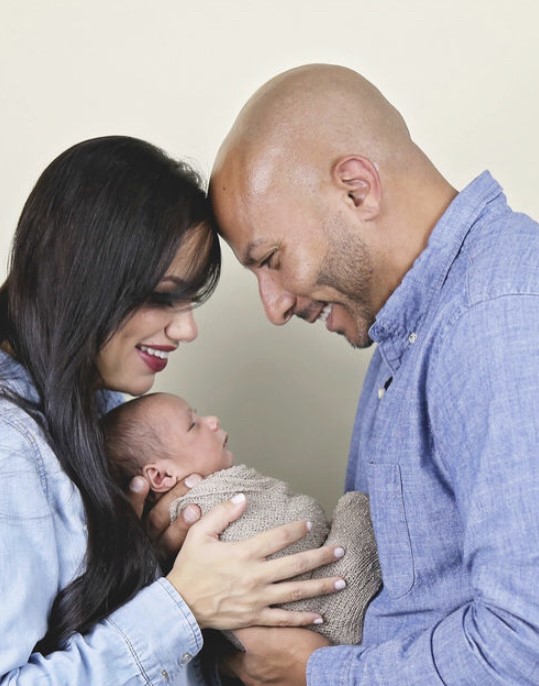
We had waited so long for this moment. After struggling with infertility and three failed IUI attempts for 5 years, we decided to go through the in vitro fertilization. Thankfully, we decided during the final months of 2019 to start the process of shots for the first procedure, the egg retrieval in January, and then followed by the implantation in early March. We were the last scheduled procedure. If we had waited, our appointment would have been postponed until elective surgeries and procedures would begin again. I’m not sure what I would’ve done if I would’ve had to go through all those shots and doctor’s appointments all over again due to this pandemic.

Our prayers were answered and the IVF worked! We were thrilled, but what followed was a series of doctor’s appointments on my own, a “zoom gender reveal,” very small baby sprinkles, and a drive by baby shower. It all seemed overwhelmingly surreal. Everything we prayed for was unfolding in such an indescribable way. Not being able to celebrate this highly anticipated pregnancy after the struggle and emotional and physical pain endured, I couldn’t believe it. All of the ideas and events that we had planned vanished into the air of uncertainty.

The day of our son’s birth, it was just my husband, the doctor, two nurses, and me. No one else was allowed. The pandemic robbed our mothers of the experience of a lifetime. There were no visitors in the five days we stayed in the hospital.

Now, after a month and a half, we are still cautious as to what we do and who comes to see our baby. We had a “window visit” for people to come and see him. My siblings who work as a flight attendant, a nurse, and a police officer have only seen him from afar due to the nature of their work.

From late March to early September 2020, I worked as a physical therapist in the COVID-19 units at a local hospital. I was the first physical therapist in the unit and volunteered my time during our two surges.

I tend to leave writing to the writers and novelists of our world, but as I return to my regular work at the trauma center at the hospital, I find solace in chronicling my experience. It gives a sense of finality to those five months as nothing else really can.

It’s all more bitter than sweet, this leaving. It seems strange to say that because I always imagined the end of this, or rather the end of my direct involvement on the COVID floors, would be more . . . celebratory? Exciting? In my daydreams, I imagined we’d fight the battle, win, and then the battle would be done. A heroic cheer would go up across the nation and we would throw our surgical caps and face shields in the air and chant, “We did it! We won!” Instead, it carries on. The trenches are still wrought with the tears of continuous loss of life.

Volunteering to work the COVID floors has been a truly humbling experience for me. The decision to not tell my parents the extent of my involvement came easy. To continue with it for almost five months was hard. I also had to hold back on telling others so the information wouldn’t accidentally be passed on to my anxiety-ridden, lovely parents. To worry is to love – that’s my family. I wouldn’t change that.

But what also came with that was not being able to freely share my experience while it was happening. It was staying (mostly) silent as family members theorized the true validity of masks and social distancing. Some asked me, “I know you’re not in there because you’re a physical therapist, but do you know how bad it is?” And I bit my tongue instead of answering. There is a never-ending frustration that comes from how my career is constantly misunderstood. I am presumed to be uninvolved in many sub fields of medicine and that is a constant disappointment.

Nurses are the true backbone of this pandemic. They do the exhaustive daily work for their patients and we need to never forget that after this is all over – if it ever will be. But rehab services are there, too, working in the shadows of nurses and physicians. When we celebrate our healthcare heroes we forget those helping in the dark. But there are many of us there saying, “Let me help you. We know these days are long. What can we do to help?” Let’s not forget those in respiratory therapy, environmental work, care techs, diet and nutrition, maintenance, social work and case management, transport, and security, as well as physical, occupational, and speech therapy. They’re in those hallways and in those rooms, too.

As I go, I think about my contribution and the many moments when I asked myself if I was crazy for doing it. Did I actually help? Was it worth it? I wonder if any of the patients will remember me or their experience of laughing, dancing, and singing during their hospitalization. For some, it turned out to be their last dance, but for the many who made it to the exit doors of our negative pressure floors, I hope they can remember how much we all tried to make this as much of a healing experience as possible.

I know, as with all rotations, my memories will meld together into one kaleidoscopic view of the experience. E’s purple hair and nails will meld into C mourning the death of her mother. D’s jokes will mix with S’s stubbornness. My mind will mix them and store them away for another time.

I’m grateful to Rachel, Brady, Bill, and Brandi and so many others. We went in and we did our best. Their compassion for patients is amazing and working beside them made me a better therapist. It was a dream and an honor to work with each of them.

And of course, I’m grateful to Sean, who supported this idea from the beginning and is there when I come home every night. He keeps me laughing and helps me stay sane.

I wonder what the history books will say of this horrible time. Not one person has not been affected in some way, be it through a loss of a job, a dream, or a loved one. I wonder how we’ll teach our lessons from this to future generations. What will we keep to remember? I know that those I worked with will be able to reflect on the sweat, tears, PPE, frustrations, and loss. But I also hope they remember the singing and the dancing.

I was doing just fine, I thought. But I see a few cracks in my fine-ness. Normal always had a sliding scale meaning. I don’t know why we bother with it anymore. It’s added it to my list of no-longer-understood terms, along with Logic, Fun, Security, Truth, Reality.

People are opting for conspiracy theories, more open to snake oil. I have to look at the question: Are others wrong? Am I wrong? I’m thrown off by this thought. We’re so dug into our own ideas. It’s difficult to get around the math that allows each to come up with diverse answers. No fan of the overly medicated society promoted over the last half century, I can balance a properly vetted vaccine over suffering serious illness. I avoid antibiotics at all costs, but when plain old rest, Melaleuca honey, and oil of oregano do not knock me healthy, I will absolutely run for a Z pack before getting into serious trouble.

Truth is losing. Its edges muddied to the point of erasing the import of a simple mommy mandate for Little Tommy to “tell the truth.” If adults are having alternative truths…now what. I recently saw kids rising up against their parents, accusing them of being tyrants during a forced close Covid year. Had a trial for them. They flat out refused to listen to parents anymore. The parents were laughing, the interviewer was laughing. I was alarmed. More of our boundaries are fumbling, crumbling, making living together an impossible task.
How is this anarchy going to work? Let everyone be their own guides? I wish we all lived with a high moral compass, but our world is made up of do-good citizens, and the people that take advantage. Is the information to be believed? Do I believe it? It’s time to drag out that old animal instinct and don survival gear.

I recently ran across the word “indubitably,” meaning “impossible to doubt.” I dislike the sound, too many d’s and b’s strung together to be taken seriously; but I’d better use it while I still can. If the definition of “facts” is no longer relevant, then definitions themselves are no longer valid. Now where are the lines I’m coloring inside?

Theoretical Physicists are positing the possibility that the universe exists as a hologram. Now THAT is making some sense. California is burning up, Puerto Rico and Haiti suffer endless disasters, the deadly Japanese Tsunami, flooding, huge artificially filled butt cheeks all the rage, one universal pandemic, Donald Trump being elevated to world leader of the most powerful country on earth… this has GOT to be the last ridiculously written episode of a holographically sophisticated Jenga game show thought up by powers far superior than this crowd on the earthly plane.

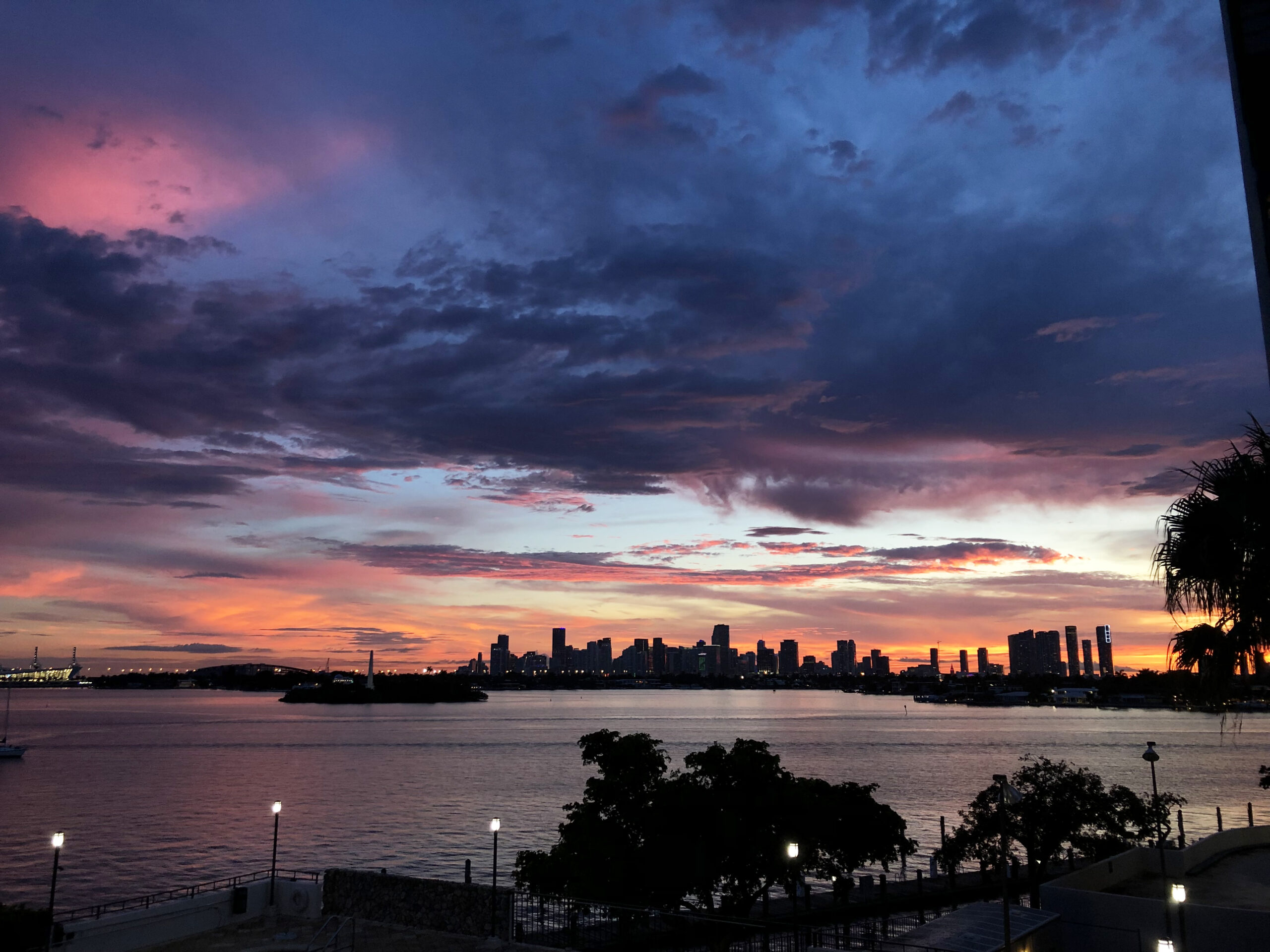
As I was considering the pileup of strange happenings (and the word “considering” could correctly be replaced by “unnerved by”), I redirected my thoughts by thumping on any old podcast; a discussion on twilight and its potentially unsettling ambiguity popped up. Someone objected to ominous music leading to a negative emotion, suggesting perhaps we are ignoring twilight spaces that need to be examined, approach it with an open attitude or run the risk of getting stuck in perpetuity with the known. How can we discover without branching into the mysterious?

Mother Nature is enjoying the break as “she” takes a moment to breathe. We are, after all, part of that nature puzzle. Perhaps with our virus enforced “time out” we will be able, as mom always shouted, to “think about what we’ve done”, and straighten up before earth gives us more good hard shakes off her pock marked hide.

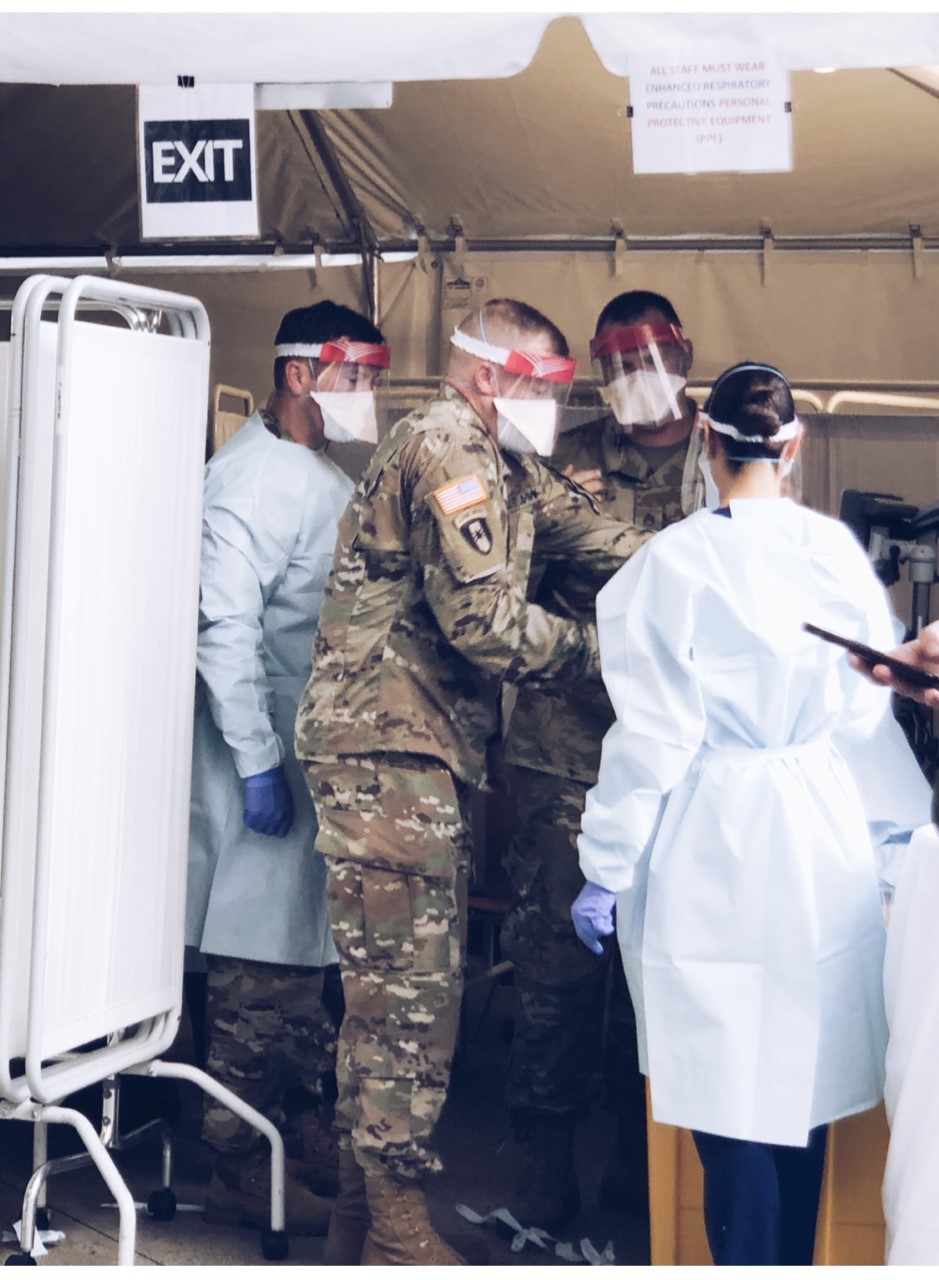
I took this picture outside of Memorial Regional Hospital. On this day, I had taken my mom to this hospital thinking she had the coronavirus. She was experiencing pneumonia but no fever. It was such a scary day since this was the first month of the virus spreading around, and people were in panic mode. She could barely breathe, and she said her lungs felt like collapsing. I’ve noticed no one outside the tent was even social distancing since they didn’t know much about the virus.

People from the military came over to the hospital to check the status of how things were being handled in the tent. It’s my guess that’s the reason why they were there. I took this photo of them heading to the tent outside the hospital since no one was allowed to go in the building. One of the nurses was able to bring my mother inside the hospital to put her in an isolated room, just in case she was positive with COVID-19.

My mother was there for almost one week, and finally she tested negative for the virus. What a sign of relief it was for me. I could never imagine going through these scary times and thinking of losing my mother. I was very concerned and told her how much I love her! I was still outside waiting since I couldn’t go in there with her. My anxiety was through the roof.

After a week or so of her being there, she was feeling a little better and was released home. I picked her up and hugged her so tight, but even having her home, I still needed to be wearing a mask around her. This pandemic has taught me a lesson that we need to love our loved ones more and not to be selfish.

Sometimes I can’t believe how naive some people can be about this virus and think it won’t get to them. I wear my mask wherever I go. I’d rather be safe than sorry! A reminder to people, life is precious! We are not here forever. Take care of your loved ones! This virus has taken many lives. Be safe rather than sorry!

My kids are now home schooling, and we are keeping social distance. I am not playing Russian roulette with our lives. When this pandemic started, I made a lot of masks and donated them to hospitals, clinics, and to family members. I wanted everyone to be safe. I hope this pandemic is over soon. We need normal lives again, but I know it won’t be anytime soon. Be safe and stay safe, especially for those with health issues.

En mayo de 1980, contando con apenas 15 años de edad perturbada, agobiada y bastante confundida en ese momento, me emprendí en lo que yo pensaba en aquel momento una aventura. Era un viaje de ida y regreso del que sin saber, me marcó un destino sin regreso a mi casa. Como adolescente al fin, estaba pensando que era una aventura más con mis amigas, que para mí ellas eran mi soporte emocional y mentalmente en ese momento de mi vida. Ya que sufría de abuso físico y sexualmente en mi persona, tome la decisión de escapar de eso. Y como ellas se iban del país, no acepte la idea que me dejaran sola en ese momento, ya que no tenía el apoyo de mis padres. Me abia escapado de mi casa con mi silencio de abuso, y con ellas sobrevivi, brindándome su apoyo de comer y dormir en sus casas. Así fue como me embarqué a este paso tan grande que cambio mi destino con una historia que contar.

Por razones de la vida, en el puerto del Mariel donde todo empezó, nos separaron y no las vi más. Yo solita en una base militar estadounidense, me recalorizaron en Fort Indiantown Gap, Pennsylvania, area de menores sin familia. Luego me enviaron a una escuela para seguir estudiando, la cual yo no quería continuar ahí. Me sentía extraña y no hablaba inglés. Ahí fue cuando empezaron mis emociones a perturbarme mentalmente, porque no entendía en ese momento lo que estaba pasando y por qué.

Me sacaron de la escuela y me llevaron a un hospital mental Saint Elizabeths en Washington D.C.. Me encerraron con personas mentalmente enfermas. No sabia por qué razón, yo no me sentía loca. Ahí me drogaron como una zombi, así me sentía. Y me privaron de libertad, llevándome a otro centro prision federal de enfermos mentales en Lexington, Kentucky, donde sufrir una depresión mortal. La cual quise atentar contra mi vida, me sentía perdida en un país sin un ser querido.

Sólo quería morir en ese momento. Con la noticia que estaba embarazada fueron momentos difíciles para mí que marcaron mi vida, con tan solo 15 años camino a cumplir mis 16. Adolecente, sola, sin familia, y embarazada en un país extraño, fue un caos de emociones revueltas en ese momento. Pues la cual tuve otra recaída en depresión intentando quitarme la vida en mi cerda de la prision de immigration de Lexington, Kentucky. Lo cual me insolaron en un cuarto con camisa de fuerza y medicada las 24 horas.

Del día, donde no tenía ni la noción del tiempo, solo estaba sumergida en mi terrible angustia y dolor, tragando lagrimas día a día sin saber cuál sería mi futuro. Solo me aferré a pensar que todo era una pesadilla que tenía. Después de tanto gritar que yo no estoy loca, decidieron hacerme una evaluación. Ellos sabían que estaba embarazada y me podía hacer daño de toda esa estrés. La cual yo le dije que al llegar al refugio de Pennsylvania, el primer mes que estaba ahí tube relación con un muchacho y qué el era el papa de mi embarazo. Al darle toda la información sobre el y qué todavía permanecía en el refugio Fort Chaffee, lo relocalizaron, y haciendo los trámites necesarios me reunieron con el. Sin embargo me sentía muy feliz de salir de ese horrible encierro.

Pensaba que estaba curada de mi depresión del todo, sin imaginar que lo que me venía después con mi pareja y papa de mi bebe. Bueno, creo que sí les interesa más de mí historia que no terminó ahí…

Translate »