fbpx Skip to content
Named Best Museum 2022 by Miami New Times

As a 16-year-old boy, traveling alone, I first met Miami in 1942 as I stepped off the train at the railroad station just north of the Dade County Courthouse, on the way to visit my girlfriend in Santa Clara, Cuba.

Flying to Cuba during World War II required me to check in the day before at the Pan American ticket office at the corner of Flagler and Biscayne Boulevard. Passengers had to deposit their luggage there for the next day’s flight so it could be searched by the Army.

The next morning, we 19 passengers assembled in a Pan Am jitney bus, which drove us to Northwest 36th Street, then to the runway behind the small airport terminal to board the two-propeller plane, with one passenger on each side of the aisle that slanted down to the small tail wheel.

The night before boarding, I rented a room at the Royalton Hotel, on Southeast First Street, for $3 for the night. I began to explore fascinating Miami. I watched a professor giving free lectures on astrology and selling his horoscopes on Biscayne Boulevard and Southeast First Street. I smelled fresh doughnuts at the Mayfair doughnut shop and the hot dogs at Howard Johnson’s.

I heard a band playing at the Bayfront Park bandshell. Two blocks north on Biscayne Boulevard, I watched people dancing to the sounds of an orchestra playing on the roof of the Columbus Hotel. Hungrily, I continued north on the Boulevard to Eighth Street where Pan Am had told me Manning’s Seafood Grill had the best seafood dinner in Miami for $1.50. After dinner, the salty, sweet smell of fresh fish lured me across the Boulevard to watch the fishing vessels arrive at the municipal docks (now Bayside) and sell their day’s catch to the waiting public.

The next day, I was off to Cuba to visit my girlfriend, Emily Iznaga. Her father, a doctor in Santa Clara, Cuba, wanted his family to learn English by attending a typical American school in a town where no one spoke Spanish.

He chose Daytona Beach where my family had just moved. I met Emily in the registration line the first day in the ninth grade. I was smitten and the rest is history. When World War II started, fearing future difficulties in traveling, her father called the family back to Cuba. Thus, my trip to Cuba in 1942! Visits continued, but soon I was off to the Air Force.

In 1948, after the war, Emily and I were married in Santa Clara, Cuba, and moved to Miami. We moved into a brand-new apartment on Red Road at Southwest 77th Street, where four city blocks of apartments were being finished for returning war veterans.

I graduated from the University of Miami under the GI Bill in 1950.After graduating, I became deeply involved in Miami as a realtor-developer and federal trustee for major real-estate bankruptcies. In 1950, home prices were $25 per square foot.

To be closer to my office downtown, Emily and I moved to a 2/1 in the Roads section of Miami, and later to Natoma Street in Coconut Grove. When, in the 1970s, the first house in Miami was sold for $1 million, we toasted the event, but also thought who in their right mind would pay $1 million for a house!

Emily and I, with our three small children, Eric, Vicki and Ronald, would go to ride ponies downtown, where the Omni Hotel was later built. We went to childrens’ Saturday matinees, and in the evenings, to the Tropicare Drive-in Theater on Bird Road where the three children, brought in their pajamas, soon fell asleep and we parents had the short time alone we seldom had.

In the summer, we swam in the lagoon at Matheson Hammock, the Shenandoah public pool, Crandon Park with its zoo, Ferris wheel and roller skating rink, or in the freezing waters of the Venetian Pool, which had originally been built from a rock pit.

Emily died young and Geraldine Griffin, whom I later married, became the second mother of our three children, plus a new sister, Nadia. Gerry, a native Miamian, remembers, as a child, sleeping during hurricanes in the ice plant at the corner of Southwest 37th Avenue and U.S. 1- what a cool shelter!

In 1971 Gerry and I, the four children and “Mama,” their grandmother, moved to Rock Reef on South Bayshore Drive, opposite a mangrove thicket that was the shoreline of Biscayne Bay. Our family loves living in and being a part of Miami – a multilingual dynamo poised for the future.
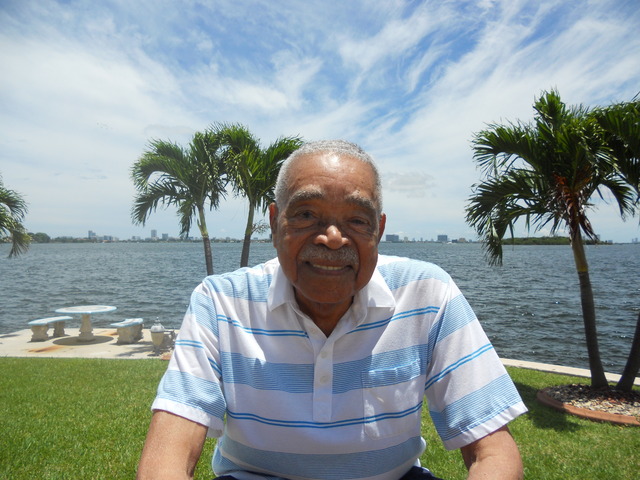
I was born in Nassau, Bahamas. I came to Miami when I was four months old in 1919. My dad came first on his way to visit a brother in New York City.
He was going to buy some printing equipment in order to go into business for himself in Nassau. He met some of his compatriots who had come over from Nassau and were living here. They said that this was a great town. They saw a lot of progress and opportunity in this young city. He must’ve seen it, too, because he decided to stay. He sent for my mother, my three sisters and me.

He had a sister living in Miami at the time and she rented a place for him on Northwest 15th Street between Second and Third Avenues. We lived there for a few months and then my dad bought a home in the 1900 block of Northwest Fifth Place. That’s where we all grew up.

Living in segregation, I wonder how I managed to get through without being hurt too badly. Back in my day, lynchings were every week. My mother sheltered me to keep me from getting involved with white people. When I returned from my duty in World War II, I gave my mom a list of cities that I would rather live in than Miami. She said that a lot of these places weren’t that different from Miami. They’re segregated just like it is here.

She said, “Anywhere you go, you’re gonna find the same kind of people and you’ll always be black.” She said that I’m not a person to run from something. If something isn’t right, then I ought to fix it.

When Martin Luther King came down, I attended some of his meetings. My friend was a good friend of King’s and I used to attend meetings where he would preach to us about nonviolence. I remember talking to Martin a few times and I said, “Martin, you really believe that if I was somewhere and a white guy spat on my face, you think I would walk away from that?”

I said I’d try and kill that son of a b—-. He said, “That’s why you’ve got to try to learn to control yourself.” I liked him.

Working for my father at The Miami Times is the only job I’ve ever had. I was working in the printing department, where the money was. The former state president of the NAACP (National Association for the Advancement of Colored People) used to come by my office all the time and talk to me about becoming more active in the NAACP. I said that my dad handles all that at the newspaper with the coverage. He thought my dad was too hesitant about taking a stronger stance and he knew I was tougher. His name was Father Theodore Gibson. He had Christ Episcopal Church in Coconut Grove. He said he needed my help, so I started helping out the NAACP a little more.

The first project I got involved with was integrating the golf courses in 1949. Back then, we could only play one day a week and that was Monday. That was the day that they maintained the golf course. They watered the lawns and cut the grass and we’re out there trying to play golf. I went and I talked to Gibson about it and started thinking about how we can attack it.

We decided to file a suit. We went out to the golf course in Miami Springs on a Wednesday instead of a Monday and presented ourselves to play golf. They wouldn’t let us in. I think it was two days later that we filed a suit. It took us seven years before the Supreme Court wrote a decision and said that you cannot take a person’s tax dollars for a municipal golf course and tell that person that they can only play once a week because he’s black.

After that, we had the beach. Twenty-eight municipal beaches everywhere but one beach for blacks, Virginia Key Beach. We decided we’d go after them in 1957. We called and arranged a meeting with the County Commission.

We got a good solid group together. We made sure that all of us were registered voters and all of us were freeholders. We had read the rules and believe it or not there was nothing in the county charter that said black people were restricted to one beach. But we had been told so many times and refused entrance to a white beach.

We had a meeting at 10 o’clock at Crandon Park. We went in and all the county commissioners were there. We made our appeal. They sat there and didn’t say a word. Nobody. We went on saying that it was wrong and that we wanna know what they’re planning on doing about it. They didn’t say anything. I guess they thought we’d just go away.

We then said, “It’s 10:20 now but what we plan on doing is coming back over here at 2 o’clock, and we’re going in the water. It’s up to you to do whatever you please. You can beat us up like most of you police always do when we go to the white beaches.”

Two o’clock came and our 12 had dwindled down to maybe about six of us. Oscar Range, whose wife went on to become our county commissioner, and myself, put on our trunks under our shirts and pants and just had on some sneakers. There were police out there just standing around us as a preliminary thing. We walked straight down to the beach, we kicked off our shoes, took off our shirts and we jumped in the water; just two of us. We were waiting for 20 minutes on something to happen, and nothing did.

We came back, put on our shoes, shirts and left. The next day, I called the NAACP and told them, “We’d like you to go to the beach tomorrow, any beach other than Virginia Beach.” We showed up and nobody said anything. The County Commission got the word out what we were doing and they knew they couldn’t defend it. From that day on, black people have been using all 28 beaches in Dade County.

Those are two things I’m most proud of. It taught me a lesson that you just gotta push and do your homework. First, you gotta be right. You’ve gotta have the right cause and you’ve gotta involve the right people. You just need some warm bodies to take a stand and get to the course and you’ve got a good chance.

(This story was compiled by HistoryMiami intern Lisann Ramos as recounted by Garth Reeves).

Garth Reeves was the publisher of The Miami Times newspaper and passed away on November 25, 2019 at 100 years old.

When I was just 6 months old my parents moved to Miami and rented a house across from a beach on Collins Avenue. They could actually open the front door of their house and see the Atlantic Ocean, but this beautiful view almost cost us our lives. Three months later a powerful Category 4 unnamed hurricane made landfall on September 17, 1947 at Port Everglades.

My parents were raised in New York City and were unwise to the dangers of tropical cyclones, so they elected to remain in the rented house; that is, until the Atlantic Ocean came “a-knocking.” My mother told me that when the ocean came through the front door my father decided it was time to leave. My parents grabbed me and my 4-year-old brother and tried to make it to the safety of the mainland in the family car.

When the sedan finally succumbed to the rising tidal surge halfway across the Venetian Causeway all they could do was huddle and hope for the best. An uncle on the mainland must have been more hurricane-smart and realized that one of his six brothers was probably in trouble, so he jumped into a 2 ½-ton truck they used for the family tile business and came looking for us. He possible saved our lives as my dad’s car was being battered by waves coming over the low bridge’s railings, according to my mother.

This experience had such a profound effect on my father that when he decided to build a house for his family a few years later, he used topographical maps and searched for a lot with a very high elevation. His final choice was near Southwest 23 Street and 14th Avenue and has an elevation of 36 feet above sea level. This ridge is part of the Miami Rock Ridge and is called Silver Bluff.

The fine house my father built rested slightly more than a half mile from Biscayne Bay and one mile from the first bridge of Rickenbacker Causeway, which were both in easy bike range for a young boy. This close proximity to Biscayne Bay would have a profound effect on me for the rest of my life.

At that time one could fish behind Mercy Hospital on the seawall for trout and jacks, or head over to the Rickenbacker bridges in winter for snook, loads of mackerel, bluefish, bonefish, tarpon, and big jacks. We even caught snook in the canals in the Grove and assorted fish on the bridge to “Fair Island,” before it was developed and renamed “Grove Isle.”

When I was just 3 years old my father died of natural causes and my mother had to struggle to survive. Before I was even 10 years old I took advantage of being a child of a single parent and became a free-ranging youth that ventured as far as his bike and legs would take him.

I took up fishing in earnest, and by the time I was 14 I fished in the summers all through the night, mostly solo since none of my friends shared this kind of freedom. (I leaned early on how to defend myself from pedophiles and bullies.) I was a late bloomer and did not learn how to swim until I was in 9th grade. One year later I bought a used Scuba outfit with my paper route money and started diving under all of the Rickenbacker bridges.

By age 15, I had complete usage of my mother’s ‘55 Chevy, and was ranging all the way down to the middle Keys to fish and dive. I lived a very adventurous life and often slept in her car next to bridges in the Keys, since my mother had a friend who drove her anywhere she wanted to go.

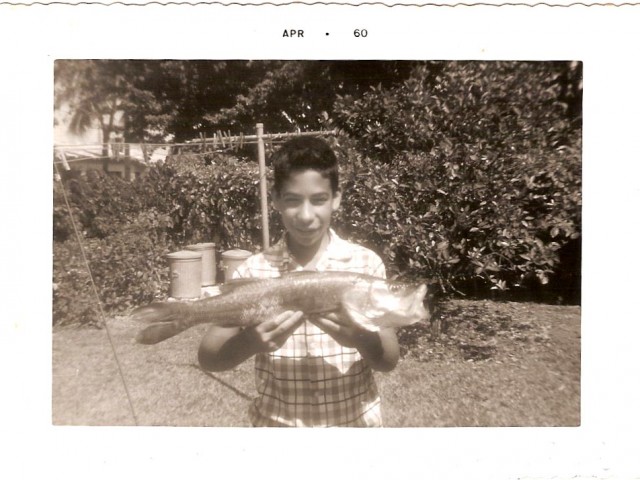
I lived to fish and dive and this pastime stayed with me for the rest of my life. In the 1950s, one really didn’t need a boat in South Florida to locate quality game fish. I caught tarpon, snook, trout, bonefish, snapper, bluefish and even grouper all from land or bridges. Some of these fish even earned me weight citations in the Miami Metropolitan Fishing Tournament before I graduated from high school, and still hang in my den.

Miami was truly a paradise for me over a half century ago. I now look how young kids are practically sequestered inside their houses out of parental fear. I always thank my lucky stars that I was fortunate to have those early experiences instead of being cooped up in front of a TV or computer as today’s children often are.

It was the end of the first week of June, 1963. I had just finished third grade at Shenandoah Elementary School and I was looking forward to summer vacation. Papi was a third-year resident in neurosurgery at Jackson Memorial Hospital; he was on call 36 out of every 48 hours.

Neither my mother nor my father was particularly young: Papi had been 45 when I’d been born; and Mami, almost 42. I was their only child: their hija consentida (pampered daughter).

In 1963, Mami had just turned 50. As for Papi, both his salary, at $219 per month, and his age, at 53, were “record-setting,” according to Mami. “He was the oldest resident in JMH’s history.”

My sweet natured, shy – yet gregarious – father had befriended many of the staff at the Jackson. A tall, lanky, bow-tie clad, pipe-smoking Tennessean became his special friend. He called my father, “Fred.”

Basil Yates, who figured in our lives for many years to come, came to our financial rescue. Estábamos muy apretados: we didn’t have much money. One day Yates asked his friend Fred if he had enough money to take care of his family. Papi very honestly responded, no. Yates reached into his pocket and pulled out $200.

With Yates’ generosity, we were able to move from the kindly, shabby tenement, “El Vanta Koor” (Vanta Court) to a better apartment building several blocks away. Not only were we to move, but – thanks again to Dr. Yates – we were able to spend a month on Miami Beach that July. We rented an apartment in the Amsterdam Palace Hotel.

There was no air-conditioning, but that’s the way Mami wanted it. Las brisas del mar – the ocean breezes – provided plenty of cross-ventilation. When Papi could join us, he was able to enjoy the alcove that fronted the balcony, right smack in the middle of the second floor of the Amsterdam Palace.

For my part, I played among the statues and fountains on the first floor, ceaselessly rode up and down the elevator, and spent as much time in the ocean as I could. Sometimes I went swimming twice a day. Mami liked to take me in the early mornings, when the sandbanks were built up, and we were able to walk out into the ocean as far as we dared. I became vey tanned that summer.

There’s a picture of me at a party, sitting next to Papi, where I’m muy bronceada y rosada, very bronzed and rosy, indeed. I’m wearing a white shift with big roses on it. I’m shyly looking down at my hands and Papi is glancing over at me. This is the way I remember myself from the summer of 1963.

Late summer found us in the new apartment. For three years, I had all but stumbled out of bed to get to school, as “El Vanta Koor” was located next to Shenandoah Elementary. Now I had to walk a few blocks.

As my English had improved tremendously, I fully expected to find myself in an English-only fourth grade classroom. To my horror, I found myself being directed back to my third grade bilingual classroom! It turned out a number of us Cubanitos were in the same predicament. We soon found out we were not being held back – we just needed a little extra “tweaking.” I remember not finding it so strange after a while.

In the old days, walking from Calle Ocho on Southwest Tenth Street Road, one was able to run smack into Shenandoah Elementary. All three floors of it, with its Mediterranean tiled roof and graceful arches.

Passing underneath these arches on Nov. 29, 1960, I embarked upon my first grade experience in the United States. I didn’t speak one word of English. I remember my first grade teacher, Mrs. Morvil, speaking to me in English. Looking up at her, quizzically, I responded en español. And that’s pretty much how it stayed, all year.

At the beginning, I wrote a few letters to my teacher in Cuba, asking her to send me my textbooks. And then I didn’t open my mouth, to the point that I almost failed first grade. I had learned enough to know that an F was a bad grade, and I had received six of them. Somehow, I was passed on to second grade.

The first six weeks of second grade were pretty bad. Then something happened: a small group of us were handed over to Mrs. Bustillo, a Cuban teacher who spoke enough English that she was able to teach us in both languages. I did much better with her, ending up the year with my lowest grade being a C in Physical Education. And, oh, how I hated P.E.

On the other hand, I didn’t fight learning English, any more. I did really well: I became the spelling champion in our class, and runner-up in the entire grade. I actually remember breathing out, “hand-ker-chief,” in spurts: that did the job.

Third grade was my year of glory at Shenandoah: the Spelling Bee, and the Hungarian Gypsy Dance.

Two Hungarians were the obvious choices to lead this gypsy dance out from underneath the central arch, under the lights one May evening in 1963. Nicky Perusina and I were all dolled up in our red velvet and gold-trimmed jackets. He wore black pants, and a long black bow fringed with gold tassels. I wore a white skirt with red and green stitching, a flower-trimmed headdress, and carried a little bouquet of flowers in my hands. I even got to wear makeup – I felt so grown up.

I DO remember being nervous, and trying to remember on what foot I was supposed to skip out, first. Most importantly, I remember telling myself, “Don’t trip. Don’t trip.”

Well, I didn’t trip. We all had a good time. And I became known as The Hungarian Dancer.

The Silver Meteor and the Champion were the two sleek trains that came to Miami from the Northeast in the early 1940s.

My first trip to Miami was with my parents, Harry and Jeanette Levine, and my younger brother, Yale. Leaving Metuchen, N.J., on a drizzly morning in February, we traveled all night, through the Carolinas and Georgia. The next morning we arrived in “God’s Country.”

It sure was a big change: Palm trees and the pink sidewalks that Miami Beach was known for in those early Art Deco days. The rainbow of colors — turquoise, pink, mandarin orange, chartreuse — were beyond belief.

We rolled out of bed and were at the beach in just minutes. On the way back home we would stop at Lee’s Health Bar for a cold piña colada fruit drink or a frosty chocolate malt or milkshake.

My younger brother and I enrolled at Miami Beach High School. My two older brothers were away in the service, one in the Army Air Corps and the other in the Navy. The first few weeks our family stayed at the La Flora Hotel on Collins Avenue. Shortly after we moved to Normandy Isle.

In 1946, our family bought The Neron Hotel at 1110 Drexel Ave. across from the old City Hall, where the cannon still sits as a memorial to our veterans. Now the Miami Beach Police Department and other city offices take up the block. When I pass that area, I think, “What a shame that the Neron did not survive to take its place among the other Art Deco hotels.”

Beach High was great in those days. We were one big family. Carl Wagoner was our principal. Our teachers did a pretty good job of putting a lot of knowledge into these impressionable kids. Most of us went on to become quite successful, including a movie director, state Supreme Court justice, U.S. Treasurer and Army general.

Among the teachers I remember was Helen Davis. Margaret and Anne Gilky (the Gilky sisters), Margaret Roberge and Harold Ruby were a few of the other fine teachers we had at Beach.

On September 1947, on the 14th Street beach, after one of our hurricanes, I met my mermaid and my life changed forever. Eleanor Lieberman (Ellie) was 16 and I was 17. We fell in love and were married in 1952 by Rabbi Irving Lehrman at Temple Emanuel. Ellie lived in Miami and went to Miami High. This was the beginning of our “MacArthur Causeway romance.”

Among my many wonderful memories: My mother used to go to Pier 5 in Miami where Bayside is now to buy fresh fish every day. Ralph Renick, the first TV voice in Miami at Channel 4, would sign off the news every day: “And may the good news be yours.”

Other memories include the Miami News building, Grand Union, Kwick Check, Food Fair, Tropicaire Drive Inn, Jordan Marsh, Riviera Theatre, the Miracle Theatre.

There was the Howard Johnson’s with fried clams and ice cream. The Jackie Gleason show with the June Taylor dancers. Royal Castle hamburgers at 15 cents, birch beer at 5 cents. License tags that had numbers for county size: Dade 1. Liberty 67. And UM football games Friday nights in the Orange Bowl.

In Miami Beach, we had the Cinema Theatre, which is now Mansion. At the Cinema, I was an usher, a doorman and finally an assistant manager during my later years at Beach High and my early years at the University of Miami. I also worked at the Lincoln and Sheridan theaters. The Sheridan was on 41st Street.

I delivered telegrams by bicycle to all the hotels and guests. Because there was no Internet, this was the alternative to snail mail. Yale and I were cabana beach boys at the Delano and National hotels.

This was our Miami Beach: a small town of the 1950s Art Deco area, where life was simple, where you knew most of the people personally and our biggest decisions were over where to go to college.

Some of this dream was shattered temporarily on Sept. 28, 1954, after I received greetings from Uncle Sam: “We Want You.”

I was a graduate of UM, married with one child, at that time, and was in our family’s furniture manufacturing business. This did put a crimp in my future plans for the next 24 months.

But I’m happy to report that I did survive this temporary interruption in my growing family’s plans.

Although I was born in Miami, I left when I was a couple months old and did not return until I was almost seven.

My father got hired as a pilot for Pan American Airlines, but when they cancelled his training class, he took a job for Dominicana Airlines, based in Santa Domingo. When the political climate in the Dominican Republic became too dangerous, my family moved – first to Warner Robbins, Georgia, then to Wayne, Michigan, where my Dad flew cargo for Zantop Airlines.

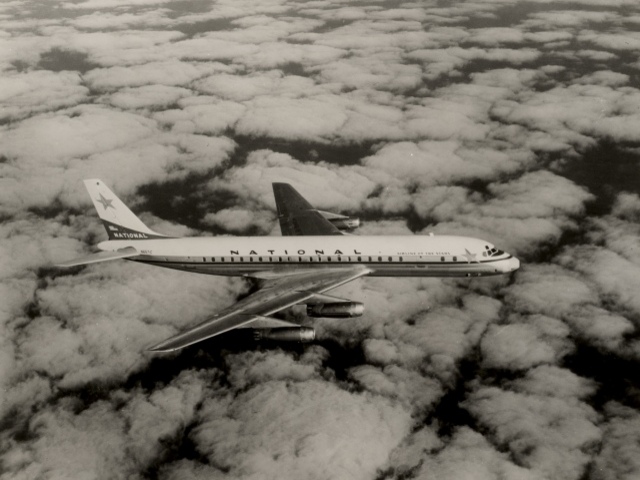
My sister Kelley was born there, but his plan had always been to move back to Miami, where his parents lived. When he got hired with National Airlines (“Fly Me”), we moved back to Miami and my parents built a house in Gables-By-The-Sea. My sister Elise was a baby and my Mom was pregnant with my brother John, when we moved into our new house in 1967.

I celebrated my seventh birthday with my new classmates, at Parrot Jungle. I attended Silver Bluff, Sylvania Heights, and Pinecrest elementaries before landing at Epiphany School in the third grade.

Living in Gables-By-The-Sea, I grew up fishing and swimming in the canal behind my house, exploring the swamp across the street and going on outings on our family’s boat. I also organized musical extravaganzas for my father’s annual 4th of July birthday parties. I once water skied from Matheson Hammock all the way to Elliot Key. My father was so proud of this accomplishment, he bragged about it to my ballet teacher, Mr. Millenoff. My strict Russian instructor was none too thrilled, claiming it would ruin my legs for ballet.

After Epiphany, I attended Our Lady of Lourdes Academy and was a cheerleader for Christopher Columbus High School. Friday nights, after football games, we would hang out at Lums in Westchester, or Little Caesars in the Gables. During this time, my parents and sisters were very active in the Miami Ski Club, competing in water-ski competitions and even going to Nationals.

After graduating from Lourdes in 1977, I went to Florida State University in Tallahassee. After two years, undecided on a major, I came back home and got a job as a flight attendant with Air Florida. In 1980, National Airlines was purchased by Pan American Airlines, so my Dad ended up flying for Pan Am after all.

My first route when I got hired (since I was French-qualified) was Port-Au-Prince/Santo Domingo, so I ended up returning to the city where I had lived as a baby. I flew that line for almost a year. I was flying into Washington, D.C. on January 13, 1982, just as another Air Florida plane crashed into the Potomac. We aborted our landing and landed in Boston, but had to return to Washington the next morning to pick up our passengers.

I later flew with one of the flight attendants (and one of the few survivors) of that flight. It turned out her stepmother had hired me for Air Florida.

Miami in the “Miami Vice” eighties was glamorous, fast-paced, and a little scary. Still, I enjoyed going to clubs such as: Cats, Suzanne’s, The Mutiny, and Faces in the Grove. One night, while at Biscayne Babies, my sisters and I even met Senator Ted Kennedy. With Air Florida, I traveled to London, Paris, Zurich, Frankfurt, Brussels, Stockholm, and even Havana.

Air Florida went bankrupt in 1984, the same year I got married. I then worked at my family’s nursing home, The Floridean, as a secretary. I worked in the office with my grandmother Julia Rice, who was the Administrator and my sister Kelley, who was the activities director.

My family was featured in a MacArthur Milk commercial, since we had four generations (from my grandmother to her great-grandchildren) who had “grown up on MacArthur” in Miami.

I also did some extra work (“Miami Vice,” movies and commercials) to make some extra money. I finished my A.A. at Miami Dade when my daughter A.J. was a baby and got my B.A. at F.I.U. in 1994. Getting a degree with three young children (Brad, A.J. and Christopher), a husband, and a house to maintain was a considerable challenge but I made the Dean’s List and graduated Magna Cum Laude with a degree in Liberal Arts.

Like many other Miamians, we survived Hurricane Andrew. At the time it hit, we lived in Mangowood, very close to the strongest winds recorded. Our neighborhood was practically unrecognizable, without a leaf left on the trees. In the days and weeks following the hurricane, we got to know our neighbors very well, taking turns grilling food from our freezers for dinner, and helping each other out.

Our children, who attended Coral Reef Elementary, started about a month late with the National Guard escorting them to their first day of school. Although it took more than a year, we re-built our house and it was better than ever.

My husband and I moved to Tallahassee in 1996, in search of a slower pace of life. I decided to return to Miami four years later, in order to spend time with my dad – Butch Rice – who had been diagnosed with lung cancer. I moved back on July 3, 2001, just in time for his annual 4th of July Birthday Bash.

I got divorced in January of the next year, and my father passed away in October. I was very glad I had that year and a half to spend with my dad.

I continued my education and got my Master’s in screenwriting at University of Miami in 2003, so I now consider myself a “Cane.” I love attending UM football games with my husband Zeke (also a UM graduate), just as my father did (although no longer at the Orange Bowl).

I also enjoy entertaining, traveling, photography and all kinds of writing – from blogging to screenwriting. I edit and write articles for The Pulse, the Floridean newsletter, where my sister Kelley is now the executive director.

I play tennis on several teams and enjoy going for runs around my neighborhood, which is right down the street from Epiphany and Lourdes. All three of my grown children live in Miami and I am now stepmother to three daughters – Lauren, Rachel and Emma.

I love the energy of Miami – the diversity of its residents and the variety of activities it offers. Miami is always changing and offering new opportunities and I hope to embrace them all.

My father, John Mantell, was born in 1898, somewhere in Romania. At age 16, he emigrated to the United States and was employed by relatives as an apprentice in the parquet and flooring craft industries.

Industrious and of high intelligence, he quickly became skilled in this craft, learned to speak impeccable English, and adapted quickly to American culture.

Saving his earnings and seeking to capitalize on his newly acquired skills, he accumulated enough to start his own business. In a relatively few years, he developed one of the largest wood parquet flooring company in the United States.

When Dad discovered Miami Beach in 1922, he bought a bungalow with an unobstructed view of the ocean. In those days, people were hesitant to build too close to the ocean, so there were no buildings on Ocean Drive. In effect, our home on the east side of Collins Avenue and Second Street was oceanfront.

Almost all Miami Beach single-family homes at the time were built with coral rock or Dade County pine wood. Our pine home had wide, screened openings around the perimeter instead of windows, which kept out bugs. Canvas covers were rolled down on pipes when it rained.

Even though there was no air conditioning, ocean breezes kept us comfortable even during the hottest summer days.

In those times, no one had dogs or cats. The pet of the neighborhood was a Japanese chicken, which came with the purchase of our house. The chicken lived under our house, which sat on concrete blocks two feet high off the ground.

There were no airlines or interstate highways at the time, so our vacation travels alternated between two available coastal liners. One went from Miami to Savannah to Norfolk to New York, and the other from Miami to Nassau, Bahamas, to New York.

Our family was up north on vacation in September 1926, when a major hurricane hit. Upon our return we fortunately found the bungalow intact, except for some of the screening. Amazingly, the lonely Japanese chicken was still under the house.

The banks caved in that year and the stock market crashed. Dad had retired at age 32, but lost everything except the Miami Beach bungalow in the market crash. So the extended family moved in and Dad went back to work, this time as a general contractor and realtor.

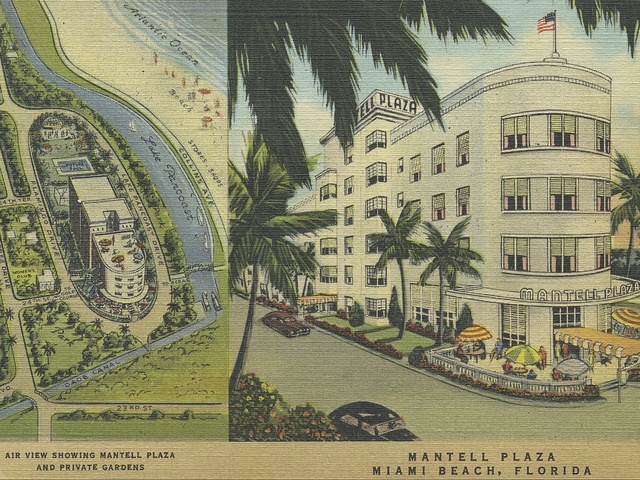
Dad worked with leading architects, building Art Deco hotels, apartments and homes — Flamingo Plaza, Shorecrest and Chelsea Hotel, to name a few. At one time, he was one of the five biggest contractors in Florida. With the help of Seminole Indians and others, Dad had 20 jobs going at once. He built and managed the Mantell Plaza Hotel. Then World War II changed Miami Beach.

In 1942, the U.S. Army Air Forces took over all the hotels, including the Mantell Plaza, for housing Army Air Forces personnel. Miami was troop-training headquarters for U-boats. We would watch soldiers marching the streets, including famous actor Clark Gable. We were very patriotic and I sold war bonds at the local movie theatre. Lucky for us, the Mantell Plaza was the first hotel released by the Army and was the only operating hotel on Miami Beach for a year.

While my father was working to recoup the family fortune, our dear mother Anna was running the household and raising the three children: Murray, Sally and me. We had carefree early childhoods spent barefoot on the golden sands of Miami Beach. I have early recollections of jumping boulder to boulder on the government rock jetties, later the 14th Street beach.

I attended Miami Beach Elementary and Beach junior and senior high schools. It was a small student body; we all knew each other. We had small classes and great teachers. Many thanks to them for all they did for us. After class, there were fun-filled afternoon patio dances and championship basketball games.

In high school, eating off-campus was “strictly forbidden,” so lunches at Joe’s Broadway were dangerous, thus especially delicious. Weekends were for sunburns on the sandy 14th Street beach.

Most weekends, kids took the short jitney to Miami for the movies and big name stage shows at the Olympia Theater (now the Gusman). The favorite lunch spot was Burdines.

My sister Sally also went to Beach High and then University of Miami where she played violin and was a member of the UM symphony orchestra. She met her husband Dan Raylesberg during the war while he was stationed at the Biltmore Hotel.

To date, my brother Murray is the oldest living graduate of Beach High. He studied and got a degree in civil engineering.

During World War II, he was a naval architect, and after the war he became the founding chairman of Civil Engineering at UM, where he taught for 57 years and received numerous awards for teaching excellence.

I started college at the University of Miami in 1946. During my senior year at UM, while doing my teaching internship, the mother of one of my pupils arranged a blind date for me with Norton Pallot. We were married three months later.

Norton was associated with his father, and later his brother and brother-in-law, in the operation of Norton Tire Company, which sold to Goodyear in the 1980s.

Life in Miami has been good. The city has grown and changed beyond recognition, and we enjoy it all the more — and perhaps also because our three children and spouses, and our four grandchildren all live around us in Coral Gables.

(This story was compiled by Laurie Appignani Pallot, as recounted by her mother Gloria Mantell Pallot).

In 1949, I first came to Miami to check out the University of Miami.

I hitched a ride from New York with my Uncle Pat, who drove the boss’ shiny black Cadillac down south every fall to be the chief mutual racetrack teller through the winter season at Hialeah and Tropical racetracks. Leaving New York on a sleety day, we cruised the whole way down on U.S. 1 and arrived, almost magically it seemed to me, in warm, sunny Miami.

As everyone promised, it was heaven!

Then it was Miami again in ‘52 when my parents and I joined Pat for another southland sojourn — this time including the necessary tourist stop at Silver Springs. But I ended up at NYU part-time and was lucky to land a great job at IBM, so Miami had to wait until 1954 when my friend Barb and I split our vacation and took a week in August — first to Vacation Valley in the Poconos — and then a week in December back to my warm Miami.

I had booked a package tour with round-trip air fare, seven days at the Lombardy Hotel on 63rd Street, some meals, transfers and tours — for $99.

That summer before, back at Vacation Valley, Barb had been bitten by a black widow spider and had been pretty sick. Now in Miami, the sun activated the poison in her system, and she ended up at St. Francis Hospital on Miami Beach for the rest of our Miami week.

I ended up — by myself — at the hotel pool reading everything in sight, including the classifieds in the Miami Herald and The Miami News. Two ads intrigued me. They were looking for “Qualified Gals” to be stewardesses for Eastern Airlines and National.

I had become friends with a sweet Hawaiian who wove palm hats poolside. He encouraged me to apply — even lending me his old car that backfired all the way across 36th Street to the interviews. I was accepted by both airlines. The Lombardy’s doorman, George, another new acquaintance, said to go with Eastern, and I did.

I graduated — after six days of training — and remained at that great job for 20 years.

In 1957, I bought my first home in southeast Hialeah for $12,500. To go furniture shopping, I rented a car at $1 a day and 10 cents a mile (airline discount). In the middle of that “Other Century,” I wasn’t able to close on the house I bought because I was a single woman, so I called for “back-up” and sent for my mom to come down from New York and co-sign with me. But that wasn’t enough because she was a married woman and — at that time — needed her husband’s permission. I finally settled when Dad came down to sign for me. We’ve come a long way.

In the Miami sunshine, Mother’s arthritis almost entirely disappeared. When Dad came down on weekends and saw her improvement, he, too, became a Miamian, retiring from his job as an innovative production manager with Ever Ready Labels, which served the entire international label industry.

Within the year, they moved to Miami and, instead of living with my parents, the switch happened. They lived with me.

We bought a few more houses — from $10,000 to $17,000 — and rented them out to new stewardesses, and my folks happily became surrogate parents to the homesick girls. Mom, always a terrific seamstress, tailored their uniforms expertly and gave more than a few Italian-style cooking lessons. We became a happy extended family — my parents and all their high-flying “daughters.”

It wouldn’t be a bad idea for a thoughtfully written movie, I think, with worthy actors to play Sinatra and all the other celebrities we met and dined with back then — at Jilly’s on the 79th Street Causeway in those glamorous years.

I married a pilot in ’68, and we moved to Kendall. My husband’s hobby was rebuilding planes, so we bought an acre behind Baptist Hospital where he could have his large airplane parts spread out to work on. We remodeled a one-bedroom cottage to a three-bedroom, two-and-a-half bath home with a separate three-car garage workshop.

My airline job had to end in ’74 so I could be available if and when construction workers decided to show up. It was a sad day when I wrote my letter of resignation. I still had my heart with E.A.L. and became a Silverliner, our national service organization of former Eastern flight attendants.

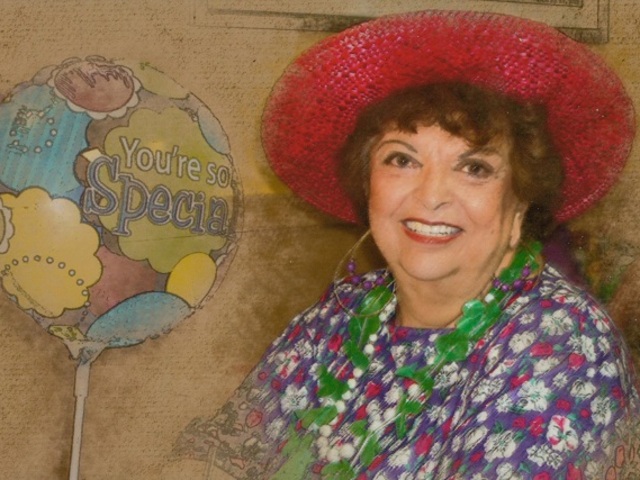
I only recently stepped down from being Miami’s Silverliners president for 13 years, but I’m still active in our club, though our national membership has dwindled to 850 members and our local chapter from 45 to 11. I also joined the Red Hat Society, which widens my circle of friendships.

Under my mango trees and palms, I count my blessings every day for the good luck and sunny path that took me and my family to Miami.

In the summer of 1939, our Catskills vacation was cut short when the hotel we were staying in was destroyed by fire, leaving my family with just the clothes on their back.

Returning to the Bronx, Arthur “Art” Bressler, my dad, was determined to try his luck in Florida and turn this misfortune into a positive.

The night before he was to leave for Miami, my dad took our last $800 and put it in the torchlight fixture for safekeeping. Shortly thereafter, we smelled smoke and just in time, retrieved the smoldering cash.

From this inauspicious beginning, my dad embarked to Florida in his Willys automobile while my mother (Celia), brother (Howard) and I waited to join him after he established himself in a business.

Starting with a dry cleaning/tailor shop in the heart of Miami, my dad tried his best for several months to make a go of the faltering business. Unfortunately, he had no choice but to close the doors and with the last remaining money bought the Cafe Royale at Northwest 36th Street and 22nd Avenue.

Shortly thereafter, my mother, brother and I joined my dad, where we rented a small semi-detached house in Allapattah, an area completely at odds with our familiar neighborhood in the Bronx and our Jewish family and friends. For many years, my mother could not acclimate herself to this new environment and had one foot back in New York.

My formative years at Andrew Jackson Junior High in Allappatah and later at Miami Senior High bring fond memories of the “old” Miami. We enjoyed Sunday strolls in the lushly landscaped Bayfront Park, beach parties at Haulover with my friends, roller skating at the rink on Biscayne Boulevard and taking the jitney over to 14th Street beach.

The World War II years were financially productive for the Cafe Royale and my dad quickly learned to cook up a mean chili. Both my mother and dad worked long and hard to provide the necessities for their family. They eventually bought a home in Miami.

Over the ensuing years, my dad tried his hand at many different enterprises with the Imperial Bar and Package store across from the old Dade County Courthouse being his last venture.

He was well-suited for the business with his outgoing, charismatic personality. He knew many of the judges and politicians who frequented the courthouse and his warm personality with a smile and a joke attracted many around him.

Always the entrepreneur, and never having musical training, he nonetheless taught himself to play a Gene Krupa style of drums and nightly filled the lounge.

When my dad passed away in 1977, the chapel was filled to overflowing with family and the many friends he encountered over the years. Although he is gone now, his zest for living and optimistic spirit will long endure.

Eleanor Bressler Udoff resides in Aventura.

In 1986, Miami International Airport was pretty scary for a first-time traveler coming from Guyana, a small country in South America. The escalator comes readily to mind when I think of that overwhelming experience. Although I saw others stepping on it, I was deathly afraid of this incredibly long, moving staircase. I just stood there, my fear weighing me down and keeping me rooted in place. The gentleman behind me gently suggested that I step on and he would stay close. I made it down safely and have been living in Miami since that beautiful July 4th day.

I came to Miami by way of marriage. Whenever I’m in conversation with anyone who wants to know how my husband I met and I tell them that we had an arranged marriage, many of them balk and I can see the questions tumbling around in their minds. Most times, it’s a high-pitched, capitalized, one-word question that is punctuated with endless question marks, “REALLY” A smiling “yes” will always be my response.

In the course of the conversation, I would often get this one, “Do you guys fight?” Of course, we do! Which marriage is without its ups and downs? As we continue chatting, the million-dollar question comes out, “Were you forced into this arranged marriage?” It is at that point that I have to explain that not all arranged marriages are forced. In my case, my husband’s parents met with my parents and marriage was discussed. I made the final decision.

I met my husband in February of 1986 when he visited Guyana for a week. I gave him a resounding “yes” the day after I met him. He returned to Miami and we got to know each other through our letter writing. He went back to Guyana in June of that year, we got married, and he returned to Miami on his own a week later. I followed on July 4th.

My husband and I lived in West Kendall in a condo on 157 Avenue and Sunset Drive. There were only fields west of 157 Avenue. Today, that area is a vibrant, highly populated neighborhood; it is hard to believe that it was once quiet and tranquil.

My first year of marriage was the “dating” year – it was the time my husband I and got to know each other. We went on a lot of dinner and movie dates, sometimes catching a double at the movie theater. We were frequent visitors at the Don Carter bowling alley. Not knowing anything about the sport, I cheered myself on even when a single pin fell. Often, we were tourists – enjoying the sights, scenes, and recreation of Miami. Many Saturdays we got up at 5:00 in the morning to make the drive to Key Largo to fish. Sometimes the catch was abundant and other times we returned home with an empty bucket.

My first job was at Eckerds (now CVS) as a cashier. I have many fond memories of this first U.S. work experience. A few months into the job, a customer referred me to the manager at Amerifirst for a teller’s position. That job also offered a few “firsts” in my early years in Miami. I took a taxi for the first time ever to the interview. I had my first lie detector test. I wore my first skirt suit. I earned my first “big” paycheck, and I drove my first car.

Keeping with firsts, by our first wedding anniversary, I was pregnant with our first child. Over the next nine months, we took our first Lamaze class. I had my first C-section, and I held my first-born in my arms. Six months after we welcomed our baby girl into the world, we moved into our first home in the Hammocks area.

Over the next five years, we were blessed with two other children – a boy and another girl. Our children have grown up and made warm, fond, memories in this same home since 1988.

At the age of 26, I decided to go to Miami-Dade Community College to pursue an associate’s degree in elementary education. Two years later, I transferred my credits to Florida International University and graduated with a B.A. in December of 1998. In January of 1999, I was extremely lucky to start my teaching career at an elementary school close to my home.

In 2002, I was granted a full scholarship to pursue an Urban Master’s degree at FIU. I took classes in the evening and some Saturdays. At FIU, I interacted with many brilliant professors and students who continue to have an impact on me. Miami has bestowed upon me the wonderful opportunity of education.
Miami has also blessed me with beautiful gifts of friendship.

I have great memories of being welcomed warmly into the hearts and homes of my husband’s friends and relatives. My husband and I meet often with those same friends and some new ones for fundraising for charities, cricket games, and religious and cultural activities.

Some of our most cherished memories with our friends are of the marathons we completed to raise funds for the Leukemia and Lymphoma Society. My husband ran his marathon in 2001 and I walked mine in 2010. In 2011, a group of us participated in the Disney Wine & Dine half marathon to mark our 25th wedding anniversary. My husband slowed his pace so we could cross the finish line together!

Miami is my home. I love the cultural, flavorful diversity here. I love it that nobody notices our Guyanese accent! Miami and all those with whom I’ve come in contact have nurtured me into the woman I am today. I’m glad that my marriage was arranged with a wonderful man in Miami.

Today, although I am no longer afraid of escalators, I must admit that navigating Miami International Airport can still be a challenge!

Translate »