fbpx Skip to content
Named Best Museum 2022 by Miami New Times

The first time I traveled out of the city of my birth was on a 24-hour trip from Rio de Janeiro to Miami on an old propeller airplane in 1958. We were one of the handful of immigrants trickling into Miami just before the Cuban exiles started arriving. At that time, my father was required to have a sponsor and a deposit of $12,000 to be allowed to emigrate.

I don’t know why he chose Miami – perhaps because it was the closest city to South America, although it was so far that it took 24 hours to reach our destination. At some point, I looked out of the window hoping to see Miami, but saw instead an unusual sight: cotton, piled as high as buildings. It didn’t look like the pictures of snow I had seen. I was 6, and I looked hard at that cotton before I realized I was looking at clouds. Many meals later, we broke through the clouds and Miami in all its glory appeared below us.

We settled in the home of our sponsors, the Aguiar family, in a pristine neighborhood of modern houses and deep black asphalt near Tropical Park, at that time a race track. Even as a child, I was amazed at the cleanliness of the neighborhood – its wide-open spaces and its wide, smooth, ebony streets, so unlike the crowded cobblestone streets of my Rio neighborhood. And the freedom! We were allowed to play outside on our own, leave our toys on the lawn, cross the streets without adult supervision, and live and roam freely. Miami was a small town then.

We bought a house across the street from our sponsors, and I began attending Emerson Elementary School. It was such a modern school that each classroom had its own bathroom, and we didn’t have to raise our hand in order to use it. On the other hand, there were no air conditioners, so the windows were always opened. At Emerson Elementary, I learned to speak, read and write English.

My father loved outings. With four kids, my father couldn’t afford to take us on too many expensive outings, but beaches were free, so every Sunday we switched from Crandon Park (where there was a free zoo!), Haulover (clothing was required then), South Beach (mostly filled with retired people), Cape Florida (not Bill Baggs then) and one of our favorites, Matheson Hammock (we called it “Devil’s Toilet”).

One beach we never visited when we first arrived was Virginia Key, which was reserved for blacks. I never even knew Virginia Key existed until the 1970s when, as a teenager, I went there to hear my brothers’ rock band playing at an outdoor concert. By then, beaches had been desegregated and Virginia Key was a haven for hippies, bands and young people playing Frisbee.

Occasionally, my father splurged, taking the four of us to those wonderful, old Florida theme parks that flourished before Disney World: Monkey Jungle, the old Parrot Jungle in Pinecrest, Pirate’s World, Pioneer City. His favorite was the Seaquarium. He delighted in hearing us squeal at the shark sculpture revolving at the entrance to Key Biscayne. The shark is still there, but motionless now, and much less threatening.

Because I was the oldest, and the only one who could appreciate it, he took me alone to a Seminole Indian Village, a place he’d visited the year before we moved here, when he came to make arrangements for our arrival. Before the casinos, many of the Seminoles lived in thatched huts. Though Seminoles are now identified with Broward, the Miccosukee and Seminole were one and the same before the early 1960s, when they were recognized as independent tribes.

Then, in 1960, the Cubans began to arrive. Rapidly, Miami began to change. More and more of our neighbors spoke Spanish. Around the mid-1960s, my mother was able to have a shot of sweetened espresso (now known as Cuban coffee) at Kress. Even as children, we noticed that something was happening. Cuban neighbors would sometimes give us cans of free food given to them by the U.S. government as a way to help the new refugees. The cans came with no paper labels, merely an official “Cuban Refugee Program” stamp and a description of the contents. I guess the Cubans didn’t much like them because they kept giving them to us. None of us liked the powdered scrambled eggs or the canned meat, either, so my mother stopped accepting them.

When we moved to Hialeah, I found a boyfriend, who took me to an empty area he called Master’s Field not far from our house. It had once been an airport, but what was then nothing but rocks and gravel. He told me that as a kid he often biked there to watch Army tanks and soldiers but was oblivious to what was probably the preparation for either the Bay of Pigs invasion or perhaps the Cuban Missile Crisis. Later, part of that field became Amelia Earhart Park, and another section became Amelia Earhart Elementary and Hialeah Junior High School, which we attended.

When the Cubans arrived, we found much of Latin America taking root and growing right in our backyard. Our family was once again able to live a Latin lifestyle – sweet, strong coffee at every corner, a language my mother could understand, although not speak perfectly, and crowded beaches filled with loud, rhythmic music.
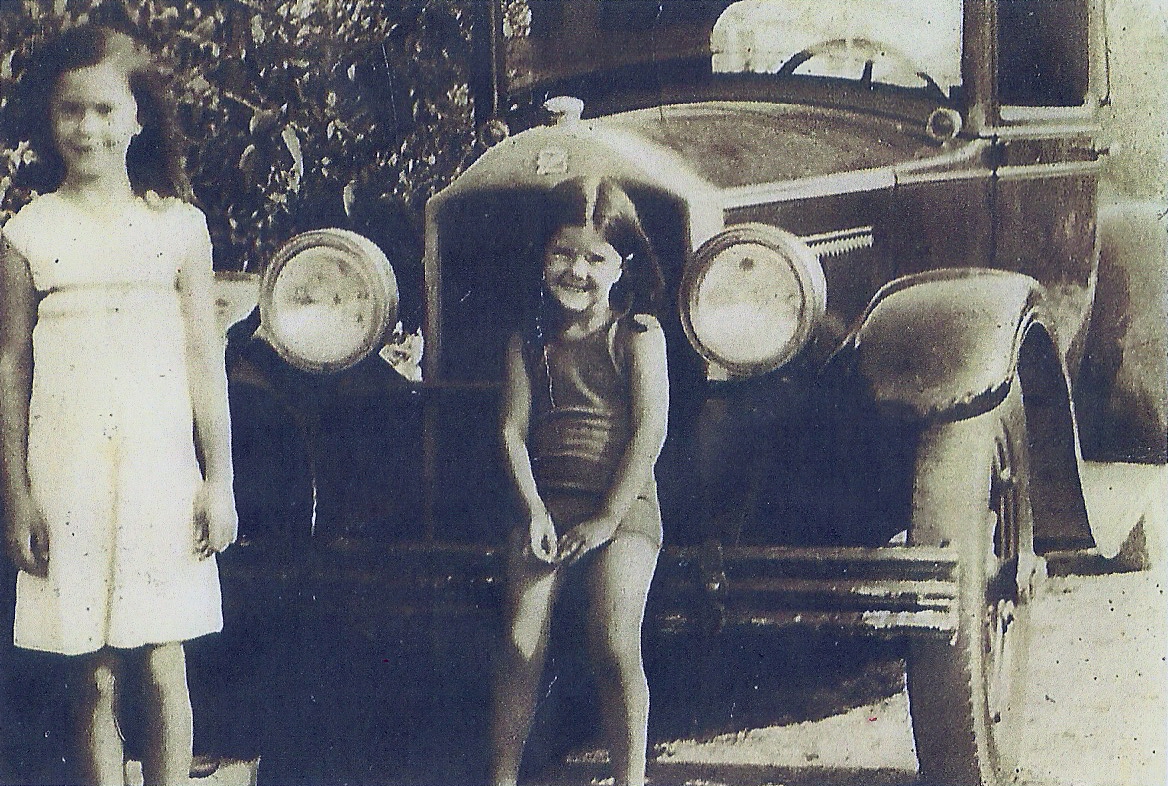
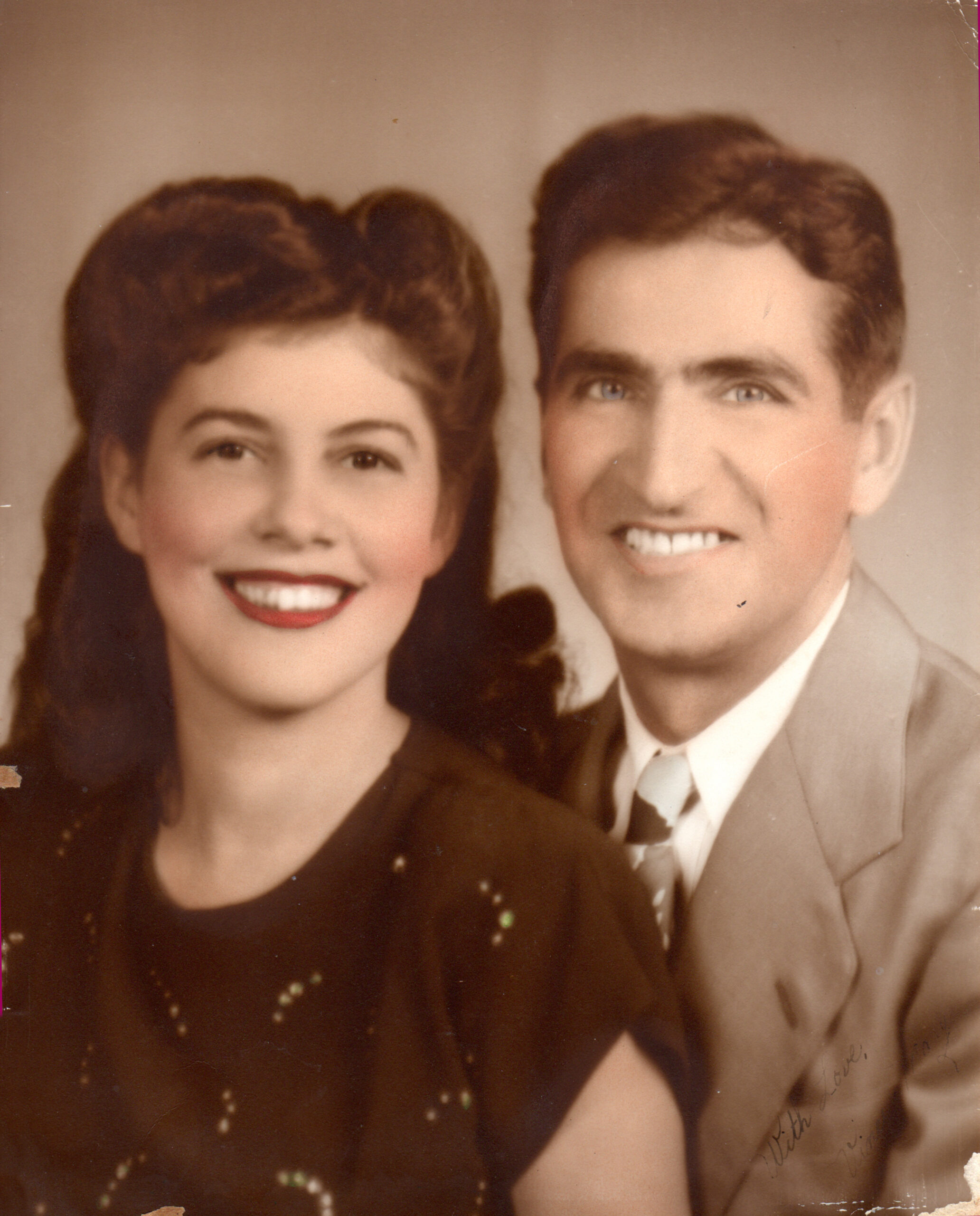
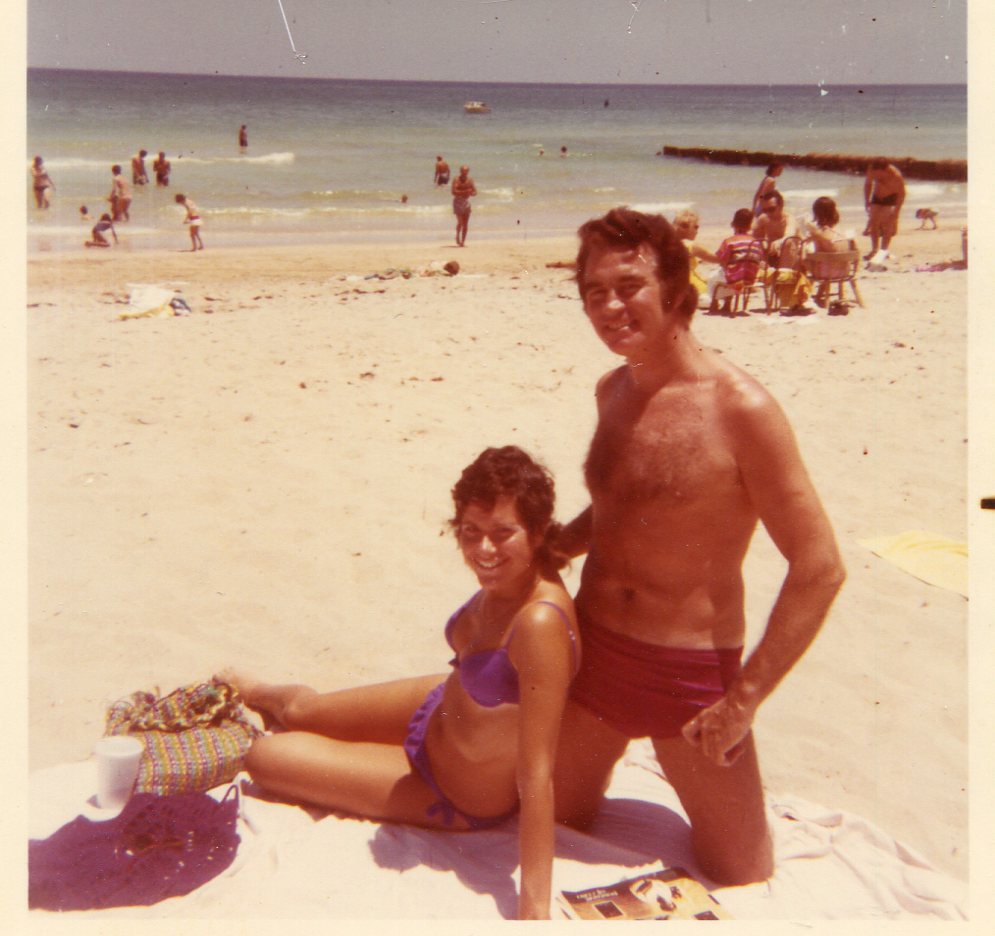
Being a third-generation Miamian, I have lots of stories.

This one will begin with my father, Del Matchett, who was born in Miami in 1923 in the original Jackson Memorial Hospital that later became the Alamo Building at UM/JMH Medical Center.

He grew up in North Miami on Northeast 132nd Street. His father built the two-story house that they lived in. He was a newspaper boy for The Miami News and rode his bicycle from North Miami down to the Miami News building, which later became The Freedom Tower. He went to grade school at William Jennings Bryan and later to Miami Edison High School. My mother, Margaret Knowles Matchett, and my father graduated from Edison.

When I was a child, they took my brother and me to many Edison-Miami High football games in the Orange Bowl. The two high schools filled the stadium in the 1950s and ’60s. It was a sea of red/white and blue/gold and very exciting.

We attended First Baptist Church of Miami, which was behind Edison. The pastor there, Dr. Ray Culbreath, always said a prayer with the football players before each game. He was a big football fan. My parents were married in his church on May 13, 1945. That church later became the Yahweh Temple.

After high school, my father joined the U.S. Air Force. When he came back from the military he went to work at Eastern Airlines as a sheet metal mechanic, later rising to foreman in engine overhaul. He met and spoke to Eddie Rickenbacker many times during Eastern’s early years. He always respected and spoke highly of Rickenbacker. He said that he would come on the job dressed in working man’s clothes and sit and talk to the guys.

My father met the Radio City Rockettes in 1979 when they flew to Miami on Eastern. He proudly owned an autographed photo.

We were able to fly free and took full advantage of that benefit. We dressed in our Sunday best when we flew. He told us that we were representing the airline and we had to dress accordingly. He loved working for Eastern Airlines and was fortunate to retire after 40 years, when Frank Borman was in charge. He saw the end of Eastern coming and decided to get out early.

My mother’s family lived on North Miami Avenue and Northwest 60th Street. The Cape-Cod-style house was built by my step-grandfather, Jack Mangum. It was a beautiful white two-story house with green shutters and a fireplace. He also built a two-story apartment building behind the house. After World War II, my family lived on one floor and my aunt and uncle and their family on the other floor. My brother, cousin, and I had many happy days there playing in the big yard. The house still stands, but it is now yellow with brown shutters and there are chickens in the yard.

I have seen many changes in Miami over the years but I still love it here. Just take a look at the Miami skyline at sunset. One word comes to mind: “Paradise.”

With Mom, Dad, and sister, Ange, we left Pennsylvania in October 1936 before the cold weather set in.

We rode the “Orange Blossom Special,” arriving at the F.E.C. (Florida East Coast) railway station just a couple of blocks from the tallest building in Dade County, the courthouse.

The turkey buzzards were returning to the roof as they have done every winter. When it came time to find a place to live, we rented an apartment walking distance to the beach.

I loved to go shopping in downtown Miami, mostly because we took the trolley that ran down the middle of the MacArthur Causeway.

At Easter, we would get new bonnets and chocolate eggs with our names written on them at Kress on Flagler Street.

Another must was Burdines, where the air conditioning was a huge treat. Not many places had air conditioners in the 1930s, not even the movie theaters.

The Plaza Theater used to have double features and serials every Saturday for nine cents! The Olympia (the Gusman now) in downtown Miami showed double features with a live stage show.

Swimming was the favorite way to cool off. Another was a birch beer for five cents at the air-conditioned Royal Castle. What was not to love?

Sometimes we would spend a dime to go to Smith’s Pool, which was next to the Beach Kennel Club at the southernmost point, where towering condos now stand.

Many of our neighbors were Jewish, and on Friday nights Mom would light their candles to help them prepare for the Sabbath.

At the Jewish bakeries, I was introduced to bagels – yummy! On Ocean Drive was Piccolo’s Italian Restaurant, our family’s favorite.

During the 1940s, the focus of Miami changed to World War II. Returning from the movies Dec. 7, 1941, my parents told me we were at war. At 9, I could not really understand the significance of that.

Air Force officer training took over all the hotels on Ocean Drive and Collins Avenue. Their “mess” tent was down the street from us on the beach between Second and Third streets.

Morning, noon and night, thousands of uniformed soldiers marched to meals, singing all the way.

I was so proud of them. I learned dozens of songs: Over There, The Caissons Go Rolling Along,Yankee Doodle Dandy, Oh How I Hate to Get Up in the Morning.

Often we would march along singing beside them. They would enter the mess tent and we would go swimming.

At times there were artillery target practices out on the Atlantic, which as a child, I thought was very exciting. We had “blackouts” which called for black curtains so the U-boats at sea could not see the lights on shore. Street lamps were painted black on their east side.

There was rationing of many basics, such as sugar, coffee, meat, gas and shoes. The shoes were tough since children change sizes so quickly.

On Aug. 15, 1945, I was walking on Lincoln Road when the war ended. Everyone was celebrating and crying all at the same time.

St. Patrick Catholic Church held its first Masses in a stable in 1926. I went to St. Patrick School from first through 12th grades.

While dating my future husband, Luis, who graduated from St. Mary and the University of Miami, we attended every UM basketball game at the Coliseum on Douglas Road and football games at the Orange Bowl.

At the Coliseum and in the hangar at PanAm’s Seaport (which is now City Hall) we danced to Harry James, Paul Whiteman and Tony Bennett, to name a few. Luis and I were married 61 years ago at St. Rose of Lima Church.

We went to live in Havana, where three of our four children were born. Although it is a beautiful island and we were very happy, Castro sent us back home in 1960.

After returning to the United States, Luis took a job at Variety Children’s Hospital, now Miami Children’s Hospital.

After our youngest finished first grade, I started teaching at St. Monica’s Catholic School in Carol City. Later I taught at Immaculate Conception Catholic School in Hialeah for a decade.

Our family life centered around the Optimist Club, where our two sons played football and baseball and our two daughters were cheerleaders.

All four graduated from Monsignor Pace High School, which was a boy’s school when it first opened.

When our nest emptied in 1980, Luis transferred to Tallahassee and I taught there at Trinity Catholic School. We both became very involved in our church, “cursillo,” and ministries for the poor and prisoners.

When we retired in 1996, it was back to Miami for us. Luis wasted no time getting settled at Corpus Christi Catholic Church as a deacon.

We also now love to cruise, especially since Miami has a port conveniently nearby. Another big plus is all the restaurants with the Cuban food that we love.

Our family here has blessed us with seven grandchildren and two great-grandchildren.

One of Webster’s definitions for home is “a place of one’s affection” and that clearly describes our feeling for Miami.

Wanderer Buddy Hayes painted his way from Depression-torn Atlanta eastward to Charleston, S.C. He settled in North Charleston, where he frequented a popular local restaurant.

In a cold Connecticut convent, Marie and Helen, two nuns from immigrant families, had grown up together, singing popular songs like Begin the Beguine, about tropical nights and swaying palms. They ran away for Miami one bitterly cold morning. Helen had a nice car, Marie had a nice case of wanderlust.

They got along fine all the way to Charleston – a town of warm winter days, beaches and swaying palm trees. Then, sitting in a popular restaurant north of Charleston, the two friends argued.

“Just go on without me, I’m staying here,” Marie told Helen.

Then without leaving that restaurant, Marie found a job, a roommate, and, on her first day at work, Buddy Hayes walked in and found her.

Fast-forward to 1946: Buddy and Marie have two little children, my brother Jim and me, and she’s pregnant again. “Aunt” Helen is visiting from Florida. They’re laughing about old times and singing Begin the Beguine.

Mama died in childbirth with that third child. Helen’s visit is a rare memory of her. When I played piano years later, my father gave me sheet music for Begin the Beguine, which I played repeatedly hoping she could hear me.

Before the ’60’s brought us hippies, the decade brought us Beatniks and coffeehouse poetry. I wrote my own “drifter” songs and poetry, but I eventually married anyway, moved to a Low Country island and excused my wanderlust as youthful notion.

When we separated in ’71, the Midnight Cowboy theme became myBegin the Beguine. I left my last day of work in a sun shower – rare for Charleston – while my car radio played, “I’m going where the sun keeps shining, through the pouring rain…” I had left my job, my husband, his island, our friends. Mama, it’s time for Miami, I thought.

I felt her beside me on the drive and when I landed a job at the great JM, Jordan Marsh’s gorgeous five-story downtown store. I found a nearby apartment at the Bayshore Drive home of feisty matriarch Adelaide Allocca.

Oh, Mama, I can walk out my door and see Biscayne Bay! Across 18th Street was the small, homey Miramar Hotel, where I breakfasted on Sundays with only Mama’s spirit and The Miami Herald for company. JCPenney was a block west, on Biscayne. Across Bayshore from Jordan Marsh were the Herald building, the Seaboard building, a cathedral and the Miami Women’s Club. A vacant lot lay between the cathedral and the Women’s Club, with a dock where yachtsmen frequently tied up, came ashore and crossed Bayshore Drive to shop at Jordan Marsh.

Although they were decades older than me, Adelaide and her friends became my first source of Miami social life and information. She and her sons welcomed me at Thanksgiving. She enlisted me to drive her places, to join her card-playing socials. When I admired the Women’s Club’s gracefully sloping coconut palms, they told me about the lethal yellowing that was expected to wipe out all our palms. One card player, Mary Fascelli, introduced me to her son Dante. “He dropped the ‘i’ from his name when he went into politics,” Adelaide explained later; I had just met Dante Fascell, Florida’s most famous Congressional representative of the time.

Both JM and the Herald had employee cafeterias, and as many Herald people ate at ours as did JM employees at the Herald’s. Three outstanding Herald cafeteria moments:

1. Briefly meeting John Keasler, my favorite Miami News columnist.

2. Complaining to coworkers about a doughnut-shaped roll that seemed stale. The JM ladies laughed, but the next morning at breakfast, they showed me how bagels should be toasted, buttered and savored.

3. An alarming glimpse out the cafeteria window, eye to eye with the huge Goodyear blimp that appeared to be coming in at us. But it was only positioning for a landing across the channel at Watson Island.

Walking home from Bayfront Park one day, I noticed people gathering, standing on the sidewalk. I asked someone what was happening and was told, “Orange Bowl Parade is coming.”

How could I have forgotten? My father and I watched that parade every year on TV, and I could already hear the music. So I stayed, too. The Coppertone float, carrying four attractive young men, drew the loudest cheers. “It’s the Rhodes Brothers,” someone said of Miami’s iconic, nationally known entertainers.

Before I left JM and downtown, Adelaide’s neighbors buzzed with rumors that a large shopping mall would soon take over our neighborhood between Bayshore and Biscayne, between JM and JC Penney’s. Offers were made to Adelaide and her neighbors, but she swore to hold out.

Years later, I returned downtown to the multi-storied Omni Mall, with its huge carousel in the round feature window.

Jordan Marsh and JCPenney anchored it, and the Omni monster had devoured all the homes between, except for Adelaide’s. Her place still stood, a little dog ear carved out of Omni’s northeast corner. She had held out like she said she would.

From somewhere far away, I heard an ex-nun laugh.

I first met Mary Merlo Lugo at a party at a friend’s house in South Miami. Circulating, as one is prone to do at any party, I found myself seated next to this wonderful woman who, at age 93, regaled me for the next four hours with the most entertaining anecdotes about her life, both in her native Puerto Rico and in Miami.

She moved to Miami in 1945, never to go back, except for a few short visits.

I was fascinated with this woman’s zest for life, but mostly impressed by her clarity of mind. I asked her adopted daughter to take me to Mary’s house to meet her husband, Vince, and got to know him, as well, thus starting a trip down memory lane, which I just had to sit down to chronicle.

Vincent Biondi was born in the Bronx, New York, on Aug. 19, 1917, one year before Mary, who was born in Guayanilla, Puerto Rico, on Oct. 18, 1918.

When Vince was 9, his Italian mother, Josefina, moved him and his brothers to Washington, D.C., where he lived until he was drafted into the army in October 1941, just two months before Pearl Harbor. After basic training in the Corps of Engineers, he was shipped to Ireland with the 1st Armored Division, and from there he was sent to Oran, Algeria, and later Anzio, Italy. Once the war was over, and after spending a number of weeks in a hospital in Naples, Italy, he was flown back to the United States in 1945.

After a series of odd jobs, Mary ended up working at Woolworth’s, and while she became immersed in the energy of a blossoming city, Vince was convinced by a friend in Washington to come down to Miami to look for new opportunities. He worked as a painter in Miami Beach and Coral Gables. One day, a year later, he happened to go with a friend to Woolworth’s. They were talking about a hurricane that was threatening Puerto Rico as they passed the counter where Mary was stationed. When she heard Puerto Rico mentioned, she interrupted their conversation.

Vince was immediately smitten, and as it happens with all the affections destined to last, their relationship was initially tentative, with Vince stopping in at Woolworth’s every day to visit her, giving themselves time for their growing love for each other to mature.

They were married on Aug. 16, 1947, and the city embraced them as Mr. and Mrs. Biondi with a gulp of fresh air as soon as the doors of the church flung open.

The city in those days was flat, irregular, unkempt. Nonetheless, some changes were sprouting here and there. South Beach had its Art Deco buildings, which Vince kept beautified with his painter’s brush. However, with a family in mind, Vince decided to get a regular job and ended up working at Burdines, making $1.65 an hour. He joined the union and, with pension and medical plans secured, they were able to buy their home at 931 NW 39th Ct. with the help of the G.I. Bill of Rights.

Vince and Mary took the plain but structurally sound house and slowly transformed it into a comfortable Miami house that became the home of their two daughters, Cheryl, who now lives in Orlando, born in 1950, and Aileen, born in 1953, who now lives in Gainesville. Then, one day in 1961, when Cuban families were making the supreme sacrifice of parting with their children and sending them alone to Miami to escape the Castro regime, Mary and Vince took in a 14-year-old Cuban girl as their own until she could be reunited with her natural parents. To this day, Migdalia calls them Mom and Dad, and Cheryl and Aileen are like sisters to her.

Migdalia eventually went to Puerto Rico, but Vince, Mary and their two daughters remained in Miami, sharing good and bad times, dodging dangerous hurricanes and taking in the luxurious pleasure of the perfume of native flowers in the winter.

Certain deep loves mature slowly, but they are meant to be forever, so the song says. However, nothing as we know it is forever. I called Mary to ask her the dates when her daughters were born. Mary passed away too prematurely, on Thursday, March 15, 2012. I was preparing to fly down to Puerto Rico, her birthplace. She never got to read this chronicle.

As I now sit on the beach in Puerto Rico, rewriting the end of this “Miami Story,” I really think that I was truly blessed to share some very special moments with this very wonderful woman and her husband. They, in turn, shared 65 glorious years together and many happy experiences in Miami raising their daughters, Migdalia included. Mary’s great sense of humor, her kindness and love for them and all of us who were lucky enough to get to know her, is a great part of her exceptional legacy.

I agree with Maya Angelou when she says that most people do not grow old. We find parking spaces and honor our credit cards. We marry and dare to have children and call that growing up. We carry an accumulation of years in our bodies and our faces, but generally, our real selves, the children inside us, are still innocent. Mary and Vince made me realize that.

My Miami story began before I was born.

My paternal grandfather, Thomas Tilden, arrived in the 1880s in Syracuse, Mo., and built a magnificent barn. It was “the largest in Missouri, the third-largest in the United States, and the sixth-largest in the world,” crowed the newspapers at the time. Like a fine home, it had mahogany woodwork throughout and cost well over $10,000 – a goodly sum in those days.

But tragedy struck.

In 1896, the barn and all its contents went up in flames. Grandfather, subsequently depressed, decided to sell his farm and move his family to a milder clime. To scout the territory, he boarded Mr. Flagler’s train and rode all the way to its just-completed terminus at Biscayne Bay. There, according to my grandmother, he found a settlement, recently incorporated, of fewer than 50 inhabitants.

Evidently this did not suit his needs, so he reboarded the train and went north; about halfway up the state, to what is now Florahome. There, he bought land and built an architect-designed home. Back in Missouri, he loaded his furniture, some livestock, tools and other belongings into a freight car, and on Oct. 16, 1901, he and his family took up residence in Florahome. When my grandfather died in 1906, my grandmother, with her four youngest children (my father included) moved back to Missouri.

But two of the children stayed on at the farm in Florahome and, even today, there are Tildens at Winter Park.

Fast-forward to 1946: World War II had ended. I was a sophomore at Lindenwood College in St. Charles, Mo., and my parents’ wartime employment in Oak Ridge, Tenn., was no longer needed.

They planned to start a new life “out West,” but wanted to see some of the USA. They bought a trailer and, with my three brothers in tow, headed south to Miami.

Oops, their timing was off – September was upon them, and school started. They parked the trailer and enrolled Billy and Tommy and Bobby in nearby Edison School.

Trailer-park living did not appeal to them, however, but they found that no homeowner would rent to them with three boys. They ended up buying a house on nine acres at the edge of the Everglades – East Glade Drive and Coral Way (Rural Route 4, Box 222). No other manmade structure was within sight except the tip of the Biltmore Hotel nearly five miles to the east in Coral Gables.

I came home from college and we still didn’t have a telephone (wouldn’t for another year). We did have electricity, solar water heating and a tennis court. We had an acre in lawn and only a push lawnmower. One of us was always out pushing the mower.

Meanwhile, my father, William Tilden, an architectural draftsman, found a job. He took our lone car to work every day and deposited me for a summer course at Alex Gibson’s Modeling School. Billy was enrolled at Miami High, Tommy and Bobby at Olympia Heights. Mother, at home with the laundry, sprayed the screen door for mosquitoes each time before she darted out to hang clothes on the line.

So much for the dream of moving “out West.”

Truly a model of tropical living, our Florida home had hurricane shutters; it had coconut palms in the front yard and Australian pines in back. We had mango, avocado, orange, grapefruit, sour orange, guava and kumquat trees. And Daddy put in a patch of sugar cane. He taught us how to slice off a piece of the stalk and suck the sweet juice, sharing with us a pleasure of his Florida boyhood in Florahome.

On weekends, we took long drives around the county, the city, to various parks, the Everglades, and the ocean with its glorious beaches. There was the thrilling trek on the long, narrow, rickety bridges of the Overseas Highway to Key West. Seeing a huge tractor-trailer truck barreling toward you on the Seven Mile Bridge, you couldn’t help but hold your breath and brace for the shudder as it thundered by.

I learned to drive on the Overseas Highway, turning back before the toll booth at Lower Matecumbe Key.

As we became involved with the community, my mother, Josephine Tilden, became president of two school PTAs and started the South Florida Weavers guild, becoming the state president. After my father died, she designed and built her own house among Redland pines. My father eventually retired from the planning department of Dade County Schools and proceeded to tend his “farm” surrounded by grandchildren and, at various times, cats, dogs, chickens, turkeys, rabbits, a horse (Tommy’s), a cow and a bull (Bobby’s), a pigeon named Henry, and Charlie, a vocal bantam rooster that followed him everywhere.

We children grew, married, settled or scattered, and multiplied.

I spent almost 26 years editing Sea Frontiers for the International Oceanographic Foundation on Virginia Key. Billy died in an auto accident during Orientation Week as he entered the University of Florida . Tommy, a retired Marine, is a veteran of the Korean and Vietnam wars. Bobby retired from the school system and moved with his family to the mountains of northern Georgia.

In 2012, Tommy and I are still here, confirmed Floridians, as Grandfather had planned – and not “out West” as our parents once dreamed.

P.S. Since writing this story, I regret to add that my brother, Thomas Tilden, passed away Oct. 1, 2012, just three weeks shy of his 78th birthday.

My great uncle Matthew Freeman, of London, England, was a passenger on the Lusitania, a ship that was torpedoed by the Germans in 1915 and sank in 18 minutes. He was quite the hero, saving several lives. He survived the attack, and in the early 1950s he came to live in Miami Beach.

My mother and I arrived in Miami Beach from London on Oct. 15, 1964. We checked into the Saxony Hotel, which was owned by George Sax, a friend of my great uncle Lou, Matt’s brother. There was a nightclub at the top of it called The Ivory Tower, and we had plans to go there that very night. We needed to get our hair done, or combed out, as they said in those days. It was quite late in the afternoon, and Mother was convinced that all of the beauty salons would be closed. However, after trudging down Washington Avenue, we found Mr. Carmen. He teased our hair to a suitable height, and off we went for our night in the Ivory Tower.

I thought Miami was the most exciting place I had ever been. We stayed at the Saxony for three weeks before renting a little efficiency apartment at 235 30th St., just off Collins Avenue. Lincoln Road was nearby and little trolleys would take you up and down the street. You could ask the driver to stop whenever you saw something in a store window that took your fancy; there was no other traffic on Lincoln Road. Jackie Gleason did his weekly television show from Miami Beach.

There were huge yachts lined up all along Collins Avenue opposite luxury hotels – The Fontainebleau, the Eden Roc and the Doral. On top of the Doral was the Starlight Roof, so named for a thousand twinkling lights on the ceiling. It was one of the few places that gentlemen were required to wear a jacket and tie.

In those days, there was very little crime, and on balmy winter nights, women could be seen strolling along Collins Avenue wearing minks and diamonds. I would go farther north to the Castaways and Thunderbird, where all kinds of entertainment would go on until the wee hours of the morning. Sometimes I would dance the night away at Funky Broadway in Sunny Isles. I would go to the 79th Street Causeway, where there was a hub of nightlife: The Place For Steak, The Penthouse Club on Harbor Island, and Jillys, to name a few. Also to Fun Fair, to eat the best hot dogs in the world and play the nickel skee ball. For a café con leche and arroz blanco con frijoles negros, we would take a Sunday trip to Southwest Eighth Street. There were hippie “love-ins” in Greynolds Park in North Miami.

Reluctantly, I returned to England after six months, but Miami remained in my heart and I knew it was my destiny. I was 21 when I returned to live here permanently. I met my beloved late husband Guy Aylward, who was a newscaster for WCIX Channel 6 TV, which was housed in a round building at 1111 Brickell Ave. I had met him when we were both cast in a play at the Ruth Foreman playhouse in North Miami.

Our son was born in 1978 at Mercy Hospital. We were living in Pinecrest at the time and had mango trees, grapefruit trees and star fruit on our property. It was an idyllic existence and seemed as if we were living in the heart of the country when, in fact, bustling South Dixie highway was only a short walk away.

Having a child opened up a whole new Miami world – the quaint Crandon Park Zoo on Key Biscayne, the Seaquarium and the original Parrot Jungle. There was the unique Serpentarium and the mysterious Coral Castle. All of these were a veritable wonderland for a child.

Eventually, we opened foreign and independent movie theaters in Coral Gables. Among them were Cinematheque, which had airplane seats obtained from Eastern Airlines when we first opened, and also the Arcadia and the Grove Harbour in Coconut Grove. Nat Chediak, who had met my husband at Channel 6, was my husband’s partner.

Guy filmed the first commercials for Carnival when the company only had two ships, the Mardis Gras and the Carnivale. My husband was a man of many talents both in front and behind the camera. A new television series called The Magic City has just been filmed here, created by Miami son Mitch Glazer. It recaptures the era of the late ’50s and early ’60s. I look forward to seeing it. I’m sure I’ll recognize some of the characters whose names have been changed to protect the innocent!

Miami has gone through so many changes.

Life is ever-changing, but in Miami the magic always prevails. My roots are here, planted firmly in the ground, just as strong as the roots of the old majestic Banyan trees.

It was 1918 when Ben and Bessie Diamond visited Miami on vacation from Elmira, N.Y.

They fell in love with the city and the people. In 1921, they moved to Miami, driving from Elmira with all five of their children. One of those children became my mother in 1930.

Ben opened an auto-wrecking and used-parts business on Southwest 12th Avenue and Eighth Street as Diamond Auto Parts. He sold that business and opened an oil-refining business on the Miami River and Southwest Sixth Street. That business was prospering when, in 1936, at age 44, Ben died.

Four of those five children graduated from Miami Senior High, at the new building on West Flagler Street and 25th Avenue. Lil Diamond was valedictorian of her class.

Two of the boys got jobs working at the dairy owned by Mr. Ernest (“Cap”) Graham, out in Pennsuco, Fla., in the western part of the county. Sidney Diamond stayed with the dairy for more than 25 years, and Harry Diamond stayed on until World War II interrupted.

I went to Miami Beach elementary and junior high schools, and watched the soldiers marching down the streets when the entire island of Miami Beach became a military base. All of the parks and golf courses became drill fields, the north end of the beach – where the Bal Harbour Shops now stands – became a prisoner-of-war camp, and on the ocean side there was a firing range.

At Miami Beach Senior High, I played and lettered in four sports: football, basketball, baseball and track. In 1948, I was given an award as the most outstanding athlete in the history of Miami Beach High. No one had ever done that before and, as of now, it hasn’t been repeated.

During the war years, food and gasoline were rationed, and it was good if you were personal friends with the butcher so you’d be able to get just a little more meat for your family. Since Uncle Sidney worked for Graham’s Dairy. He couldn’t be drafted because dairy businesses were considered an essential industry. The dairy trucks were entitled to extra gasoline; in that way, I got a little for my motorbike.

As a teenager, it was mandatory to head to the 14th Street beach on Saturday and Sunday. The girls were all in one-piece bathing suits that had short legs and went all the way up to the neck in front. We set down our blankets and turned on the battery radio to listen to the “Pepsi-Cola” all-day music on Saturday.

There was no trouble parking if you had a car, because very few people had a car. Most people took a bus wherever they needed to go. I remember bunches of us taking a bus over to Miami to the Greyhound bus station with all of our picnic stuff with us, and then taking the Greyhound all the way to Ojus, in North Miami, where we spent the day at Greynolds Park. There was no mosquito control then, so sometimes we came home all eaten up.

When it came time to go to college, most of us chose the University of Florida in Gainesville. How did we get there? Again, it was a Greyhound bus, for about $7, or you could take the Seaboard Railway from Miami to Waldo, Fla., and hitchhike into Gainesville. So many of us chose UF because the tuition was only $75 per semester for a Florida high school graduate, and a dorm room was just $50 per semester. The burger basket at the CI was $0.39 with fries and slaw. For those who had a car in Gainesville, gas was only $0.29 a gallon, but the Blue Sunoco station in downtown Gainesville had a special on Saturday mornings: seven gallons for $1.

If only Ben could have lived another 10 years. When he died it was necessary to sell off all of the land he had owned to support Bessie and five children and one grandchild. Forty acres on the corner of two unpaved dirt roads – one named Galloway and the other South Kendall Drive. The whole 40 acres sold for $400.

Back then, a whole city block on the ocean and 25th Street in Miami Beach sold for $10,000. Ben, you died too young, and too soon.

My family moved from Washington, D.C., to Hollywood in 1926 due my father’s severe asthma attacks during the cold Northern winters. My sister, Shirley, was 4 and I was 2.

Our sister, Isabelle, was born in Hollywood.

In 1928 we moved to 1625 SW 15th St. in Miami. I went to Shenandoah Elementary School when it was a row of wooden portable buildings with a boardwalk between them. The custodian improvised, with a set of tablespoons he altered, to retrieve the lunch coins that many of us dropped between the cracks of the boardwalk.

Kent Kelley and I started out in kindergarten together in Mrs. Patterson’s portable classroom and remained close school mates through high school, remaining good friends until now.

Shenandoah Junior High School was next. We thought that was the big time – going to school in a real two-story building. In 1937 my father passed away. I worked in the school cafeteria drying trays in return for my lunch. My best buddies were Walter Jessup, Joe Heard and Kent Kelley. My fifth-grade English teacher, Mrs. Hancock, drilled us so well in diagramming sentences that I did not learn anything more in English classes through college.

Miami High School holds many fond memories as a part of the Class of 1941. Walter Jessup and I both had Miami Herald delivery routes that required us to get up at 3:30 a.m. and deliver our papers by bicycle with a large wooden basket attached to the handle bars. I traded a paper every week for a haircut every two weeks, at the barber shop next to the Tower Theater on Southwest Eighth Street. Walter and I traded papers for a day-old pie at the bakery across the street from the Tower Theater and then traded a paper for a quart of milk from a McArthur Dairy truck driver. We sat in the Gulf Station at the corner of Southwest Eighth Street and 17th Avenue, sharing the pie and the milk while we folded our papers for delivery.

Miami High School in those years had a national championship football team with David Eldridge, Bruce Smith, Arnold Tucker and many others. Walter and I were cheerleaders. We almost created a riot during one Miami High – Edison game. Edison cheerleaders placed a red lantern in the bleachers behind our goal posts. Walter and I ran up the bleachers and took it back to our side. The police closed in and averted further contact.

Many of us from the Class of ’41 went into the armed services after graduation to serve our country in World War II. Bruce Smith went to the Naval Academy to play football and Arnold Tucker went to West Point to play football. They both became flag officers, Bruce an admiral, and Arnold a general. I met up with Walter during the war at North Island Naval Air Station, where I was stationed at a hanger next to the one where he was stationed. We arranged to take liberty together to go to Los Angeles to see the Rose Bowl Game.

My sister, Shirley, MHS Class of 1939, enlisted in the Navy Waves. Our mother, Bertha, and four of her brothers were in the U.S. Navy during WW I. Mother was a wireless operator in St. Augustine. She was a Miami community leader in the 1930’s and 40’s.

After attending the University of Colorado on the GI Bill, I decided to help my mother, who had cancer, to operate Camp Wohelo, a small girls’ camp she founded in 1929, in Waynesboro, Pa. During the winter of 1953 I met Kev Klein, a school teacher, who was teaching at the Lear School on Miami Beach. We were engaged six weeks later and married in Mansfield, Ohio. Kev became the assistant director of Camp Wohelo, and I built Camp Comet for boys on the adjacent mountain. We have been happily married for 59 years.

Our children, Jay and Bari Sue, were born and raised in Miami. Jay is a retina surgeon, practicing in Miami and Bari is teaching at the University of Miami/Canterbury Child Care Center. Jay and his wife, Kerry, have two beautiful children, Haley, 10, and Easton, 3.

In 1985 we moved to West Dade after selling the camps. I became a political activist, co-creating the West Dade Federation of Homeowner Associations with Jesse Jones. As WDFHA president for 17 years, I lead the incorporation movement for Doral, which became a city in 2004. Five years later, the Doral City Council voted to name a beautiful 10-acre park, Morgan Levy Park, at Northwest 102nd Avenue and 53rd Street.

After Hurricane Andrew in 1992, smoke from burning debris was a serious problem. I started a “Stop The Burning” movement in West Dade and teamed up with the South Dade Soil and Water Conservation District in Homestead that was fighting the same problem. We ground up 4.5 million cubic yards into mulch and delivered it free to South Dade farmers, enough to fill a line of dump trucks from here to Atlanta.

As a result of my volunteer work for that project, Jack Campbell, then chairman of the soil and water district, asked me to go to work as their administrator. I am still working as the administrator of the district after 18 years and I hope to remain on the job.

This is not the same little community in which I grew up. I am proud to see the growth and development that has taken place. I am always happy to call “Miami” my hometown.

We first vacationed in Miami and Miami Beach in the winter of 1945. My parents fell in love with the beauty of the area and one year later I was able to move here permanently. I attended the old Miami Beach High school and lived with my grandparents in the Herbshire Apartments on Euclid Avenue.

I played trumpet in the Miami Beach marching band and loved living near the beaches. Almost every day after school we headed for the beach at 14th Street. This was the meeting place for all of the high school students. In the evenings I usually played basketball at the nearby Flamingo Park until dark, and on weekends I played trumpet with a small group at the local youth center.

I ate all of my meals with my grandparents, but on weekends we would eat at the famous Wolfie’s Deli. In 1948, I attended the University of Florida, where I completed my pre-medical studies.

I married in my last year of college and my first child, Michael, was born at Mercy Hospital in Miami in 1952.

I was accepted to the University of Tennessee where I completed my medical training and internship. My daughter Cathy was born in Baptist Hospital in Memphis, Tenn., in 1955.

I returned to Miami to complete a residency in pediatrics at Jackson Memorial Hospital.

I bought a home in beautiful Coral Gables and lived there for approximately the next 20 years.

I opened my pediatric practice on Coral Way and 87th Avenue in 1959, and met my first patient as I was nailing my sign on my door. For the next 20 years, I made house calls to about every home in that area.

My parents lived on Miami Beach and almost every Sunday we would visit with them and take the children fishing off the shore in the bay. They loved to fish and could hardly wait for the weekend to come.

I was a big sports fan in the early days of the Miami Hurricanes and the Miami Dolphins. I always had season tickets and never missed a game. It was great fun going to the old Orange Bowl, and I was sad when it was torn down for a more modern facility. I will always have great memories of the wonderful times we had there.

I was thrilled when the Miami Heat team was introduced in 1988 and, of course, was a season ticket holder.

I remarried in 1987 and, for the next 20 years, my wife was my office manager in our new office in Kendall. My wife and I retired about seven years ago and we now live in the Redland with our dog, Lucky.

My wife, Johan, has been very active in the community for the past 25 years, lending her time and expertise to many volunteer organizations, including Guardian Ad Litum, Voices for Children, and Neat Stuff, all dealing with children’s issues.

Since my retirement, I have had a chance to hone my photographic skills and I am now exhibiting my work at the beautiful Art Fusion Gallery in the Miami Design District.

I am still an ardent and loyal sports fan but, at my age, I am more comfortable watching the games sitting on my couch in my pajamas and eating a bowl of ice cream.

Translate »