Skip to content
Named Best Museum 2022 by Miami New Times

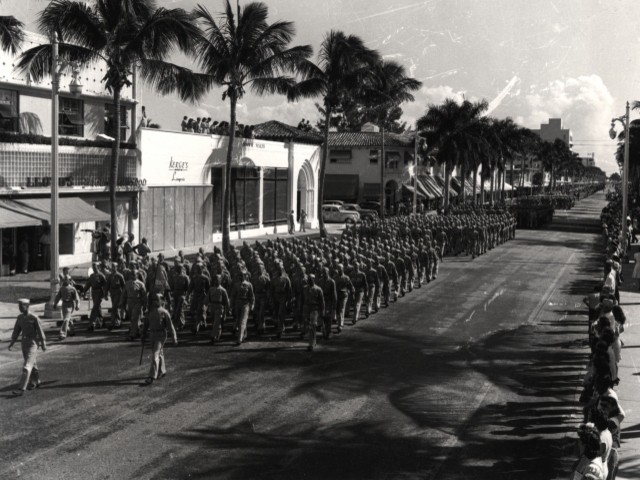
I guess my earliest memories are from the time of World War II, when I was aged 6 to 10, and all of Miami Beach was an OCS (Officer Candidate School) for the Army. Soldiers were marching in the streets, coming to our house for dinner, and training on the golf courses, where “obstacle courses” were set up.

Car headlights were painted black on top. Windshields had stickers to show the amount of gas you were allowed (according to need). Once or twice, my dad or someone drove us to the beach to watch a freighter burn that had been torpedoed by German U-Boats. On Purdy Avenue, there was a fenced-in area where they kept German POWs for a short time. I remember walking by, but don’t remember saying anything to them.

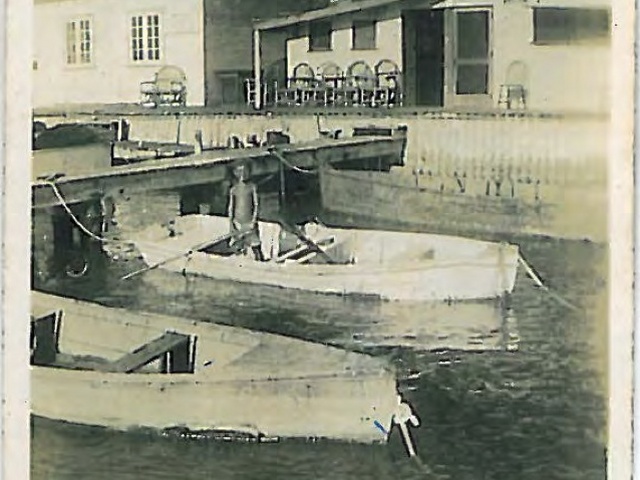
Port Elco, a marina at Dade Boulevard and Purdy Avenue, is a good place to start a tour of our neighborhood. I remember that I was at Port Elco on VJ Day (the end of the war). All the boats in the marina started blowing their horns, and everyone was shouting, “The war’s over!”

Right next to Port Elco was the bridge to Belle Isle. It made a good ramp for our home-made skate scooters (an apple box, nailed to a 2×4 with roller-skate wheels) and was a good place to fish with our drop lines, and especially good for dropping our home-made crawfish and stone crab traps. Back then, we thought that shellfish had to be cooked alive, so we just ran home with them.

The mouth of the canal, where the tide either came in or went out under the bridge, was another great fishing spot. That’s where I kept my rowboat, and later on it was a hurricane refuge for my brother Tom’s and my sailboat.

Mother Kelly’s was a nightclub on the corner of Dade and Bay roads. Mother Kelly (no relation) was a round, white haired, Russian man with three grown sons. Because I lived so close, I was adopted as their mascot. Sometimes, on Sunday morning, I would help Mother Kelly clean up the bar.

Three blocks south of Lincoln Road was the start of Flamingo Park, the biggest park on the Beach. It had red clay tennis courts (sometimes when I went to play, my sister Babe would give me her white tennis shoes to take along and scuff up to look worn), basketball courts, softball fields, a football field (my high school, St. Pat’s, played our home games here), a band stand, a professional baseball field (AAA), and two four-wall handball courts. Some of the best players in the country played here. In my late teens & early 20s, they let me play with them if they needed a fourth.

In the beginning, when we left the neighborhood, it was either by foot, thumb, bus, or jitney.

There were not enough bikes to go around. In fact, I think I had the only one for a while. It was a hand-me-down from my sisters, which I used on my paper route until I saved enough to buy a new Columbia from Western Auto. Of course, we also got rides in my mother’s car – mostly to the beach at 21st Street and Collins, but also many other interesting places, like Matheson Hammock, Tahiti Beach, Venetian Pool, Greynolds Park, and many others.

The bus system in those days was great. If my mother wasn’t taking us to the beach, we caught the “L” bus across from Mother Kelly’s to the 21st Street beach. The L bus was also our ride to downtown Miami, across Venetian Causeway, down Biscayne to Flagler, the last stop for the beach bus, and beginning for all Miami buses. At this stop was the famous “Jahn the Magic Man” hobby shop. Model trains, planes, boats – the works. At one end was a small stage where Jahn would put on magic shows.

On Saturdays, I got to work with my dad at his produce company. I’d help put up orders, and ride with the drivers. Dad and I would go to breakfast at Charlie’s Marketview Restaurant. We always sat at the same table and had two cake doughnuts.

Dad’s warehouse was on the railroad tracks and when the circus came to town, he brought me down to the station to watch them unload the animals and gear. The field where they set up was also nearby, so we got to watch them put up the “Big Top” and lay out the midway. They used elephants to help put up the tent, carry the gear, and pull up the center pole. Just as much fun as the actual circus.

When Tom came back from the Army and UF, about the time that my father died, I was 13. I gave Tom my paper-route savings (about $400) and he put up the rest, and we bought our first sailboat – a 20-foot center-board sloop with a star rig. Tom came up with an enterprise for her: advertising for Picciolo’s Restaurant. My mother sewed a sign on the boat’s sails in red letters, “TONIGHT DINE AT PICCIOLOS” on the main sail, and “DINNERS $1.25 & UP” on the jib. Mr. Picciolo paid us $100 a week (weekends and holidays). The “enterprise” ended when we turned her over in Government Cut and tore up the rig on the jetties.

After her demise, we bought a 30-foot sloop with a cabin and gas inboard. She was a “double-ender” and looked like a submarine when motoring. We named her Gypsea.

We sailed her down to Matecumbe one time for her most eventful cruise. She sunk at her mooring behind the VFW hall, when she impaled herself on a submerged piling we didn’t know was there. After that, we moved on to power.

Well, that takes us up to the ‘50s, and the days of my first car, a 1937 Ford Coupe, black, 3 speed on the floor. Cost me $35 and she ran! Needed a new transmission pretty quick, which I got at a junk yard for $18. A friend of Tom’s put it in for me, and off I went. The 50s were right out of “Happy Days,” and happy they were, but a little too wild for these pages.
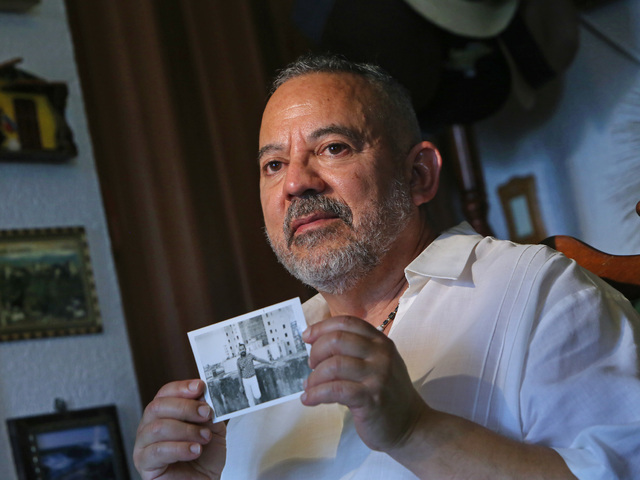
I was born in Guantánamo in 1956. I moved to Havana as a teenager to study and ultimately graduated with a math degree. In 1994, I decided take a raft to the United States.

I had to leave Cuba. I had no future there.

I graduated from the University of Havana believing that if I had a good education and worked hard, I would succeed in life. But because I wasn’t integrated enough with the government, there weren’t opportunities for me. So I resorted to selling produce on the streets with my university degree in my pocket. Later, I cleaned floors at the Hotel Inglaterra.

I also wanted to leave because I valued my freedom and found that I didn’t have the freedom to express myself in Cuba.

I started plotting my escape with a plan to try to get through the border fence at the U.S. naval base in Guantánamo Bay. On Aug. 1, 1994 I went to my 1-year-old niece’s birthday party in Guantánamo. That was the last time I saw many of my family members, including my father. I couldn’t even tell most of them that I had plans to leave. But it proved too difficult to try to get passed security and onto the base.

On Aug. 5th, I returned to Havana to find the streets filled with protesters. Several days later, Fidel Castro announced that whoever wanted to leave, could go. So I got in contact with a cousin who also wanted to leave and we started working on a raft.

When it was ready, everyone in the neighborhood helped us get the raft on a truck we had rented. They wished us well, hugged us and gave us blessings. Many of the old women cried.

We drove the truck to the Brisas del Mar beach east of Havana. Even the people at the beach helped us get the raft out on the water. A neighbor of mine, who had planned on going with us, backed out at the last minute. And my cousin, who was just supposed to help us get out, ended up coming along.

We left on Aug. 30, 1994.

I was the guide on the raft. I had the compass. Before we knew it, the coast of Cuba was gone. We left in the late afternoon so we saw nightfall.

The night out on the water was one of the most impressive things I’ve ever experienced. The only light you see is the moon. We would see empty rafts out on the ocean. I later realized that those probably belonged to people who didn’t make it because when the U.S. Coast Guard rescued rafters, they would usually sink the raft.

We were out on the ocean for the entire night. Our sail didn’t work so our hands were destroyed from rowing all night. Our drinking water had been contaminated and we were too nervous to eat.

There was a point when everyone saw an image in front of us on the sea. I’m not a particularly religious man but, to me, it was an apparition of the Virgin Mary. She stood in the direction that we were supposed to be heading. She came at a time when things were getting desperate for us. Next thing we saw were helicopters.

At this point, night was falling on our second day at sea. We had been out there for a little more than 24 hours.

We were picked up by the U.S. Coast Guard and they took us to a ship that was full of people. We were in bad shape. The ship had the biggest American flag I have ever seen. For me, it was like an angel hugging us and welcoming us to the United States. It was the first time I felt safe since I left Havana’s shore. Even in Cuba I didn’t feel safe. So it was the first time I felt that way in a long time.

I knew there was a chance that I wouldn’t be able to get into the U.S. Nothing was guaranteed. But I had to try. The freedom to express myself and have a voice was worth it.

We were on the ship for about a week. We would travel around the Florida Straits picking up more people on rafts. Then we finally made it to the base in Guantánamo.

We stayed in tents on the sand in extremely hot weather and with barely any clean water. I was in Guantánamo for a little more than two months. With conditions as bad as they were in Guantánamo, they began building camps in Panama. Some friends and I decided to go there.

When I got to Panama, all I had on was shorts and shoes that I had made out of cardboard. I was there for almost four months. In Guantánamo, they were creating better conditions, so that they could send us back.

Finally, I was able to come here to the United States. I arrived on Aug. 31, 1995.

It then became about a new struggle for a new life. I had to adjust to a new language and a new system of living. In Guantánamo, there was a program that taught us about these adjustments. I still work with this program to help other refugees.

My first job here was at a Pollo Tropical; I lasted there two days. Then I got a job at a pharmacy.

I went from a place where nobody was allowed to aspire and where everything was decided for you and given to you, to working at a place with so many products by all of these different companies. I wasn’t used to having so many options.

That was my first dose of the reality of living in the United States. Here, they don’t teach you, they push you to learn. You have to go look for work instead of waiting to be told what to do.

In Miami, I feel at home. I love the Cuban atmosphere, the people and the culture.

Twenty years later, I miss my close family and Havana, where I grew up. But my life here gives me independence. If I had gotten here when I was younger, I would’ve probably flourished more. But I can’t complain. I have everything I need for my life here.

What I want to celebrate 20 years after I fled, is not the fact that I left on a raft but that I now know that every country has the ability to be free. I hope that, in the future, every person realizes their potential in whatever country they’re in. So that they don’t feel the need to leave their lives and the people they love to find freedom.

I don’t want there to ever be a need again for what we did and what we went through. For me, that has been the biggest lesson from the past 20 years. I’m grateful to this country for giving me that lesson.

It will be fifty years this November since we took the Pan American flight that would separate us from the life of the privileged in Cuba to that of political refugees.

They served us tiny ham-and-cheese sandwiches with the iconic blue PanAm logo that tasted to us of the future – America.

We moved in with my aunt and uncle and their children into a three-bedroom house on the corner of 82 Avenue and 17 Street, a neighborhood known as Westchester. The community was predominantly Jewish with a handful of Cuban professionals, actors and writers. Walking distance was Everglades Elementary, a lovely school, but not if you didn’t speak the language.

I knew a few words in English – the colors, numbers and so on – but not enough to survive the third grade. I was made to feel alien, which I was. I looked forward to my afternoons in the warmth of the kitchen of Mrs. Meyers’s house, down the street. She would give me a quarter after school for babysitting and she allowed me to lick the cake batter off of her beaters. She was so nice to me and I acted as if I enjoyed her batter, but I didn’t because I was suffering from anorexia nervosa and couldn’t keep anything down.

No one really knew how bad things were for me at Everglades until my mother was informed that because of my problem with the language, I was being held back in second grade. Thank God that practice has since been abolished.

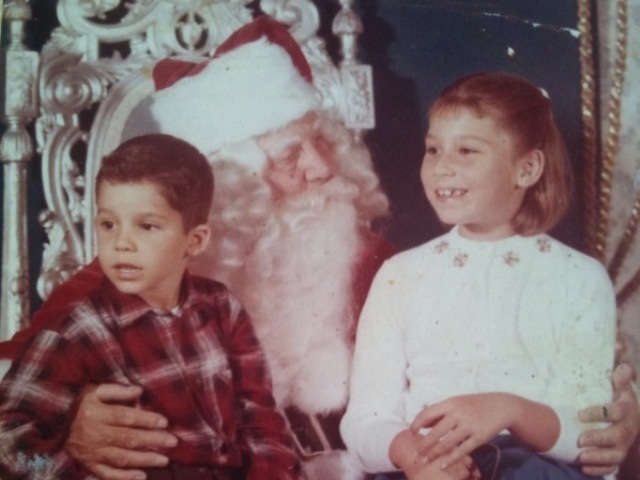
I also cherish the memories of the holiday traditions that were established early by my parents in an effort to bring normalcy to our lives. We would all pack into the Ford Falcon and head to Jordan Marsh department store downtown (where the OMNI eventually would be built) to see the beautiful animated Christmas displays and head upstairs to the toy department where we would get our traditional picture with Santa.

The holiday tradition would culminate with the New Year’s Eve parade down Flagler. Sometime around noon we would set up the fold-out chairs in the parking lot across from Walgreens and, with sandwiches and hot cocoa, we would see the likes of Paul Anka, Bobby Darrin, the stars of TV shows such as “Flipper” and the terrific high school bands. Everything in the “Magic City” was bright and shiny.

Spring of 1964 would bring The Beatles to Miami Beach, the Mustang, and Coral Park High School to Westchester. “Wow, Mom, that’s where the big kids go,” I said, but all these things were in the future.

Spring also brought the celebration of Easter. Services at noon would be in Spanish at St. Brendan’s on 87th Avenue, with me in my two-piece pink outfit and straw hat from the Zayre department store, also on 87th. Lunch would follow at the Pizza drive-in on Bird and 87th followed by a jelly-bean-decorated coconut cake from Publix on Coral Way.

I did not go to Coral Park High after all. I graduated from Southwest High off of 87th Avenue and 47th Street in 1973, and by the time of my ten-year-reunion, both my parents had died of cancer at the age of 47, and I was divorcing. I had nothing to share.

The OMNI by then had replaced the magical windows of Jordan Marsh. As luck would have it, while getting certified in teaching, my internship landed me back at Everglades Elementary, in the exact second grade with the same teacher who had held me back as a seven year old because I did not understand the language.

I eventually did end up at Coral Park, but as a teacher and, amazingly, the little seven year old who had been held back was now honored by her peers and elected 1999 Teacher of the Year.

The “Magic City” will never recapture the luster of the sixties through the eyes of a seven year old. I miss the blimp on Watson Island, the train rides at McArthur Dairy on Mother’s Day, flying kites on Father’s Day at Robert King High, the colorful Christmas windows at Jordan March, and most of all neighbors like Mrs. Meyers.

I was not allowed to talk at six o’clock when the news came on. Dinner at the pull-down table in the breakfast room was a silent affair, but for the radio.

Edward R.Murrow was reporting: Hitler’s crossing this river, that river. Daddy fumed that he wanted to go “over there,” to help our country – but he was too young for WWI, too old for WWII and he and Mommy were saddled with 3 little girls and one on the way. Mommy would say, “Why am I bringing another life into this horrible, hopeless world?”

A recurring ghastly nightmare — me, 5 years old, swinging on the playground at North Beach Elementary – and suddenly Hitler was standing on a giant swing, arcing over the playground, with a uniformed German on each side in identical mustaches and on swings, each one scoo-o-o-oping up little children – me, one of them, disappearing into instant night.

During the day I would march alongside soldiers outside my house on Royal Palm Avenue and in Polo Park (where Nautilus Middle School now stands). The army was occupying Miami Beach hotels, with the streets as their training grounds. One of my first songs was, “Over there, send the word . . . that the Yanks are coming. . . .” Me wondering, who ARE the yanks, anyway?

There were blackouts every night and rationing; my parents were on Civil Air Patrol “birdwatching” from the Roney Plaza hotel tower for German subs off the coast.

In school, I remember wrapping bandages for the war effort and singing, “Off we go, into the wild blue yonder. . . .” There were daily drills and we had to duck under our desks.

Then, on Fox Movietone News, concentration-camp skeletons were being liberated. Then came the great day! I was nine years old, and my whole childhood of memory had been nothing but war. Now that childhood was almost gone – I danced around the radio with my sister singing, “The war is over, the war is over, the war is over!!!!”

After a bitter winter in 1949, my parents, Philip and Mary, and my sister Filippa and I headed south to visit my maternal grandparents, Elizabeth and Peter Sapundjieff, who had become Floridians in 1946.

Grandma and Grandpa had become the proud owners of the Cleveland Apartments, which was located in downtown Miami next to the old YWCA. They also owned the Columbia Hotel just down the street.

Their home was an old estate in Coconut Grove named Treasure Trove, between Tigertail and South Bayshore Drive. Years later, in a deteriorated state, Treasure Trove would be featured in the Frank Sinatra movie Tony Roma.

Within six months of our return to New York, my parents would sell our home in Flushing, as well as their silk-screen printing business in the Manhattan garment district, the Marfil Company.

Soon, we were Florida-bound in a Pullman car with our personal possessions and a branch from a mulberry tree that was carefully taken from my Uncle Frank’s backyard in Staten Island. During the next six months we lived in a large garage apartment at Treasure Trove, overlooking the plush sunken gardens and the natural stone carvings that still stand today. Immediately, our attention turned to locating a parcel of land to construct my dad’s dream of a country home and farm. A 10-acre tract on North Kendall Drive was selected for two reasons:

1. The mosquito test, which consisted of getting out of our car and counting the number of mosquitoes that would land on your arm in one minute. (The Old Cutler area was immediately eliminated since we could not last more then 15 seconds for fear of needing a blood transfusion. Kendall yielded the lowest count.)

2. Kendall Drive was the most major east-west dead-end street, and Dad envisioned its future development. At that time, Kendall Drive consisted of two dairies and several orange groves and farmland.

It was there that we built our house and planted our mulberry branch.

By my 4th birthday in May 1950, construction was completed on our new home. Our closest neighbor down the road was Janet Reno and her parents.

Soon, our new family business, Summerland Tropical Fish Farms, was established and continued to flourish, as did the mulberry tree. That is, until 1969 when the property on Kendall Drive, now on a six-lane highway, was sold for development.

We headed farther south to the edge of the Redland and relocated to Southwest 248th Street, also known as Coconut Palm Drive. A new home and tropical fish farm was constructed, but, before moving, the old mulberry tree was pruned back, removed and replanted in its present location.

Sixty years have passed since we fled the frozen North. The tropical fish farm remains open to the public. With my parents gone, I am now a member of the older generation.

I have seen many changes in Dade County, both good and bad, but one thing remains the same for the Marraccini family — the beauty of our mulberry tree. Its branches reach toward the sky for the same warmth that we came seeking so many years ago, the same reason generations to come will continue to flock to sunny South Florida.

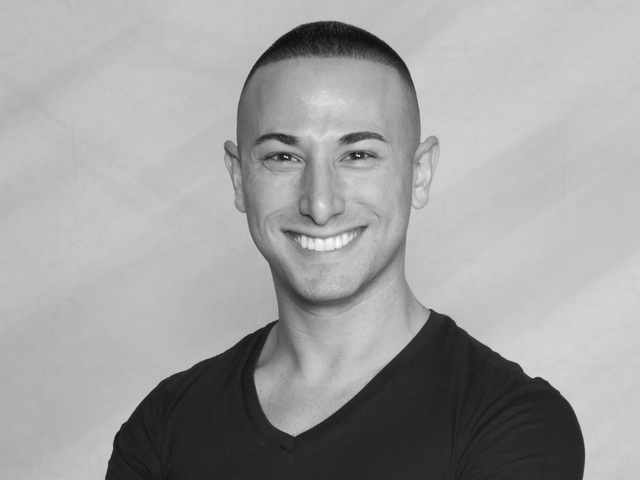
On Sundays when I was little, my dad and I would take the tandem bike and ride from our home in North Miami to the beach. Most of the time, my legs were just along for the ride and rested lightly on the rotating pedals, allowing my dad to do the hardest pedaling. With the 19-mile round trip, I preferred to save my energy for galloping through the waves. I started tap dancing when I was four, and it was always more fun to shuffle and lindy through the waves. The flapping of my feet struck the water, and resonated with even more satisfying sound than the beat of metal taps on a wooden dance floor. It was always a celebration, dancing.

While my dad and his dad were football players at my age, I was never interested in sports. There was, and still is, something magical that happens when I step out onto a stage. The feeling is a strange cross between everlastingness and fleetingness. And somewhere in between the -ness, I have always remained caught. For me – much more than the acknowledgement that dance is a language and that dance is a representation of everyday experiences – dance is much like life: some days it feels like forever, and then there comes a day when there are no more days. In this way, dance is also a measure of time. And this love for dance has helped me through many difficult times, including the loss of my mom when I was 9.

One of the best memories I have of my mom is standing on the tops of her feet as she danced around the living room. I remember the feeling of shifting from one foot to the other, the continuity of her movements and my role as her abiding partner, neither controlling nor directing the dance but a part of it nonetheless. After she passed away, I would stand in the middle of the living room, close my eyes and try to recreate our waltz. It was never the same.

My mom started me in dancing. Once a week, we’d all get in the car together and drop her off at an adult tap class in North Miami. My dad and I would then continue on to Donavan’s Bar & Grill on Northwest 7th Avenue. Donavan’s had billiards and French fries, and we’d hang out there for the hour or so of her class. Eventually, I grew curious about my mom’s tap class and began to stay and watch. This led to being enrolled in dance class myself and it was strange at first – not the same as leaping through ocean waves or whirling into dizziness at home, but I soon caught on.

I am very close with my dad, and for a few years after my mom died, he too became closer with his. Around this time, my dad signed me up for a football summer camp. I tried football, but I prayed for rain every day we had practice. Most of the other boys at Bunche Park already understood football and played it in their own backyards, much how I practiced dance in mine. I remember doing sprints – that was the one thing for which I was passable. I could run without tripping on my own two feet. Aside from one kid I befriended with a perpetually runny nose, who could also burp on command, the entire experience was pointless. I have a faint memory of my dad bringing Grandpa Lou to one of the practices (when I had been unsuccessful with my rain invocation), and as terrible as I was, my grandpa seemed far more pleased with my mediocre football than my love for dance.

A few years later, my grandpa passed away. And for another year or so after that, his ashes and wristwatch waited on the mantle. After watching the movie Around the Bend with Christopher Walken and Michael Caine, my dad and I awoke from our moratorium. We walked outside and stood on the dock behind our house to cast his ashes into the dark lake, leading into a canal of brackish water that weaves through many of the neighborhoods in Biscayne Gardens. After minutes of silence, my dad turned to me and said, “Give us a little soft shoe, son.” So there I stood holding my grandfather’s ashes in a cardboard box and tapping out “Tea for Two.” I felt highly inappropriate doing this, believing this ceremony required a more solemn reflection.

After making sure all of Grandpa Lou was out of the box and into the lake, I noticed for the first time just how cathartic dancing is for me. The tapping out of the rhythms brought me back to my best memories of my mom, and suddenly this was not so much about solemnity as it was of celebration. Celebrating life that can be over as quickly as a dance. And it is in this precious fragility I now find my place as a dance artist and choreographer.

Much like my earliest experiences with dance, I am very interested in creating dance for non-traditional and unexpected locations. We have plenty throughout Miami – secret places we drive past everyday without ever knowing of them. I was recently awarded a Knight Arts Challenge grant for a project called Grass Stains that will help commission and mentor other artists interested in creating work that highlights Miami’s hidden spaces. As I continue to change as an artist, my early memories of growing up in North Miami inform my art making and remind me of those in-between moments, of everlastingness and fleetingness, the dances that have ended and those whose music hasn’t yet begun.

One of Jean McNamee’s first memories as a child in Hollywood was of her mother, Elise La Monaca, putting her and her brother in the family’s icebox.

Her father, Caesar La Monaca, calmly assured his wife that everything would be alright, but Elise was afraid the roof would come off the house or that the rising flood water would overtake them.

Caesar peered out of their East Hollywood home on Sept. 18, 1926. In the shadows of the stormy morning he saw images he would recount for the rest of his life: Large objects floated haphazardly through his neighborhood. Cars were being pushed by powerful winds and waves through the streets, as if being driven by frenetic children on a bumper car floor.

The Great Hurricane of 1926 killed many people on its path of destruction. What La Monaca couldn’t have realized that day was that the winds of that storm would change the direction of his career and his life. It would end up pushing him towards Miami, where he would become the city’s authentic “Music Man.”

La Monaca was born in 1886 to a shopkeeper father, Vito, in San Severo, near the heel of what is the Italian boot. His mother, Giovanna, raised six children.

He was born Cesare, which he Anglicized to Caesar in America. He followed his older brother, Giuseppe, who later changed his name to Joseph, into the Banda Bianca, an Italian community band in which new band members were apprentices, studying music theory as well as instrumental techniques until they were good enough to play with the group.

After Joseph earned a flute-playing job in Ellery’s Royal Italian Band, a touring group in the United States, he found a spot for Caesar as a horn player.

The La Monaca brothers immigrated and traveled America’s booming heartland, playing concerts, festivals, fairs and any event that would hire them.

As America entered World War I, La Monaca was drafted. His expertise in music was discovered and he was made the enlisted bandleader of the Camp Kearney band, in California, while serving in the 82nd Infantry Division. During those years he transitioned from musician to bandleader.

The war wound down before he was deployed and La Monaca moved back to the Northeast, where he worked on Broadway and in vaudeville. In New York, he met a beautiful young Italian immigrant, Elise D’Addona. She was 15 years his junior but Caesar proposed on their first date and they were soon married. The La Monacas soon had two children, Caesar Vito and Jean.

Joseph La Monaca moved to Philadelphia, where he began a prestigious career as flautist and composer with the Philadelphia Symphony.

Ceasar La Monaca brought his band to Florida in 1923. With six new houses starting construction daily, developer J.W. Young’s Hollywood was exploding with residents and they needed entertaining as much as the tourists in Young’s hotel. Young hired La Monaca full-time. By 1926, Hollywood had a bandshell, an outdoor stage at the casino, and countless other venues for live music. La Monaca even formed a marching band to participate in Hollywood’s first Fourth of July parade.

Soon after the Great Hurricane, Hollywood’s economy floundered and La Monaca had to look for work elsewhere. He joined the American Legion as musical director for Harvey W. Seeds American Legion Post #29 drum corps. The corps already held a national championship. La Monaca would lead them to three more national championships and countless state championships as well as international accolades over the following 25 years.

La Monaca soon won the job producing seasonal concerts at Miami’s Bayfront Park. His free concerts became a social staple, with thousands in attendance at almost every show. He attracted guest soloists like the famed Mana-Zucca and local John Basso. He introduced thousands of music fans to classical songs he arranged from memory. His bands also played popular songs and even some of his own compositions. La Monaca wrote several songs about Miami.

He was always teaching music and bringing good musicians together. He incorporated members of the 265th Coast Artillery band of the Florida National Guard band, where he was the bandmaster, and students from the University of Miami, into his shows.

During the Great Depression, La Monaca, through the Works Progress Administration (WPA), was able to get unemployed musicians to teach music to his drum corps.

It is impossible to count the thousands of young men and women La Monaca trained over the years. He and Miami Sheriff Thomas Kelly, a fellow Legionnaire, launched the Miami Boys Drum and Bugle Corps for younger boys. Even after they retired from the marching field, they helped guide the development of the Miami Vanguard and Legion of Brass drum corps. La Monaca taught Boy Scout drum corps in Miami and Hollywood. He organized the predecessor to the Greater Miami Youth Symphony.

Daughter Jean McNamee recollects one Orange Bowl parade in which her father marched the route five times. As soon as he would get to the finish line, a police escort would take him back to join another of his marching bands or drum corps.

From 1926 to his death in 1980, La Monaca’s bands were everywhere in Miami: His band opened the horse track at Tropical Park in 1931 and played there and at Hialeah race track regularly. In 1933 his band was at Bayfront Park during the attempted assassination of President-elect Franklin Roosevelt.

During World War II, La Monaca was too old to serve. He was forced to retire from the military. He joined the all-volunteer Florida State Guard and helped the sales of war bonds.

He worked tirelessly in the industry that brought him joy and success. He was a musician, composer and a respected conductor. La Monaca, an Italian immigrant whose life began under adverse conditions, arranged his way to the American dream as Miami’s Music Man.

In 1953, my father realized his dream of many years when we moved from Allentown, Pa., to South Florida.

I can remember stepping off the train at the old Florida East Coast Railway station in downtown Miami in the middle of August. When the blast of heat hit me, all I could think about was how I missed my hometown, my friends and my dog that I had to leave behind. When I entered Ada Merritt Junior High School, it looked like a cardboard school compared to the sturdy brick school I attended back home. It was a difficult adjustment, but before long I made new friends and became acclimated to the heat and mosquitoes.

We lived on Southwest Sixth Avenue and my brother Jim and I would take frequent walks to explore our new environment. We often walked by the two-story frame homes from the late 1800s that lined Brickell Avenue. Close by was Miss Harris’ School, a private school for girls. My only regret is that I never took photos of these historic homes.

One day, my brother and I bicycled across the Rickenbacker Causeway to the end of Key Biscayne to explore the old Crandon estate. There was very little left, but it was exciting to view the remains of this home, as well as Key Biscayne. We could hardly walk for a few days after that long bike trip. Another time we tried to “enter” Vizcaya via the bay side, but didn’t get far past the thickets.

Our family moved to Coconut Grove a few years after coming to Miami. Our home was on a street that ended at the bay. There was a large empty lot that extended from behind our home to the bay. This land has since been developed. Back in the ‘50s, we had large land crabs crawling all over our back yard and we could get a clear view of the bay from our house. I used to enjoy sitting on the seawall at the end of our street watching the boats go by. From the seawall, I could see Fair Isle (now Grove Isle) before it was developed.

When we were teenagers, we used to speed down “thrill hill,” as Darwin Street in Coconut Grove was then nicknamed due to its elevation. It wasn’t much of an elevation but compared to the rest of Miami, it was a hill. Being a short hill, we had to quickly brake at South Bayshore Drive. Just a few feet down the street was Jensen’s Restaurant, which later became Monty Trainer’s.

Coconut Grove was a sleepy, artsy town in the ‘50s. A highlight of my teen years was going to see Elvis Presley at the Olympia (now Gusman) Theater in downtown Miami. The theater was filled with screaming teens and, I am embarrassed to admit, I was one of them.

After graduating from Miami High, I entered the University of Miami. The campus was different from the way it looks today. Everyone congregated at the “Slop Shop,” along the patio by the lake. Girls were forbidden to wear Bermuda shorts to class and many wore them under their trench coats. There was always a party going on at one of the frat houses that lined the campus, and the lion in front of PKA frat house was constantly getting attacked with paint. On Friday afternoons, the place to go was the Campus Canteen, which is now Taco Rico on U.S. 1. One afternoon, Coral Gables police officers pulled up to the Canteen with a bus to haul away all the students who were caught drinking under the age of 21.

Miracle Mile and Lincoln Road were THE places to shop before Dadeland was built, with many wonderful stores to choose from, like Judy Leslie’s and Stow on the Wold. Popular restaurants included Chippy’s and Jahn’s Ice Cream Parlor. Also, Tyler’s Restaurant on Ponce de Leon Boulevard, where the chicken with honey was always a hit. A few blocks down on Coral Way was Dean’s Waffle Shop where we would go for a late-night snack after a movie. At Dean’s you always saw someone you knew. The Holsum Bakery coffee shop was another popular spot to stop for coffee and glorious French doughnuts.

In the ‘70s, the favorite sport among teens, including our oldest daughter (unknown to me), was to sneak into the abandoned VA hospital – now the Biltmore – and climb up to the tower. This was a challenging and scary prospect as there were no lights in the building and the abandoned operating tables and gurneys added to the eerie atmosphere. I learned of these exploits years later when my daughter knew she would be free from punishment.

My husband and I have been residents of Coral Gables for 45 years. We remain ever grateful for the privilege of living and raising our children in this beautiful city. Our daughters now live in New York but loved growing up here and spent much of their youth playing tennis and swimming at the Coral Gables Country Club. They have fond memories of J. Paul Riddle, an aviation pioneer and founder of Embry Riddle Aereonautical University, who was a mentor and tennis coach to my older daughter and so many of the youngsters who frequented the tennis courts.

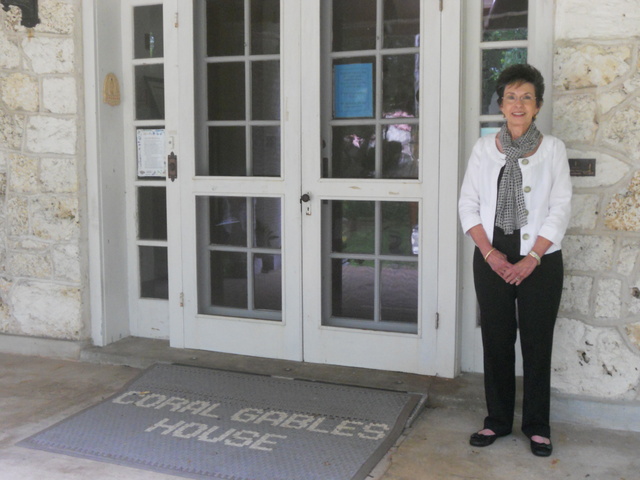
As a docent at Merrick House, I have learned much about our city’s history and the debt we owe to its founder and creator, George Merrick. It is always a good feeling to drive through the arches and come home to this beautiful tree city. There is nowhere in South Florida I would rather live.

My father met and married my mother in 1929 and I arrived in 1930. Her mother came to Miami from Cleveland, OH, in 1923 to begin a new life. She opened a tropical fruit stand on the front porch of her coral rock house at Northeast 26th Street and Second Avenue.

The fruit was purchased early in the morning at the farmer’s market on Northwest 12th Avenue and 20th Street, and the market is still there. She then became a real estate broker and, after many years of buying and selling real estate, she purchased a small hotel on Miami Beach. She became a civic leader and was presented with a gold key to the city by the mayor.

When I was seven years old, I watched the store as I ate my nickel ice cream cone and observed the trolley cars go by on Second Avenue. On the weekends, my family and I took the trolley car that ran down the middle of the MacArthur Causeway to Miami Beach. We went swimming in the ocean and built sand castles. Though the trolley is long gone, now there is talk of bringing it back to run once again. As the saying goes, “Everything old is new again.”

I attended Beach High, where many of the students were from families that were either very rich or very poor. However, at school, everyone played and worked together and we had a great time. Latin music was the rage and many of the boys had Cubavera jackets and suede shoes.

The Lindy Hop was a popular dance, and Beach High’s big patio was the place where we had wonderful dance parties. Sports were a big part of high school life. I played tennis and won the Beach High tennis trophy. I was initiated into the B club and joined a fraternity with Irwin Saywitz, who became an owner of Joe’s Stone Crab restaurant.

After graduating, I attended the University of Florida, studying architecture with Kenny Treister, who later built the Mayfair Center in Coconut Grove. We were members of the ZBT fraternity and one day made a bold decision to write to Frank Lloyd Wright and ask him to design a fraternity house for us. He did — it was brilliant.

Unfortunately, the fraternity could not afford to build it. Wright came to Gainesville for two exciting days to present the plans and to meet and lecture with all the young aspiring architects and the faculty. That was the highlight event of the school year.

After graduating, I entered the Navy Officer’s Candidate School. This was the time of the Korean conflict and all boys over 18 had to serve. After serving three and a half years, I was honorably discharged as an LTJR (junior lieutenant). During this period I was on an aircraft carrier stationed in the Mediterranean. My next tour of duty was as an aid to the commander-in-chief of the fifth fleet in Norfolk, VA, where I greeted all of his visitors.

After my discharge, I returned to my home in Miami, where I began my career as an architect with Bob Bleemer, a high school friend. We opened a very small office on 40th Street in the Design District and were successful. It was a time of construction and growth in Miami and we were a part of it.

We borrowed money and built an office building in the neighborhood and eventually employed 35 designers and architects. We became well known and designed more than 40 condominium interiors in Miami, plus many projects around the country and in South America. Miami grew and we grew with it.

After 20 years, I partnered with Pepe Calderin and we became Levine Calderin & Associates. We won numerous awards.

I received a lifetime achievement award from the American Institute of Architects, and then finally retired to spend time as president of the American Foundation for the Arts, which I founded. In the 1980s, we created an exhibition space in the Design District on 40th Street and Second Avenue. This was a period when Miami only had a few galleries and a small museum of art, and The American Foundation of the Arts played a major role in Miami’s developing cultural life.

We helped bring numerous artists to Miami for exhibitions and lectures, among them Christo who draped the islands of Biscayne Bay in pink and pop artist Alex Katz. We also gave many local artists their first show and produced beautiful catalogs for each exhibition.

During the creation of the museum, I learned about the artist Purvis Young, who lived in Overtown. The Miami Herald ran a big story with a color picture of “Goodbread Alley” where Purvis lived. The article said that many of the wooden homes and fences in the neighborhood were to be demolished, including paintings that were nailed to the houses.

The next day, I went to “Goodbread Alley,” met Purvis and purchased 80 of his paintings. Purvis’ work is now in many museums and private collections throughout America.

The city has grown and today has many outstanding cultural institutions. It is a vibrant, cultured, and fabulous place to live. It was wonderful to be a part of the growth of the Magic City.

My mother was born in Tampa in 1895. Shortly after her birth, the family moved to Punta Gorda. In 1898, there was an offer of free land for homesteading in Dade County.

My grandfather and grandmother gathered their brood of six and started out in a horse and wagon. Their route took them north of Lake Okeechobee, then to West Palm Beach and then south along the coast to Miami.

This arduous journey across unpaved prairie and forest took three weeks. The 20 acres they homesteaded were between Northwest Third and Fourth avenues and 11th and 13th streets in what is today’s Overtown.

My mother only went to school through the third grade. In 1904, one of her classmates was a little girl named Bessie Burdine, whose father owned the general store. My mother’s teacher at the time was a young woman fresh out of teachers college, Lillian McGahey.

Forty-two years later, Miss Lillian taught me math at Miami Edison High. Her brother, Ben McGahey, went on to own the largest Chrysler-Plymouth agency in the county.

My mother married in 1911 at age 16. My grandparents and their children lived on the little farm for 18 years. My grandmother sold it in 1917 for $1,800, or $90 per acre.

My father came to Miami in 1923. In 1926, the great hurricane struck with massive loss of life. The Prinz Valdemar, an iron-hulled schooner, was picked up by the storm surge and deposited on the east side of Biscayne Boulevard around Fifth Street. It was retrofitted with large tanks and served as the county’s aquarium for the next 25 or so years.

In 1927, my mother was widowed. Her husband was lost at sea bringing back a load of Scotch from Bimini. She was left with two young daughters and no marketable skills. My father was her husband’s best friend, and they were married in 1929. I was born in Victoria Hospital in 1930.

My father and mother’s first husband worked for the biggest bootlegger in the Southeast. He went on to become the mayor of Miami Beach. My father continued to work for him after the repeal of Prohibition. We lived in a succession of houses. The one on Michigan Avenue was quite elegant as well as a house on Meridian Avenue that had a tennis court.

Although my father speculated at times in buying and selling real estate, we never owned a home. As the Depression deepened, our family lived in houses that were more modest. That’s a nice way of saying we lived in one dump after another. (My mother used to joke that we moved every time the rent came due.)

In 1941, when I was 11, our family moved to the Edison Center area. I enrolled in the sixth grade at Edison Elementary and graduated from Edison High in 1948. When I was 12, I had a Miami Daily News route.

One of the boys who worked out of the same station was Ralph Renick. Ralph had a special bicycle. As I recall, it was made by Rollfast and had a small front tire that allowed it to accommodate a built-in basket where Ralph could put his papers for delivery. The rest of us had to make do with a wooden basket placed on the handlebars of our regular bikes that made them highly unstable when loaded with papers.

His brother Dick and I were good friends. Ralph and Dick attended St. Mary’s High School, about 10 blocks north of Edison High. During high school, I used to deliver 250 Miami Heralds every day before school.

One Sunday in November 1944, I was riding my bike on 79th Street on my way to do some fishing on the causeway. I stopped at the railroad tracks for a very long troop train to pass.

A 1942 Lincoln Continental pulled up alongside of me. I looked in the back seat and there was a little man who seemed to be swallowed up in a camel’s hair overcoat. He leaned out the back window and, in a rasping voice, said, “How ya doin’ kid?”

I saw the scar on one cheek and knew immediately who it was.

I replied, “Doing fine, sir.”

It was Al Capone.

In 1948, I went to work for the telephone company, and in 1950, I spent a year as an installer on Miami Beach.

Most of the mansions had fairly elaborate multi-line systems that needed constant maintenance due to the saltwater. The Firestone Estate was located where the Fontainebleau is today, just north was the Dodge Estate, where the Eden Roc now stands.

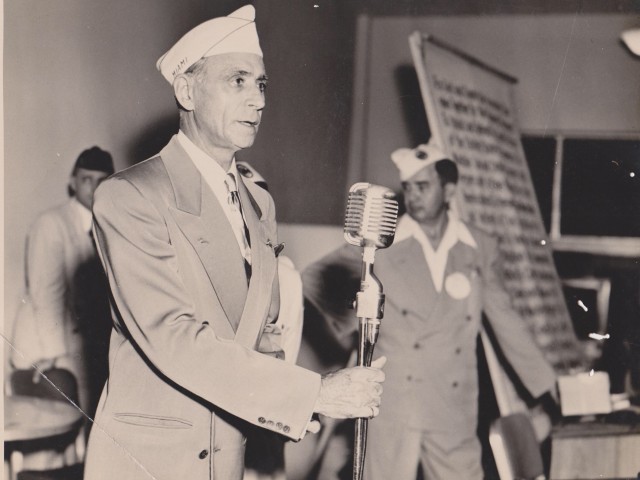
During the summer months, the hotels closed due to lack of business and the fact that many did not have air conditioning. The American Legion scheduled its convention in October 1948, which necessitated the early opening of the hotels housing delegates.

I was a helper with a PBX installer-repairman when a call came in to proceed immediately to the Roney Plaza Hotel. When we arrived, we were ushered into the Presidential Suite. After being frisked by Secret Service, we were instructed to hook up the “hot line” for Mr. Truman, who was the featured speaker for the convention.

Before wireless technology, the president required a direct land line to Washington wherever he went. As I sat on the floor installing the telephone set, I glanced up and saw a pair of sturdy legs attached to a pair of sensible shoes standing next to me. It was Mrs. Bess Truman. She was a lovely and gracious lady without a trace of pretension who introduced herself to all those present, both great and small.

In 1951, I joined the Army. In reality, I joined one day before I was due to be drafted. In November 1952 at Camp Stewart, Ga., our unit was out in the swamp conducting its Army Training Test before deployment overseas.

During mail call, the company clerk said, “Telegram for Lt. McCormick.”

Back then, telegrams were usually the bringers of bad news. The wire was from my father. It read, “After 27 years, we finally did it.”

He went on to give the score for the Edison-Miami High annual Thanksgiving Day game. It was the first time Edison had won in more than a quarter century.

Telegrams went out all over the world that night.

Richard H. McCormick, DVM, was born in Miami’s Victoria Hospital in 1930. He graduated from Edison High School in 1948 and Auburn University in 1965, and practiced veterinary medicine in Miami for more than 45 years.

Translate »