fbpx Skip to content
Named Best Museum 2022 by Miami New Times

This year marks two important events in our family’s life: the 50th anniversary of our arrival to Coral Gables and the 50th anniversary of the company my parents founded in Miami.

This was my dad’s second start in the auto parts business – as a teenager he worked in the automotive field in 1938 in Cuba.

When Fidel Castro declared himself a Marxist in 1960, my parents, Jose Ramon and Dolores Hernandez, realized it was time to send my sister and me to the United States to be brought up in the freedom they cherished. At that time they had five auto parts warehouses, the American Motors dealership, and several gas stations in Cuba.

We lived in Tampa with our aunt and grandmother for nine months.

On May 13, 1961 (Mothers Day), my parents surprised us by arriving in Tampa, never to return to Cuba.

We drove across Tamiami Trail in a green Rambler, with a U-Haul in tow. My parents, my sister Teresita, my grandmother Teresa, my aunt Carmen and I would see for the first time the city that we would forever call our home, Coral Gables.

My parents had friends who were living in the Gables. Our new home was a small house at 109 San Sebastian, off Douglas Road. The house had a screen door that was only closed before going to bed. Our bikes and toys were left on the front lawn and nobody thought of stealing them.

Thanks in part to his good credit with American companies, my dad was able to start a small auto parts warehouse in Miami on Flagler Street, AAA Million Auto Parts. It was a couple of blocks away from Miami High, and since we had a water fountain, all the kids who walked to school were always welcome to stop inside for some air conditioning and a cold drink.

As a child in the 1960s, I remember a different Coral Gables. The summer movies at the Coral and Miracle theaters cost a quarter, popcorn was a nickel and we got to see two movies. We would go to Miracle Mile, without adult supervision. I remember the old Woolworths, McCrory’s and Jefferson’s, where we were rewarded for good grades. We spent a lot of time at the Coral Gables Country Club, The Big Five or the Westbrook Country Club.

On the days we had off from school, my sister and I would help out at the business, a pattern that continued with our own children in the 1980s, and hopefully will be repeated with my granddaughter, Sofia. We all still enjoy living in the City Beautiful and working in the family business.

I went to a new school, Dade Demonstration Elementary on Douglas Road (now the English Center), where we watched space launches on a TV in the library. Elementary school lunches were only a quarter. Ponce de Leon Junior High was a very different place. I remember the entire school going to the field and listening to a bugler play Taps while they lowered the flag. We didn’t know what had happened until the principal said over the microphone that President Kennedy had been shot and died. This was something I will never forget.

When we went to Coral Gables High, all the girls had to wear dresses since slacks were forbidden. A full lunch cost only 35 cents. While I was a sophomore at Gables High, the schools were integrated for the first time. The school day began with the Lord’s Prayer and later with a “moment of silent meditation.” Times sure have changed.

The University of Miami, where my sister and I attended, cost about $3,000 a semester, a lot less than what a private elementary school costs now. There were still two sets of water fountains and bathrooms everywhere, a remnant of the segregation era.

Five years ago, at my father’s funeral, we were surprised to meet many people from all walks of life who came to pay their respects to a man who had done them many favors.

I remember a homeless man standing in the back. He said he had walked many miles to see my dad for the last time. Unbeknownst to us, my father had bought him lunch for over five years.

My mom, Dolores, is 90 and comes to the business every single day. Now as we celebrate the 50th anniversary of my parents’ business, we look back fondly on our time in Coral Gables and look forward to making the city as nice a place for my grandchild, Sofia, and my nephew, Joseangel.
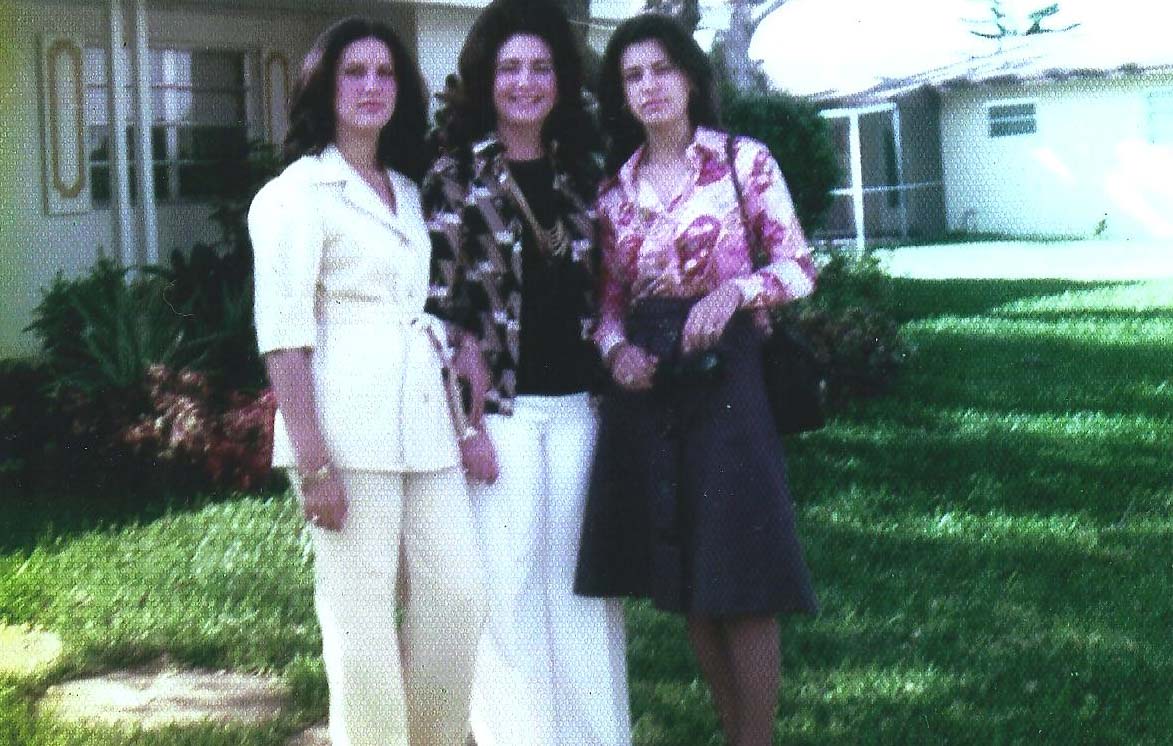
On June 29, 1973, we waited all day long for the movers to come for our furniture. At the time, I lived in an apartment in Flushing, New York, with my family. I was 16 and had just completed my junior year in high school. We were moving to Miami, where every Cuban living up North dreamed of living.

The movers finally arrived late in the afternoon. Although everything was packed, it seemed to take an eternity for the truck to be loaded with all our furniture and boxes. Finally, the apartment was empty, and my father, grandparents, older sister and I drove off in our Chevrolet station wagon. It was nighttime, and my sister and I sat in the front with our father singing along to songs playing on the radio so he would not fall asleep. We stopped in Washington, D.C., for the night.

Sometime in the afternoon on July 1, we drove up to the front of our new house in Kendall. My mother and younger sister were there waiting for us with members of the Cosculluela family, lifelong friends who were instrumental in our move to Miami. We could not believe our eyes. This four-bedroom, three-bathroom house with a pool was to be our home. We had arrived in paradise.

In the summer of 1973, Miami was not the metropolitan city it is today. Kendall ended at the turnpike. Dadeland was anchored by Jordan Marsh and Burdines. Across Kendall Drive was the Dadeland Theater, where we watched the latest James Bond movie, Live and Let Die.

Our mother took the Palmetto Expressway every morning to her job at the Flagship Bank on Lincoln Road in Miami Beach. She and her fellow co-workers would take the trolley on Lincoln Road at lunchtime. There was a Burdines on Michigan Avenue and a small Saks Fifth Avenue store behind Burdines.

In Kendall, there was a Jefferson National Bank on the corner of 97th Avenue and Kendall Drive where my grandfather opened his first checking account.

Miami Dade College was much smaller. My older sister attended college there and worked part-time at Jordan Marsh in Dadeland, where she was not allowed to wear pants to work. Florida International University was relatively new, and all college-age students whose parents could not afford the University of Miami attended Miami Dade for the first two years of college and then the last two years at FIU. It was not yet the four-year university it is today.

My younger sister and I attended school at Loyola on Coral Way, east of 107th Avenue. Emilio Cosculluela, who passed away three weeks after we moved to Miami, was the owner of the school. I was a senior; my sister was in sixth grade. My senior class consisted of 30 boys and girls. Most of my teachers were Cuban, and some taught their classes in Spanish.

My second day of class, I stayed home from school, throwing up. I asked myself, “What was I, a New York City girl who rode the bus to her all-girl Catholic high school, who hung out with American girls smoking cigarettes after school, and who rode the subway into Manhattan, doing in Miami, Fla.?”

I did go back to school on the third day. I wore my uniform – plaid skirt, white blouse, knee socks and saddle shoes – and rode in the car with my father, who worked in the school, and my younger sister. I soon got used to my classmates speaking “Spanglish,” the boyfriend/girlfriend couples who spent the day glued to each other like old married couples, and the math teacher who taught trigonometry in Spanish. I even taught some of my new friends to smoke.

It took me a long time to think of Miami as home. It is now 38 years since our arrival in sunny south Florida. I graduated from Loyola, Miami Dade, FIU and the University of Miami. I met my husband here. He moved to Miami from Chicago the summer before I did. We were married in Little Flower Catholic Church 29 years ago. Our children were born at Baptist Hospital. Our son will be married next summer, and our daughter is coming back after attending culinary school in Michigan. We live in the village of Kendale, not far from our first neighborhood.

I sometimes wonder what my life would be like had we stayed in New York. I still love to visit the city we lived in when we first came from Cuba in August of 1961. I prefer cold weather and snow to the heat of Miami summers, but Miami is my home. I root for the Miami Heat and the Miami Marlins, and if I liked football, I would root for the Miami Dolphins, too. Miami is a very different city in 2012. It is a city I have grown to love.

In December 1945, I got my first glimpse of the palm trees, beach umbrellas and hotels on Miami Beach. After six years of being exiled in England, I managed to get passage on a tramp steamer in Norway so I could join my family in Mexico. We had all been dispersed from our home in Germany by the Holocaust.

The North Atlantic was cold and miserable, but eventually we rode along the coast of South Florida in the Gulf Stream. It was delightfully warm, and I spent most of the days in my swimsuit on the captain’s bridge, looking at the coastline with his binoculars. That’s when I fell in love with this area.

At the time, I was “stateless” and knew that I could not get into this paradise. I was reunited with my family in Mexico after two weeks in Cuba. I lived in Mexico City with my parents and two sisters for 2 ½ years and learned to speak Spanish. My sisters immigrated to New York City, and I planned to join them there.

When I did get my U.S. visa, I looked at a map and concluded that my dream land (South Florida) was almost on the way to New York. I decided to see if I could get a job and stay in Miami. At age 23, I arrived with $200 and a suitcase full of out-of-fashion clothes. I landed a job as an English/Spanish secretary, even though my first languages were German and French. My stay in Mexico had paid off.

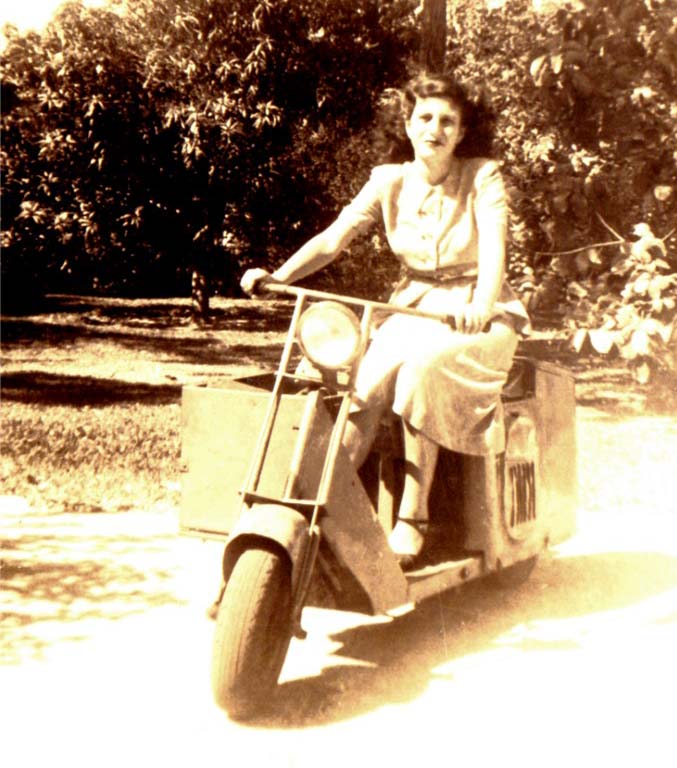
I rented a garage apartment at Northwest 76th Street off Seventh Avenue. I rode the bus to my job at the airport. When the bus route was discontinued, I bought a motor scooter. There were no expressways, so I could putt-putt my way to the airport every day. My only problem was going to Hialeah via the 103rd Street overpass. The scooter barely made the “hill.”

Every weekend, I drove over the 79th Street Causeway to the beach. The police stopped me quite often. I was terrified because of what I had experienced as a Jew in Germany. Eventually, I learned that the Miami police were just being friendly and wanted to chat with a young woman on a motor scooter. I saved my money, and after a year I bought a used car.

I worked for a freight-forwarding company and managed it for years until I finally got the title of manager. I was one of the first women in that position. My name is now on a black marble monument at the entrance to the Port of Miami. The monument is dedicated to the pioneers of the freight business in Miami.

When I got married, I was glad to change my name from Wiener to Hoffner. I was originally from Hamburg, Germany, and didn’t want to be known as a hamburger or a wiener. I remember a neighborhood restaurant called Jumbo’s on Northwest Seventh Avenue. I believe it still exists. We liked Junior’s at 79th and Biscayne.

Occasionally, my husband and I went to Tropical Acres in Fort Lauderdale. That was a very special treat. Our shopping area was Little River. There was a nice restaurant called Watson’s and, of course, the movie house. For movies, we also went south on Biscayne Boulevard to the Mayfair.

At times, I shopped downtown. I loved Burdines and Hartley’s. Woolworth’s and Grant’s were wonderful dime stores. My greatest experience in downtown Miami was going to the old federal courthouse. That is where I became a U.S. citizen in 1951.

One thing that detracted from my chosen paradise was racial prejudice. The rule was “separate but equal,” but life was definitely not equal. My husband, who was not Jewish, was shocked to find that he could not take me into certain places that were “restricted” – that meant no Jews or blacks.

He also told me that when he was working as a tile-setter he had a black helper. The helper was just as skilled as he was, but he could not join the union. He did the same work for less pay. I am happy to say that these injustices no longer exist.

In 1963, I went to work in the cargo department of British Airways. During the 13 years that I worked there and in retirement, I enjoyed the airline travel privileges to see the world. After retiring, I volunteered at the Holocaust Center at FIU, transcribing the life histories of survivors and liberators.

I now live in a condominium overlooking Biscayne Bay and look at Miami Beach from the opposite side. I walk every morning and enjoy the sunrise. Sometimes I swim in the pool. When I first gazed at the beautiful shore so many years ago, I couldn’t imagine what a wonderful life I would have. I still love it and feel so lucky to be here.

My Miami memories are not only vivid in my mind, but they are also dear to my heart.

My family and I moved from Orlando to Coral Gables in 1949. My dad, Rabbi Morris A. Skop, was the first rabbi in the young Jewish community of Coral Gables. Our first home was an old, scorpion-infested abode on Minorca Avenue near Le Jeune Road.

Because of my dad’s religious convictions, my brother, Eli, my sister, Shirah, and I were forced to attend a private Jewish academy in South Beach. During my fifth and sixth grades, I attended Coral Gables Elementary. I loved assimilating with my new non-Jewish friends and became quite popular.

My dad’s first congregation was called the Coral Gables Jewish Center and was on Palermo Avenue. Unfortunately, anti-Semitism was rampant at the time, and we constantly received phone calls imploring us to “Go back to the beach, Jew.” On one memorable Sunday while my friend Arnold and I were riding our bikes, we discovered a misfired stick of dynamite on the temple’s front lawn.

On Saturdays, our mom would pack us a lunch and we would spend the day at the Miracle Theater watching movies. My dad, who was a big humanitarian, assumed the position as a chaplain at the then-Pratt Veterans Hospital, which later became known as the Biltmore Hospital. He was also a chaplain at Homestead Air Force Base. We finally moved into a lovely home on Riviera Drive near Coral Gables High School.

My memories of restaurants include Jimmy’s Hurricane drive-in on Bird Road, The Hot Shoppes, The Red Diamond, The Big Wheel, The Studio, Shorty’s, Old Hickory, The Pub, Pizza Palace, King Arthur’s Court, Black Caesar’s Forge, Joe’s Stone Crab, The Merry Go Round, The Varsity Inn, Royal Castle and many more.

We would swim at the Venetian Pool, Crandon Park, Matheson Hammock and Tahiti Beach. Our mini vacations included stays at The Americana, The Roney Plaza and The Fontainebleau.

My college days involved attending the University of Miami, where I graduated cum laude as a pre-med student. Our social excursions then included being guests at the Sir John Hotel, where I met a young Cassius Clay, later to become Muhammad Ali.

I recently had the pleasure of visiting a dear friend, Jimmy Pontera, who lives next door to O.J. Simpson and who helped my brother and me reminisce and rekindle our past.

Those were the days, my friend.

Miami, I have seen you grow since 1948. You have become an internationally important city with events that are known worldwide, restaurants with famous chefs, busy highways, theaters with spectacular shows and a mix of cultures.

My first stop in Miami was 64 years ago, 1948, on my way from Colombia, South America, to school in New Jersey. As I walked down the stairs of the propeller airplane, I was surprised to see how tiny the airport was – just a small hangar – but I was impressed with the beautiful ocean and with the stunning white buildings of Miami.

My second trip to Miami was in 1949 when I came to see my parents, who were on their way to Israel. We stayed in a hotel in downtown Miami on Biscayne Boulevard, where we walked the wide avenue and watched the elegant palm trees swaying with the wind. We sat on benches and fed the seagulls and pigeons.

Seeing the ocean in Miami was different from seeing the ocean in Colombia, surrounded by mountains. I returned to school in Carmel, N.J., after my parents left.

My next visit to Miami was in 1952, when my husband, Bob, came on a business trip. I took the opportunity to stay with my uncle Abraham and his American wife, Adele. They lived in a nice neighborhood with impressive shady trees on Pine Tree Drive in Miami Beach.

It was exciting for me because my uncle and aunt took me to the ice cream parlors at the Miami Beach hotels, which in those days were very popular at night. We would go for a snack, for coffee or for one of the splendid ice cream sundaes. The Sans Souci Hotel was their favorite, and I remember the waitresses would pass by with their trays piled high with tall ice cream sodas and sundaes, topped with whipped cream, sparklers or flags.

Our son, Alan, was born in Colombia in 1953, and when he was 6 months old, we stopped in Miami on our way to New York. We stayed in a small hotel called the Fairfax, directly across from the ocean because we couldn’t afford oceanfront. It was located on 18th Street near Lincoln Road. I was impressed with its kitchen and diaper service, and the famous restaurant Wolfie’s was nearby.

At night, we would take walks to Lincoln Road, which at the time was lined with very elegant and fancy ladies’ and men’s boutiques, including Saks Fifth Avenue, two cinemas and a European-style drugstore.

Our fourth trip to Miami was in 1954 and included Bob, our son, Alan, my parents, and Carlina, our nanny. We would swim in the morning and go to Crandon Park, where a little train would take us around; it was one of Miami’s favorite amusements at the time.

Then, during our next trip, we stayed in a hotel on 14th Street called the White House, which was on the ocean and had a wide, white-sand beach with palm trees. By then, we were hooked on Miami, and we came back every year in the summer, taking advantage that our daughters were now in an American school with three months of summer vacation. We found a motel called Beau Rivage, at Collins Avenue and 95th Street, which offered the so-called American Plan, including breakfast and dinner. We stayed in first-floor rooms called lanais, which had sliding doors directly to the pool. This was a great convenience for us, as the kids could easily come in and out whenever they wanted.

The Beau Rivage also had fantastic nighttime activities, like barbecues with hot dogs and hamburgers by the pool and water races for both kids and adults. Back then, Bal Harbour did not exist, and at night we would walk to Surfside to go to one of the drugstores to buy comic books and ice cream.

A few years later, we bought an apartment in Hallandale at the Hemispheres. By then, the kids were grown and going to universities. I recently asked my grown children which Miami memories were their fondest, and, without hesitation, all three children said the Fun Fair, a simple, rustic, open-air park-like place on the 79th Street Causeway. The wooden picnic tables faced an open kitchen where pizza, burgers, hot dogs, corn on the cob soaked in butter, French-fried potatoes, beverages and ice cream were sold.

After dinner, the kids would go inside into an air-conditioned room that had pinball machines, Skee-Ball machines, photo booths and a fortune-teller. We all had grand times there. It was one of Miami’s landmarks.

Miami, now my three children and I have been living here for decades, and we have seen you grow. And as my own family expanded and I became the proud grandmother of six grandchildren and two great-grandchildren, we also watched you grow, knowing how lucky we all are to live in this beautiful paradise.

We moved to Miami in 1947 from Yonkers, New York.

My dad had a breathing problem and the family doctor told him he needed to move to Phoenix or Miami. Since my Aunt Peggy already lived in Florida, my parents, Silvia and Herb Haber, decided to move to Miami.

After a brief stay at Aunt Peg’s, we bought our first home at 64th Avenue and 25th Terrace. The house was a two-bedroom, one-bathroom stucco house with a carport. It seemed that back then the town stopped at 67th Avenue and the Everglades started.

Dad had a hard time finding a job and was turned down by the Coral Way Cafeteria for a waiter’s job because he was not black.

He ended up working for Star Cleaners, which I loved because he would take me with him on his route on Saturdays, and part of his route was the University of Miami athletic dorm.

The UM players were not allowed to have pets, so we often came home with animals. Once we came home with a spider monkey (that set the next door neighbor’s house on fire), snakes and other animals.

My older brother, Paul, decided that he would go into the snake business and I would help. We caught coral snakes and water moccasins and sold them to Mr. Hess at the Serpentarium.

My parents went into the children’s clothing business in 1950.

Their store, the Miracle Children’s Center, was originally at 290 Miracle Mile, next door to the Miracle Theatre. They then moved to 212 Miracle Mile.

The store was in that location for 10 years until Sears opened on Douglas Road and Coral Way. Sears sold many of the same products for less, and as a result, in 1960, my parents closed the store and went into real estate.

I remember going to the Coral Gables bus terminal and the signs at the drinking fountains delineated, “for colored” and “for white.”

I remember driving past Arthur Godfrey’s Kenilworth Hotel, where the sign read, “No dogs or Jews Allowed.”

My brother and I were thrown off the bus once because we sat in the rear of the bus, which was not for white folks and when we refused to move the driver made us get off the bus.

My family has a great history of music. My mother played piano with the New York Philharmonic as a teenager and we always had a piano in the house.

My brother (nine years older than I) played jazz piano and I started playing drums when I was 4. I began playing at the Coral Gables Youth Center with two kids from junior high, Bob Rauchman and Elliot Midwood.

As I improved, I was lucky enough to get a music scholarship to the new Miami-Dade Junior College on Northwest 27th Avenue.

I met my friend Don Mattucci, a saxophone and flute player, who plays with the jazz quintet I play with today.

He was in the first CC Rider band led by Wayne Cochran. I played drums at the Cadillac Hotel on Miami Beach, The Swinging Door on 27th Avenue just north of Coconut Grove, The Flick by UM, and many other clubs and coffee houses.

I have worked in broadcasting here since the late 1960s. Miami has grown and changed from the small town it was in the ’40s, ’50s, and ’60s.

My kids, Laura and Lon, have moved from South Florida and I still live here with my wife, Ana Marie, and her children in Saga Bay.

Jane Wilson – and countless others who called Miami home from the late ’40s through the mid-’80s – recalled the sweet, heady aroma of baking bread serenading the senses in South Miami.

Seth Bramson, a leading chronicler of Florida history through his more than 20 books about the region, saw his collection of Florida East Coast Railway memorabilia grow after he shared his tales of local lore with readers.

Haitian activist Gepsie Metellus, executive director of Miami’s Haitian Neighborhood Center, found new voices for her cause after she detailed her deepening connection to the city in her Miami Stories feature.

These are just some of the more than 100 people who have written about growing up in South Florida for the popular Miami Herald Neighbors column, Miami Stories, since its inception in May 2009. The weekly feature is a collaboration by HistoryMiami, historian Arva Moore Parks, Miami-Dade County Public Schools, National Conference on Citizenship Chairman Michael Weiser and The Miami Herald.

Miami might only be 116 years old since its incorporation but its history is rich and vibrant. This is a place where change is the only certainty. Books and photographs capture the places and faces along the way but add personal memories and the stories really begin to come alive.

“It’s your own story, it’s your own life,” says Parks, acting director of the Coral Gables Museum. “When I used to teach history they’d say, ‘I hate history!’ I’d say, ‘What don’t you like about yourself?’ I’d always have them tell me their life history – from their parents to their grandparents. When they would do so, I’d say, ‘That’s your history.’ ”

Personal remembrances, through oral history, are particularly valuable, Parks says, because it gets to the truth.

“If you are watching something happening it tends to be accurate, they are eye-witnesses.”

And what a set of eyes we have.

‘Miami is for me’

Metellus opened her story in February by recalling an old tourism ad popular around the time of television’s pastel-colored crime drama, Miami Vice: “When I arrived in Miami in the early 1980s, the slogan ‘Miami Is For Me’ was ubiquitous. As someone who had just arrived here from New York, I not only wondered what the buzz was all about, but I did not believe for one second that it could ever apply to me.”

Turns out Miami was for this reluctant arrival.

Metellus, 50, quickly immersed herself in the Haitian community and its issues. The community, she recalls, was recoiling from “the abuses and neglect of the Duvalier dictatorship,” not to mention a period when the Centers for Disease Control and Prevention identified being Haitian as a risk factor for acquiring the HIV virus.

Metellus worked in the fields of research, education, government and community work, with a goal toward empowering and enriching those who had arrived from the island. Today, she’s the executive director of Sant La, the Haitian Neighborhood Center.

Writing her story, she said, was purposeful.

“Miami is a place for new beginnings of so many people and that’s the magic of Miami. I had to sit down and write this story,” she said. “I hope it encourages other people to follow suit. My work is all about making sure our immigrant population becomes fully integrated and becomes self-sufficient, can prosper and open doors for future generations of immigrants from Haiti.”

The feedback she received after her story ran still touches her.

“It was most exciting. People would say, ‘I didn’t know those details. I didn’t know you met your husband in Montreal. I didn’t realize you were married.’ That one got me laughing. Some others were very touching and some thought I’m doing what I’m meant to do. The Haitian community has such interesting stories that, too often, go untold.”

Sense of place

Nidia Rodriguez-Gralewski wrote of her arrival in Miami in 1959, three months after Castro took power in Cuba. She moved to “where all the newly arrived Cubans were living” – Southwest 14th Avenue and Second Street, home of Ada Merritt Junior High, the first junior high school in Miami, built in 1923.

Life in Miami for Rodriguez-Gralewski in the Kennedy space-race era meant meals under a dollar at McDonald’s. Royal Castle deals – two small hamburgers, a birch beer and doughnut for dessert – for .99 cents. Fun Fair off 79th Street, which offered a day’s worth of arcade games and finger foods for pocket change. Top of the Columbus Hotel was an extravagance with their $5 steak meals. A down payment for the family home east of the airport went for $350 in 1962. Rodriguez-Gralewski moved back to Miami in 1973 after five years in New York City, back to the same neighborhood where she grew up and where her parents remained. That’s Miami’s lure.

She hoped to find more people who graduated from Ada Merritt, so she wrote her Miami Story in June 2011. Rodriguez-Gralewski and a schoolmate have managed to track down some 60 people over the years who graduated from the school in 1961, including the principal and a couple teachers.

Miami Stories like these “build a sense of place,” Parks says. “Particularly the Cuban refugee stories help people who have been here for half of Miami’s history recognize the connection of love of place. That’s how you build a sense of place since only about 10 percent of people were born here. Building a sense of place is difficult because they leave their sense of place somewhere else. When you connect with someone you build a sense of place.”

Baking bread memories

“The stork” brought Wilson to Homestead in 1927, she wrote in November, so her fond recollection of growing up the daughter of the man who made South Miami smell yummy for generations didn’t quite lead to an avalanche of calls or letters.

“A lot of my peers have moved out of town or passed away, so my group has gotten very small,” Wilson, 84, says from her home in Coral Gables. But her feature – “a full page,” she says proudly – adds texture to several books that have been written about her family.

Her father, Charles T. Fuchs, Jr., opened Fuchs Baking Company which became known as the baker of Holsum Bread. South Miami went from sleepy to wide awake with the smell of bread after the bakery’s opening in 1934 and remained famous for unleashing its tasty aroma until its closing in 1984.

“I think about it every time I go by,” Wilson says. “All my shopping is in South Miami and I have fond memories of it. It was the most modern bakery in the country and people from all over the country came to visit. People need to know where they came from and try to save as many historical buildings as they can. The Historical Museum is doing a good job downtown and Coral Gables has a historical section and they are trying to collect things for their museum. I think it’s great.”

Alas, today Sunset Place Mall sits on the bakery’s grounds. An earlier mall at least tried to evoke the name of the landmark bakery which, in the 1950s, decorated U.S.1 with Christmas displays and automated ice skaters and moving trains, but the Bakery Center soon failed on that location after its opening in 1986.

Growing collection

Perhaps Bramson, who wrote of Henry Flagler’s Florida East Coast Railway, has the most tangible result of reader reaction to his Miami Story, published in April 2010: more artifacts to add to his swelling collection, reputed to be the largest private collection of Miami memorabilia in America.

Just check out his garage, as it’s festooned floor to ceiling with cherished relics of our past. “That’s 56 years of collecting,” he boasts.

Readers sent him booklets and postcards, FEC timetables and photographs, rare hotel brochures and menus, ice tongs from the Biltmore Hotel, a Burdine’s employee’s hat and even a fez from a Shriner. Bramson also received a monument from a less enlightened time in our nation’s history, a Negro Housing in Greater Miami booklet published by the University of Miami in 1952.

“While my Miami story did not bring out any old girlfriends – didn’t have to do any explaining to [wife] Myrna! – or long-lost relatives, it did turn up some things that, to me, were equally as important. The Miamiana was marvelous,” Bramson said.

My earliest memories of Miami date back to December of 1944 when I was 4.

We were all bundled in heavy winter clothing and shivering in sub-zero temperatures when we left Toronto under a blanket of crusty gray snow and headed south.

On the first day, as we crossed the border at Buffalo, N.Y., the roads were icy and visibility was poor. Finally, after three-and-a-half days of driving, we arrived at the Florida state line. We all cheered as my father pulled into the welcome station, where we sampled fresh-squeezed orange and grapefruit juice.

How wonderful it felt to get out of the car, stretch my legs and feel the warmth of the glorious Florida sunshine on my bare skin. The sky was a clear brilliant blue, and we were surrounded by verdant greenery. Hibiscus shrubs were bejeweled with blossoms in vibrant shades of red, yellow, pink and white. After the drabness of Toronto, it felt like I had walked into a Technicolor movie.

After 30 hours of driving, we had arrived at our winter home. It was not Miami or the Hollywood where they made movies, but we did have orange and grapefruit trees in the backyard. That winter was the first of many delightful winters our family would spend together in Florida.

I have many fond childhood memories of those times, but most memorable were the things I experienced for the first time, like swimming in the ocean at the beach in Hollywood, being stung by a jellyfish, visiting the orange groves with my dad, and seeing the bridge rise up over the Intracoastal Waterway. Dad would hold my hand as boats passed by, and we could see the Hollywood Beach Hotel, which was being used to house U.S. troops during the war.

When Dad went back to Toronto to check on his business, mother and I would go for long drives in her creamy yellow Chevy convertible. We’d stop on Harding Avenue for lunch and check out the small shops, then head south again to Miami Beach and Lincoln Road. Our favorite place for dinner was Wolfie’s. Often we stopped at Haulover Beach to watch the colorful kites soaring near the old marina.

Even after my parents sold the house on Hollywood Boulevard, we always wintered in Florida until 1953. By that time, I was too involved with my education and music lessons to be away for long periods of time.

It was only natural that after I married, I wanted my husband, Bob, to see Florida and experience the joy that I remembered so vividly. Bob and I made our first motor trip to Florida in 1963, and we stayed at the Colonial Inn in North Miami.

My husband fell in love with Miami just as I had, and we had a wonderful vacation. Bob loves swimming and enjoys basking in the sun. He also loves to eat, and Rascal House became his shrine. For breakfast, we gorged on the tiny prune Danishes; and for lunch, a succulent, hot pastrami sandwich on rye. The desserts were divine, but the tasty little black bread rolls and salt sticks were like candy. You could rarely walk into Rascal House without standing in line, but that was part of the charm. Sadly, it no longer exists, and in its place is The Epicure, an upscale gourmet market and café.

In 1974, during a business trip to Miami, my dad happened to meet an old friend on the plane who talked him into seeing an apartment he was selling in a new development called Coronado, in what was then North Miami, now Aventura. Dad was so taken with the view of Turnberry Isle Golf and Country Club, the Intracoastal and the beach that in his excitement he bought the apartment before my mother had a chance to see it.

Even though Bob and I had demanding careers – he was in structural steel and I was a piano teacher – and we were raising two daughters, Melissa and Stacey, we managed to come to Florida whenever time allowed, especially after my parents, Lillian and James Betesh, became snowbirds.

There is no doubt in my mind that living in Miami not only enhanced, but extended, their lives. My parents spent almost 20 happy years at Coronado. They enjoyed an active social life and made many new friends. They took up tennis in their late 60s, and my mother played well into her 80s, winning local tournaments. My father lived to be 83, and my mother continued to live at Coronado until she was 89.

I spent many enjoyable times with my parents and our family visited often, so it was natural that after my mother passed away at age 91, we became the second generation to live at Coronado.

The famous restaurants like Wolfie’s at Lincoln Road, The Rascal House, Pumpernick’s, Martha’s on the Intracoastal, Grey’s Inn, and Martha Rae’s Five O’clock Club are gone, and the once grand hotels of the 1940s, ’50s and ’60s, like The San Souci, The Saxony and The Roney Plaza have long passed their heyday.

Since Miami is only three hours away from Toronto by plane, our children can visit often. Bob and I take advantage of the live theater, concerts, comedy clubs and fabulous restaurants. We both feel very fortunate to live here.

This is truly paradise.

The first time I traveled out of the city of my birth was on a 24-hour trip from Rio de Janeiro to Miami on an old propeller airplane in 1958. We were one of the handful of immigrants trickling into Miami just before the Cuban exiles started arriving. At that time, my father was required to have a sponsor and a deposit of $12,000 to be allowed to emigrate.

I don’t know why he chose Miami – perhaps because it was the closest city to South America, although it was so far that it took 24 hours to reach our destination. At some point, I looked out of the window hoping to see Miami, but saw instead an unusual sight: cotton, piled as high as buildings. It didn’t look like the pictures of snow I had seen. I was 6, and I looked hard at that cotton before I realized I was looking at clouds. Many meals later, we broke through the clouds and Miami in all its glory appeared below us.

We settled in the home of our sponsors, the Aguiar family, in a pristine neighborhood of modern houses and deep black asphalt near Tropical Park, at that time a race track. Even as a child, I was amazed at the cleanliness of the neighborhood – its wide-open spaces and its wide, smooth, ebony streets, so unlike the crowded cobblestone streets of my Rio neighborhood. And the freedom! We were allowed to play outside on our own, leave our toys on the lawn, cross the streets without adult supervision, and live and roam freely. Miami was a small town then.

We bought a house across the street from our sponsors, and I began attending Emerson Elementary School. It was such a modern school that each classroom had its own bathroom, and we didn’t have to raise our hand in order to use it. On the other hand, there were no air conditioners, so the windows were always opened. At Emerson Elementary, I learned to speak, read and write English.

My father loved outings. With four kids, my father couldn’t afford to take us on too many expensive outings, but beaches were free, so every Sunday we switched from Crandon Park (where there was a free zoo!), Haulover (clothing was required then), South Beach (mostly filled with retired people), Cape Florida (not Bill Baggs then) and one of our favorites, Matheson Hammock (we called it “Devil’s Toilet”).

One beach we never visited when we first arrived was Virginia Key, which was reserved for blacks. I never even knew Virginia Key existed until the 1970s when, as a teenager, I went there to hear my brothers’ rock band playing at an outdoor concert. By then, beaches had been desegregated and Virginia Key was a haven for hippies, bands and young people playing Frisbee.

Occasionally, my father splurged, taking the four of us to those wonderful, old Florida theme parks that flourished before Disney World: Monkey Jungle, the old Parrot Jungle in Pinecrest, Pirate’s World, Pioneer City. His favorite was the Seaquarium. He delighted in hearing us squeal at the shark sculpture revolving at the entrance to Key Biscayne. The shark is still there, but motionless now, and much less threatening.

Because I was the oldest, and the only one who could appreciate it, he took me alone to a Seminole Indian Village, a place he’d visited the year before we moved here, when he came to make arrangements for our arrival. Before the casinos, many of the Seminoles lived in thatched huts. Though Seminoles are now identified with Broward, the Miccosukee and Seminole were one and the same before the early 1960s, when they were recognized as independent tribes.

Then, in 1960, the Cubans began to arrive. Rapidly, Miami began to change. More and more of our neighbors spoke Spanish. Around the mid-1960s, my mother was able to have a shot of sweetened espresso (now known as Cuban coffee) at Kress. Even as children, we noticed that something was happening. Cuban neighbors would sometimes give us cans of free food given to them by the U.S. government as a way to help the new refugees. The cans came with no paper labels, merely an official “Cuban Refugee Program” stamp and a description of the contents. I guess the Cubans didn’t much like them because they kept giving them to us. None of us liked the powdered scrambled eggs or the canned meat, either, so my mother stopped accepting them.

When we moved to Hialeah, I found a boyfriend, who took me to an empty area he called Master’s Field not far from our house. It had once been an airport, but what was then nothing but rocks and gravel. He told me that as a kid he often biked there to watch Army tanks and soldiers but was oblivious to what was probably the preparation for either the Bay of Pigs invasion or perhaps the Cuban Missile Crisis. Later, part of that field became Amelia Earhart Park, and another section became Amelia Earhart Elementary and Hialeah Junior High School, which we attended.

When the Cubans arrived, we found much of Latin America taking root and growing right in our backyard. Our family was once again able to live a Latin lifestyle – sweet, strong coffee at every corner, a language my mother could understand, although not speak perfectly, and crowded beaches filled with loud, rhythmic music.

Being a third-generation Miamian, I have lots of stories.

This one will begin with my father, Del Matchett, who was born in Miami in 1923 in the original Jackson Memorial Hospital that later became the Alamo Building at UM/JMH Medical Center.

He grew up in North Miami on Northeast 132nd Street. His father built the two-story house that they lived in. He was a newspaper boy for The Miami News and rode his bicycle from North Miami down to the Miami News building, which later became The Freedom Tower. He went to grade school at William Jennings Bryan and later to Miami Edison High School. My mother, Margaret Knowles Matchett, and my father graduated from Edison.

When I was a child, they took my brother and me to many Edison-Miami High football games in the Orange Bowl. The two high schools filled the stadium in the 1950s and ’60s. It was a sea of red/white and blue/gold and very exciting.

We attended First Baptist Church of Miami, which was behind Edison. The pastor there, Dr. Ray Culbreath, always said a prayer with the football players before each game. He was a big football fan. My parents were married in his church on May 13, 1945. That church later became the Yahweh Temple.

After high school, my father joined the U.S. Air Force. When he came back from the military he went to work at Eastern Airlines as a sheet metal mechanic, later rising to foreman in engine overhaul. He met and spoke to Eddie Rickenbacker many times during Eastern’s early years. He always respected and spoke highly of Rickenbacker. He said that he would come on the job dressed in working man’s clothes and sit and talk to the guys.

My father met the Radio City Rockettes in 1979 when they flew to Miami on Eastern. He proudly owned an autographed photo.

We were able to fly free and took full advantage of that benefit. We dressed in our Sunday best when we flew. He told us that we were representing the airline and we had to dress accordingly. He loved working for Eastern Airlines and was fortunate to retire after 40 years, when Frank Borman was in charge. He saw the end of Eastern coming and decided to get out early.

My mother’s family lived on North Miami Avenue and Northwest 60th Street. The Cape-Cod-style house was built by my step-grandfather, Jack Mangum. It was a beautiful white two-story house with green shutters and a fireplace. He also built a two-story apartment building behind the house. After World War II, my family lived on one floor and my aunt and uncle and their family on the other floor. My brother, cousin, and I had many happy days there playing in the big yard. The house still stands, but it is now yellow with brown shutters and there are chickens in the yard.

I have seen many changes in Miami over the years but I still love it here. Just take a look at the Miami skyline at sunset. One word comes to mind: “Paradise.”

Translate »