fbpx Skip to content
Named Best Museum 2022 by Miami New Times

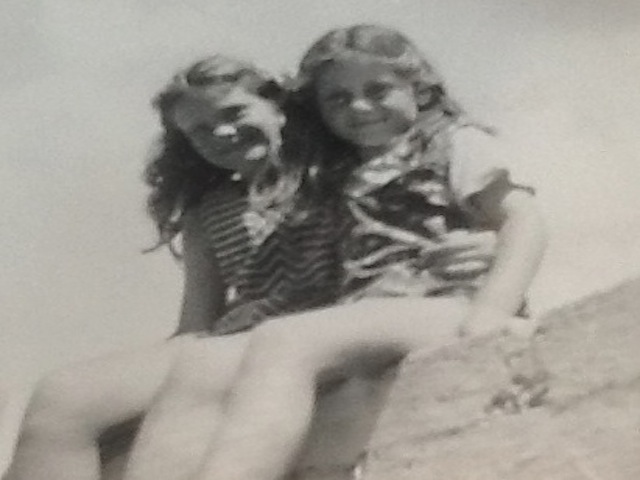
Our family moved to Miami Beach from Brooklyn, N.Y., for my grandmother’s health. It was 1943 and Dad was with the Navy in the Pacific, so it was Mom, Aunt Rose, sister Bonnie, Grandma and me.

We settled in a one-bedroom, one-bath apartment on Third Street and Jefferson. Our apartment was close to the dog track, so we could hear the announcer call the races. Bonnie and I would wager on each race while in bed, and we could hear the announcer proclaim the winners. My best friend, Sonja Lovseth, and I played with our dolls, danced in our house, and rode our bikes everywhere.

South Beach Elementary School was three blocks away, and provided the best education one could ask for. We had an assembly program every week and my sister, Bonnie, was assembly leader. I was captain of the safety patrol.

We learned Spanish beginning in third grade, and I can remember singing the Cuban national anthem in the classroom. Señora Ransom always carried a lace hankie and smelled of Old Spice cologne. The teachers were all wonderful – Mrs. Bleich in sixth grade sex education told the girls to be proud of our bodies, Mr. Little and his violin produced operettas, and Mr. Sanders was our handsome and very dignified principal. Mr. Vasey, the custodian, lived in a cottage next to the school, and he was always Santa Claus for the holidays.

Our apartment on Third and Jefferson was downstairs from Ben Cohen, an attorney for the notorious Miami Beach gambling syndicate, which attracted outside gangsters such as Meyer Lansky. He and his beautiful wife, Joan, had a baby girl and I went upstairs to see the baby.

In the bedroom were about a dozen telephones. I remember asking my mother why anyone needed so many phones. There is a window in the Jewish museum with Ben Cohen’s name and Meyer Lansky’s.

Grandma, as an observant Jew, needed to be near the synagogue, which was on Washington Avenue, and today is the home of the Jewish Museum. My sister and I attended the Hebrew School there. On Fridays when I got home from school, I had to help Grandma prepare for the Sabbath. I usually chopped vegetables or turned the grinder for the chopped liver.

When we were done in the kitchen, I would help her in the bath, wash her hair, and scrub her back, which was crooked from osteoarthritis. After her bath I combed her white hair, set the waves, and she rested for a while in her bed. Grandma had very bad asthma. There was always an oxygen tank next to her bed.

Sometimes I polished her nails. When the sun set, she would light the candles and bring in the Sabbath. Bonnie and I would not write, cut, or, later, watch TV for 24 hours.

During WWII, soldiers were stationed on Miami Beach. They marched by our house, singing army songs, which we quickly learned. Mom and Aunt Rose went to dances at hotels used as a USO (a United Service Organization with a mission to support troops).

Dad returned from the war, lived with us a short time, and then my parents divorced when I was 9. Bonnie and I continued to see our father, who worked in the window at Wolfie’s, Pumpernik’s and the Rascal House as a salad and sandwich chef. Sometimes he would take us for lunch at Burdines in Miami.

Walking on Lincoln Road in the 1940s and ‘50s was like walking on the Champs-Élysées, with luxury shops like Lillie Rubin, Saks Fifth Avenue, and so many others. Once my father took me into Saks and bought me red butter-leather sandals and an emerald-green, silk-taffeta cocktail dress. He introduced me to the finer things of life.

Bonnie and I had always wanted a dog, so when we moved to Miami, we got our first dog, a precious Jack Russell named Bing. Next, we got a blue tick hound named Penny.

We would take her to Crandon Park, where she ran for hours along the beach chasing shadows in the sand. We also had a pet duck named Christine. She followed Penny like a shadow and would greet me when I returned from a date in the evening. One day the duck disappeared. We found out several years later that Grandma had made a trade with the butcher.

I attended Ida M. Fisher Junior High on Miami Beach from seventh through ninth grades. One of my boyfriends was Norman Cement, who later became mayor of Miami Beach. In the 1950s, my grandmother and mother bought a duplex in what is now Little Havana.

I did not want to leave my friends, so Mom arranged for me to be picked up in Miami by Mr. Dutton, my music teacher, so that I could finish ninth grade with friends I’d had since second grade. Later, I attended Miami High.

On my own, I applied for a scholarship to the University of Miami, and did not tell my mother until I was accepted. I majored in Elementary Education.
At the end of my junior year, I flew to Nashville to attend the wedding of my friend, Marie Lefkowitz. It was at this wedding I met my future husband, Irwin Kaplan.

We moved to New Jersey in 1956, after we married. We have been married 57 years, have three children, 10 grandchildren, and four great grandchildren.
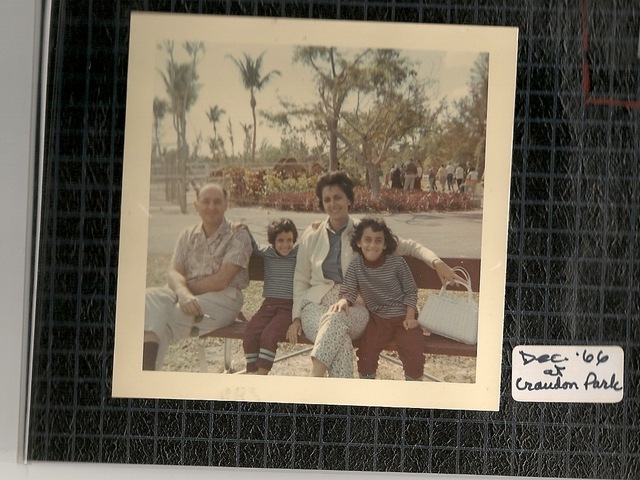
My sister Laurie and I share an unusual trait: we are in our 50s and we are both native Miamians.

We were born at Mount Sinai Medical Center in Miami Beach. My mother, Suzanne Gillette Collins, and her family moved here in 1939, because my grandfather, Jules Gillette, was seeking new opportunities in Miami.

He opened a men’s clothing store on Lincoln Road, Jules Gillette Men’s Clothing, leading to a succession of such stores on Flagler Street, in downtown Miami, and on Northeast 125th Street in North Miami. During World War II, the store became an Army supply store since Miami Beach was a training ground for soldiers.

My mother helped out at the store and she liked to tell the story about the first time a soldier came in and asked for a jock strap. She was clueless.

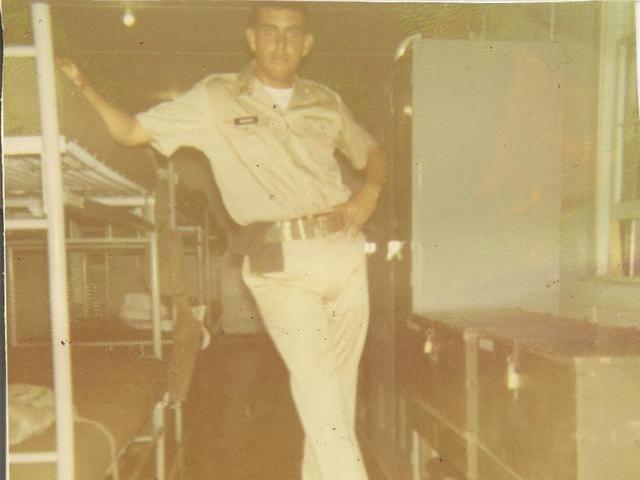
Although he didn’t know my mother at the time, my father, Ken Collins, trained here with the Army Air Corps during the war. He stayed at the Embassy Hotel on Collins Avenue which, like most other hotels, had been converted for wartime use. The soldiers would drill in Polo Park on Miami Beach.

My mother would watch the soldiers drill. My father went on to fly several missions before being shot down over Hungary. He was captured and became a POW in a German prison camp. Gen. George S. Patton’s Third Army liberated the prisoners and my father went home to Ohio.

He went to college and moved to New York for a career in retailing.

My mother graduated from Miami Beach High in 1945 and went to college out of state as well.

My parents met when they both worked at Macy’s in New York. They married in Miami in 1953, but remained in New York for a couple of years before moving to Miami when my grandfather offered my father a job at his store. On Lincoln Road at that time, there were about eight men’s clothing stores and several ladies’ shoe stores.

My parents found an apartment on Marseilles Drive in Miami Beach. The apartment was not air-conditioned, so they agreed to purchase one if the landlord would install it.

They then bought a house on Northeast 175th Street in North Miami Beach. It was one of two houses built on the block at the time, which ended in a dirt road until about 1962. The stately royal palms in the front of our house came from Miami Beach when they were constructing the Julia Tuttle Causeway.

My parents lived in that house until 1991 when they moved to the Highland Lakes area, where my husband and I also live.

In September 1960, Hurricane Donna threatened South Florida. It was believed that the low barometric pressure might induce labor in pregnant women in their late stages. Since my mother was eight months pregnant with me, she and numerous other pregnant women spent a night roaming the halls of Jackson Memorial Hospital until the hurricane threat had passed.

Since I was to be her second child, she was calmer than most of the women, but she told the story of the many large hysterical women who spent the night with her. It sounded worse than any sorority function you could imagine. I was born in October 1960.

In 1962, there was the Cuban Missile Crisis. We still have my mother’s can of Sterno, and the shovel my dad bought to dig a trench if we needed a latrine. I can’t picture either of them using either device, but they couldn’t say they weren’t ready.

My one grandmother would take us to Junior’s on 79th Street and Biscayne Boulevard, where they had great breads and rolls. My other grandparents used to take us to the Roney Pub for dinner. We loved that big quarter-wedge of iceberg lettuce they’d give you with a choice of dressing.

We’d also go to Corky’s for pastrami and corned beef back in the days when I ate big meaty sandwiches. Corky’s used to have a drive-up area where you could order from your car window, and they’d bring your food out to your car and hook a tray to your car window.

As I got older, I’d go to the Sportatorium for concerts with my friends way out on Hollywood Boulevard, before there was anything else built out there.

My mother worked at Temple Israel, where my family were members. My dad eventually opened his own store in Bay Harbor Islands, Ken Collins Men’s Clothing. I used to help out at both places during summers and holidays.

My sister and I went to Sabal Palm Elementary School, John F. Kennedy Junior High School, and North Miami Beach High School.

Two recollections I have that are not among Miami’s finer moments: in 1972, there was an organized boycott against busing, and parents kept their children home from Miami-Dade public schools for two days. I went to school both days; I think I was one of two or three kids in my class who showed up.

I also remember going to work downtown in the summer of 1980, following the McDuffie riots. I remember seeing the smoke rising from Liberty City – and, visible from Interstate 95, the National Guardsmen with their rifles standing on almost every corner.

I went out of state for college, but came back to the “U” for law school, where I met my husband, Peter Bronstein. I am a die-hard ‘Canes fan and bleed orange and green during football season.

We were married on Key Biscayne at the Sonesta. What a beautiful weekend it was, and our out-of-town guests got a wonderful taste of Miami.

We had a Michigan flag at our wedding, since my husband went to the other U of M for undergraduate studies.

We lost my mom several years ago, but my dad and sister still live close by. Miami is home, and other than my years at college, I’ve lived here all my life. In the winter, the weather is beautiful, and in the summer, the crowds thin out.

What more could you ask for?

My Miami story began the day my KLM flight touched down from Cuba at Miami International Airport.

I was traveling alone in 1961 at the age of 11. I was going to some unknown destination, which turned out to be an orphanage in Colorado, arranged by Operation Pedro Pan. I was reunited with my mother and two younger sisters almost two years later in Miami (we were some of the lucky ones).

We moved into an old wooden house near Shell’s City. I was enrolled at Edison Junior High in the seventh grade in 1963, and later I went to Beach High (Miami Beach High School). My mother was now a single mom raising three kids in a new country with a new language.

My first job was delivering The Miami News around Lemon City and Little River. Adjustments had to be made to my bicycle by installing a wooden “banana basket” to the handlebars to accommodate the heavy load from the newspapers. It felt as if I were peddling a Buick. My introduction to mobile journalism drastically ended the day my bike fell apart into several pieces and I had to walk back home in the rain carrying the wheel and frame in one arm and the chain and handlebars in the other. No more banana basket. I was 14.

Fortunately, I was told about a couple of jobs in the restaurant business. One job was as a dishwasher at Junior’s Restaurant on Biscayne Boulevard; the other as a busboy at Jumbo’s Restaurant on Northwest Seventh Avenue. Unfortunately, I was fired from both jobs the same day. Clearly, it was time to find a different line of work.

Another job came up where I was allowed to take the company car home. That was great news because my family needed a car. The pest control company was on the beach. I was hired as a “pest control specialist.” I was the only employee and was told to come back the next day so they could show me around the “company car,” a ’56 rusted four-door Packard.

The windows did not roll down and the car had no air conditioning, making the smell from pesticides and other chemicals suffocating. I sprayed the Seacoast Towers on Collins Avenue, and for the first time —as bad as it was —the family had a car. Nobody bothered to check my driver’s license. I didn’t have one. My mother must have fainted the day I got home behind the wheel of my new, smelly, beat-up company car. I was 15 years old.

We hung out at pool halls, dance halls, movie theaters and food joints in North Miami and Miami Beach. Congress pool hall and Bowlerama come to mind. I will never forget the Paramount Theater, where we skipped school to see A Hard Day’s Night. No more short hair for me after that.

Flirting with girls up and down Collins Avenue became an art form; we cruised past the Neba Roast Beef restaurant, Scotty’s Drive-In and The Castaways. I remember getting my first Beatles haircut from the master known as Evan at a cost of $5. Among our favorite eateries were Parham’s, Royal Castle on 71st Street, Tony’s Fish Market, Nathan’s, Fun Fair, the Bonfire, The Place For Steak, and Jilly’s when we were a little bit older.

We watched Wayne Cochran lift the roof off The Barn. The Hialeah Municipal and all the armories were great venues that showcased Miami’s local bands like NRBQ, the 7 of Us, The Kollection, and many others whose memories are kept alive in Jeff Lemlich’s book, Savage Lost. Man, Miami rocked!

We grooved at Coconut Grove’s first head shop owned by the now legendary Michael Lang, one of the brains behind Woodstock. He had learned from his experience organizing the Miami Pop Festival in 1968 at Gulfstream Park in Hallandale. It headlined a not-too-well-known band called the “Jimmy Hendrix Experience.”

Finally, I found a real job at a well-known auto-rental and leasing firm in Miami with a large fleet of vehicles and a high-end clientele. Driving around and picking up people at the airport was part of my new job. I took a new car home every night. I remember pulling up to the “love-ins” at Greynolds Park in a new convertible every weekend, which made me extremely popular — a rich hippie. The job lasted almost three years. I knew it was only a matter of time until the U.S. armed forces’ Selective Service System would come knocking and drafted me into the U.S. Army. I was almost 19.

I was very lucky to have been permanently stationed in one of the most beautiful places on earth, Ft. Ord on the Pacific Coast Highway in the Monterey Peninsula of California. The Santa Ynez Mountains climbed up from Big Sur. There are not enough colors in an artist’s pallet to duplicate the sunsets I was lucky enough to see along the Pacific Ocean from my ocean-view Army barracks.

San Francisco was a short hop away from Ft. Ord, and on the weekends we hung out at The Haight (not what I expected) and saw a lot of the bands you only heard on the radio. I was having a great time, but sadly the ’60s were coming to an end and so was my Army obligation.

I had choices to make. “Going Back To Miami” was playing over and over in my head, and I knew in my heart what I had to do. It was time to come home. I have no regrets.

I was born at Coral Gables Hospital in 1948. My mother was from Brooklyn, my father from Morriston. He was a CPA, in the Giller Building on the Beach, at the exit off the Julia Tuttle Causeway onto Arthur Godfrey Road. He said that every day when he drove across the causeway, he marveled at the beauty around him.

We lived in the Gables – first on Alhambra Circle where the UM fraternities were, and the athletic field and tennis courts. We played touch football and tennis there on weekends; no one bothered us. Then my family moved to the corner of Old Cutler Road and Santurce Avenue, into a one-story ‘50s house, now replaced by a mansion too big for the property.

There was only vacant land across the street, east of Old Cutler. I asked my father why nobody built there, and he said that it was too close to sea level; it would never be developed. Now it’s Cocoplum. Temple Beth Am was surrounded by vacant land. When they built Dadeland, my parents said that no one would live that far out.

Matheson Hammock was quiet and uncrowded—no Red Fish Grill. We swam at the Venetian Pool. On Sundays my dad would get bagels and lox at Sam and Carl’s on Red Road at Sunset. Across the street was the Holsum Bakery, with that wonderful smell. South Miami was small and sleepy, like a village. Sometimes we went to Pumpernik’s and Wolfie’s on the Beach — the best pastrami sandwiches I’ve ever tasted.

One of my father’s clients was the Melaleuca Motel on Collins Avenue, and when I was little we stayed there in the summer – two rooms and a cabana. The ocean, the beach, the pool, eating out, lots of other kids – I loved it.

I went to first and second grades at Sunset Elementary, then to West Lab at UM (my mother put me on the waiting list when I was born). I had a friend who would take me to his country club in the Gables, and defiantly introduce me as “my Jewish friend Joel.” Nobody reacted, but we all knew that there were Jewish and non-Jewish country clubs, and restricted hotels. Most were more subtle than the one with the sign that said “Great Views, No Jews.”

I road my bike to Ponce Junior High, racing up and over the bridge on Granada. In ninth grade I took drama because there weren’t any tests, and after a few silly skits in class, my teacher, Mrs. Firestone, cast me as the lead in the school play. When I tried to get out of it she said that her class wasn’t a democracy. It was my tipping point.

Everything I’ve done since has involved public speaking – debating in high school and college, moot court in law school, writing speeches in D.C., and then appellate law. Mrs. Firestone wouldn’t remember me, because she was just doing her job — being a teacher – and unfortunately, I never told her.

Gables High was all white, with the first Cuban students from the first wave of immigrants. My world was all white. I remember “White” and “Colored” water fountains, public restrooms, and beaches. Virginia Key Beach, for the “Colored People,”was beautiful, and my friends and I were welcome there.

I drove the ’56 Chevy that my father gave me when he bought his burgundy Mustang; it took all my strength to turn the wheel. My friend Larry and I would drop off our dates and go to the Royal Castle on the highway around 22nd Avenue, and eat four or five of those small hamburgers with the soft buns and the little pieces of cooked onions, and drink birch beer.

A favorite hangout was the Hot Shoppes Drive-In off U.S. 1 at Bird Road. We took our dates to the Flick Coffeehouse on Ponce near the university to hear folk music. Movies were at the Miracle, Gables and Riviera Theatres. Next to the Riviera were Spec’s Music and Swenson’s Ice Cream.

Some of my friends had ski boats, which we took out on weekends. At that time you could water ski anywhere you wanted. During the Cuban Missile Crisis there were military convoys everywhere. Our teachers taught us to crouch under our desks with our arms over our heads in order to survive a nuclear attack.

In tenth grade English they announced on the public address system that President Kennedy had been shot. My first political campaign was Miami Mayor Robert King High’s run for governor. We took a small plane to Tallahassee that was held together by bubble gum. It was terrifying.

The public schools in South Florida were among the best in the nation; some of the smartest people I’ve ever known went to Gables; fortunately for me it had a great debate team; and Gables and Miami High had two of the best football teams in the country. In 1965, the game between Gables and Miami High drew 48,000 people to the Orange Bowl. Miami High’s 14-7 win ended our 28-game winning streak. It was devastating.

When I left for college I had no intention of coming back. The place was sleepy and Southern and in many ways prejudiced. But it had changed radically when we decided to move back from D.C. 15 years later to raise our family. It was becoming a center of art, sports, commerce and finance – bilingual, international. It had acquired a buzz that still buzzes. And the lawyers here are as good as the best lawyers anywhere—in particular my colleagues for 25 years at Podhurst Orseck. I’ve never regretted coming home.

My mother Myrtis Virgina Bell came to Miami in 1913, her birth year, from Polk County. Charles and Virginia Bell, my grandparents, worked in a phosphate mine there.

In Miami, they successfully built houses in the Shenandoah area. They had two more children, Jack and Donald, before they divorced, leaving the three children for Virginia to raise.

Charles retired after building projects like the Miami Shores Country Club. Virginia struggled through the roughest part of the Depression. She sold crystalized citrus peels, avocados, or anything she could think of to provide income.

Virginia never learned to drive. Charles taught my mother Myrtis to drive the family car. She would drive her father to work, and then drive her mother on her errands, and then drive back to pick up her father.

She died at 98 in 2011, having retired from the University of Miami at 65 with the last mechanical typewriter on campus.

My first memory of my baby sister, Joan, was on my third birthday. We were introduced in Victoria hospital; she was born on the same day as I.

I started school at Riverside Elementary. I loved the Norman Rockwell setting, and looked forward to school. We moved into our new house at the edge of the Everglades: Southwest 63rd Avenue and two blocks off Flagler Street. I enrolled in Kinloch Park School for the third grade. It was a complete change. Most of the boys didn’t have shoes and they all had to establish a pecking order over me.

There was one classmate who rode the same school bus and delighted in throwing me out of whichever seat I picked. I learned to escape to our small community and still look on the neighbors as extended family. Originally, it was a planned neighborhood, with cast-iron lampposts and sidewalks.

The noises at night were a lot different than city sounds. There was a winter home for the circus, a hit-and-miss motor supplied the power for pumping water to the few houses scattered in the neighborhood, and early Sunday morning, a big cast-iron bell on the top of West Flagler Baptist Church would start ringing, summoning everyone to church. The original building had a baptismal pool behind the pulpit where I was baptized. My best buddy, Bruce, married his wife there, with me as his best man.

My mother attended Shenandoah schools in town but graduated with the first class of the new Miami Senior High School. My sister and I attended Kinloch, Citrus Grove School and Miami High.

My dad James Posey Boyer with only one ear drum was 4-F (classified unfit to serve in WWII). But he went to work as a machinist, first in Trinidad and later in Cuba. He helped establish U.S. military bases there at the beginning of the war. He and my mom opened a sundry store on the ground floor of a Masonic hall on Northwest 15th Avenue and First Street.

The Orange Bowl Stadium was just down the street. As a kid, I worked there after the games, picking up empty glass Coke bottles, where I got five cents for each crate. Competing with other kids, you really had to hustle to earn two bucks.

As kids, we camped out and fished on Key Biscayne, and even built a driftwood shelter on Fair Island. We could ride the bus all the way to the jetties for 10 cents. There were hundreds of vacant places for beach parties. In the summer, some hotel rooms were a buck a night. A birch beer and hamburger at Royal Castle was only 15 cents.

My dad used to take the family to Old Cutler, break an oyster-filled branch off a mangrove bush, build a fire, and roast it until the oysters opened. He would get us up early, catch a few fish and cook them on an open fire, for breakfast on the beach. Fish was a large part of my family’s diet. I now realize it was readily available and cheap.

I had a paper route, and I used a chicken crate to carry the papers. I started at 52nd Avenue and Flagler and went north to the Tamiami canal, all the way to the Flagler Street Bridge and Milam Dairy Road with only 110 customers.

Every year we made a trip to Pompano to find a Christmas tree, imagining them standing upright, because all the short needle pines were bent over to the west from the constant wind off the beach. Several times during the war we heard about a ship being torpedoed and on fire, and we would go to the beach to watch.

I got my first bike at 9 and gave it away after high school, when I had to report for basic training. The USAF 435th was activated at the beginning of the Korean War. I dream about those times in early Miami, and for sure I lived through the greatest time in history, in the greatest town God ever created.

She died at 98 in 2011, having retired from the University of Miami, at 65 with the last mechanical typewriter on campus.

My first memory of my sister was on my third birthday, being introduced in Victoria hospital, to my baby sister, Joan born on the same day as I. I remember being taken across the street from our apartment, in 1935, to spend the night in a bigger building; because a storm was coming; and then sleeping through the whole thing.

I started school at Riverside Elementary. I loved the Norman Rockwell setting, and looked forward to school. We moved into our new house at the edge of the Everglades, Sixty-Third Avenue and two blocks off Flagler St. I enrolled in Kinloch Park School for the third grade. It was a complete change.

Most of the boys didn’t have shoes and they all had to establish a pecking order over me. A couple of the more infamous attending were the Cash brothers; and the one who made my life the most miserable was later known as Long John Fulford. He rode the same school bus and delighted in throwing me out of whichever seat I picked.

I learned to escape to our small community and to love our in their small houses, and still look on the neighbors as extended family. Originally, it was a planned neighborhood, with cast iron lampposts and sidewalks. They never paved the streets because of the crash in 1929.

The noises at night were a lot different than city sounds. There was a winter home for the circus, a hit-and-miss motor supplied the power for pumping water to the few houses scattered in the neighborhood, and early Sunday morning, a big cast iron bell on the top of West Flagler Baptist Church would start ringing, summoning everyone to church. The original building had a baptismal pool behind the pulpit where I was baptized pre-teen.

My best buddy Bruce married his wife there, with me as his best man. My mother, Myrtis Virgina Bell, attended Shenandoah School and High school in town but graduated with the first class of the new Miami Senior High School. My sister and I attended Kinloch, Citrus Grove School, and Miami High.

My dad, James Posey Boyer, (with only one ear drum), was 4-F; but he went to work as a machinist, first in Trinidad and later in Cuba. He helped establish US military bases there at the beginning of the war. He and my Mom opened a sundry store on the ground floor of a Masonic Hall on NW 15th Ave and 1st street.

The Orange Bowl Stadium was just down the street. As a kid I worked there after the games, picking up empty glass coke bottles, where I got 5 cents for each crate. Competing with other kids, you really had to hustle to earn 2 bucks.

As kids, we camped out and fished on Key Biscayne, and even built a driftwood shelter on Fair Island. We could ride the bus all the way to the Jetties for 10 cents. There were hundreds of vacant places for beach parties. In the summer some hotel rooms were a buck a night. A birch beer and hamburger, at Royal Castle, was only 15 cents.

My dad used to take the family to Old Cutler, break an oyster- filled branch off a mangrove bush, build a fire, and roast it until the oysters opened. He would get us up early, catch a few fish and cook them on an open fire, for breakfast on the beach. Fish was a large part of my family’s diet. I now realize it was readily available and cheap.

I had a paper route, and I used a chicken crate to carry the papers. I started at 52 Ave. and Flagler and went north to the Tamiami canal, all the way to the Flagler Street Bridge and Millan Dairy Road with only 110 costumers.

Every year we made a trip to Pompano to find a Christmas tree, imagining them standing upright, because all the short needle pines were bent over to the west from the constant wind off the beach. Several times during the war we heard about a ship being torpedoed and on fire, and we would go to the beach to watch.

I got my first bike at nine and gave it away after high school, when I had to report for basic training. The USAF 435th was activated at the beginning of the Korean War. I dream about those times in early Miami, and for sure I lived through the greatest time in history, in the greatest town God ever created.

I was born in Hamburg, Germany, in 1941, during World War II. My father had a sister in New Jersey who sponsored my parents and me to come to the United States. Due to the quota at that time, we had to wait five years to get permission to immigrate. My parents were only allowed a certain amount of money to bring into this country, so we came first class – it was a glamorous ship. Unfortunately, I was seasick most of the cruise. We left April 4, 1952, and arrived on April 15. This April was so stormy our arrival was delayed by two days.

We finally made it to New York and went past the Statue of Liberty. We were all so excited. My aunt and uncle picked us up and we drove to Demarest, New Jersey. My parents went to night school to learn English and I was enrolled in the public school.

Demarest was a small town, and they had never had a foreigner in the school, so they had no clue what to do with me, not knowing English. I was placed in first grade – mind you I was 12 years old – and I felt terrible being there. My aunt helped me learn English at home after school with tools the school gave her. After a few months I was placed in the correct grade.

In 1956 we came to Miami Beach for a vacation and loved it so much that we moved here in 1958.

I worked as a hostess at Maisel’s Restaurant, then known as Junior’s Restaurant, on the corner of 79th Street and Biscayne Boulevard. Having come from up north, I could not believe that the restrooms and water fountains were segregated; “White” and “Colored” signs were placed on them. This restaurant, like Wolfie’s, was very popular. We used to have long lines.

In 1961, I was fortunate enough to be hired as a flight attendant with National Airlines until 1992, when I was made a supervisor of flight attendants for seven years. When Pan American acquired National, I was a purser for them until 2002. I loved all 30 years of flying and looked forward to every trip. My daughter is a flight attendant with Delta and also loves it. My son is in New York becoming a lawyer.

It was a big shock when Pan Am went out of business, and I had to find a new career, which turned out to be in the hotel industry. I became a manager of housekeeping for the Seaview Hotel, then the Grand Bay Hotel, and then Fisher Island. Then I was fortunate enough to receive a call from Royal Caribbean and asked to be a facilities consultant. I traveled to all the ships to teach cleaning and equipment use. Unfortunately, due to the economic situation, several of us were let go.

As you can see, Miami has been very good to me and my parents. “Thank you” to the USA for having accepted us, and allowing us to be able to live here in this great country.

In the years shortly after World War II, my father who was born in Greece would make numerous trips to Miami Beach on vacation. He became a sun worshiper and could not get enough of the sand and sea.

In 1948, he sold his apparel business to his brothers and made Miami Beach his home. Our first apartment was on South Beach facing the ocean on Ocean Drive. Starting at age 3, I knew my daily routine would include an afternoon trip to the beach.

About that time, my father purchased an apartment house, The Indian Creek Manor, on the corner of 67th Street and Harding Avenue. The parking lot was adjacent to the original Pumpernick’s restaurant and a half block from the McFadden Deauville Hotel, which at that time boasted the largest swimming pool in the United States.

My Uncle Dave also fell in love with Florida. He purchased the Rivera Ocean Villa Apartments on the ocean. This is the spot where the current Deauville now stands.

I attended Miss D’s Nursery School until we moved to a new housing development called Golden Shores. This was just south of Golden Beach on A1A. This area quickly became Motel Row, but at that time, A1A was a two-lane road.

A popular restaurant called Grandma’s Kitchen was on the corner of Collins Avenue and 163rd Street.

When I turned 6, I attended Biscayne Elementary School on Dickens Avenue and 77th Street. I attended Nautilus Junior High, Miami Beach High, Miami Dade College and Florida International University.

My years at Beach High were some of the most memorable. Although I was one of the poorest kids in the school, it didn’t matter. My friends had cars and boats, cabanas at the better hotels, and houses with pools and even an extra bedroom if I needed it.

After school, each weekend and summer vacations I worked as a pool boy/lifeguard, up and down the strip — the St. Moritz, Surfcomber, Sands, Carillon, Sterling and others.

While at Miami Dade College, I worked as a delivery boy for Surf Drugs on 74th and Collins.

The area around 48th Street was our hangout. When I wasn’t working, this is where my friends and I would be. At night, we would cruise Collins Avenue, grab a pizza at Fun Fair and eventually wind up at Wolfies 21 on Collins Avenue.

I usually had only enough money for a cup of coffee but would eat an entire bowl of cole slaw and pickles that were on the table. On occasion, when we felt brave enough, we would invade another school’s turf to get the world’s best French fries at a new drive-in called McDonald’s.

I’ve never left South Florida. Over the years, I turned down offers to relocate to Los Angeles and other cities. I met my wife Carol while attending college in Miami. We just celebrated our 42nd anniversary.

We have raised two daughters here and have three grandchildren.

Whenever I have the occasion to be on Miami Beach, it’s like a homecoming. Every corner holds a special memory. Like my father, I still have sand in my shoes.

I have called Miami home for 82 years.

Sometimes I feel like “The Last of the Mohicans” because there are so few native born left.

I was born in 1927 at Victoria Hospital. My husband Pete Williams also was born that same year, but we grew up in different neighborhoods so never met until high school days. We both had parents who came to Miami in the early 1900s — his from Tennessee and mine from Illinois and Georgia.

After dating all through our Miami High days, he went to the U.S. Naval Academy and I went to Florida State University in 1945. We both graduated in 1949 and then married in 1950 — after I taught school for a year and he served in the Navy. We’ve been married 59 years and have three wonderful daughters. God has blessed our family!

I have always wanted to honor my grandfather, James E. Crammond, and grandmother Lula Harry Crammond, as they were pioneers who came to Miami in 1912. They were both born in Gibson City, Ill.

As a boy my grandfather helped his father in the grocery business and learned the art of proper display of foods.

When he came to Miami seeking a warmer climate for his family and since the grocery business was all he knew, he established his first store on Avenue “L” or Seventh Avenue (as it is now known) and 10th Street. Within four years he had a chain of six stores.

Then he realized that he could better utilize his talents with a consolidated store so the White House Grocery was born.

It was one of the first, if not the first, supermarkets downtown.

He was the first to introduce the “cash and carry” system in Miami — and possibly Florida. He said he had never seen the system anywhere but with the coming of the war, employees became scarce and expenses ran high so he had to diminish both. The plan was a success!

The White House Grocery was located on North Miami Avenue between Fourth and Fifth Streets. His only son, my father Emert Crammond, worked for him and he loved to take photos from the store’s rooftop. He was so excited to see Miami growing, the first causeway being built to the beach and the Miami News Tower growing tall on the boulevard.

Then the 1926 hurricane came along and ruined everything, including my father’s pharmacy, which he had just opened. He and my mother, Sarah Jones Crammond, married in 1925. Then the 1929 Depression hit. Everyone was hit hard.

My grandparents decided to tear down their home on Northwest Seventh Street near 12th Avenue and build the 12th Avenue Curb market, their last store. Sadly my grandfather died of the flu in 1937 but the Curb Market survived for about 10 more years.

I am proud of my loving grandparents and parents. My grandmother died in 1949, my father in 1977, and my mother in 2001.

We must never forget the people who came before us and made Miami what it is today.

I came to Miami Beach as a New York transplant along with my father Irwin, mother Fay and older brother George.

Dad was a self-taught gentleman with a sixth-grade education. Our small library was filled with Reader’s Digest books and the music of the classics. When we arrived here in 1944, the only place we could find to rent was an efficiency at 1417 Collins Avenue. I can never forget this place because in the same bed I shared with my brother, we twice found scorpions.

Dad’s first job in this beautiful resort town was working as a bookie for an illicit gambling syndicate in the South Florida area. Dad didn’t want to embarrass his family by getting arrested; fortunately the opportunity to start a fruitful career in the hotel industry came upon him.

Starting as a hotel clerk at the Edison Hotel on Ocean Drive, he quickly rose to the position of manager. I was 11 years old at the time, enjoying being able to hang out with my dad often. This is where I spent my first hurricane, helping to feed hotel guests. We opened the coffee shop with our family doing our best to operate it, with me taking the orders.

I learned a lot at that old hotel. I could run the telephone switchboard, the elevator (they were manually run), and could even man the desk to sign in the guests. As a matter of fact, that is exactly what I did on V – J (Victory over Japan) Day in 1945, when the war ended. All the staff went out to celebrate, leaving me in charge to manage the hotel. It wasn’t too long as I remember, that Dad started his move north on Collins Avenue.

The next hotel was called the Alamac. There, I learned to dance the tango at the age of 12. This beautiful blond lady who had a dance studio on the premises asked if I would like to learn. Since I I had a crush on this woman, I jumped at the chance. She had me dance with her in the evening, on the patio, where the guests enjoyed the beautiful weather. I believe she wanted to show that if she could teach a 12-year-old boy to tango then anyone could learn.

The next hotels up the line were small, twin, side-by-side structures on Collins Avenue called the Seacomber and the Surfcomber. Dad managed both at the same time. Next came a hotel south of what became the Fontainebleau . Dad’s new position was to run the Sovereign Hotel where again, I occasionally had a chance to help operate a telephone switchboard. I had a chance to meet some celebrities such Una Merkel and Charles Atlas, the bodybuilder featured on the back cover of so many comic books and magazines touting his exercise program.

Later on, the last of the hotels in my father’s career turned out to be The Raleigh, at 17th Street and Collins Avenue. It wasn’t as famous as it is today, but it was a beautiful place.

I started schools in Miami Beach at Central Beach Elementary, moving on to Ida M. Fisher Junior High, and Miami Beach Senior High at the same location. At lunch time, my friends and I would go to the Dolly Madison ice cream parlor on Española Way. Next door was a place where I would play the pinball machines and buy comic books throughout the ninth grade.

With a love for photography, I was able to convince my parents to let me attend Lindsey Hopkins vocational school (which at that time was called Miami Technical High) for 10th through 12th grades. While in school, I had part-time jobs at several movie theaters in the area; I ushered at the Beach, Lincoln, and Sheridan theaters. The pay then was 35 cents an hour.

We eventually moved out of the efficiency and rented apartments on Marseille Drive in Normandy Isle. We were close enough that my mother would suggest that she and I go fishing at all hours of the night on the 79th Street Causeway bridge. These were some of the most memorable nights I remember about my late mother.

When I got my driver’s license and dated, friends and I would travel around town to places such as the Big Wheel drive-in where we could get a whole bag of French fries for $1. We would go bowling at the Coliseum on 16th Street and Douglas Road, or across from the old Sears store at 13th Street off of Biscayne Boulevard. Swimming at the Venetian Pool was a must for me and my date. We loved the grotto cave where we could “neck” (just a lot of kissing).

After high school, I entered the military, got married, and after nine years of service returned with two sons to the place I loved the most, Miami. In the years that followed, my careers have taken me from being a business owner of “Herb’s T.V.” for over 25 years, to teaching high school starting at the age of 55 for another 19, at Miami Jackson, and later, Hialeah High.

Now as a great-grandfather of two, I am living my retirement years in South Florida where I belong. Recently, I was at a North Miami car dealership, and found on the wall a very large B&W; picture taken circa 1945 of the Edison Hotel, my dad’s first manager’s job; I could not get over it.

This is an interesting story about a creative, talented man (my dearest husband of 50 years), Herbert Marks. He had an office on Lincoln Road for 60 years. His talent for show business started as a boy when his family had a theater in Boston where they had movies and let talent try out.

When Morris Landsberg had five hotels, Herbert produced full-length Broadway shows and he had all guests come to the Deauville to see the productions. Leon Leonidoff from Radio City Music Hall designed the stage.

Herbert also had a Lou Walters review at the Carillon and, of course, big bands at all the hotels. Herbert supplied talent for [Jackie] Gleason and booked big names into the Olympia Theater. He booked shows at the Indian Creek Club, private clubs, La Gorce Surf, the exclusive Everglades in Palm Beach, the Whitelaw Hotel and Boca Raton Hotel.

Herbert also supplied talent for big conventions. He got Sammy Davis for an automobile convention. He also provided entertainment for the children’s wear conventions, started in the ’60s by Sam Kantor.

Herbert managed the McGuire Sisters and got them on the Arthur Godfrey show. He had water shows at the McFadden Hotel (now the Deauville), was the booking agent for the Olympia Theater (where I danced many times) and supplied the talent for Miss Universe. Once, he took the producers to see a circus act and the car got stuck in the mud, but the elephants lifted the car up. Herbert also helped Bob Hope produce shows in Miami to raise money for Parkinson’s Disease.

It’s good to remember the heyday of Miami and Miami Beach. I am 92 and enjoy the memories of the Golden Era here.

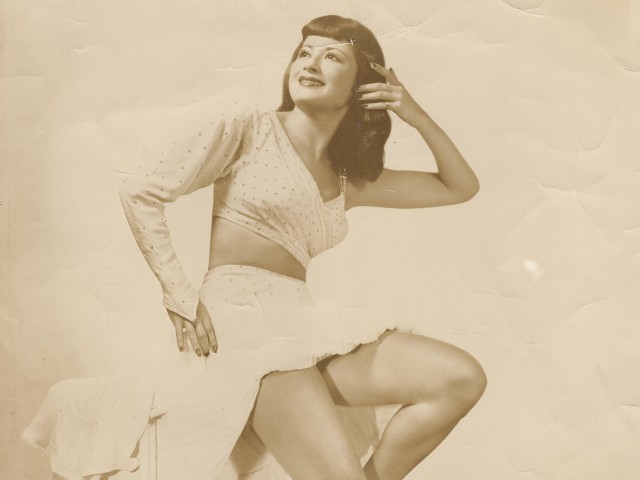
A few tidbits about me: I was a dancer. I was the opening act for Dean Martin and Alan King. When I worked with Dean in Philadelphia we used to go dancing after hours. He did not drink whiskey but did drink iced tea. He put on the act of drinking all the time, but that was not true. He proposed to me then. I was too young to take that responsibility. It would have been fun I’m sure, but my mom said no. I kept in touch with him and called him years later when he and his family were interviewed by Edward R. Murrow (in Philly).

I continued working many nightclubs in Miami and Miami Beach, including the Copacabana, which was run by Bill Miller, and the Kitty Davis Airliner, which was a very popular club down here in Miami Beach. The service men loved going there. I was also voted “Miss Olympia.”

The Biltmore Hotel was a veteran’s hospital and I volunteered there as a “gray lady,” which was what we were called. We’d write letters and read to the boys. I loved it there trying to make the soldiers happy. Everything I did for the soldiers and the officer’s club was great fun for me and the servicemen. I did shows for every branch of the service.

Well, when I got married in 1947 my dancing days were over, though my husband and I were still going to the Eden Roc and Fontainebleau for dinner and dancing. We joined the Palm Beach Club, which attracted many celebrities. We also joined the Jockey Club as I was an avid tennis player up until a short time ago.

We had a son, Randy, who worked for the city for 25 years and is now retired.

Several years ago, Alan King was here at the Fontainebleau and I called him. He used to follow Dean and me around. He told me that who he was really following was me! I didn’t know. That’s why they say that youth is wasted on the young.

Translate »