fbpx Skip to content
Named Best Museum 2022 by Miami New Times

A Miami Story by Lynda Grant Killingsworth in honor of all Americans on this anniversary of Pearl Harbor.

A letter home from James Whitfield Grant dated Saturday, Sept 22, 1945 written in Tokyo Bay.

Dear Mom,

Well, here is the bad news – we have been detached from the Third fleet and reassigned to the Fifth fleet for duty – I don’t know for how long but the reason was that we did such a good job evacuating POW’s that they felt that we would be a good ship to keep out here until things get straightened out.

The men on the ship were pretty mad about it since we are the oldest ship in the Third fleet and rate more battle stars than any ship in the Third or Fifth fleet. I have known about it for several days but did not want to write you until I cooled off a little.

Our Captain made a speech to us today and told us why we are going to stay out here a little longer. He had to make a speech because the rumor started that he asked for six more months of occupation duty. Naturally everybody believed it since he hasn’t been out here long and he is a Glory-hunter. He denied the rumor of course, and said you couldn’t believe everything you read in the papers (some of the boys got clippings from the New York Times that listed the San Juan as one of the ships to be reviewed by the President on Navy Day in New York Harbor). He said if we got our orders we could be in San Francisco by Navy Day but don’t count on it-So we are just sitting here waiting for something to happen. I admit this is very interesting duty but it is nothing like the U.S.- We feel that by the time we get back all the celebrating will be over and everybody will have forgotten about the war. I still have hopes of being home Xmas but don’t count on it.

Love,
Jimmy

Uncle Jimmy, a veteran of every major battle in the Pacific was in the Navy when the Japanese bombed Pearl Harbor 79 years ago. He came to Miami with my parents, my sister Annie and me looking like the okies from fanokie, and lived with us for several years after arriving in Miami Dec 17, 1947. I am sure if any of my Jr. League buddies had seen THAT picture, 3 adults and 2 babies in a Jeep Dad needed for Dad’s work, I would have never been invited to join this prestigious organization. Our first apartment was near their new place of employment Hill York established in the 1920’s by Everett Carroll and Ren Niche located at SW 8th and 12 Ave.

I loved Mr. Carroll and the opportunities he gave my father. Dad ended up as President of seven Mechanical Contractor Companies and he and his brother, Uncle Jimmy, never worked anywhere else during their 35 year careers. Mr. and Mrs. Carroll, Uncle Everett and Aunt Babe, lived a block off of SW 8th Street, the famous Tamiami Trail built by a distant relative of ours, Barron Gift Collier. His great grand nephew married my grandfather’s cousin and this elegant Bascom, Florida native, population 30, served as hostess to the likes of Ford and Edison at their home on Utopia Island, now a Ritz Carlton.

Dad found an apartment nearby, and because it was right after the war, the only language spoken was Yiddish as our welcoming new city had become a haven for those who were in Nazi concentration camps. Boy did they love Anne and I, and I can remember being so young and sitting on their lap and running my figure on numbers that I did not know how they got there. Mama knew, and even though Mama only spoke Southern and they spoke no English, there was a bond that proved language did not matter. Their means of communication was LOVE.

Uncle Jimmy was just barely 20 when he joined the Navy on October 18, 1940, fourteen months before we declared War. He served our Country in the North Atlantic and saw war there against the Axis which entitled him to wear the Navy bronze “A.” He never slept the night through after he and his Navy boys, who lovingly called him Reb, freed the POW’s. He told his mother about it but could never talk to anyone else, not even his brother, my father. When I was a teen, my Grandmother told me his stories, and what he had witnessed as she felt it important that history be told. I remember the conversation 58 years later and her confession that she really liked Eleanor Roosevelt who was not at all treasured in the South at that time and revered years later. I agreed and will share what was told in other stories. This letter was addressed to:

Mrs. LL Grant
501 East Jackson Street
Marianna, Florida

The airmail postage was 6 cents.
Great Neck, Long Island meets South Florida

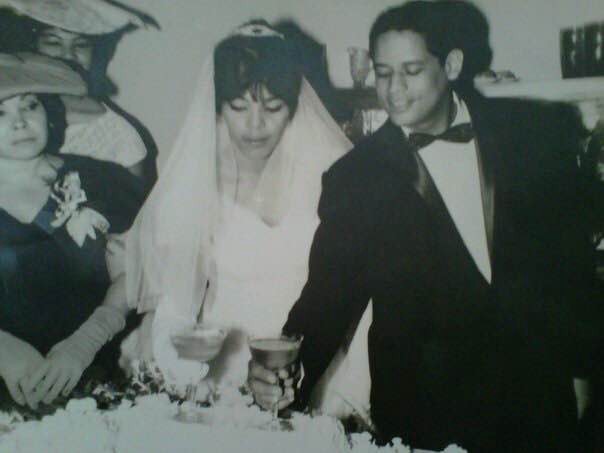
My mother, Zada Wilchyk fell in love with Marvin E. Williams up north. How they met, fell in love and married in 1936, I never knew the details. They came south to start their family in West Palm Beach, FL where I was born in 1941. Then they moved to Miami and my brother was born here in 1943.

Mother’s parents moved here then with grandfather establishing a tailor shop one block off Flagler in downtown while grandmother and mom opened a restaurant called The Spot near the courthouse. Father worked first for Frankie Watts Motors, later at Luby Chevrolet as their best mechanic in town I was always told.

Life in Miami from the 40’s through the 50’s was a segregated, two paper, “small town” that saw the development of Miami Beach bringing rich tourists down each winter and then the immigration of masses of Cubans, which would forever change the character of this city.

From Colored town (as it was called then) becoming Overtown, to Miami Dade Junior College beginning, to the Miami Dolphins under Don Shula winning, and to television shows discovering South Beach – My childhood memories of life growing up before any of this, near Flagler between S.W 4th St to S.W. 16th Street, with a neighborhood of mom and pop stores like TipTop grocery, Puritan Dairies, and Burdines and Richards, the Olympia Theatre…that’s the Miami Ill always remember.

My father was born and raised on a farm in South Dade where eventually the Tropical Racetrack was built. He and his twin brother Thorne, dropped out of school in the 4th grade to work with their father on the farm to survive the Depression. How he and my mother who grew up in the north met, fell in love, married, I never learned the story. I knew that mother was college educated, had a trained operatic singing voice, and was a reporter and editor for the Great Neck News during the “Jazz Age.” I grew up hearing her stories of the Marx Brothers creating chaos in her office whenever they dropped by, and Clifton Webb always visiting with his precious yapping dogs, one with a pink bow, the other a blue bow. She went riding in Central Park with Frederick March and her best friend, Sue and they were hell raisers during Prohibition!

My father was as handsome as Clark Gable when they married, worked as a mechanic for Frankie Watts Motors on Flagler and later Luby Cherolet (now long-gone), and at one time worked as a diesel engineer on the Orinoco River in Venezuela. He was Baptist, mom was Jewish, and my brother and I were raised respecting both religions.

La embajada del Perú fue el 4 de abril del 1980 y mi hija nació el 12 de Abril de 1980 , así que cuando nos llegó la salida por el Mariel el 17 de mayo, ella solo tenía 36 días de nacida.
Cuando nos presentamos en el edificio de seguridad donde nos recogerían ,nos entregaron salvoconductos como si hubiéramos estado en la embajada del Perú, algo totalmente falso (los cuales conservo).Llegamos al Mariel en una guagua, lugar el cual era un campamento lleno de carpas donde los catres estaban en la tierra. Había un solo edificio de cemento que era donde te registraban y te hubicaban en la carpa que pertenecías. Nosotros salimos como familia de un preso político.

Cuando nos toco la revisión mi esposo tomó la niña en sus brazos en lo que me registraban y revisaban. Una miliciana me mando a pasar detrás de una cortina de saco, y me registro toda. Cuando salí atolondrada con lo que había acabado de vivir, buscó con la mirada a mi esposo y lo encuentro del lado de los que habían revisado. Se había pasado sin que los milicianos lo revisarán, por lo que pasó sus prendas, dinero, y La Niña con sus areticos.

Mi angustia era como podíamos estar tanto tiempo allí con una niña tan pequeña. Las personas nos decían días y semanas de espera. Dios nos protegió siempre. Salimos al mar en la madrugada del 18 en 17 horas de odisea llegamos a Cayó Hueso, en el lugar de las carpas del army. El trato fue maravilloso. Cuando vieron La Niña nos montaron en la primera guagua para Miami.

El Orange Bowl hay mucho que hablar. Las personas llegaban a los alrededores y te regalaban las cosas que tenían puestas, te compraban helados, lloraban. Estaban tan felices de lo que estaba pasando. Y después el aeropuerto de Opa locka, tan organizado, todos tan cariñosos. Tenían muchachitas para entretener y cuidar los niños en lo que te hacían las entrevista y los papeles de immigracion. Nadie podía creer el tiempo que tenía mi Lily. Pensaban que había nacido en la embajada del Perú. Hoy graduada con un Master en business administration.

Mi esposo (28) y yo (20) en el 1980, Marielitos que le damos las gracias a este gran país por darnos la oportunidad que nos fue negada en nuestro país, donde nuestras hijas estudiarían y viven en libertad y respeto al ser humano.

Hay muchos detalles de cada lugar que los revivo en mis recuerdo, pero me pasaría de las 1000 palabras, gracias por la labor que hacer. El Mariel fue una huella muy importante en Miami. Vinimos con muchas ganas de crecer y trabajar. Gracias.

Like many Miamians of Cuban descent, I grew up very aware of my family’s history on the island. This year marked the 40th anniversary of their exodus. My grandmother, aunt, and father left Cuba on the Mariel boatlift of 1980, in which as many as 120,000 Cubans made a traumatic exodus to the United States.

My father was born in Havana into a family of entertainers in 1964, five years after the revolution. My grandfather, Miguel Cancio, along with my grandmother’s brother, Kiki Morua, founded the popular ‘60s band Los Zafiros. My grandmother, Monica Leticia Morua, a musician in her own right, was known as the “Voz de Crystal.”

As a young boy, my father had a dream to become a great doctor like my great-grandfather, Dr. Leoncio Morua. He was able to attend a boarding school in the province of Matanzas. When he was 16, he was caught telling a joke about Pepito, a famous Cuban character. My father and his friends were told that they were being expelled for betraying the trust of the revolution. My grandmother, fearing my father’s future in Cuba, decided it was time to leave the country. At that time, there was no legal way to leave Cuba. Then, in April 1980, an incident at the Peruvian embassy caused Castro to announce that all those who wished to leave Cuba could do so from the port of Mariel.

The Mariel situation offered an unexpected way out for my family. After appearing in front of a government panel, my father was separated from my grandmother and aunt and was taken to a holding facility in Havana, then to a camp for unaccompanied males near Mariel, where they waited alongside newly released criminals. A few weeks later, he was put on an American cabin cruiser. As the boat left Mariel harbor, my father panicked and tried to dive overboard and swim ashore, but the American captain on the boat and a family friend calmed him.

My father was reunited in Miami with my grandmother and aunt, who had come on another ship, and they spent several days in the Orange Bowl, where other refugees were kept, until they found their way to a home in Miami Beach. My father did not return to Cuba until 1993. Since his return he has dedicated his life to advocating for the reconciliation between his native and adopted countries. I also have had the opportunity to return to my father’s country of birth and walk on the same streets my family once walked through in Varadero.

This year marked 40 years since my grandmother made the decision to leave her family, her career, her beloved Varadero and the future she hoped to have in Cuba for her children. It marked 40 years of her life in this country, raising two children and becoming Abuelita to three grandchildren.

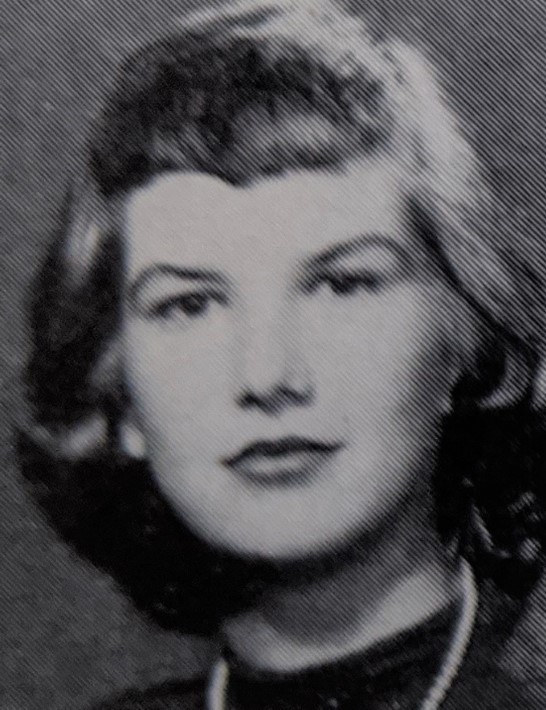
Long before Coconut Grove’s first high-rise was built at 2951 S. Bayshore Dr., that address was known as The Compound and described by Miami Herald reporter Stephen Trumbull “…a pastoral setting of cottages…occupied by newspaper and news wire service men and women…” and UM professors. The verdant property would become Sailboat Bay Apartments, later The Mutiny Hotel. The heyday of The Compound was mid-1950’s to June of ‘67. A paradigm shift was occurring in Miami and changes at this address reflect historic change to all the city. This fragment of interconnecting history concerns some of The Compound’s residents in a short span of years. Historic references to The Compound are few, I located some details from Herald stories and research into the life of one of The Compound’s celebrated residents, my aunt, Evelyn DeTardo Hively. By her 1953 Edison graduation, Evelyn had a scholarship to the University of Miami and was a Herald copy boy. By June she was Herald Staff Writer with an article: Evelyn Faces Life reporting on an illegal, pornographic dime peep show. Later she wrote a special series to expose illicit activities behind seemingly innocent ads placed in the Herald, ads offering young women the opportunity to become fashion models but really fronts for prostitution & illegal massage. Evelyn wrote regular columns: Tip Top Teens about outstanding achievements of Miami’s young people and What’s New at the U, events at UM. In May of ‘58 the Herald sent her to Haiti to report on Papa Doc Duvalier. Then to Haiti to track down and investigate a witch doctor known for making zombies. She wrote a fullpage zombie story April 12, ‘59. Evelyn was likely the last reporter to interview movie idol Errol Flynn in Miami and Cuba during the revolution filming Cuban Rebel Girls. Evelyn worked at the Herald for 7 years then Time bureau assistant and later professor of English at Miami-Dade College. Another Compound resident, Denne Petitclerc, had a flair for hooking readers to a story with first lines, “A pair of armed bandits, a bolita bagman, his brunette bookkeeper, a stolen car and an innocent horseplayer flopped up like a school of mullet in a police net Saturday.” Nixon Smiley’s Knights of the Fourth Estate credits Petitclerc for “combining the technique of fiction writing with newspaper writing long before Tom Wolfe & Gay Talese” “he gave readers a glimpse of newspaper writing that would not be seen again until the late ‘60’s.” and “the Herald had become widely known as a newspaper which encouraged individual style and individual writing”. Mr. Petitclerc, like my aunt, was a young, outstanding Herald reporter, among the first to discover the link between Miami, guns and Cuba with investigative reports on the Cuban revolution focused on the underground delivering guns to Castro through Miami. Petitclerc would go on to befriend Hemingway, write novels and write the TV series Then Came Bronson and the screenplay for the feature film Islands in the Stream. One of my aunt’s best friends at The Compound was Frances Swaebly Herald’s theatre critic. She interviewed stars of the era, Jose Ferrer, Maureen O’Sullivan, and Joe E. Lewis, to name a few, featured in plays and shows in Miami. Reporter Bob Hardin had been living at The Compound after graduating from UM. He, like my aunt, had been writing news for Miami papers since high school. Like my Aunt, he wrote an expose of illicit activities at Miami massage parlors. His series on the Mob’s violent takeover of Miami laundries gained national attention. For those years The Compound housed creative, talented Herald writers. Other residents of The Compound were United Press International’s Andy Taylor, and Joe Emmert, UM Marine Lab. September 7, ‘62 reporter Stephen Trumbull wrote the Herald story which inspired this History Miami story. Nixon Smiley celebrates Trumbull’s writing style as “salty leads, colorful phraseology likely to take unusual turns.” That’s the case in Intellectual Cats which brings together the residents of The Compound when they decided to round up the stray cats on the property. Surplus cats were products of Crissy being boarded by Bob Hardin & Andy Taylor. She produced innumerable offspring. The Humane Society took many, older cat residents remained. By June ‘67 Ellen Emmert wrote in the Herald, Grove Progress Means Loss which serves as the Epitaph of The Compound- “the future home of Coconut Grove’s first high rise, Compound residents will be saddened, suffer a small personal loss when bulldozers move in.” From “a pastoral setting of cottages” to Sailboat Bay Apts. to Mutiny Hotel, a big leap. What of those who came before? Late 1920’s to ‘30’s this address, 2951 S. Bayshore, was the place for lavish parties and social events when attorney Leland Hyzer and his wife lived there. These small fragments of Miami history might be lost, forgotten if not pieced together for readers and kept in the archives of History Miami.

On January 1, 2020, I officially became a minimalist. I’m collecting experiences now, not stuff. I also figured, the less I own the more I can travel, only there’s no traveling this year. I still need my dose of traveling though. Travel is ESSENTIAL.

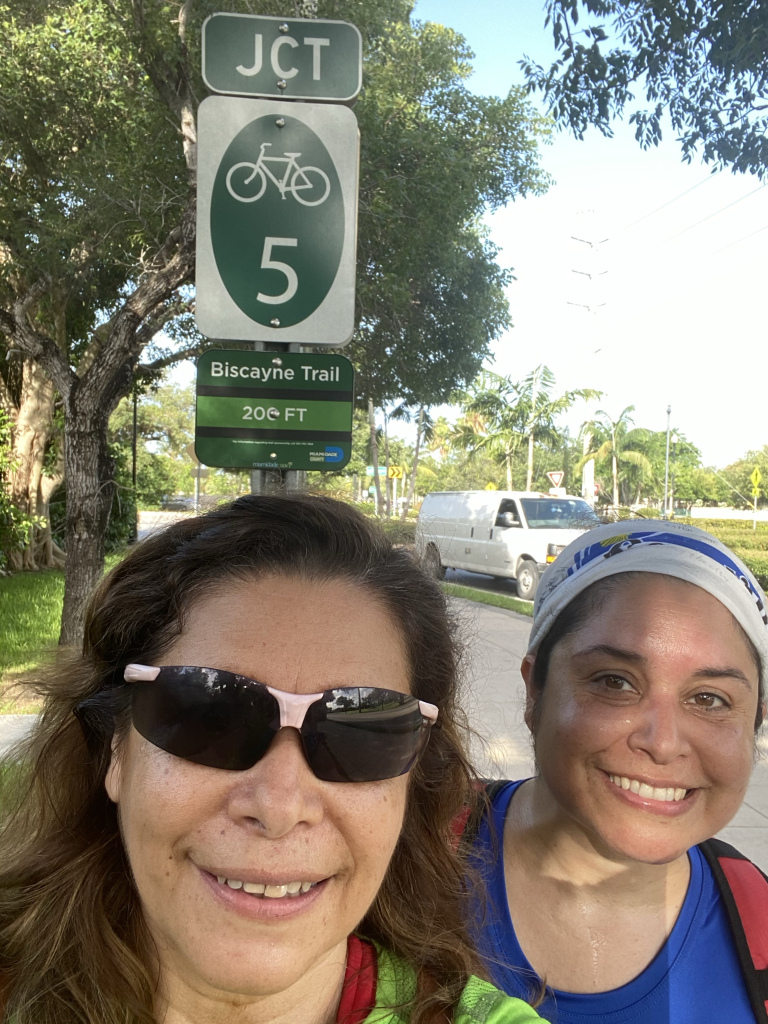
While international traveling is suspended, people have come up with virtual traveling ideas. The Vatican Museum, the Great Wall of China, the Taj Mahal – all are in virtual tours that can be done from home. Cool, but my idea of traveling involves getting up from the couch, so I embarked on a new kind of journey. I researched the Miami Trails and their histories, picked up my water bottle and started out into new explorations of a very familiar place: home. Since I enjoy the writing as much as I enjoy the hiking, here is my little contribution to encourage you to enjoy and learn more about our own community. In this pandemic, my passion for traveling has led me home.

Coco Plum Circle in Coral Gables marks the junction of Commodore Trail and Old Cutler Trail. Old Cutler Trail goes south along Old Cutler Road through beautiful historic neighborhoods. Old Cutler Road is historic itself, being one of the first roads in Dade County connecting Coconut Grove with Cutler, an old farming community. The trail follows a natural limestone ridge along Biscayne Bay and was referred to by the pioneer settlers as “The Reef.” Then it was widened to become a wagon trail and declared a public road in 1895. I can almost see myself on top of those wagons wearing a flower hat. The Florida legislature declared Old Cutler Road a historic road in 1974.

Walking down Old Cutler Road is a delight. It is shaded all the way to Matheson Park/Fairchild Tropical Garden by beautiful old banyan trees and charming Floridian-style houses. The trail is also a bike trail, so watch out for silent bikes coming from behind. Right across from Fairchild Tropical Garden there’s a parking lot that leads to a forest protection area within Matheson Park. It’s not part of the trail but it’s worth the exploration. Birdwatching, photography and nature appreciation are the activities permitted here. It is truly a forest within the neighborhood and in the middle there is an open space where other paths meet. We took the one going south and eventually found the Old Cutler Trail again.

A little south of Fairchild Tropical Garden, the trail actually goes through a gated community. To follow the trail you have to cross the street and go to Snapper Creek Road. At the other end of Snapper Creek Road, you leave the community and cross the footbridge to Red Road to continue on Old Cutler Trail. Not far from there, at Southwest 110th Street, you will find the entrance to the old Parrot Jungle. It opened in 1936 and quickly became a tourist attraction with a signature structure. After Parrot Jungle moved, the Village of Pinecrest purchased and restored the building and it is now a park with a farmer’s market, children’s activities, and events year-round. It is now called Pinecrest Gardens.

After Pinecrest Gardens, Old Cutler Road follows the coastline. It curves from 57th Avenue to 67th Avenue and at the Y junction at 135th Street you have to go left to continue the Old Cutler Trail on Deering Bay Drive. One block after the Y junction it’s Chapman Field Park. You don’t have to enter the park to continue on the trail, but we did. There’s a trail within the park with a big loop that starts and ends at the canoe dock. Fishers canoe through the canal into open sea while dog walkers let their dogs run without leash in the trail.

There are few shaded areas from Chapman Field to the Deering Estate, so it is very important to wear a hat and sunglasses and don’t forget the water! The Deering Estate, on 168th Street in Palmetto Bay, is an ocean-front historic site and museum with beautiful grounds to enjoy nature. It is part of Miami-Dade Parks and an admission fee is charged. Outside of the estate you may visit the historic Chinese Bridge and kayak or canoe to open water from the People’s Dock.

Just across the bridge, on 173rd Street, you will find Thalatta Estate. I can’t describe how lovely this place is. It was purchased by the Village of Palmetto Bay and is also part of Miami-Dade Parks, admission free. Its charming Spanish architecture, turquoise water pool, perfectly maintained grounds with palm trees and all kinds of flora, and the breathtaking view of Biscayne Bay make it perfect to host the most romantic wedding. Thalatta Estate is my favorite site along Old Cutler Trail.

The Palmetto Bay public library on 176th Street at Ludovici Park is worth mentioning. With an amphitheater, a two-story community center and a bike path loop, it must be the highlight of this community. I will certainly be in the lookout for events at this location when this pandemic permits it. Next to the library there’s a stable, most likely private. Horses are such beautiful animals.

Cutler Bay starts on 184th Street. It was designated as Tree City USA in 2009 by the Arbor Day Foundation. Although beautiful and shaded with trees, you can notice the change in the neighborhood. It’s newer, not historic and not grand. Old Cutler Trail ends where 216th Street, 87th Avenue and Old Cutler Road converge in a circle.

From Coco Plum Circle at Southwest 72nd Street to the south end of the trail at 216th Street there are 13.5 miles of asphalt trail that wait to be conquered, and it’s at this point where Biscayne Trail starts, which I will cover in a future post. Eat seasonally, love locally… or love your local trails.

As a Cuban-American New Yorker, I have strong family and cultural ties to South Florida. Since childhood I spent summer vacations in the Magic City, soaking up Cuban culture as well as the glorious sunshine. Once I started working as a teacher for the New York public schools, I continued the tradition of enjoying July and August in the heart of El Exilio Histórico.

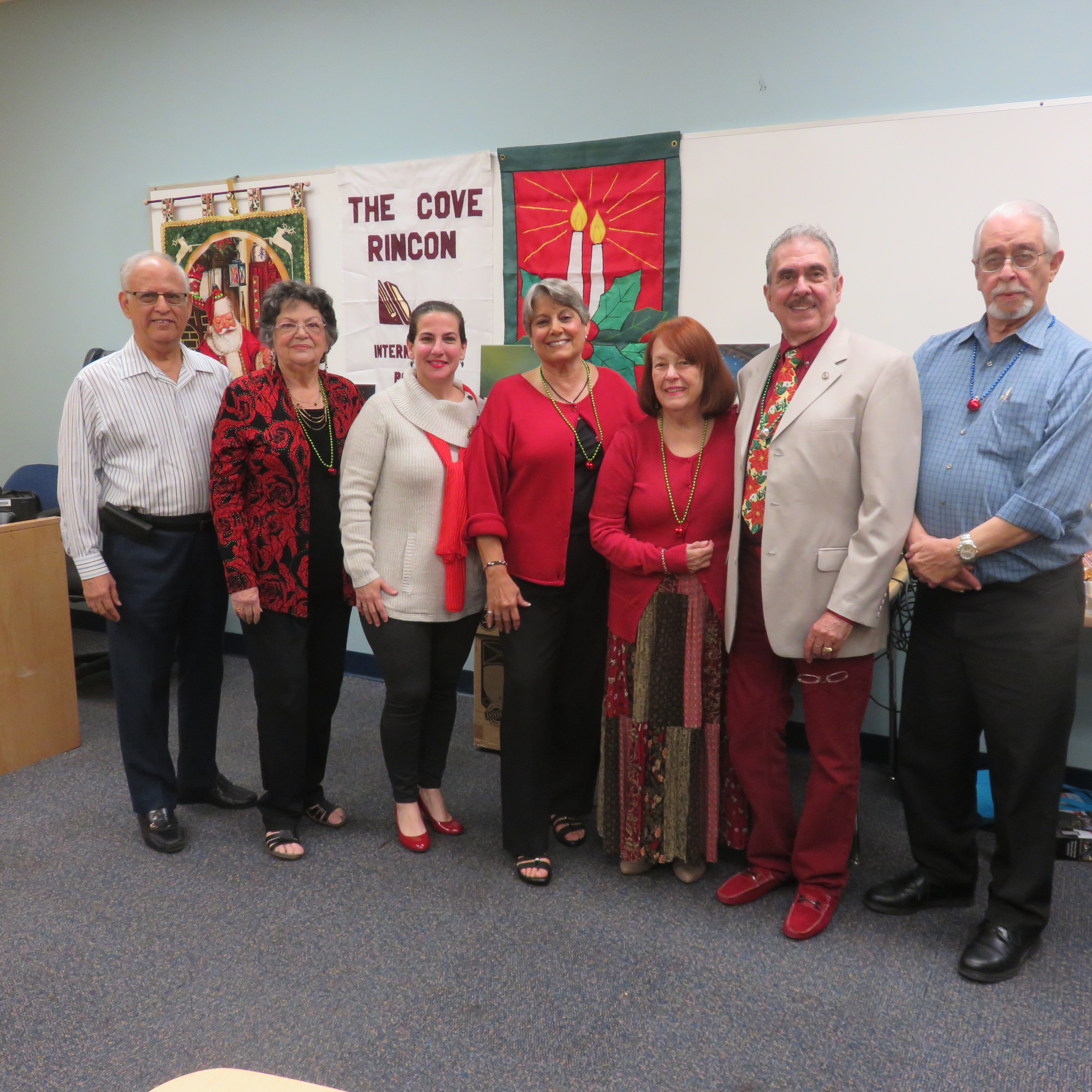
In 2015, I joined The Cove/Rincón International, a Miami-based non-profit. I never imagined that five years later, from two thousand miles away, the “Cove” would offer me a psychological lifeline, rescuing me from the brink of depression as the world learned about the novel coronavirus.

Sheltering-in-place in my New York City high-rise, I felt mounting anxiety and apprehension. At the age of 56, having retired from teaching in 2019, I had become my mother’s primary caregiver. As medical experts warned that the elderly with underlying conditions were most vulnerable to the “invisible enemy,” my world revolved around protecting her. My paralyzed metropolis, known for its theater, museums and nightlife, became the epicenter of the virus, and scenes of body bags piling up outside area hospitals were horrifying.

Then Miami resident Marily A. Reyes, founder and president of the Cove, seized an unprecedented opportunity to use her platform as “mother” of this cultural family to promote the mental health of her members. She initiated a project she named “Sharing the Arts During Quarantine.”

Knowing that human beings are driven by a need to forge social bonds, to face each day with a sense of purpose, and to support a cause greater than themselves, she called upon painters, writers, singers and creative souls of every stripe to tap into their talent and create, create, create!

Having studied psychology at Miami-Dade College, Marily was well aware of the therapeutic effects of the arts. Through chapters of the organization in the Americas and Europe, the Cove had an impressive range of talent to draw upon. The response to “la convocatoria” (the call) was overwhelming and international.

Art poured into Ms. Reyes’s email inbox at a breath-taking pace. She uploaded every submission to the organization’s official Facebook page, the Cove/Rincón Corp. I marveled as the page developed into a virtual museum and library. From paintings capturing the fluid movement of a flamenco dancer to the charming “Cofre de Recuerdos” (treasure chest of memories), by 12-year-old Natalie – the Cove’s youngest member – the page was a means of connecting human beings and providing entry into worlds of beauty while the world was in lockdown.

Before the project began, I felt detached from time, from seasons, and from others, consumed by daily briefings full of “models” of infections and grim warnings regarding I.C.U. capacity. In my paralyzed metropolis, I discovered worlds of beauty accessible through my computer. I found a reason to get up in the morning.

Each day brought fresh material to the Cove/Rincón Facebook page and I was eager to encourage others in their work, some of whom I had met in Miami at summer Cove events, but many whom I had come to know only through their art. I added “Greetings from the Big Apple” to members in Mexico, Argentina and Austria, and we started exchanging virtual hugs. I wrote my own poem in Spanish about my grandmother. Suddenly I realized that something new and unexpected had developed. The news was still dire, and I continued to heed the medical authorities, but I noticed that my state of mind had changed dramatically. Hope replaced despair, and I felt grounded in the collective power of human beings not only to produce art, but to nurture each other from afar. The sense of solidarity was palpable.

Indeed, Marily A. Reyes had created something more than a virtual museum or library: She created an artistic, nurturing community! I salute her humanitarian service and I celebrate the artists of the Cove/Rincón International.

We moved to Miami by accident in 1953. We drove down from Chicago for a vacation and stayed in Miami Beach at the Tradewinds Hotel. One day my parents told my two older sisters and me they would be gone for a few hours, and we were to stay at the pool and not go to the beach. When they came back we were informed that we would not be going back to Chicago as they had rented an apartment in Coral Gables at 17 Majorca Avenue.

My older sisters cried as they would leave behind many friends. I was too young at 6 to care.

I practically grew up at the Venetian Pool, a great treasure that seems to be kept secret these days.

I went to Coral Gables Elementary for 1st, 2nd, and part of 3rd grade. Then we moved to 2390 Southwest 16th Terrace, and I attended Shenandoah Elementary, Shenandoah Junior High, and Miami High.

All my teachers at Shenandoah Elementary were great. In 3rd grade I had Mrs. Echeverria; 4th, Mrs. Gill; 5th, Mrs. Fowler, who taught me to love poetry and Greek mythology; and 6th, Mrs. Conroy. The principal was Mrs. Hatfield, the original Steel Magnolia. She was a sweet Southern belle that you would never want to cross. She regularly attended the Miami High games, which were always played in the Orange Bowl.

At Shenandoah Jr. High the dean, “Mr. K” (Kouchalakos), terrorized us all, though he was actually a pussycat with a gruff demeanor. We weren’t supposed to sit on the wall of the fish pond, and one day my friend Ellen sat there, and as he walked by shoved her into the pond.

My most important memory was when I was 7 and new to Miami. My mother took me shopping at Food Fair on Coral Way. At the back of the store by the meat section were two water fountains, one marked “white” and the other marked “colored.”

I thought wow, how great is Miami, they had colored water!

So I went up to the “colored” fountain and was very disappointed to see it looked like regular water. A lady nearby very nicely (!) told me that I had to drink only from the “white” fountain. Shortly after that, I had my first introduction to the white lines on the buses marking off the seating that blacks were forced to use.

I remember being deeply offended by segregation even at the age of 7, as it was nothing I had seen in Chicago. To Miami’s credit, that all ended by 1956, well before the Civil Rights turmoil of

the 1960s. South Florida was not the Deep South, and I used to joke that Miami was the southernmost part of The Bronx!

Food was an adventure. There was the Red Diamond Inn on LeJeune Road, Royal Castles everywhere, hamburgers for 15 cents and a frosty mug of birch beer for a nickel. Shorty’s Bar-B-Q on South Dixie Highway was a frequent treat: pork sandwiches for 50 cents and the best corn on the cob for 20 cents. You ate ranch style at long tables, and the log-cabin interior was festooned with saddles, spurs, bridles, horseshoes and other western gear.

The thatched-hut, open-air juice stands selling fresh orange juice, papaya juice and, my favorite, piña colada had all but disappeared by the mid-1950s. The Pilot House on Northwest 36th Street across from the old Miami International Airport terminal had stuffed Florida lobster tail on Fridays, all you could eat for $5.

Then there was Jahn’s ice cream parlor on Miracle Mile. One night a gang of us went in and ordered “The Kitchen Sink.” It was $12 and had perhaps 20 scoops of ice cream, toppings, and bananas, all in a large silver bowl. We got frisky and started a food fight, and were promptly thrown out. But the fun we had was worth it.

On Southwest 8th Street (Tamiami Trail) around 32nd Avenue was a two-story orange ball of a building where you could get fresh-squeezed orange juice. Later, it was painted white and was reborn as The Pizza Palace. Further west on 8th was the Tower Theater, and next door was the Trail Bowl, where they had human pin setters.

My friend Jerry B. (still great friends since 3rd grade) was the son of the owner of Tropicalite, a neon sign company. He was the designer of the famous Coppertone signs with the dog pulling down the little girl’s bathing suit, and for years he made every Burger King sign. The biggest Coppertone sign was on McLamore’s Restaurant on Brickell Avenue. Every evening a man in a white chef’s suit and toque stood outside the restaurant and rang a bell and waved to us kids as we drove by.

Shenandoah Park had a pool with a lower-level snack stand and jukebox. All the teens spent the day dancing (and romancing?). The park had a giant field house with ping-pong and knock hockey. After getting hot playing sports we would go to the air-conditioned library on the southwest corner of the park. I’d grab a cold drink of water and settle down with a book. After an hour or so it was back to the fields for some more baseball or football.

Back then, Miami had only two television stations, CBS on channel 4 and PBS (pretty yucky stuff for a young boy) on channel 2. We watched “The $64,000 Question,” but as we had no NBC affiliate I was unaware of the quiz show scandal of “Twenty-One.” And of course, there were local legends Ralph Rennick, Miami’s Walter Cronkite, and Chuck Zink, who entertained children

for years on “The Skipper Chuck Show.” The radio station of record was WQAM, with Charlie Murdock.

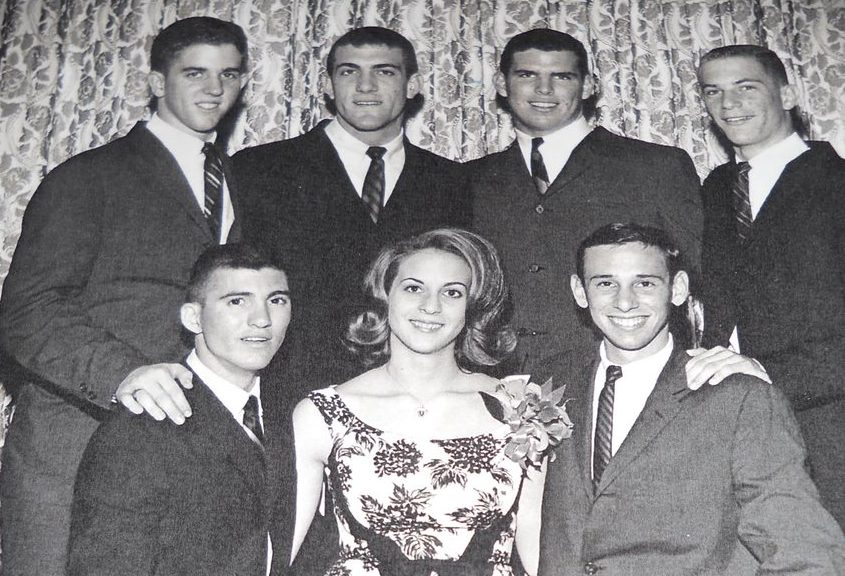
I belonged to Sigma Rho, a social fraternity affiliated with the JCC, and we had our own island. Sigma Rho Island is still there today, about 500 yards to the southwest of the first bridge on Rickenbacker Causeway. In 1959 one of the members died of Hodgkin’s disease, so we started a fund in his memory at the University of Miami. The fund provided up to $500 cash for medical students who had an emergency need. We worked like dogs to raise money for the fund: held picnics, dances, and sold Krispy Kreme Doughnuts. Over the years we raised perhaps $10,000 for the fund.

Other wonderful memories include going to Matheson Hammock Park and the zoo at Crandon Park, Holy Joe preaching at the 14th Street Beach, Wolfie’s 21, Pier 5 downtown, learning to play tennis from “Slim” Harbett at Henderson Park (and sometimes hitting with tennis legend Gardnar Mulloy), and watching the Miami High Stingarees maul every team in sight, especially the classic Miami High – Edison game on Thanksgiving Day in 1963.

All in all, growing up in paradise.

Much has been made of 16-year-old Bill Clinton meeting John F. Kennedy when Clinton was Arkansas’s delegate to Boys Nation in 1963. There’s even a famous photo.

Though I was a bit younger and lacked official recognition, I, too, met JFK. It was a combination of luck and living in Miami Beach. Perhaps a bit of chutzpah, as well.

I was 14 and in ninth grade when I met the president. The meeting took place Dec. 7, 1961, when JFK spoke to the Young Democrats at the Deauville Hotel before going up to the old Americana in Bal Harbour to address the AFL-CIO.

A man from the Young Democrats spoke to our TV civics class one morning. He told us that “grass-roots involvement,” as exemplified by Young Democrats, was the heart of our political system. To illustrate the importance of his organization, he noted that Kennedy would be speaking at its convention the next morning at the Deauville.

“TV civics” might be a confusing label. It was new then; by now it’s likely obsolete. The entire Nautilus Junior High ninth grade — some 400 kids — was herded into the school auditorium. Big television sets sat on rolling towers throughout the room. The TV lecture, about 25 minutes’ worth, went to students all over Dade County. After the TV portion, our on-site teacher would reprise the information and try to get a discussion going.

I thought it would be cool to see JFK. I went to the teacher in charge of the school newspaper and told her I’d like to cover the speech. Although I wasn’t on the staff, she said that if I could get myself invited, she’d sign me out of school for a few hours — a worthy goal in itself. I called the Young Democrat who’d spoken at our school and he set it up. I also arranged a pass for an “assistant,” a role I assigned to my younger sister, Donna.

I knew the Deauville well. It was about a mile from where I lived, and I’d checked it out many times. I often walked up the beach, wandering from hotel to hotel, comparing the pools and cabanas and evaluating the concourse shops. The Deauville was a fancy place, but like many of the newer ones, it was built on a strip too narrow for a good beach. (I imagine the city fathers would want me to point out that today the beach is much wider, thanks to a massive infusion of sand dredged up from the bottom of the ocean. The new sand is nowhere near as soft as the old stuff, though.) Instead, it had a big pool and a concrete deck. That seemed tacky to me.

The next morning Donna and I took the bus to the Deauville. Three years later, it would be where the Beatles stayed on their first Miami Beach visit. Today, it was going to host a speech by the president.

There were perhaps 100 people in the Napoleon Room, on rows of folding chairs arranged on either side of a center aisle. They faced a small stage with a lectern and a dais. I couldn’t see much from the back, so my sister and I grabbed seats in the front row. People smiled at us. We were both in junior high, a good deal younger than anyone else, and we looked about 11.

Kennedy arrived through a service entrance at the front of the room and got right to work. “How can the United States maintain its strength, maintain the peace, maintain full employment, improve the life of our people, spread its influence around the world, strengthen the cause of freedom, survive, endure and prevail?” he said. (That’s not a first-hand recollection — I’ve looked up the speech.)

From 15 feet away, I was mesmerized. When the president finished his remarks and people stood to applaud, I was seized by a sudden idea. I led Donna past the adults on our right and into the hallway he’d entered from.

In just a few steps, we’d left soft carpeting and flocked wallpaper for a concrete and cinder-block utility area. I stopped by a freight elevator. Now, down the same corridor Donna and I had just hurried through, walked JFK, trailed by security. Everyone seemed surprised to see us.

“Mr. President,” I began, extending my hand.

The president shook it. “Hello, young man,” he said.

I introduced Donna and myself. I gave my credentials — I was on assignment for the Nautilus Green and Gold.

“Mr. President, in our school we’re doing a play on Americanism. I wonder what you think of the idea.”

“That’s wonderful,” he said. That’s how I remember it, anyway.

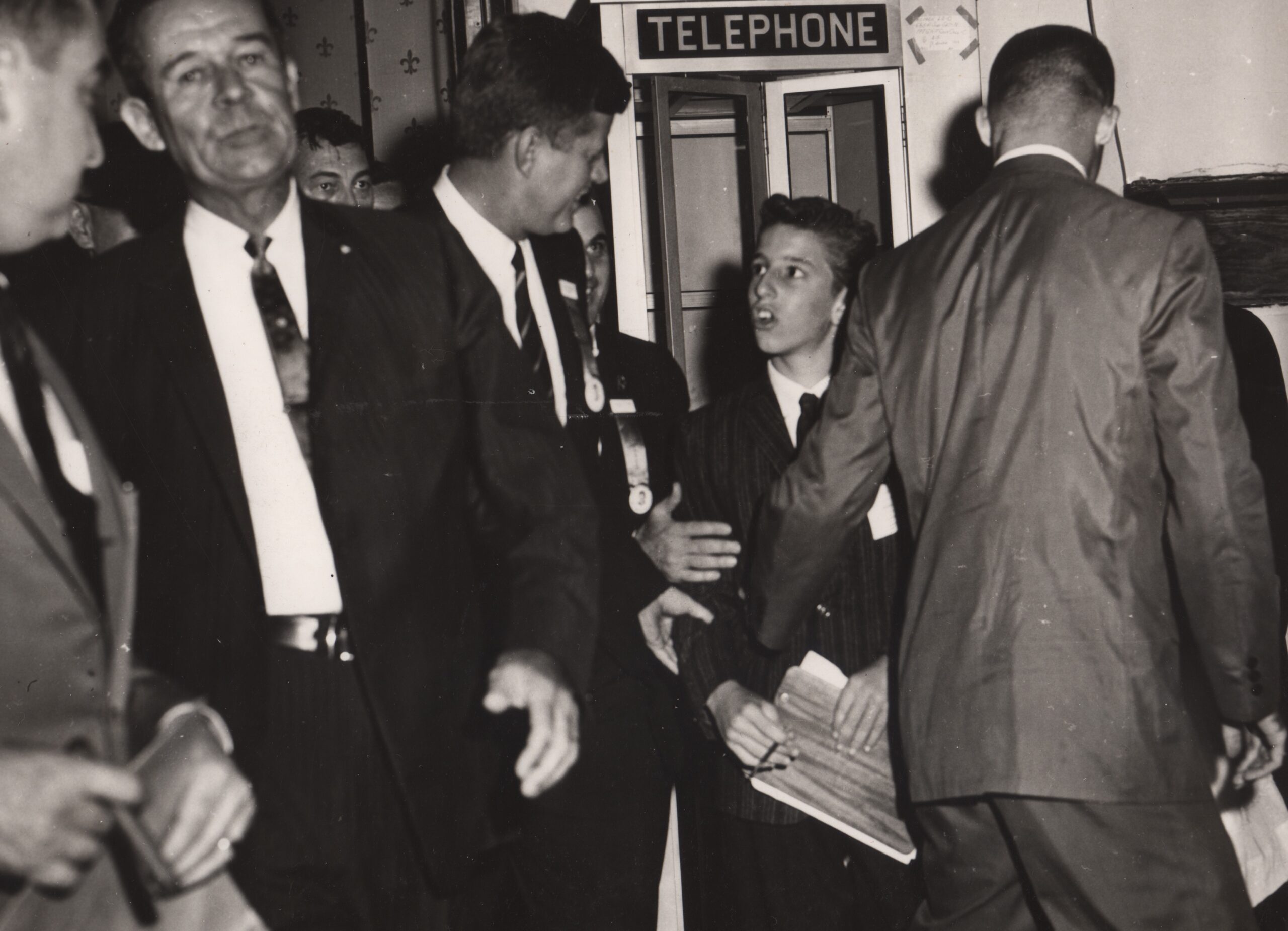
I was about to ask if I could ride with him to his next speech, but several large men now had their hands on me. They weren’t hostile, but they weren’t friendly either. Not by a long shot. They didn’t seem to find a kid’s worming his way backstage to meet the president remotely endearing. Kennedy got on the elevator and the doors closed.

Maybe a week later, a friend told me that the Deauville had a photo of me with JFK. I still have it, in its original Deauville hotel folder. There I am with my oversized front teeth and my hair in a swoop as President Kennedy smiles and the Secret Service attempts to remove me from the scene.

“Look, Mom! I’m a princess!” I used to yell from the inside of a tree that stood the height of a two-story house in the heart of Coral Gables, close to my childhood home, the one my parents still live in today.

The tree stood on a triangular patch of grass bordered by Banos Court, Calbira Avenue and Durango Street. The inside branches formed a seat facing west, and from there I could spot the top of the Biltmore Hotel over the line of houses in front of me. I felt like royalty perched in there.

For years, I could not climb up by myself without my fear of heights taking over. My mom would push my bum up to help me climb on. My clothes would get dirty, but it didn’t matter: I ruled this “land” as Queen of Green Gables. This was my sanctuary.

As I grew up, I’d introduce my friends to “The Big Tree.” I remember my childhood best friends playing tag with me along the trip-hazardous roots, hanging out there after my 14th and 15th birthday party shaving-cream fights, passing time with former love conquests on my previously pure “throne,” its branches marked by initials enclosed within a heart, and many photo shoots I had with my high school best friend prior to her permanent move to Spain.

This tree watched me grow up from being a child with dreams of becoming a princess to a young adult who was just about to start college.

In 2013, I spent the summer before my first college semester walking around the block, stopping at the tree on occasion. I remember distinctly crying my eyes out, sitting on the roots of this tree, post-breakup with the boy who’d taken my virginity.

I wasn’t crying because my heart was broken; I was emotionally abused by him. The words: “No one will ever love you the way that I loved you” messed with my mind, triggering what would become the most difficult years of my life.

May 2, 2013, my tree would die. My sanctuary would no longer be mine to retreat to as bulldozers and chain saws tore down, branch by branch, my beautiful tree which grew no more leaves, just as my sanity grew no more hope.

I lived on campus at Florida International University in the fall of 2013 and even joined a sorority. However, my resident assistant had spotted my behavior change when my boyfriend ended our relationship only a month into college. She suggested the counseling and psychological center on campus, but no matter how much talk therapy I received, my sanity only worsened.

I saw a physician who diagnosed me with depression and prescribed for me the lowest dose of antidepressants, which I’d take daily.

Adjustment to the medication wasn’t quick and my tree wasn’t growing back. The first few weeks on the medication led to thoughts darker than the shadows that once lurked underneath the branches of my old friend.

My sorority prides itself on its many philanthropies, one of them being “Inherit the Earth.” With that, I wanted to become this exact tree in this exact spot with the Bios Urn, creating a tree with my life remains, giving back what my tree had always given me: oxygen to breathe in a natural remedy and breathe out the negative air. I could give oxygen to my beautiful city where I grew up and watch children frolic where I once did. I could be the anchor to children just like my Big Tree had been for me.

In spring 2016 while driving to my parents’ house, I noticed a chain-link fence surrounding empty space where my tree once stood and prayed that a house would not take its place. For a moment, I lacked oxygen.

In summer 2016, the summer leading to my final college semester, I had finally regained the sense of self that I had lost years ago. I was finally happy; the constant storms that had perturbed my brain had dissipated. I was repaired. But I was not the only one.

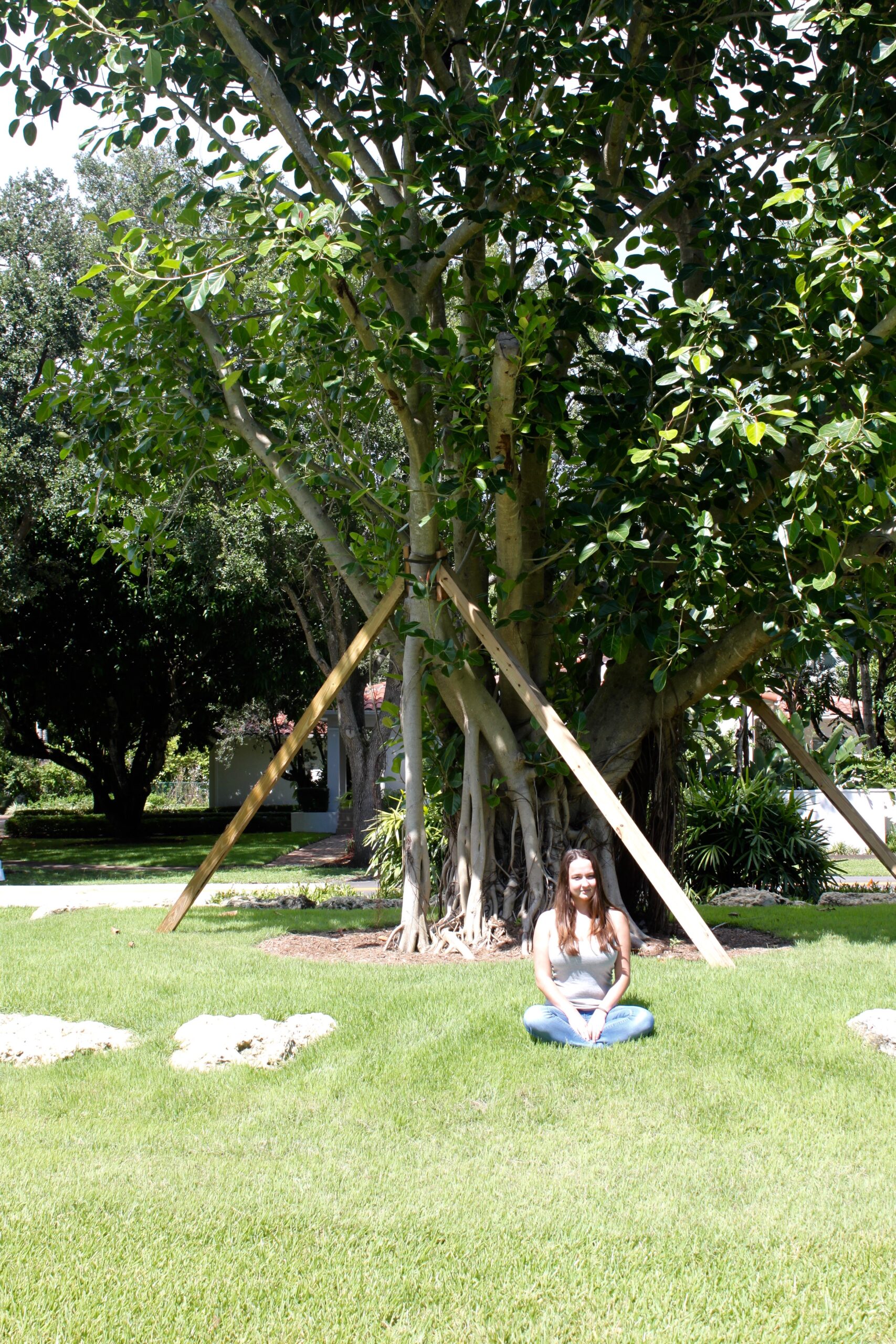
My eyes filled with tears of joy as the gated fence was taken down, revealing a beautiful grass patch with surrounding stone benches and a row of trees leading to a new Big Tree, placed in the same spot as my dear old friend. I felt that my neighborhood had regained that sense of normalcy that it had lost. It felt complete and so did I.

This tree and I had been living parallel lives, I just wasn’t aware of it. She still stands pretty today and I hope my children will visit her someday in the far distant future to etch their own initials on her trunk.

Translate »