fbpx Skip to content
Named Best Museum 2022 by Miami New Times

On the plane ride from Panama to the United States, there was a short layover in Nicaragua. However, we were not allowed to deplane. I looked out the window and asked my mother, “Why are there men with guns outside?” That was my first memory of Nicaragua, where I was born.

The day was Feb. 14, 1985, and I was a precocious 5 year old. I had only heard the stories as my parents spoke with their friends about the events that forced them out of their country. I vaguely knew that the reason we were living in Panama was because of the Sandinistas. It was because of them that my parents were forced to start all over in a different country.

My mother never wanted to go to the United States because she wanted to continue her profession as a professor, which she was able to practice in Panama. In addition, although my father knew how to read and write in English, he saw the United States as a place where he would have to clean toilets, and having been the credit manager of a bank in Nicaragua, he shuddered at the thought. My parents had worked very hard and had overcome many obstacles to become professionals in their country. They wanted more for their children, and that was their main motivation for leaving behind all that they knew.

Under the Sandinista regime, boys would be forced to become part of the military service to defend the “Revolution,” headed by Daniel Ortega, against the counterrevolution, known as “La Contra.” My parents had two boys before me and they refused to allow their children to be used as pawns for something they did not support. So we left for another country without family and without relatives, but where my brothers and I had a chance for a future.

Life always throws curve balls, however, and my brother Lodwin fell sick. My parents took him to doctors and they couldn’t diagnose what was wrong. They took him from specialist to specialist and no one was able to give them a clear answer. After several attempts to take care of the symptoms, the doctors finally came to the conclusion that he had acute lymphoblastic leukemia, which spread to his central nervous system and attacked his vision. My 12-year-old big brother had almost completely lost his sight in a matter of a year. The cancer was attacking his body and the only solution that my mother saw was to bring him to Florida and find out what the doctors here could do for him.

My mother was completing her doctorate in education at Universidad de Panama, and we were supposed to be in Miami only temporarily. My father and oldest brother, Richard, stayed behind because they had to continue with our lives in Panama. After all, we were going back once my brother was well. When we walked through customs, I had five dolls. My brother was in a wheelchair wearing dark sunglasses and his lips were cracked and dry; he looked like a skeleton. My mother was strong and swift; she knew what her child needed and she was going to find it here.

We went to stay at my uncle’s studio apartment off Biscayne Boulevard and 29th Avenue in Miami. My mother slept in a chair and my brother and I slept on a couch. My two uncles slept on the floor. Thankfully, the doctors and nurses in the cancer unit at University of Miami/Jackson’s Holtz Children’s Hospital brought my brother back to life. He went through chemotherapy, and a series of other procedures. Eventually he was in remission, and although he had lost his sight, he was a top student in high school.

We never went back to Panama. Instead my father and eldest brother came to Florida and we all became Americans. We left behind all that we knew. My parents were able to work and grow in different fields, and were able to provide a better future for all their children.

This country gave my brother eight additional years of life. He filled the house with jokes, art, and never complained. My identity revolves around being an American. This country signifies life to me. It brought my brother back to life and it has given me a life that I would not have had in Nicaragua, or Panama, for that matter. I’ve been submerged into this culture and I feel like a tourist when I go back to my place of birth.

Living here, I have had the opportunity to graduate from Florida International University in business, and later had the opportunity to change careers. Here, my political party affiliation doesn’t determine the jobs or promotions I will get. How I feel about President Obama doesn’t determine my future. My children will never be judged by my choices and they will be able to decide their own futures. I have the liberty to grow and achieve what I am willing to work for.

Today, I hold a master’s degree and I teach young people who are very much like me. This melting pot, Miami, exposes us to a “ colada” and “ empanadas” and different ways of saying things in Creole, Spanish, and Portuguese. I have met people who have come from Haiti, Argentina, and Iowa – in one sitting. My students reflect that diversity and that same hope for the future. They have their own immigrant stories and they are here because their parents want a future for them that they cannot have in their own countries. There is no other place like Miami in the world. The United States is a beacon of light, when we have come from such dark paths. I tell them this every day as we salute the flag and “Pledge Allegiance” to it.
Oh, Miami! What a wonderful and glorious place to live.

I have been in Miami since 1949.

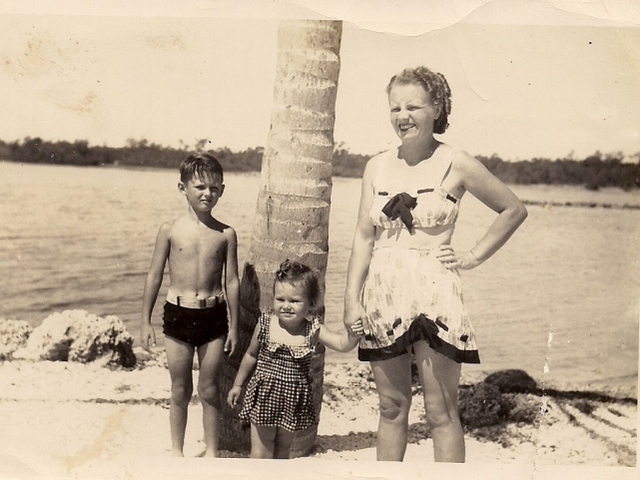
My parents moved here from Pennsylvania, when I was almost a year old. My father opened a soda fountain on Southwest 67th Avenue and Eighth Street. At the time, it was the closest place for the Miccosukee Indians to come and eat. I remember the pictures of them in their traditional Native American dress.

We lived in a small house behind the store, and when my mother’s family soon followed from Pennsylvania, everyone lived in this small home while my father and his new neighbors built a house on Southwest 57th Avenue and 33rd Street. The mortgage? All of $7,000. The neighborhood is now known as Schenley Park.

When the area on 67th Avenue started to build and added a drugstore, my parents sold the business and my dad took a job at Dressel’s Dairy Farm as a milk delivery man. He used to get up at 4 a.m. to start his milk route. What a great place.

Dressel’s Dairy was a farm with an ice-cream shop, ponies to ride, and cows to watch being born. We used to have great birthday parties there. Sadly, this place also closed and moved upstate to a bigger plant.

I also remember the Holsum Bakery on South Dixie Highway. Who could forget the great smell — a smell you just waited for?

When my uncle Paul went to the University of Miami he would take me to football games and we played on the grass.

My grandparents soon moved into their own home on Villa Bella Avenue. My grandfather continued to work as a food business owner. I loved the trips with my grandmother to downtown Miami where we would go to the old Burdines store and I used to get M&Ms; by the pound because they were not packaged. Burdines had a “ladies lunch room” and an ice-cream parlor, which was such a special treat. At Christmas time there was an amusement park on the roof with wonderful rides and, of course, Santa Claus! So sad, it is all gone now.

One of my grandmother’s favorite places was the cafeteria on Miracle Mile. We would go there for lunch. My grandmother lived in her house on Villa Bella Avenue until her death at 103.

My dad’s favorite things were Bird Bowl and waking everyone up to go to 7 a.m. Mass at the Church of the Little Flower. Mine? The skating rink next door to Bird Bowl. My mom’s? The Slim and Trim club, to which she belonged for over 25 years.

My brother and I would walk to what was then Children’s Variety Hospital. We would fly kites and play football in their front yard. It was such a big place to have fun!

There is a canal a street over from my parents’ house with open towers in which to play “king and queen.” They were sealed shut later because of bats. The boys in the neighborhood would swim in the canal and it was sparkling clean, but I was too scared so I would just walk the wall behind the canal.

The Biltmore hotel had a pool that was so deep you could “scuba dive.” Doctors were trained there. Somehow, my doctor got my friends and me into the pool. It was so deep that it scared us.

We had Fuller Brush men coming door to door selling such great products, and also a knife sharpener who would come by every month to sharpen all of my mom’s knives. One of the most fun things was the man with ponies. He would come to our houses and had hats and costumes to take pictures of us riding. It was just a great thing to do.

When my father worked at the dairy he would get off on Wednesdays, which meant breakfast at Crandon Park. Back then it had grills set up with picnic tables and even spigots to clean with. Mom used to say I loved the spigots more than the beach. But how could you forget the zoo and amusement rides there? What a special treat to go there. I remember taking my children to the zoo and the rides there.

Mr. Crandon had a huge house on 57th Avenue that was set way back; it had a wall around it and the kids used to walk on the wall till the butler would catch us and come running to make us get off. Now that area is filled with houses.

How can I ever forget the Venetian Pool? So cold and so big. It had a snack bar when you first walked in and I just loved to get the cherry sticks, hot dogs and Florida trinkets. They even had a Miss America contest there! The pool had islands in the middle and a cave with an opening you could dive through. You had to swim across the pool before the lifeguards would let you go to the diving boards. How proud I was to do that. The pool is fed with an underground spring and every night it was emptied and refilled with ice-cold water.

We would drive to the pool and have to do a circle around this huge fountain with faces that sprayed water. On special days we would go by the fountain and it would be full of soap bubbles to clean it. But as I grew older, I spent less time at Venetian Pool.

Oh, Miami!

My great-grandfather, Joseph Rapisardo, Sr., was a farmer in Chester, New York, with my grandfather, Leo Nicotra. As the cold and nasty winters arrived every year making crop growing a challenge, they decided to move to sunny Florida in 1950.

After arriving in Florida my great grandfather and grandfather built a home in Homestead, Florida on the corner of NW 8 Street and 6 Avenue. On the adjoining property they decided to plant onions. The crops grew well in the South Florida’s sunny winters. In 1950 the area was rural and Homestead only contained 4,573 residents.

After being so cold in the winter, South Florida was a piece of heaven and that is why for more than 50 years the family has continued to live in South Florida. At first my great-grandfather and grandfather tried to settle in Naples, Florida, but did not care for the area or the soil. They both agreed to move to the small town south of Miami known today as Homestead. It was a perfect fit for raising a family and starting a farming business.

After the elder Rapisardo and Nicotra were deceased, the children and grandchildren continued the family tradition. My father, Gaetano Talarico married my mother in 1962 in New York and in 1967 he also moved to Homestead, Florida. After falling in love with the area he started F&T; Farms, which is now over 40 years old.

I, too, went to school here in the winter and also in New York for the summer to continue the planting of the onion seeds. My uncle, Joseph Nicotra, continued the tradition that his father, Leo Nicotra, and grandfather, Joseph Rapisardo, started back in 1950.

The seeds were planted in December and the plants were pulled in April. Joseph and Leo made the long trip back by truck to Chester, New York, where they were planted again only to be re-harvested in July.

In 1953 the Homestead Air Force Base opened and grew the community to 9,152 residents and became a national center of attention since it contained the closest jet fighter facility to Cuba. With the new growth in Homestead, it still remained a part of an agriculture spot as it is today.

The property to date, now on the corner of NW 8 Street and 6 Avenue, houses duplexes that are still owned by the family. I have now lived in Homestead for nearly 46 years and was so proud to be a part of the Nicotra-Rapisardo family and learning the history of the planting seasons.

The winter in Cleveland was very cold and snowy in 1975.

We just came home from a night on the town, and Mort tried to put his key in the front door lock, but it was iced over.

He grabbed The Plain Dealer, which was under the mat, and luckily had a match in his pocket. He burned the newspaper to melt the ice so he could unlock the door.

As soon as we were inside, we said, “Let’s get out our Florida file.”

We had started the file a few years before since someday we planned to move to the warm weather.

“You better study for the Florida State Optometry Board,” I said. Mort wasn’t ready to retire at 48. He graduated from Ohio State University in 1951 and after 25 years, studying again was quite a determination. But he passed the state board in 1976.

We were boaters and spent weekends on our boat, Eye Spy, at Cedar Point on Lake Erie.

At first, we were going to sell the boat, but we decided it would be an adventure to sail to Florida.

It was September 1979. We contacted two boating couples, each of whom accompanied us half-way.

We started the voyage from Cedar Point, then sailed east to Buffalo, where we entered the Erie Barge Canal. It took us several days to go through the 33 locks and descend from 564 feet to 49 feet above sea level, to the Hudson River near Albany.

Sailing down the Hudson was beautiful. We passed FDR’s home, West Point and Sing Sing prison.

In the New York harbor, we cruised past the Twin Towers of the World Trade Center.We cruised down the Intracoastal; our voyage took 22 days. We sailed right into the dock at the Eden Roc condos, where we bought a three-bedroom, 2½-bath unit on the Intracoastal in Sunny Isles — for $79,000.

Collins Avenue back then was a string of motels. Now, it’s a string of high-rises. The Thunderbird is still here — we go there for great dining and dancing.

We loved the Rascal House, which sadly is gone. Our kids water skied on Maule Lake near the Bay.

We are very lucky to have all our children near us. Our two daughters settled here and our son moved here shortly after we arrived.

Today Mort is 81 and I’m 79. Mort had a wake-up call in 1972, had a heart attack and by-pass heart surgery.

This prompted him to start a healthcare program, which includes diet, nutrition, exercise and stress management. We do not take drugs, feel great and go dancing EVERY night.

We join other couples and call our group, “Do Ya Wanna Dance?”

I got here by way of birth, born in Victoria Hospital, which was built in 1924. My mother, Louise Guckert, came from Louisville, Kentucky, and she married Ralph Yount, also from Louisville.

My mother was a trip; she never counted this first marriage because today people would just have lived together. The only reason I know about it is because Ralph’s mother remained a friend to us and was there when I was born. Ralph worked for a cruise line that was based in Miami, and the ships went from Miami to Cuba and back to Miami. My mom and his mom would go on the cruises. Can you imagine what a ball this was in the 1920s?

Between marriages my mother worked for Smith, Richardson & Conroy. Her second marriage was to Verne Vivian Buell, born August 23, 1902, in Ft. Pierce. He was the owner of a dry cleaners located just over the Flagler Street bridge. They were married in June 1935 in Louisville. I came along the following year. Mother attributes her one and only pregnancy to the June Taylor dance studio where she took tap lessons. Mom was third-generation American.

My father is another story. He was the last child of Lula Mae Summerlin, born January 8, 1867, in Florida, daughter of Capt. John Alexander Summerlin, Confederate, 1st Regiment, Florida Cavalry. My father’s father, whom I never knew, was Sylvania Selvester Buell, a Union soldier. My lineage goes back so far I lost patience, but stories have been handed down that these two men could have some very heated conversations.

Mother never told her correct age on anything — my birth certificate, her marriage license, her driver’s license, or her voter registration. We lived on 12th Street near the Orange Bowl. There were no gates to keep people out so this was my very early playpen. Mom would take me there and I’d run up and down all over until I was exhausted.

We moved to Southwest 32nd Avenue between 8th Street and Flagler. I went to school with Indians and white Americans at Orange Glade Elementary, located on the corner of 27th Avenue and 8th Street. The buildings were little wood houses. My second grade teacher, Ms. Rice, thought I was such a pretty little girl she entered me in an audition for the opera Carmen. I made it. The opera took place at Miami High’s auditorium.

I remember riding a trolley car on Flagler Street. It went from 32nd Avenue to downtown. My mother would take me to Burdines, and on my birthday, I would get a special princess ice cream with a porcelain doll that sat on top of a flowing skirt of ice cream, trimmed with silver candy beads.

I loved school, especially when first and second graders got to bring a blanket to school and lie down under the pine trees after lunch and take a nap while listening to classical music coming from a gramophone. I would give anything for all you who came later to know what it was like.

Sometimes my mom would pick me up after elementary school and we would go downtown to Richards Department Store and for a dime the jitney would take us to South Beach.

First we would stop at a street corner juice stand and have a fresh-squeezed orange juice. We then walked a block to the ocean and you could look down the beach, and as far as you could see the water was crystal clear blue. The sand was clean, so white it hurt your eyes, and not a high rise in sight. There were very few people then and you felt like you could run free.

The war broke out, for those of you too young to remember World War ll. It didn’t seem to faze us much until south Miami Beach, full of Art Deco hotels and small apartments, became a training ground for American soldiers. This didn’t stop my mom’s family; they were snow birds of the first degree. The little motels and Art Deco hotels became barracks and the rest was left for vacationers.

The family always rented a place for winter and Mom and I would join the relatives. Wolfie’s was the choice for lunch pickles in a bucket and sauerkraut in another. Soldiers marched all around the apartments. Remember, I was very small but won’t tell tales out of school.
Early in the morning two soldiers would come by and pick me up and take me to the beach where binoculars were available. They would lift me up to see and sure enough there were submarines close to the land. I don’t know if they were kidding or not but they told me they were German submarines.

I would ride my bike to school and go home a different way, and sure enough the bike was always where I left it.

I’m still here, married to another native Miamian. He shot missiles to the moon, went to MIT and owned Clifford’s restaurant. We both remember when.

The Chandler clan arrived in Miami early in the 1920s so that my father’s father, Thomas Chandler, could make a living working construction in those boom years of early Miami prior to the big hurricane of ’26 that destroyed it all. The family, including six children, lived in the Allapattah area enjoying the fruits of the tropics and fresh-caught fish from the-then pristine Miami River.

The maternal side of my family arrived in 1944. My mother, then 23, had had enough of the cold Indiana winters and longed for warm breezes and the glittering nightlife that was Miami. She arrived by train, suitcase in hand, $75 in her purse along with the phone number of a friend’s grandmother who might be able to put her up for the night.

It was with this journey that Velma Ruth Villwock of Indianapolis became Ruth Villwock of Coral Gables. Always one to dream big, my mother took the bus downtown and, looking skyward, saw the towering Alfred I. DuPont building on Flagler Street and declared that she would work there.

I don’t think that my mother ever took no for an answer, and consequently worked there a short time until seeing another impressive building that called her name. While living on Alhambra in Coral Gables and renting a room in the home of a wealthy elderly couple, “Mom and Pop Rhoads,” she became acquainted with the majestic Biltmore, then an Army Air Force hospital.
Once again, setting her sights high, she gained employment as a medical secretary in orthopedics at the hospital.

She changed her residence to an apartment within walking distance of the fabulous edifice. Thus began her magical “Biltmore days,” eating lunch by the pool, watching celebrities like Johnny Weismuller and Esther Williams come and go, meeting wounded GIs, and dancing with soldiers at USO parties. Her photo album is filled with lovely, smiling young women and handsome men who crossed her path and are ever immortalized in fading black-and-white photos, names unknown.

A highlight of those days was a reception given at the Biltmore for General Dwight D. Eisenhower where, as a date of her boss, Mom shook the hands of the general and his wife, Mamie. Miss V., as Mom was known to her boss, was dressed to the nines and was as glittery and sparkling that evening as the event itself.

In 1947 at Coral Gables Methodist Church, she married a handsome young Marine, my father, Joe Chandler. In 1950, they bought a house on the GI bill for $50 down and $50 a month in West Miami. It was there they began their family, which included my brother Bob and me. They raised us in Riverside Baptist Church in a city where we could walk to the corner Grand Union for groceries and play outside until the street lights came on.

In 1960, when our first Cuban neighbors moved into the house next door, my mother made them feel welcome and mentored the young mother in the ways of our city. Neither spoke the other’s language but as mothers, they communicated with the same language of the heart with a little help from their children and much pantomime.

My father was busy building a business, Craftsman Commercial Interiors, which was located on the Palmetto Expressway near Hialeah. The business built and installed interiors for restaurants and bars. It couldn’t have existed at a better time. Miami was growing and prospering, as was the Bahamas. Dad frequently flew on a small plane to the Bahamas for installations. His business had among its clients Chippy’s restaurant on Miracle Mile, where the New York-style cheesecake was out of this world. Our family got a kick out of sitting in the booths that were our dad’s handiwork.

As the business prospered, my parents wanted more for their children, so we moved to a new pool home in the Westchester area where Bob and I could attend the new, all air-conditioned Miami Coral Park Senior High School.
Miami grew and changed quickly; when my parents retired in 1975 they, like so many others, left for northern Florida. In 1992, my mother returned as a single woman because Miami had never left her heart. She closed on her condo in Kendall the weekend Hurricane Andrew arrived.

After six months, she was able to move in and lived in her condo 20 more years, enjoying all that Miami had to offer. Her connection to the Biltmore continued as she went for tea in the lobby and had brunch on the terrace. She especially loved the 4th of July fireworks at the Biltmore and even took the tour inside, adding details of the Biltmore’s war days to the docent’s speech.
My mom’s love of Miami never ended and her tales of the magic of being young in Miami during the war years live on with her children and grandchildren.

We gather back in Miami for her funeral this week and to celebrate her life. The balmy breeze and slanted light of autumn remind us that for everything there is a season. This magic city grew in my mother’s lifetime from a winter vacation playground for northerners to an international metropolis. It changed with each decade as we did. What doesn’t change is the clear, clean air from the ocean, swaying palm trees, the vibrant green of our tropical plants, explosion of color from bougainvillea and hibiscus, along with stories and memories of our beloved and unique home. We all attest to the fact that Miami with her flair and charm is in our hearts always.

Spanglish.

I do not know when I first heard that word, but it pretty much summarizes how I feel about growing up in Miami during the 1970s and ‘80s.

To me Spanglish is not just a mixing of English and Spanish; it is the mixing of two diverse cultures. It is a culture unto itself.

In the 1970s, I lived on 13th Street, five blocks away from Calle Ocho. It was a working class neighborhood — mostly lower-income families living in two-bedroom duplexes. Every morning, I walked to Auburndale Elementary, past Woodlawn Cemetery, La Lechonera, and Velvet Cream Doughnuts. In other parts of the country, I would have played with kids named Mary or John, but in Miami, my playmates had names like Maria and Juan.

At the end of the day, when we were called in for dinner, I would eat beef stew, while my friends had carne con papas. “Ay Mami” and “Oh Mom” translated to the same desire to stay outside ” cinco minutos mas,” or five minutes more.

My mom picked up eggs and milk from Farm Stores; my friend’s mom called it La Vaquita. Because it was a working class neighborhood, both parents worked in many homes. Those of us who came home to empty houses were welcomed into homes with an abuela present, who made sure you got an afternoon snack, did your homework and stayed off the roof.

I took cultural differences for granted. Spanglish was how we understood one another. It blurred the lines between languages and gave us common ground so we could get on with the business of being kids.

Summers are long when you are a child, but in Miami summer lasts most of the year. I spent my weekends with the neighbor’s grandchildren exploring Bill Baggs Cape Florida State Park, also known as El Farito because of the historic lighthouse. We searched for hermit crabs and sea slugs. We were sunscreen-free with sand baked on to our bodies. We climbed onto picnic tables, ate sandwiches wrapped in foil, and drank water out of a thermos before heading back home to play a few more hours outside.

Other times, I spent weekends with a dear friend who had moved on from our neighborhood. Those Saturdays consisted of all day in the pool and backyard barbecues. We did this all year, never thinking that in September and October kids elsewhere were wearing sweaters. For kids growing up in Miami, shorts and T-shirts were a way of life.

If my brother had extra pocket money he hoisted me on the back of his bicycle, and took me to the Machine Shop to play pinball, or sometimes to the Coliseum, a gorgeous old bowling alley off 37th Avenue. The bowling alley changed over the years, and eventually was torn down and a Publix now occupies the site.

We sneaked into the Gables movie theater on more than one occasion. If we were lucky and my mom had time off, she would take us to the Venetian Pool in Coral Gables. I eventually was married there in my 20s.

In the 1980s, Central and South Americans and Haitians became part of the Miami landscape, bringing a new dimension of diversity to a city that already had many identities. The city and its people became media targets.

Miami was the poster child for violence and racial tension. I remember watching Channel 10 news and the broadcasters talked about the violence that was taking place in the streets. I didn’t understand what was going on back then.

Talk of cocaine cowboys and images from the television show “Miami Vice” began to show up everywhere. I did not know this version of Miami. My version of growing up was more like the PBS show “¿ Qué Pasa, U.S.A?” I did not grow up surrounded by violence, I was not afraid to play outside. The only time I ever heard gunshots was when some of the men in the neighborhood shot off their rifles to ring in the New Year.

We moved for a year to Birmingham, AL. It was the first time I experienced the change of seasons; We had a bigger house, I lived in a better neighborhood, and I went to a good school. But I felt like I was missing something. It felt strange to be surrounded by Marys and Johns. It felt strange not to smell café Cubano and sazon criollo wafting from the neighbor’s house in the morning and evening. It felt weird not to communicate in Spanglish.

We moved back after only a year, and the missing pieces fell back into place. I caught up with my old friends and life resumed its normal Spanglish rhythm.

To this day, even though I understand Spanish completely, I speak Spanglish. I have been lucky to travel as an adult. I love the hospitality of the Deep South, the romance of Paris and the hustle and bustle of New York. However, Miami is my heart and its Spanglish culture will always be my home.

The year was 1973, the beginning of October, and for our Indian-origin family of five, the beginning of our new life.
I had just turned 6 and my first memory of our new hometown was actually one of fear. Everything here looked so big and spread out. The city’s bright lights especially scared me. Before moving to Miami Beach, we had lived all over England.

I’ll never forget the drive from Miami International Airport to our two-story apartment building on Normandy Drive. The neighbors living beneath us, Ralph and Betty, spoke Spanish, a language we had never heard before.

My father Virendra Bhuta, a 40-year-old physician, had only come to the United States a few months prior. My uncle had been telling my dad for years to move from the UK to the United States. He also advised him that there were only two possible places where he should choose to live: California or Florida.

After applying to a ton of medical residency programs throughout the country, Miami ultimately came calling Dr. Bhuta. What did my parents know about Miami before coming here? They knew only three things – sunny beaches, beauty pageants, and lots of millionaires!

My father, who had practiced reconstructive plastic surgery before coming to the U.S., unfortunately had to give up his love of being a surgeon. He did a medical residency at St. Francis Hospital in Miami Beach. In 1973, he was only earning an annual salary of $10,000, not much to support a family of five. After only a year of training, my dad eventually turned to emergency medicine. Baptist Hospital in Kendall had the privilege of his expertise in their ER for more than 30 years.

Pravina, my mom, also did more than her fair share. Being 11 years younger than my father, it wasn’t easy for her to take care of my two brothers, ages 4 and 8, and me. She put my older brother, Amar, and me in Treasure Island Elementary. Incidentally, the school’s principal was Christina M. Eve, who would eventually have an elementary school named after her. .

Soon my mom also became an Avon lady and receptionist at nearby Mount Sinai Hospital. Her best customers were the employees at the hospital. Her monthly Avon meetings were around the corner at Howard Johnson’s.

My parents really took full advantage of achieving the “American Dream.” In October 1973, we were living in a two-bedroom/one-bath apartment in Miami Beach. By January 1976, they had already purchased their first home. It was in Kendall, a four-bedroom/three-bath home with its very own swimming pool. My brothers and I attended Blue Lakes Elementary. In fact, we were there the year it “snowed” in Miami. I still remember the snowball fights.

We also went to Glades Junior High and Southwest Miami Senior High. Our higher education came from Miami-Dade Community College, Florida International University, and the University of Miami (where we were national football champs for my senior year). My older brother, Amar, eventually went to Ohio State University medical school to become a doctor.

We have enjoyed many things growing up here in Miami. My dad and brothers would enjoy going to Dolphins games at the Orange Bowl. Of course, we didn’t move here until the year after their perfect season. We also remember attending the spectacular Orange Bowl Parade for New Year’s. I recall the aroma of roasted peanuts and delicious chocolate in the air, along with all the decorating of Winnie-the-Pooh teddy bears.

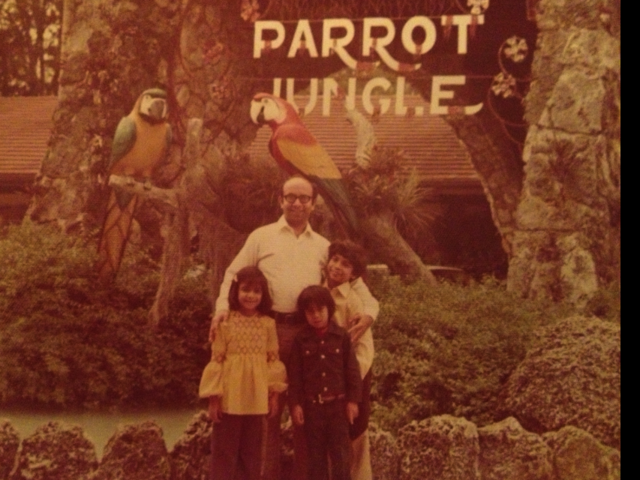
My teen year weekends always included visiting Burdines and Jordan Marsh in Dadeland Mall. The Falls being built seemed so luxurious, now that we had a Bloomingdales. Eating at LUMS was always a treat, as was being a spectator at the annual Bed Races in Coconut Grove. The Seaquarium and Parrot Jungle were always places to take our out-of-town guests. We also enjoyed showing them the colorful sails gliding on the water at Key Biscayne every weekend. Crandon Park beach was also always a fun time.

My mom even got to chaperone a few beauty pageants in the 1980s. They were all broadcast from the Knight Center in downtown Miami. She did Miss Universe, Miss Teen USA, and Miss USA (the one where Halle Berry was Miss Ohio).

I feel very fortunate to have lived here for most of my life. While I am now 45 and have traveled extensively, I can’t imagine living anywhere other than Miami. Yes, I’ve seen many changes here over the years, but for the most part, they’ve been beneficial for our community.

My parents still live in Kendall, in a different home, near Norman Brothers. My husband, Rajesh, is an interventional cardiologist, practicing mainly at Baptist Hospital and Kendall Hospital. I help with the bookkeeping for his solo practice. I have three daughters.

Seeing my own children and husband live where I grew up is such a great feeling for me.

It’s as if everything has come full circle. For me and my family, Miami will always be our wonderful “Home Sweet Home.”

Yes, I am a Miami native, born in 1951 at St. Francis Hospital on Miami Beach. My dad was in dental school at St. Louis University and my parents came home so I would be born in Miami.

My dad Jerry Denker a native of Brooklyn, N.Y., attended Miami Beach High and played football there in the early 1940s. My grandparents, Julia and Harry Mahler, had a dry cleaning store, DuBarry’s, on Fifth Street.

After the war, my dad met my mom (Gloria, from Woodbridge, N.J.) while she was vacationing on Miami Beach near the store.

After my dad finished dental school, we moved back to Miami and lived in a small duplex on Southwest Seventh Street in what is now known as Little Havana.

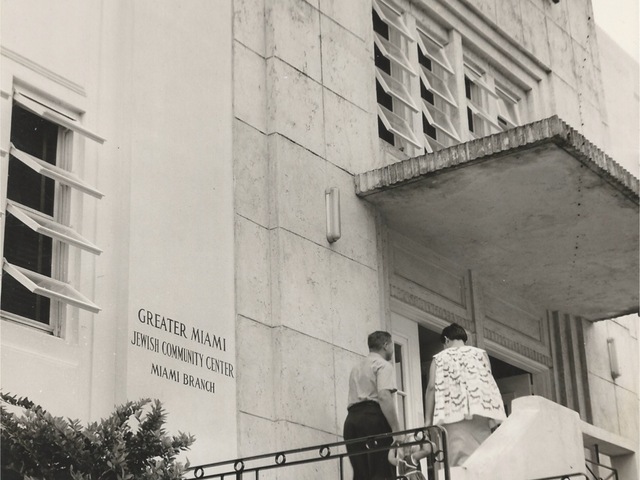
I attended the Miami Jewish Community Center (YMHA-YWHA), also located in the neighborhood, for kindergarten.

In 1955, we moved to a new housing development called Westchester. Everyone wondered why we were moving to “nowhere” in the Everglades.

Actually, it was in the area of Coral Way between Southwest 78th and 87th Avenues. There were no expressways and the neighborhood at first was barren, with no trees or landscaping. My father set up his dental practice on Bird Road and I attended Everglades Elementary School.

In 1957, when I was 7, my sister, Marti, was born at Jackson Memorial Hospital. Little did I know that as an adult, I would work at Jackson as a nurse for more than 38 years.

Westchester was a great neighborhood for growing up — playing ball games and riding bikes on the quiet streets, knowing most everyone in the community.

My dad, a proud Gator from the University of Florida, influenced my sister and me in many ways.

Dad was an all-time sports lover and we spent much time in the Orange Bowl, cheering on the University of Miami Hurricanes, claiming season tickets when the Dolphins arrived in Miami, attending the Golden Gloves boxing in Dinner Key, and any other sporting event that came to town.

I have many remembrances of the “sleepy” town of Miami where we did not lock our homes or cars. We picked strawberries and tomatoes blocks from our home.

We walked to the shopping center in Westchester and bought 45 RPM records at Zayre’s. I spent summers hanging out with friends and club members at the Westbrook Country Club (Southwest Eighth Street), later to become the “Y” where my Coral Park swim team practiced. My family liked to go out to eat and some of our favorites were the Red Diamond on Lejeune, the Pub, and Glorified Deli on Coral Way.

My grandparents lived on Miami Beach, and it was always a treat to sleep over and go to Flamingo Park and the beach.

I remember the long ride to the beach weaving in and out of streets through downtown, before the expressways. My girlfriends and I would sometimes take the bus to South Beach and hang out by the old dog track.

If it wasn’t the beach, we would ride the bus to Miracle Mile, shop at Young Sophisticates, eat lunch at Jahn’s Ice Cream Parlor and see a movie at the Miracle Theatre.

As a result of the sports culture in our lives, I became a competitive swimmer and swam with the Coral Gables Swimming Association at the Venetian pool from 1959 until I joined the Coral Park High School swimming team in 1966. My sister became a competitive tennis player and often played at Salvador Park in Coral Gables.

My mom, very dedicated, would drive us back and forth to swimming or tennis practice, sometimes more than twice a day. We would spend weekends at swimming meets anywhere from West Palm Beach to Miami.

To this day, I continue to swim and work out with groups at José Martí Park. I have great friends from my age-group swimmers and the Masters swimming community of South Florida.

Needless to say, I attended the University of Florida and also became a loyal Gator and a nurse practitioner. I spent a great 38 years at Jackson Memorial Hospital in many roles, caring for the people of Miami-Dade County.

I continue to reside in Miami in a building with a great view of the beautiful bay and downtown skyline, not far from the little duplex that still stands on Southwest Seventh Street.

My family came to Miami from Holland after World War II. My father had first visited the United States during his youth while working for the Holland America Cruise line.

He knew the United States was the land of milk and honey. So after the war, in April 1947, my parents, my brother (6 years old) and I (1 year old) came to the U.S. aboard the SS Noordam II and were processed through Ellis Island and then directly to Miami, Florida.

We lived with Mrs. Miller, who was the mother-in-law of my father’s uncle. She resided in South Miami near the Cocoplum Women’s Club on Sunset Drive for a short time. We then moved to a home on Red Road and SW 46 Street. My parents became proud citizens in 1953 and my brother and I were naturalized through our parents.

I attended kindergarten at the Cocoplum Women’s Club on Sunset Drive; I was in the Red Bird class. From there I went to David Fairchild Elementary.

I remember being so excited after getting out of school and my mother would walk with me to Allen’s Drug store on the corner of Red Road and Bird Road to get a nickel (yes, that is correct, 5 cents) ice-cream cone. Walking to the supermarket and drug store was common for us.

It was about 6 blocks which seemed very far for my little legs but it was well worth the trip to get ice cream or candy. There was very little traffic on Red Road at that time, and I can remember sitting on a coral rock fence that surrounded our property waiting for a car to come by so I could wave at them.

We frequently went to Matheson Hammock; I learned to swim there. The Eskimo Pie ice cream was an added treat from the concession stand in the coral rock building. We also went to Tahiti Beach years later so we could go on the slide, which was moored in the lagoon. That public beach has since gone to make way for the elegant houses there now.

My father worked as a Master Mechanic for Pan American Airlines for 25 years. This would enable us to fly to Holland on a few occasions. I was 9 years old on my first flight to Holland and remember it being a propeller aircraft. It flew from Miami to New York, Greenland, Iceland, London and finally to Amsterdam, Holland.

I was airsick most of the trip; flying has greatly improved since then. My father took me to visit the Pan Am building on 36 Street when I was about 10 years old. I remember being so impressed with how BIG the aircraft and hangers were. It was a sad day when Pan Am stopped flying. My Dad was very proud to have been a part of Pan Am.

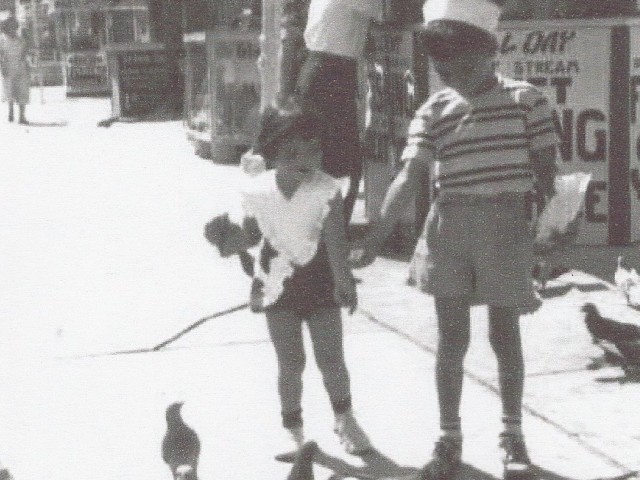
My mother would take me to Dadeland Mall, which looks nothing like it does today – it was an open air mall. Before Dadeland opened we would take two buses to downtown and take time out to feed the pigeons at Bayfront Park. At Christmas we would go downtown to enjoy the carnival rides that were on the roof of Burdines. What a special time it was!

After attending Southwest Senior High I went to work at Sears in Coral Gables in the credit department. Several years later I started my own office products company, which was located near The Falls. After 20 years of ownership I sold my company to invest with my stepson into a financial services company which was located in Palmetto Bay.

I have since sold my shares and enjoy all the free time I have to appreciate how beautiful our area is. Having lived in Palmetto Bay for over 30 years, I have many memories, such as dining at Black Caesar’s Forge on the corner of 152 Street and 67 Avenue, famous for their potatoes baked in a tree resin.

We also had land crabs the size of a small dinner plate running through our yard. It was impossible to drive 152 Street without running over them. I never see any large ones anymore once in a while a few small ones appear.

It has been a blessing to see Miami grow from a small town to the multi-cultural beauty that it is today.

Translate »