fbpx Skip to content
Named Best Museum 2022 by Miami New Times

There was a lot happening in Miami in the middle and late1920s when my father, Tom, and my mother, Ruth, as newlyweds, came across the Tamiami Trail from Fort Myers.

My father, nicknamed “Doc,” had been in the lumber business in Fort Myers as a young man and left for Miami to take a management position at Cheely Lumber Corp., located on 17th Avenue, just north of the Miami River.

Miami was a growing town with great opportunities in the ’20s, especially in a business that provided lumber for a growing South Florida.

Despite the 1926 hurricane and the Great Depression, Florida was experiencing what was then called the “Florida Land Boom.” The lumber business was sound and so was Cheely Lumber when my parents arrived in Miami. Mother said she and my father never felt the effects of the depression years, because there was always a need for lumber. My dad was in the right business at the right time.

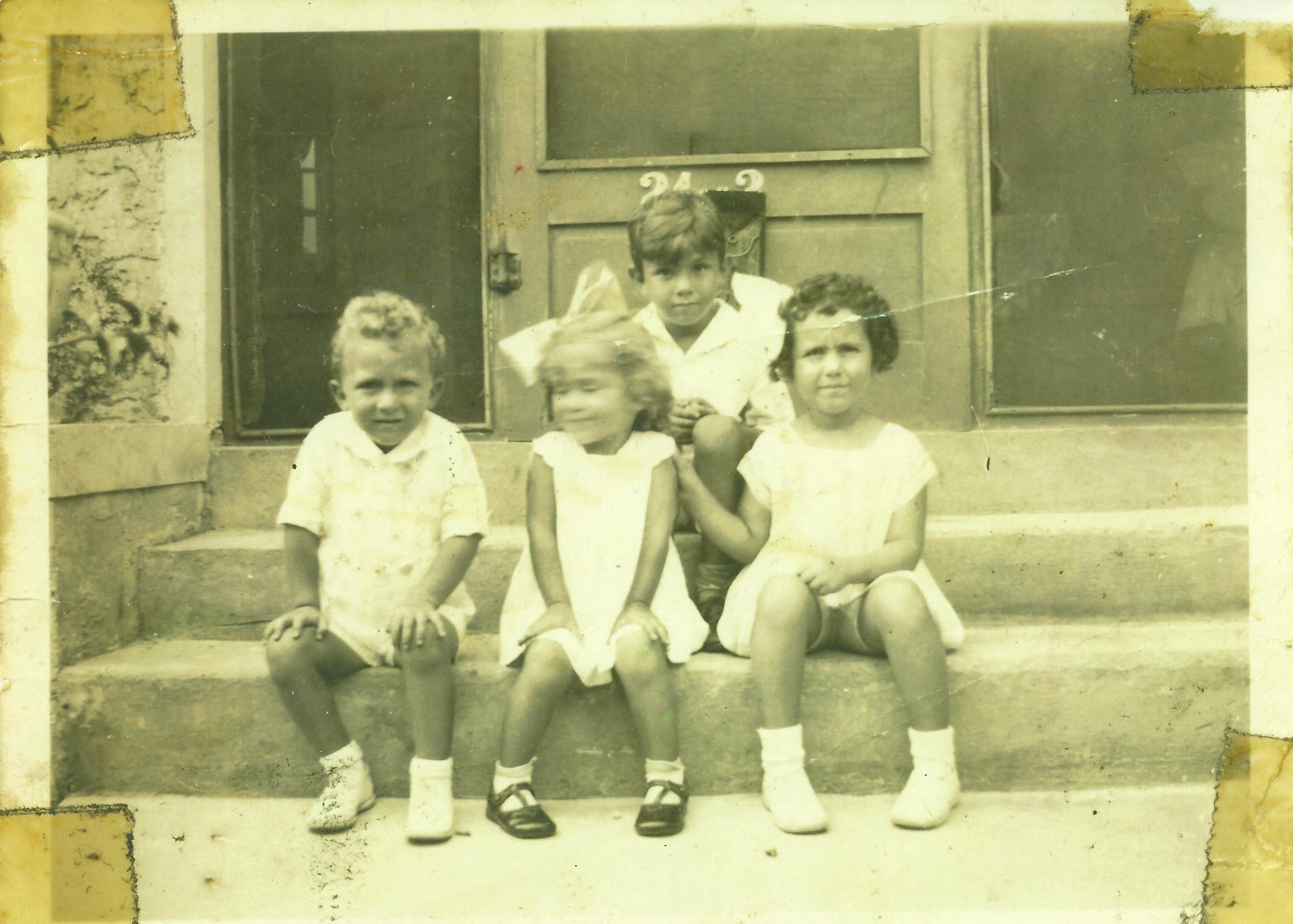
My older brother, Tom, and I were born in 1932 and 1934, respectively, at Miami’s Victoria Hospital. A few years later, my father built a small “Cape Cod” style house on Northwest Third Street and 25th Avenue, which became our home. My father and mother planned to live in this little two-bedroom and one-bath house for only a short time. They already had plans for a larger home closer to town. That never happened. Doc and a business associate were in a car wreck one night while traveling to a lumberman’s meeting in Kissimmee, Florida. Both were severely injured, and both were hospitalized in Kissimmee. About a week later my father died from complications of his injuries. His associate survived but walked with a limp the rest of his life.

The year was 1938. My brother was 6, I was 4, and mother was a widow at 30. Our little two-bedroom house was intended to be a starter home for our small family, but instead became the only house mother ever owned. Mother remarried but continued living in that little house until her death in 1976.

We lived within walking distance from both Citrus Grove, on Northwest 22nd Avenue, where Tom and I attended elementary and junior high, and Miami High on Flagler Street where we both attended high school. In my preschool years, the streetcar line came down Flagler Street and stopped in front of Miami High. The streetcar tracks are probably still there, covered up over the years with layers of asphalt.

Across from Citrus Grove was a little mom-and-pop store named “City Line Grocery” run by two brothers, Abe and Art. It was the after-school “stop off” on the way home where kids could get candy bars and soft drinks for a nickel. From time to time, during the school year, a representative from the toy company that made Champion or Duncan Yo-Yos would show up to perform yo-yo tricks and sell yo-yos. If you bought a yo-yo, the rep would carve your name on it for free.

Every street in my neighborhood had vacant lots. Many had gnarly Dade County pine trees and outcroppings of coral rock that were part of the reef system when the sea had covered Florida millions of years ago. The whole neighborhood was, for us, a potential campsite. We built makeshift shelters on vacant lots and on weekends we would sometimes spend the night out there. Somehow, we were never able to build a shelter capable of keeping out the rain. I remember more than once when it rained during our night camping, we had to pack it in and head home to our dry bedroom. We were adventurous but not stupid.

Twenty-seventh Avenue, to the west of our house, began a forest of virgin pine trees that continued past where the Dade County Auditorium now stands. There was also the Nash, a big rock pit to the west of 27th Avenue that was dug for fill rock during the Florida boom. Although dangerous, with steep drop offs, it was the local swimming hole. However, there were rumors of drownings at the Nash, so Mother forbade us to go there. It was filled in after World War II, partly because it was dangerous, but mostly because developers had gradually begun to build houses in the area and the property became more valuable.

The Miami River was only a short bicycle ride from our house. There were long stretches of riverbank that were still undeveloped. We often went there to fish for mullet. All we needed for a day of fishing was a cane pole, a small hook and line, and dough balls made from slices of bread. We would catch and release mullet until we were bored, then we would mess around trying to catch land crabs for a while. The crabs were plentiful but would scamper down their holes when we approached, so our success in catching land crabs was not as productive as catching mullet. We would return home muddy, wet, scratched and mosquito bitten after a day of fishing and exploring the mangroves and muddy banks of the Miami River, but the memories of those days are the treasures of my mind.

Several years ago, the news carried the story about a little boy getting in trouble for bringing nail clippers to school. It was reasoned that anything sharp like nail clippers, fingernail files, or other household items that had sharp or pointed edges could be used as a weapon. Life for Miami kids in the 1940s and ’50s wasn’t as strict. A pocket knife or nail clippers carried to school was not forbidden. I remember Boy Scouts coming to school in their scout uniforms and often had scout knives hanging from their belt. No one thought much about it, and there were no rules against it.

At an early age Tom and I had learned to feel comfortable in the woods and swamps of South Florida. Tom had always wanted a 22-caliber rifle, so on his 16th birthday Mother took him downtown to Frank T. Budge Hardware store for a very special birthday present — a Remington, bolt action, single-shot 22-caliber rifle. Tom had wanted one for as long as I could remember, and I was as happy as he was, because I knew he would let me shoot it.

The following weekend, Tom and I took his new rifle target practicing west of Miami along the Tamiami Canal between Flagler Street and Eighth Street. Our trip was by Miami city bus, the same bus that we took going in the opposite direction downtown to see a movie. Two kids, rifle in hand, boarding a city bus to spend a few hours “plinking” along the Tamiami Canal. When we boarded the bus carrying the rifle, neither the bus driver nor the passengers scarcely raised an eyebrow. Of course they didn’t suspect that we might have been carrying nail clippers.
How to Make a Raft

You will need the following items:
canvas, tractor tire inner tubes,
twine, wire, sawed off oil barrels,
wooden planks, nails, cut up branches,
a back door, a compass, the end
of a rope, a final straw, to have
had it up to here. Aspirin, some
honey, a shot of cane aguardiente,
an ocean of hope, a cup of grace,
a hand, two arms, a thread, a chance,
sweat, tears, blood, gall, sugar,
no salt, bread, ingenuity, super-
human courage, your dog. Take
plenty of fresh water, a red cross,
a blue sky, a white flag, a sail,
a symbol, a word, a joke, a song,
a line of poetry—preferably Marti.
You’ll need a sunny day, a starry
night, a good wind, a statue of
la Virgin de la Caridad del Cobre,
an olive branch, though a palm frond
may do. Take your birth certificate,
passport, marriage license, diplomas—
you’ll lose them at sea. A pad with
the telephone numbers of Uncle Tito,
Cousin Juanito, your niece Maria Elena—
you’ll lose those too. Don’t forget
your most cherished photographs.
Before you leave, give away or sell:
your dresser, bed, clothes, shoes,
appliances, paintings, plates, T.V.
Take only what fits inside. When
you build a raft, everything changes
forever. If you return, you’ll find little
of your former life. You’ll get used
to your new life. While in the water,
stay calm, watch the horizon, don’t
bleed, don’t think about what lurks
below, only what lurks behind. If
you make it, you’re free. Muy bien.


Healing Waters

Encased in her great, black girdle of a swimsuit, its panels holding
in the belly that bore ten children, my grandmother would slowly
lift herself from an aluminum folding chair on Miami Beach, amble
down to the shore on her short, surprisingly shapely calves, and enter
the Atlantic to her thighs. Bending into the ocean, she’d scoop up
a palm full of sand and rub the salty cement over her arms, her
shoulders—firm in her belief in the healing power of the sea—
then stand immobile as an anchor, waves breaking on her belly.
Sometimes Mima and I would sit at the water’s edge, our legs
outstretched, flat, flowing waves flooding over our knees, then
retreating, and massage sand into our thighs and the soles of our
feet—to soften skin or smooth away scars we couldn’t see. She
would gaze out across the ocean as if she could see clear to its other
side, another time—with her handsome, blue-eyed husband, still
thirty-eight, the lost children, the familiar landscape of northern
Spain, the Turkey of her youth, the Cuba of her journey to America.
Unrelenting waves pulled at our legs, stripping away sand, salt,
seaweed, broken bits of shells, dead skin, and our grip on the shore.


Not Knowing

We didn’t know the first thing about
orientations, parent/teacher conferences,
PTA meetings. My mother dropped me
off at the front steps the first day and I
found classrooms, picked up books,
grabbed a cookie off the welcome table.
Other kids came with their parents,
but all that hand-holding and sticky
back patting… so wimpy. What was
orientation if not the jumping with both
feet into unfamiliar worlds, the loss
and separation lesson one never quite
gets used to? I never knew if my Cuban
immigrant mother’s fear of things and
places American was what made me
independent, quintessentially American.
Years later, my teachers said, Not knowing
is good; it leads to discovery. We didn’t
know that. We knew one foot in front
of the other. Jump over the puddle
before they slam the airport closed.
We knew pass the test the first time,
don’t question your gut, wear the right
suits, make money, don’t explain—
your friends don’t need explanations,
your enemies won’t believe you anyway.
We knew follow the good rules, break
the bad ones. All else will come.


To Sweeten the Flesh

Amado waters the plants where I live,
rakes up the leaves, fixes fences and paints
the trim. When they’re in season, he sets
overripe mangoes, the flesh nearly liquid,
on my doorstep. I eat them over the sink,
yellow nectar trickling down my chin,
and savor each bit as if Amado (whose
name means beloved) had picked the fruit
from a tree in Cuba or from the tree
of a nearby vendor who sells creamy
milkshakes made from the fruit of seeds
smuggled out forty years ago. Flesh
freezes well. One day Amado lifts the lid
off a yellow plastic pail. A mass of blue
land crabs in a tangle of claws and wide-
set beady eyes scramble to climb out over
each other. Amado beams. It’s mating
season, rainy, hundreds of crabs scurry
across walkways, over shady paths and
beside the small polluted river behind our
homes as if caught in a Garcia Marquez
story, the streets of the surrounding
industrial park flooded, toxins no doubt
seeping into the soaked earth. When young
boys fish in the river, I warn them off
about eating their catch. Crabs creep
under my back patio fence, lightly tap
on sliding glass doors like polite neighbors
come to call. When I approach, they shrink
and sidle off. Can you eat those? I ask
Amado. “Is it safe?” He doesn’t eat
the captured crabs right away, he says.
He puts them in a large pen for a couple
of weeks to race around, feeds them purified
water and (here’s the secret) fresh coconut.
It sweetens the flesh, something he learned
in Cuba as a boy fishing on the coast
of Cojimar. The crabs grow plump, lose their
purple hues, become a tawny, neutral tone,
clean up well. Want some? he asks, as if saying,
it’s a memory you can taste on your tongue.


The author thanks the following publications in which some of these poems appeared, some in earlier versions: Tigertail: A South Florida Annual: “To Sweeten the Flesh” and Crab Orchard Review: “How to Make a Raft.”

Buenos días, Miami

Everything here is from somewhere else: the coffee, the milk, the woman bending over her lunch; the fresh-cut gold of mango running between her fingers; even the ocean gathering itself and its children from the streets paved with palm fronds and heat. The turtles are not from here; the manatees, the alligators, even the heat is from somewhere else: Puerto Rico, Haiti, Ohio. Dwayne Wade is from somewhere else; Dwayne Johnson, Celia Cruz, Romero Britto. Pitbull was from here, with his 305 anthem, and then he wasn’t. Carl Hiaasen wasn’t. Andy García wasn’t. I wasn’t. And suddenly I was. Now, it seems, I am part of this nation of heat that drives down into the lungs of this magic city every day, storm-sky in the rearview, I ♥ Café Bustelo cortadito sweet with sugarcane steady in the cup-holder of a car I drove down from New York. Here, every morning I shake my head to the man selling limes or guavas or roses beneath the red traffic light. Every afternoon I walk to a little café window for empanadas, one carne, one ham, practicing the rollout of r’s in a language meant for somewhere else. Every night I drive back out of the throat of this city, where even the walls say adios, as if they know I’m not from here, as if they know I am already halfway gone.

—Marci Calabretta Cancio-Bello
This poem was originally commissioned for 92Y’s “Words We Live In”

Pizza

I sit in East Hialeah,
a white, leather-top stool at Mr. Bee’s Pizza,
a leftover outdoor ‘50s soda shop
just off Palm Avenue.
These are out days with Father,
and this is his favorite spot.

Mabel and Mitzy shift their weight
to their feet, push into a spin.
Father lets them, so does Mr. Bee,
and we drink 10-ounce bottles
of Coca-Cola with our slices
while Father and Mr. Bee try
to understand each other’s language.

It is our first year in Miami.
Mother works days, Father nights,
and in that small, one-bedroom apartment
Tía Estela rented for us a year before we arrived,
we watch American cartoons—
Bugs Bunny, Tom and Jerry—
run around the orange trees in the backyard,
think the world is 310 East 10th Street,
walks to and from El Caibarién,
Coca-Cola, a slice
of pizza.

—Sandra M. Castillo, Eating Moors and Christians

Books & Books, Lincoln Road

The image is other, it suffers. The season changing no sooner than
it’s noticed. I was reading Paul Auster’s Invisible when you came
around: there I was, seated, and the books, so many books, the smell
of paper and ink and not much else. There I was, between Rudolph
Born, Adam Walker, and the girl, like some absurd witness passing
through. Page after page, I kept thinking of impulse, of its desire,
that stuff things are made of. Invisible and I, just the two of us; then
you came in. Desire returns. Invisible. Invisible. I read a few words
but the image returns: you, going from book to book, skimming
your fingers across the glossy covers, the paper that contains a whole
world in another language. At some point, Born implies that the boy
should be with his lover, with Born’s lover. I want to be in the world
of the book, to be another character, to tell Born that the boy can
be with his lover, with the French girl. It is not cycles of love, but of
desire. Everything happens like in the book, but in the end, here we
are, he and I, regarding ourselves slowly, without language. I think
on the limits of devastation, of the rain that falls outside, of the little
words the boy speaks without my understanding; I see his fair skin,
his eyes meet mine in the empty air. There is no triumph, and there
won’t be. It’s an image, nothing more, I tell myself. Before he left, his
eyes came to rest on me again. It was futility that I felt, the idea of
belonging only to a moment’s memory, the absence of everything,
and of words.

—Carlos Pintado, Nine Coins/Nueve monedas
Winner of the National Poetry Series Paz Prize for Poetry

Epilogue: 2016

Like prose does the term of our days extend
to the margin of the page
but it does not return, with a slap and a clang,
in the manner of an old typewriter carriage,
elementary mechanism
of spring-bearing levers and bird-claw glyphs.

Already I have journeyed more than a decade
into this pathless new millennium,
weary explorer who will never reach the pole.

Friends travel beside me, traipsing ahead,
falling by the wayside in the obdurate whiteness
from which all things of purpose have been carved away,
all things parsed and compassed by the wind.

Children follow in our tracks, assuming,
each time we look back, the aspect of strangers;
they exceed us as Olympian gods surpassed the Greeks
who fashioned them in their,
and thus our own, entirely mortal image.

And the illustrious, hard-frozen ocean receding
further into memory with each embattled step,
great whales feeding in the darkness,
their souls like wells of fragrant oil,
the exodus-light of icebergs made plastic
and manifest, that index, that sign.

To the margin but no more.

Like dough which rises to fill the baker’s pan
with a scent of yeast and distant wheat fields,
leaving nothing in its aftermath
but a ruin of crusts, a scattering of crumbs,
avenues for the triumphal procession of the ants.

—Campbell McGrath, XX: Poems for the Twentieth Century

A native Miamian, Irwin Futerfas was born nine months before the great hurricane of 1926. He was raised in Coconut Grove on Hibiscus Street and attended Coconut Grove Elementary School and Silver Bluff Junior High. When the family moved to Shenandoah, Irwin attended Shenandoah Junior High.

Irwin’s family owned a dry goods store in Coconut Grove, around the location of Commodore Plaza and Grand Avenue. Other stores there at the time included Snowden’s Gas Station, a French bakery, and a grocery store. The family’s dry goods store welcomed many patrons, including Marjory Stoneman Douglas. They also welcomed guests to fraternize and keep warm near their pot belly stove heated in the winter.

Irwin fondly remembers riding his bike throughout the area and on the rugged, unpaved Indian trail now named Old Cutler Road. He and his buddies also made kayaks out of wood and other materials for boating in the bay. At that time, Pan American Airways flew seaplanes that arrived on the bay and those were another source of pleasure for Irwin and his young friends. Irwin and his fellow Boy Scouts helped in the highly publicized search for 5-year-old James “Skeegie” Cash, who was abducted on May 28, 1938, in Princeton, near Goulds.

Irwin wanted to aid our country during World War II and was enlisted in the Army during high school with the proviso that he graduate first. He was assigned to the Air Force and sent to Keesler Field in Biloxi, Mississippi, for basic training after graduating Miami High. After more training at Truax and Chanute fields in Wisconsin and Illinois, Irwin was assigned to assist in the development and utilization of advanced radar equipment at Eglin Field in North Florida. He helped to test and develop radar equipment while flying in B17 bombers.

After the war, Irwin earned his undergraduate degree at the University of Miami and then his law degree there in 1952. During this time, he clerked for the law offices of William Pallot and Sam Silver. Irwin married his wonderful wife Charlotte in 1956. They have loving children, grandchildren, and extended family and friends.

In his early career, Irwin worked as a prosecutor at the Dade state attorney’s office under Richard E. Gerstein. Later, Irwin was the assistant director of administration for Legal Services War on Poverty at the federal Office of Economic Opportunity. He partnered with Bruce Rogow, who was the assistant in the legal procedures department. Both served under Howard Dixon. This office helped poor people with significant legal problems secure representation. Irwin also had positions as a staff attorney with the Juvenile Court of Dade County and later as a general master of the 11th Judicial Circuit, where he heard family cases that were referred by judges. Irwin was the second general master in Dade County. He retired after 16 years with the county and continued to see clients at his own practice for a number of years after that.

Charlotte came to Miami after college at the University of New Hampshire. She got her bachelor of science degree with a major in political science and a minor in music, piano specifically. Charlotte was also a long-term dedicated county employee, working first as the assistant to the box office manager at the Dade County Auditorium and then as box office manager for over 15 years. Charlotte notes that she had studied Spanish in high school for several years. She was glad that she remembered some of her Spanish and was happy to practice it while helping her Spanish-speaking patrons!

Irwin and Charlotte have always extended their kindness and help to charity organizations as well as in the community. They served as leaders and participants in the Boy Scouts and Girl Scouts, the Elks, American Legion, Coconut Grove Masonic Lodge, Miami Old Timers Club, IATSE Ticket Sellers Union, Fairchild Tropical Botanic Gardens and the Bromeliad Society of South Florida. We thank Irwin and Charlotte for their time, concern, hard work, and dedication for our great county and country!

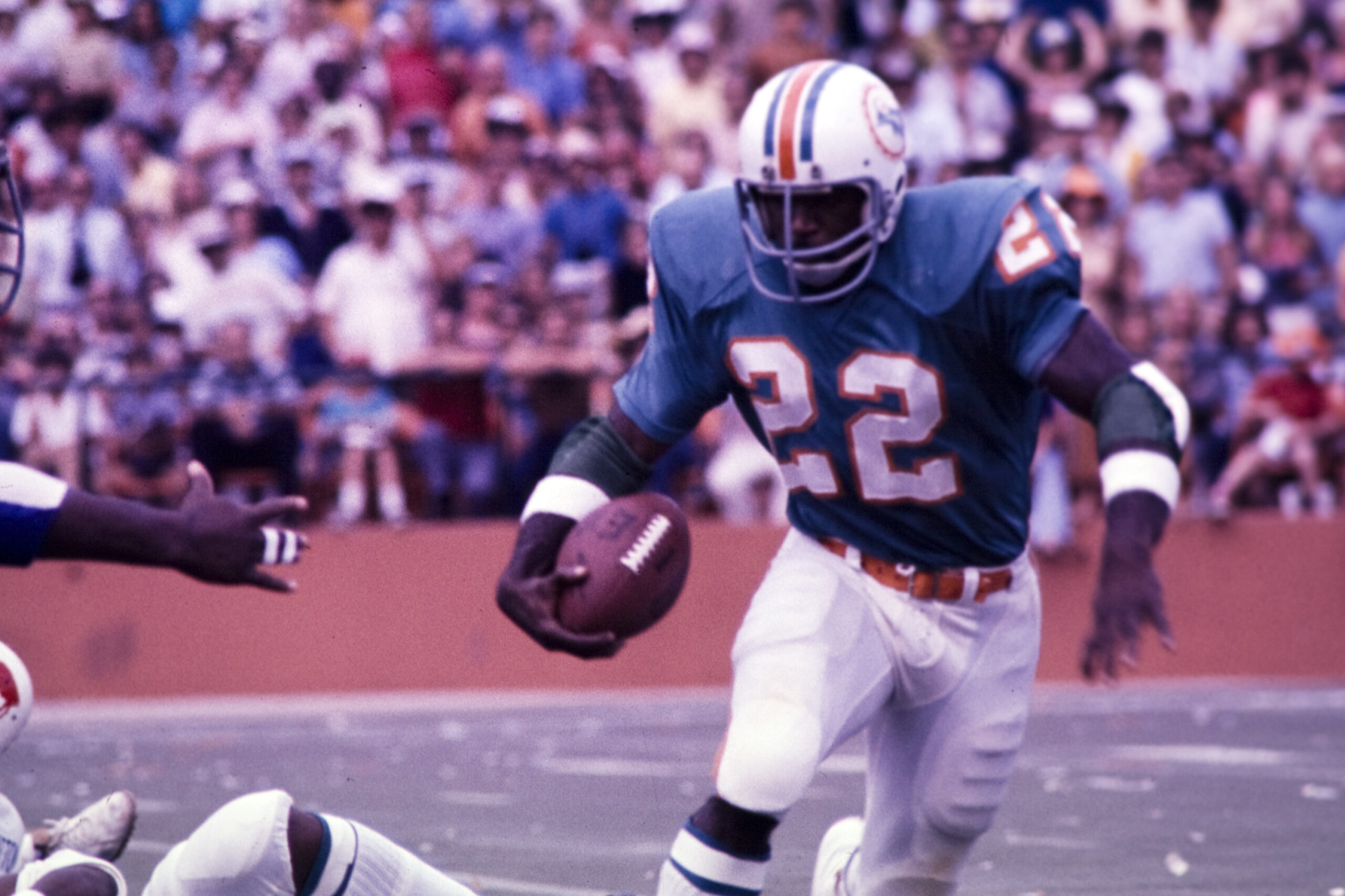
My name is Eugene Morris, but many know me as “Mercury.” I played running back for the Miami Dolphins from 1969 through 1975.

I first came to Miami from West Texas State for the North-South Shrine game, which was played on Christmas Day 1968. When I flew down here, it went from 18 degrees below zero and about 12 inches of snow on the ground, to summer. When I got off the plane, I thought I was on another planet.

I saw what I thought looked like the guys from “Hawaii Five-O,” dressed in those shirts. I thought it was really cool down here. They drove us over to the beach where we stayed. I didn’t know what the town was like but I said to myself I would love to play down here.

In January of 1969 I came down again. I had an agent who brought me down for Super Bowl III. So when Joe Namath and Don Shula clashed, I was at that game sitting in the nosebleed seats, up there at the top of the Orange Bowl, over on the south side.

The next month, I got a call from Joe Thomas of the Miami Dolphins. He said, “Congratulations Mercury, you’ve been drafted by the Dolphins.”

He told me Joe Robbie picked me because he said he liked me. He liked the way I ran and he liked my name. And that’s how I ended up in Miami.

I had gone to school in Texas, and that was my first touch of segregation, so to speak. It was institutionalized there. When I came to Miami, I didn’t see any of that. But what I didn’t know was what was going on with regard to the beach. I didn’t know that when blacks went to the beach they had to have a pass of some sort in order to justify being over there after dark.

Before Shula got here, there had been some segregation in the practice facility. And then he did away with that.

My first coach was George Wilson. When I got here I remember him saying he hoped for a 7-7 season. When you say you’re hoping for a 7-7 season, what you’re saying is, it’s OK to lose seven games. So that’s the mindset that he wanted to instill in us, which was mediocrity. And we didn’t even reach mediocrity.

There was a certain way things were run here. The Miami News, a newspaper here at the time, had a section in which I wrote an article twice a week called “Diary of a Rookie.”

I would talk about the things I saw in camp, and how these things were significant for the players and their relationships. Keep in mind, this was 1969. No blacks went to Alabama, Tennessee, LSU, anywhere in the Southeast Conference. So the players that came from there may have been experiencing for the first time having to play with black guys on the same team.

When I came in, I noticed we had segregated rooming. It was like Archie Bunker said: “Because whites got to be with whites, and coloreds got to be with coloreds.” That’s what we had then.

So I wrote about this. One day I was in the shower, and I noticed that the white dudes, their water’s coming out like Niagara Falls. And I went over and saw the black dudes, and their water’s trickling like it’s coming out the side of a mountain.

So I went over there and started washing myself. These guys went, “Hey rookie, what are you doing?” I said, “I’m taking a shower, just like you.” One said, “What are you doing? You’re supposed to be …” I said, “No I’m not. I’m supposed to be right here, taking a shower. Because I just came off the same practice field you did. And I got the same dirt on me that you do. And I’m washing it off the same way you are.”

These were my teammates but they didn’t know me. And I really didn’t know them. So we had these expectations of having to be a certain way because I was black, or because I wasn’t white.

And the dudes who had never been around black ballplayers, they had their expectations that they brought with them as well. So I wrote this article about the showers. I actually got flak from white guys and from black dudes. They criticized me and accused me of starting trouble because I talked about it. I wrote the article but the Miami News wrote the headline. The headline was, “De Facto Segregation in Dolphin Camp.” Half of these guys didn’t know what that meant, but they knew it didn’t mean something good.

I was in the throes of both groups. Neither group understood what was going on, except that they wanted to defend their side. They were settling with being who they were in that space. The coach was one of those types of people from that era, who played along with these expectations. We had a guy by the name of Norm McBride, who was a linebacker. This guy was really good, but his wife was white. They cut him. And he was their fifth round draft pick. Just because they didn’t like the idea that his wife was white, and he was black. And that’s in 1969.

We never reached mediocrity in ’69. We went three, 10, and one. Enter Don Shula, in 1970. And a lot of things changed at that point. That was the first year of the merger, so the old AFL was officially gone, and it became the AFC and the NFC. The format changed, and it became the new National Football League. Shula came here and the first thing he did was put Paul Warfield, a black player, and Bob Griese, who is white, together as roommates. He brought in a new era, that it’s about the football and what we’re supposed to be out there as the team.

Once, I said something about race, and he said, “Hey, you know I’m not like that.” And I knew he wasn’t because he only cared about one thing, and that was winning.

And this is the formula that he used: You treat everybody the same, with regard to who they are, what they do when they’re on a practice field, when they’re off the practice field, when they’re in the chow hall and the whole nine yards.

It was a rebirth of what the game would be, in terms of how it looked if everybody just played without the stigmas that came from the past. Because at the end of the day there’s only one race, and that’s the human race. The reality is somebody made that stuff up, and we’ve been trying to get over it ever since.

My parents were both in the United States Navy during World War II. They got together and lived in Virginia for a while. I was born and we moved to Miami when I was 3 years old.

First, we lived in West Miami for a period of time. Two sisters were born there and I went to school at Saint Teresa in Coral Gables.

We moved closer to the school in the early 1950s to Schenley Park right by Miami Children’s Hospital, now Nicklaus Children’s Hospital. I had two more sisters at that house, four sisters in total.

My mother worked at Doctor’s Hospital for the next 14 years and my father sold insurance.

As kids, we loved to go to the movies on Saturday. The only movies we’d go to were in Coral Gables. The movies for kids were at the Miracle, which is now a playhouse. Once you became a teenager you would go to the Coral, which was on Ponce. When you really got grown up and wanted to date, you would go down to The Gables.

We’d also go to the drive-in movies every Friday or Saturday night. I’d go with my family and we’d sometimes take lawn chairs. My dad would make popcorn at home and put it in a big grocery bag.

I remember they’d spray for mosquitoes at the movie and you’d just be sitting there in a big cloud. Who knows how many brain cells were killed in that process.

During the week, I’d get home from school, get on my bicycle and ride to Venetian Pool. Every single day.

At the pool they had a tower. If you dove off the tower you’d get kicked out of the pool. So about 15 minutes before closing, all the kids would go up the tower and jump into the pool. We’d get kicked out but we were out of there anyway because the pool was closing. That was a kid’s paradise.

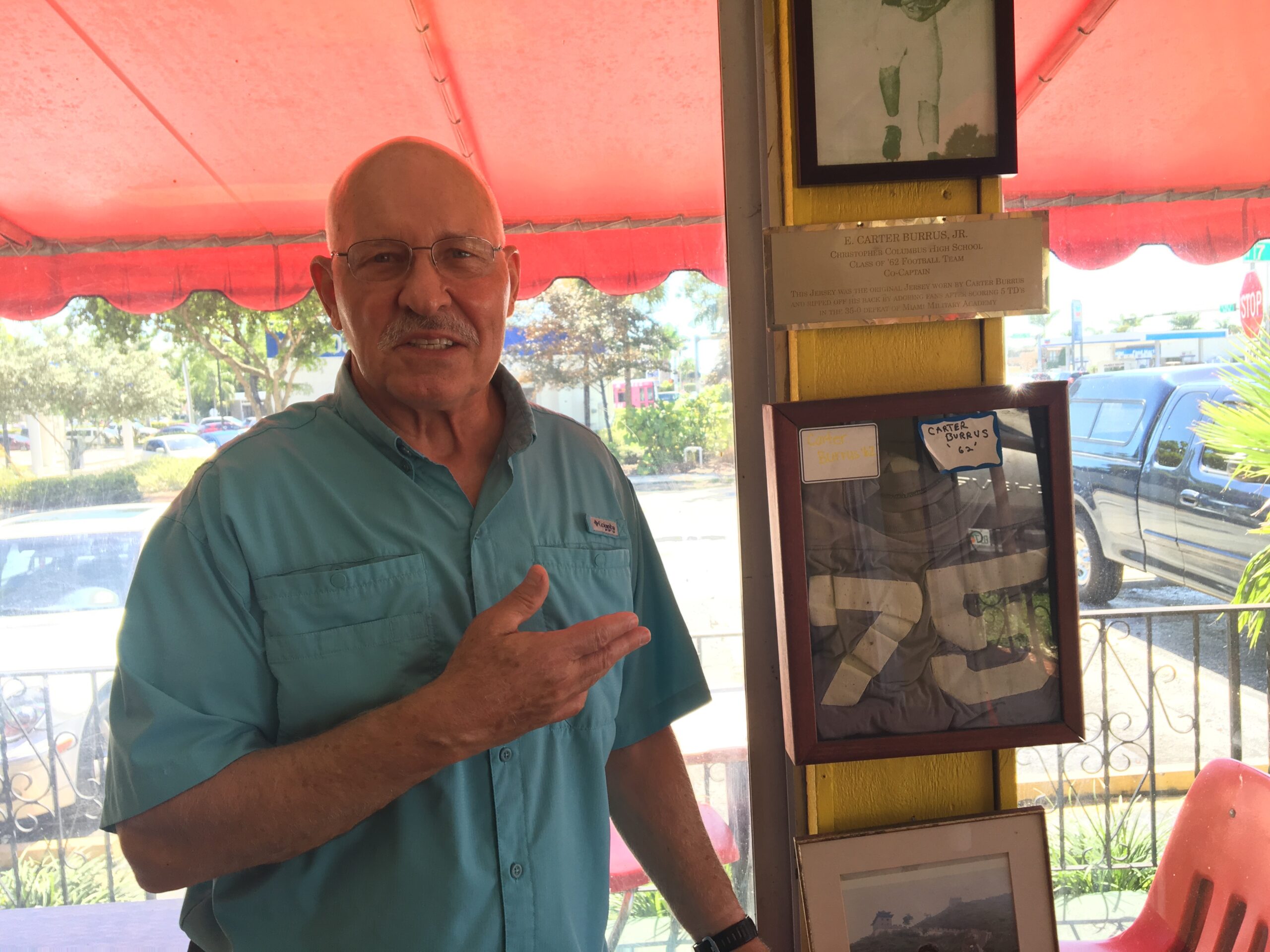
I went to high school at Christopher Columbus, a Catholic high school. There, I ran track and played football. I was captain of the football team. While I was in Columbus I had my first real official job working at this grocery store called Food Fair.

Once I graduated from Columbus, I decided to go to the United States Naval Academy, following in my parents’ footsteps. While in school, I played football. I broke my hand and decided to leave the Naval Academy for Michigan State.

My first job in Michigan was at a reform school. I knew while I was there that I wanted to be a teacher. And so I asked myself, where were the most pleasant times of my entire life? Columbus. So where do I want be a teacher? Columbus!

So I came back to Columbus, coached football and started my teaching career. After I quit football, I ran the intramural program and taught history there for 23 years.

From there, I had an opportunity to teach at Miami Dade College. I was reluctant, but I went and stayed for 20 years. There I got involved in developing, and then running, the honors program. The program eventually morphed into something called the Honors College, which is in existence today.

When I retired from Miami Dade, I wanted to return to Columbus and ended up taking several different guidance counseling positions.

I’ve been to so many reunions and have taught multiple generations of fathers and sons. Even now, when I get together with my old classmates, it’s like no time has passed.

A lot of people say they don’t want to go to an all-boys school, but there’s just something special about it. You form a very strong bond.

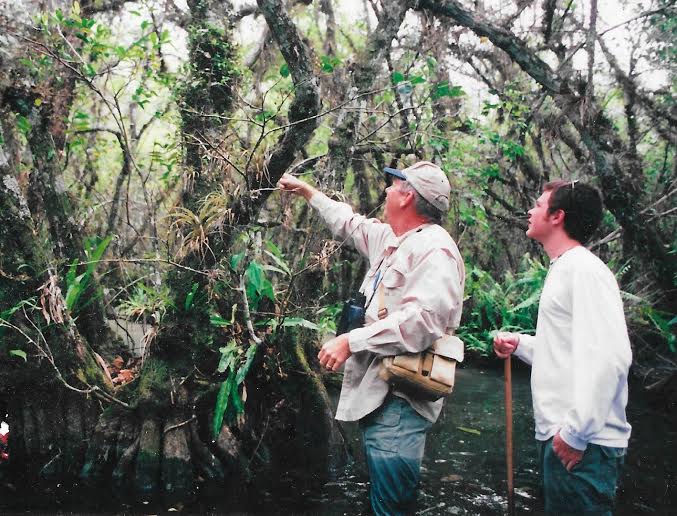
My other loves are nature and the Everglades. As a kid, my father would take me fishing out on Tamiami Trail. I’d also go to the Everglades with my friends and we’d wander around sometimes and go hunting. You can’t do that anymore.

For many years I had a sailboat and when it was peaceful and calm I would go to the Biscayne National Park.

My doctoral dissertation is on the history of the islands and the waters of the Biscayne National Park. So I know all about Biscayne National Park.

During my research, I interviewed Virginia Tannehill. She lived on one of the islands, Swiss Family Robinson-style, before she had to move out because of Hurricane Andrew. She told me about a box of silver coins she found as she was walking on the beach and then gave me one. It was cool because I’m studying this island and writing the history of the site and now I’ve got a piece of it.

There was another guy who lived there whose name was Sir Lancelot Jones. He was a fishing guy who took almost every U.S. president out fishing. He told me his favorite was Herbert Hoover, whom he called “Herbie Hoover.” He was an amazing character.

I’d always done the sailboat thing, but for some reason I decided to give my sailboat away and become an air boater. I now have my own boat and belong to an airboat club, Airboat Association of Florida, which was founded in 1951. I have started getting more and more involved in the Everglades. When you have your own boat, you go to places you could never ever go before.

I’ve been to places that are just so tranquil and peaceful. As soon as you turn the engine off, you become part of nature. It’s a real spiritual feeling that the most people here in this urban environment never get to experience. I feel tranquil and at home in those areas on the water.

I’m pretty educated and I’ve done a lot of things, but I still enjoy the simplicity of nature and I want to protect it.

Today I live right down the road from Columbus with my wife. She’s a professor at Miami Dade College.

I frequent my favorite Miami hot dog place, Arbetter’s, for lunch. Everybody’s famous somewhere. I’m famous in Arbetter’s. My high school jersey is in the corner at Arbetter’s because I’ve been eating there for 50 years. I love it because it’s the most egalitarian place. You can be a lawyer, a doctor, a ditch digger; everybody’s the same at Arbetter’s.

I’ve loved watching this whole area of Westchester change. At one time it was a Jewish enclave. Gradually, as the Jewish population moved to North Miami, the Cubans moved in and made this area come alive. I love the diversity and the different kinds of people. When I go to the middle of the state, I see areas where everybody is homogenous. I just think to myself, “There’s something wrong here.” It’s like getting your food and they forgot to put the spice in it.

That to me makes Miami really, really special. I never want to leave.

Like the strong root system that supports a stately oak tree, the love of the great outdoors and parks and recreation runs deep in the lives of two Miami-Dade Parks sons — Eric King, park manager at Greynolds Park, and Chad Pezoldt, park manager at Tropical Park. Both were inspired by the formidable examples and career paths of their fathers, Jim King and the late Charles “Chuck” Pezoldt, who were leaders in the Miami-Dade Parks department.

Eric King’s early years were centered on parks and included regular car trips to the Everglades and frequent trail hikes with his dad, Jim, who was a long-time parks naturalist and a key figure in the start-up of Miami EcoAdventures. He oversaw environmental education programming for the parks system for more than 40 years.

“These experiences allowed me to learn to appreciate nature and the outdoors,” Eric King said. “But it was one parks experience that I shared with my dad as a kid that truly sparked my enthusiasm for parks and recreation and made me a committed nature steward.”

On a Fourth of July 22 years ago, a then-10-year-old Eric was excited about joining his father at his job at Crandon Park on Key Biscayne, as the Key was having its fireworks spectacle that evening. Their first stop was the park’s sea turtle hatchery. “It was my first-time there and needless to say I was awestruck and amazed at seeing the eggs hatch into tiny sea turtles,” he said, adding, “I was so hooked that I opted to stay and care for them through the evening, skipping the fireworks.”

His enthusiasm for parks continued.

As a teen, he worked as an official county parks volunteer, recalling how proud he was to wear the “Parks shirt” and be surrounded by amazing nature views and wildlife, such as herons, osprey, butterflies, horseshoe crabs, and of course sea turtles. “It’s no surprise that I decided on a career in parks and recreation,” he said.

Now 32, Eric is proud to say that he’s stilling living the “Park Life.” At Greynolds Park, he lends his expertise to the staff that he leads and introduces Miami-Dade residents and their children to South Florida’s rich history and wildlife on assorted eco-treks on land and sea.

For Chad, the county parks played a huge part in his childhood. “There are so many fond memories with Dad that it is hard to pick just one,” he said.

His dad, Chuck, was a director for the parks department and held several high posts during his 21 years of service. The elder Pezoldt, who died of cancer at age 62 in 1996, is credited with shaping and growing the county parks system to 13,500 acres and introducing innumerable high-profile special events. Chad recalled helping his dad out at the Superstars Championships at Crandon Park: “I was completely in awe of seeing famous professional athletes like Barry Sanders, one of my favorite childhood sports idols.”

However, that experience paled in comparison to his first-time volunteering with his dad at the Special Olympics games at Tropical Park. “It was the moment that I realized that parks better lives, including my own,” he said. “What so impressed me was seeing such joy in the kids’ faces as they crossed the finish line. Regardless of finishing first or last, they were joyous. Sharing their victory in that moment, gave me so much. And that continues to drive me to this day in my work and volunteerism with other adaptive sporting events.”

Before joining Miami-Dade Parks two-and-a-half years ago at age 39, Chad spent 16 years in sales and earned a master’s degree in public administration from Florida International University. “My parks career may have started a little later in life, but my outstanding experiences with my dad led me back and I am grateful to be continuing his great legacy of giving back to the community.” At Tropical Park, Chad oversees a staff of 30 and a wide range of park amenities, including ball fields; tennis, racquetball and basketball courts; a football stadium; a track and field area; a community center and a full-service equestrian complex. Residing in Cutler Bay with his wife and young son, he is nurturing “generation next,” deeply rooted in park life.

Translate »