fbpx Skip to content
Named Best Museum 2022 by Miami New Times

My brother and I left Cuba on Aug. 23, 1961. He was 15 and I was 16.

We left our parents behind, not sure of when or if we would be together again. My mother later told me that on the trip back to our hometown of Florida in the Camaguey province, she decided they would immediately start getting the necessary documents to leave the island. They were finally able to leave in May 1962.

Meanwhile, after spending a few days with an uncle in Hialeah, we left for our final destination in New York City to live with another uncle, who was the one who had processed our papers. While we were welcomed warmly by our uncle, aunt, and two cousins, I felt as though I was navigating someplace in midair.

The cold weather did not agree with me and I was often sick. In March 1962, when my uncle was notified that I would not pass the school year due to absences, I was sent to Hialeah to live with the uncle who had welcomed us to the United States a few months before. Two months later, when my parents arrived from Cuba and found me in Hialeah, they decided against their original plan of settling in the New York/New Jersey area in favor of the milder Miami climate.

In time we became acclimated to this city, which was in some ways very similar to our homeland 90 miles away. One month after my parents arrived, my brother joined us in Hialeah after having finished the school year in New York. The four of us moved into a tiny apartment near where my uncle lived. By then a third uncle and his family had come from Cuba and lived nearby making our family group larger and stronger.

By the time I was 17, I was feeling strong and needed to look for work and help the family get ahead. That’s when my mother, who had never worked outside of the home, clearly let me know that I was to go back to school and that she would be the one looking for work. My father found work on the night shift of an aluminum factory near Flamingo Plaza, a couple of miles away from our home. We did not yet own a car so around 2 p.m. every day my father would walk to work, lunchbox in hand, and at 11 p.m. one of my two uncles would pick him up.

My mother found work sewing at a factory and my brother and I enrolled in Hialeah High School. After we got a car, a 1953 Chevrolet that cost $250, my mother and I would drive to downtown Miami some Saturday afternoons and frequent Richard’s Basement, Lerner’s, Three Sisters, and Woolworth’s. We would treat ourselves to a slice of cake with a scoop of ice cream like we used to do when I was growing up in Cuba.

The Sunday treat was going downtown as a family to eat at a restaurant where a plate of chicken with rice and sweet plantains would cost 50 cents and an order of fried rice would be 75 cents. Truly a treat! I don’t remember the location of the restaurant or the name, only that it was advertised as owned or operated by “Rafael and Federico.” Another popular eatery was El Morro Castle, which still exists today on Northwest Seventh Street. We also went to the location that is now La Carreta on Southwest Eighth Street.

Near the Versailles Restaurant was Trios, famous for its open-face sandwiches of roast beef or turkey. Little by little, with effort and diligence, we made progress and after a few months were able to rent a house in the vicinity. Two years after that, with a loan from my uncle, we were able to purchase our first home which, marvelously, came equipped with all the necessary furniture. For the small appliances we relied on collecting stamps given out at grocery stores and gas stations. Two of the stamp companies that come to mind are Top Value and S & H Green Stamps. Filled books could be exchanged for toasters, mixers, blenders, clocks, etc.

By then I had graduated from high school and we decided, in the old custom, that we would all work to help put my brother through school. That is how, in spite of our modest means, my brother graduated from the University of Miami with an engineering degree in May 1968.

My first job was as a clerk at the Cabanas office of the old and beautiful Roney Plaza Hotel on Collins Avenue and about 23rd Street, later transferring to the sales office.

I remember the small Miami airport with the terrace where we would go frequently to greet family and friends who arrived. It was common for groups of people to go to the airport to greet the new arrivals, a welcoming committee of sorts.

My father religiously went to “La Casa de la Libertad” searching for familiar faces to offer them some assistance. Mostly it was people who had just arrived and were waiting to be relocated to another state, so my father would bring them to our home for refreshments and a couple of hours of relaxation and unwinding.

For leisure, it was typical for two or three families to get together on Sundays and spend the day or the afternoon at Crandon Park Beach or Haulover Beach enjoying the time together and reminiscing about Cuba. An activity that I enjoyed very much was attending the shows of “Añorada Cuba,” a musical program put on by young people, many of whom were students at Hialeah High or attended the Church of the Immaculate Conception, under the direction of Father Bez Chaveve.

The changes in greater Miami area over the past 50 years have been many and amazing. To the west, Miami basically ended at 57th Avenue. The old Tamiami Airport eventually became FIU and the Miami-Dade Youth Fair. For the most part, Hialeah was a cow pasture.

In 1966 I found love at first sight and in January 1968 I married a wonderful man, with whom I just celebrated 44 years of marriage. We have two daughters who grew up in Miami. As they formed their own families, their jobs took them away from the area but they regularly come back to spend time with family and for a taste of Miami.

In the early years in Miami I postponed my career plans to help my brother, and later, my husband. When my oldest daughter started college at the University of Miami and my youngest started high school, I went back to school and got a degree in education. I fully enjoyed teaching and being a part of my students’ lives as a member of the faculty at Miami Springs Senior High School for 16 years, until my retirement six months ago.

That’s how, 50 years after leaving Cuba, I consider Miami my home. There is in my heart a special love for the land where I was born, but my roots are firmly planted in Miami.

I cannot see myself living anywhere else but here. Miami will always be home to me.
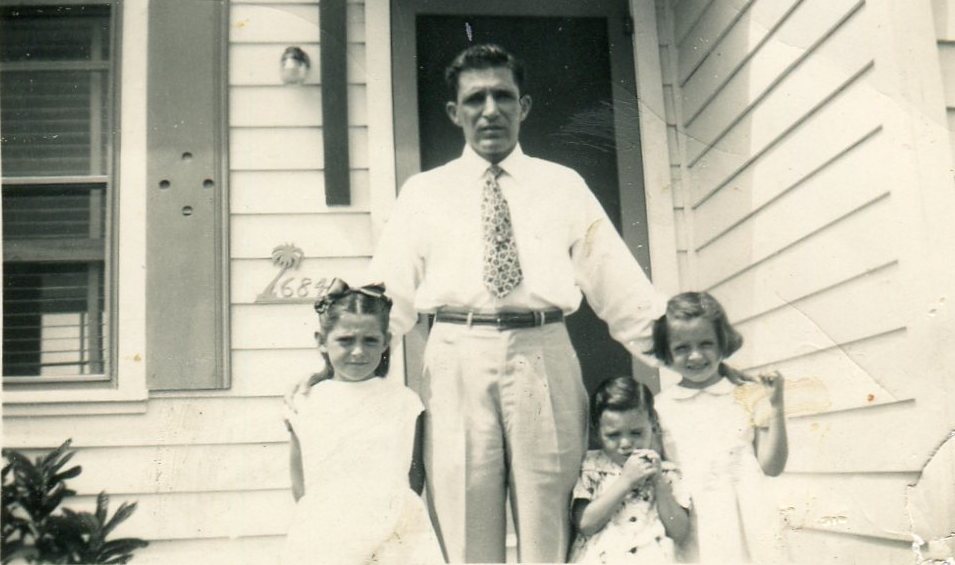
The migration of my family from Cuba to Miami began in the 1800’s, possibly because of the Spanish-American War, which caused many people to leave Cuba for Florida. One set of great grandparents went to Tampa and another to Key West.

My paternal grandfather, Jose Marcelino Garcia, was born in Key West, and my paternal grandmother, Ana Maria Silva, was born in Tampa. My grandparents met when my grandfather traveled between Key West, Cuba and Tampa as an escogedor (a person who selects tobacco leaves) for a cigar factory in Tampa.

Both of my parents were born in Florida. My Cuban-American father, Aldo Garcia, was born in Key West while his mother was visiting there. My Irish-American mother, Margaret McMillan, was born in National Gardens, Fla. They met in Ormond Beach where my father got his first teaching assignment after graduating from the University of Florida. My mother was one of his students.

After the bombing of Pearl Harbor, my father joined the Army Air Corps. He attended officer candidate training in Miami Beach. The graduation ceremony was in August, 1943 at the Miami Beach Golf Course, formerly known as Bayshore Golf Course. The golf course had been leased by the Army Air Corps as a training facility during World War II. When his tour of duty was over he and my mother moved to Miami where dad had a job teaching at Edison Senior High.

They had two daughters when they moved to Miami: me and my sister, and later had a son. They purchased a home at Southwest 39th Street and 68th Avenue, with the help of the G.I. Bill. There was a goat farm on the corner.

When we left home to go to Coral Gables or downtown Miami, my father would drive east on Bird Road to Red Road or 57th Avenue. On the southwest corner of Bird and Red was Allen’s Drugs, one of the landmarks that still stands. Turning north we would go to Coral Way and turn east. The ride along Coral Way under a tree-lined canopy is very much the same today.

We knew we were getting close to downtown Miami when we saw the birds circling the courthouse on Flagler Street – at that time the tallest building in the city. If you take the same drive today you won’t see the birds or the courthouse until you get very close, as it is dwarfed by skyscrapers.

Sadly, our mother passed away in 1948, leaving my father to raise three children under 6. He sent for his mother, my Cuban-American grandmother Anna Maria Garcia de Silva, who came to Miami to care for us.

She too had been widowed at an early age, leaving her with six children that she supported by working in a cigar factory in Ybor City. Although our grandmother was born in Florida, she never learned to speak English, which is why my siblings and I learned to speak Spanish. I couldn’t know then how important it would become to speak Spanish.

When I was a child I remember looking in the phone book for our number and being surprised to see that there were five Garcias. One was my father and another was my uncle. No one could have foreseen the many pages of Garcias now listed in the phone book.

My father taught at Edison while attending law school at the University of Miami in the evening. When dad finished law school (graduating magna cum laude) he decided to move to Allapattah so he could be closer to his teaching assignment. His dream of practicing law was never realized because he wasn’t able to give up the security of a full-time teaching position. He did, however, take on cases for friends, one of which he argued before the state appellate court.

Abuela, or “Granny” as we called her, took us to Bayfront Park every Sunday on the No. 17 bus. The bus took a circuitous route past the house on Northwest Seventh Street and 22nd Avenue that is built of coral rock. At the park we would walk along the bay from the band shell to Fifth Street, pausing occasionally to climb trees. The band shell was where my sister and I performed a duet during a dance recital by Bunny Stirruz Dance Studio of Miami Springs.

At the end of Fifth Street, we watched fishermen as they brought in their catches of the day and filleted them for sale to the public. On Saturday nights, Granny would attend what we teasingly called “old folks dances,” which I think were held in the building now known as The Freedom Tower.

Another strong memory is of going into Burdines in downtown Miami to visit “Toyland” during the Christmas holidays. The excitement would startwith the first glimpse of the walkway decorated for the holiday that connected both sides of Burdines department store on the second floor.

Also, long before Krispy Kreme brought hot doughnuts to Miami, you could purchase one at either S.H. Kress’s or McCrory’s on Flagler Street. Christmas shopping for our teachers (usually Evening in Paris perfume) was always done at Shell’s City on Northwest Seventh Avenue, a precursor to stores like Wal-Mart.

The movie theater on Northwest 36th Street between 17th and 18th avenues, where we attended Saturday afternoon matinees, is now a discount furniture store. Warm summer nights were often spent outdoors under the watchful eyes of parents and grandparents who sat on their porches while children played tag, Simon Says, or red-rover red-rover. When the sun set we tried to catch fireflies in jars. It has been a very long time since I’ve seen fireflies in Miami.

In the mid 1950s we moved to North Miami, which seemed very far from Miami. Since then, other cities like North Miami Beach, Miami Gardens, Aventura, and Miami Lakes, where I now live, have incorporated. My siblings and I attended North Miami High School. It is the same school my children, who are fifth-generation Floridians, later graduated from.

It was while we were living in North Miami that the Cuban Missile Crisis began. I remember convoys of military vehicles, including tanks, driving south to Key West along Biscayne Boulevard. Because my father was bilingual, he was recruited as a translator to assist many of the Cubans who came to Miami in those early years. I have kept a gift he was given by one of the grateful immigrants he helped – a liquor bottle that through the endeavors of an enthusiastic artist had been changed into a Charlie Chaplin-like clown, complete with wooden shoes. While it has no monetary value, it obviously meant something to the giver.

By far the biggest change I have seen in Miami is the successful integration of the many immigrants who have arrived. The Spanish language that I learned from my grandmother has now become a dominant language.

My dad, Mike Nola, came to this country from Lebanon in 1911 and peddled merchandise door-to-door along the Florida-Georgia border. He served in the Army during World War I, which earned him United States citizenship.

After the war, he returned to Lebanon to marry my mother, Chafica Sawaya. Upon returning to Florida, they opened a grocery store in Live Oak. After their first child died in 1925, they moved to Miami and opened a grocery store on the corner of Northeast Second Avenue and 22nd Street. They lived in an apartment near Biscayne Bay.

During the 1926 hurricane, the bay flooded their apartment. My dad put my sister, Josephine, who was several months old at the time, on his shoulders and walked to higher ground. The store was damaged and merchandise was scattered in the street. The neighbors gathered the salvageable merchandise and returned it to my dad. The wholesalers also restocked him, which helped him recover. He was able to open another store on the corner of Northeast Second Avenue and 25th Street. There is still a market there today.

At the beginning of the Great Depression, my dad went into the hospital for surgery. During his time in the hospital he let two neighbors, who were brothers, run the store for him. In their attempt to impress him, they put all the money they took in into my dad’s bank account, and they charged the groceries. Unfortunately in a tale all too common during the era, the bank failed and all the money was lost. Again, the wholesalers restocked him on credit, and he was able to survive.

I was born in 1930. In 1932, my parents built our home on Northeast 25th Street between Second Avenue and what was then the Florida East Coast Railroad tracks. It was a classic Miami bungalow built of concrete block and stucco, with a screened porch all the way across the front.

The construction cost was $3,000, and the lot was $600. My mother lived in that house until her death 60 years later. My parents never owned a car. The streetcar ran down the middle of Northeast Second Avenue, and it went to wherever we needed to go. One day, my brother Willie and I were taking the streetcar to town to see a movie that cost nine cents; we were counting our money and came up a penny short.

An elderly African-American lady overheard us and gave us the penny. It was an act of kindness I have never forgotten. Sometimes, after seeing a movie, my brother and I would walk to the aquarium at the North end of Bayfront Park. The aquarium had been built into a ship, The Prins Valdemar, which had sunk in Biscayne Bay in January of 1926, and was refloated later and turned into the aquarium.

The admission was 25 cents, which we did not have, but the attendant would sometimes let us in for free.

After the aquarium, we would walk back toward Flagler Street to Pier 5, to see the afternoon catch. About 30 charter fishing boats lined both sides of the pier, and the catch was always awesome.

There were no fishing regulations and “catch and release” was not yet practiced. The skippers kept everything they caught and displayed it on the dock to advertise for the next day’s charter. Once they brought in a 10-foot manta ray.

Biscayne Bay was my playground, and I spent many happy days catching snook and Jacks from the County Causeway (which was later renamed MacArthur Causeway) and catching pompano in a cast net from the Rickenbacker Causeway.

The bay was not always as nice as it is today. In the early days, raw sewage poured into the bay from sewer lines that ran under each street leading to the bay. We did not eat fish from the bay in those days. During WWII, there were many months when the bay was covered with a film of black oil from ships that had been torpedoed off the coast. Then after the war, there were several years when the water was muddy from dredging being done to even out the shore line, and to dig deep canals to make waterfront property.

But the bay did survive to become the beautiful place it is today.

Before Interstate 95 was built, Northeast Second Avenue was a busy thoroughfare. The Budweiser Clydesdale horses, pulling a beer wagon, used to come down Second Avenue and stop at all the taverns.

Before homes were air conditioned, it was a thrill to go downtown and walk past the open doors of the Olympia Theater and feel the cold dry air pouring out. At the Olympia, you could see a first-run movie and a live stage show for 50 cents. In 1956 I remember seeing Elvis Presley there, live on stage for $2.

I attended Miramar Elementary, Robert E. Lee Jr. High and Tech High which later became Lindsey Hopkins Vocational School.After my dad died, I ran the grocery store until I entered the Army in 1952. When the other GIs talked about their hometowns, I remember how proud I was to be from Miami and actually felt sorry for those who were not.

After the Army, I enrolled at the University of Miami and graduated with a degree in electrical engineering. My son graduated from UM 30 years later with a degree in architecture.

I met my future wife, Grace Geraci, when she was our across-the-street neighbor on Northeast 25th Street. We married at St. Rose of Lima Church in Miami Shores. Soon after, I took a job in the space and rocket industry, eventually settling in Huntsville, Ala. I retired from NASA 36 years later.

During our early years in Alabama, when our three children were young, we would return to Miami twice each year to spend time with family, often arriving late at night. It was always a welcome sight to see the red blinking lights on the radio towers that line U.S. 27 coming into Northwest Miami.

After retiring, we headed back to Florida and were going to work our way to Miami to look for a place to spend the winters. We didn’t make it past Stuart and have had a home there for 18 years.

We visit Miami often and are in awe of its growth and beauty. It has come a long way from the city of 150,000 when we were young.

We traveled to Miami Beach often, before deciding to move from Cuba for good.

The motivation? My father rejected an influential Cuban politician’s demand to lead his Masonic lodge, and was kidnapped for it. After paying the ransom, we boarded a Pan Am flight, and landed in Miami in the summer of 1943.

We rented an apartment, and I enrolled at Ida M. Fisher – Beach High was not yet built. We lived south of Fifth Street because Jews were confined to that area of Miami Beach, nicknamed “Little Jerusalem.”

African Americans had to leave before sundown, and hotel signs advertised: “No Jews, Blacks or Dogs.”

I spoke little English, and was teased for being one of only three Hispanic kids at school. Back then, being Cuban was rare! I graduated as president of the French Club, and was one of the first Hispanics inducted into the National Honor Society. I went on to graduate from the University of Miami, completed an M.B.A., and then a law degree, and became a professor there.

Life in Miami Beach was simpler then: fishing off the Fifth Street pier and catching grouper in Biscayne Bay. I worked as an usher at the Cameo Theater and as a bellhop at the Marseilles Hotel to save up for a boat. You cannot buy much of a boat from tips, and on the fourth sailing, my boat sank a mile offshore. Luckily, I swam back to shore with the incoming tide.

My wife and I married in a civil ceremony, officiated by the only notary public we could find – our mailman. We joined Temple Beth Sholom, became active members of the Mr. and Mrs. Club, and met lifelong friends. We dined at The Famous, went to races at the dog track on the Beach, and ate ice cream at the Saxony Hotel.

Most of all, we traveled. We started small, taking our Chevy Bel Air and $100, and drove all over the country. We are still going strong, having traveled now to every country in the world, some of them many times over.

In those days we lived in a single room on the roof of the Ocean Reef Apartments, next to the building’s boiler. We may have had to wash dishes in the bathroom, but we had a marvelous view of the ocean.

In addition to teaching, I worked as an accountant for a $1.50 an hour. My office was located on Eighth Street and 27th Avenue. Life changed after the Cuban Revolution. I helped many Cuban arrivals with the loss of their homes and businesses, even traveling to Washington, D.C., to facilitate a new tax rule to recoup Cuban losses. I also campaigned at the UM to allow me to teach newly arrived Cubans to become accountants in Florida.

And we raised a family. Our four children grew up roller skating at Crandon Park (then the zoo), and boating to Rope Island (before it became Fisher Island) to watch bald eagles nest.

Looking back, we’ve traveled the world, our children graduated from Beach High, went on to Ivy League colleges, and some of them have returned to raise their own families. One of my grandchildren even attends Beach High. Is another UM graduate in our future?

I arrived in Miami on a bright August day in 1993. I was 8.

I was born in Dallas, and had moved with my parents to Caracas, Venezuela, and Santiago, Chile, by the third grade, and then we ended up in Miami. I started at Bay Harbor Elementary that September.

My parents were nomads: my father was from Colorado and my mother was English – they met in South Africa in their 20s. It did not look like they would ever settle down.

But Miami touched my mother, Wendy, the way no other city ever had or would. That first week, when I was in third grade, we lived at the Newport Beachside hotel while we waited for the moving trucks. My mother was out on the pier, marveling at the pelicans. She watched a woman capturing one of them.

That woman was Darlene Kelton, and that meeting changed my mother’s life, and my own.

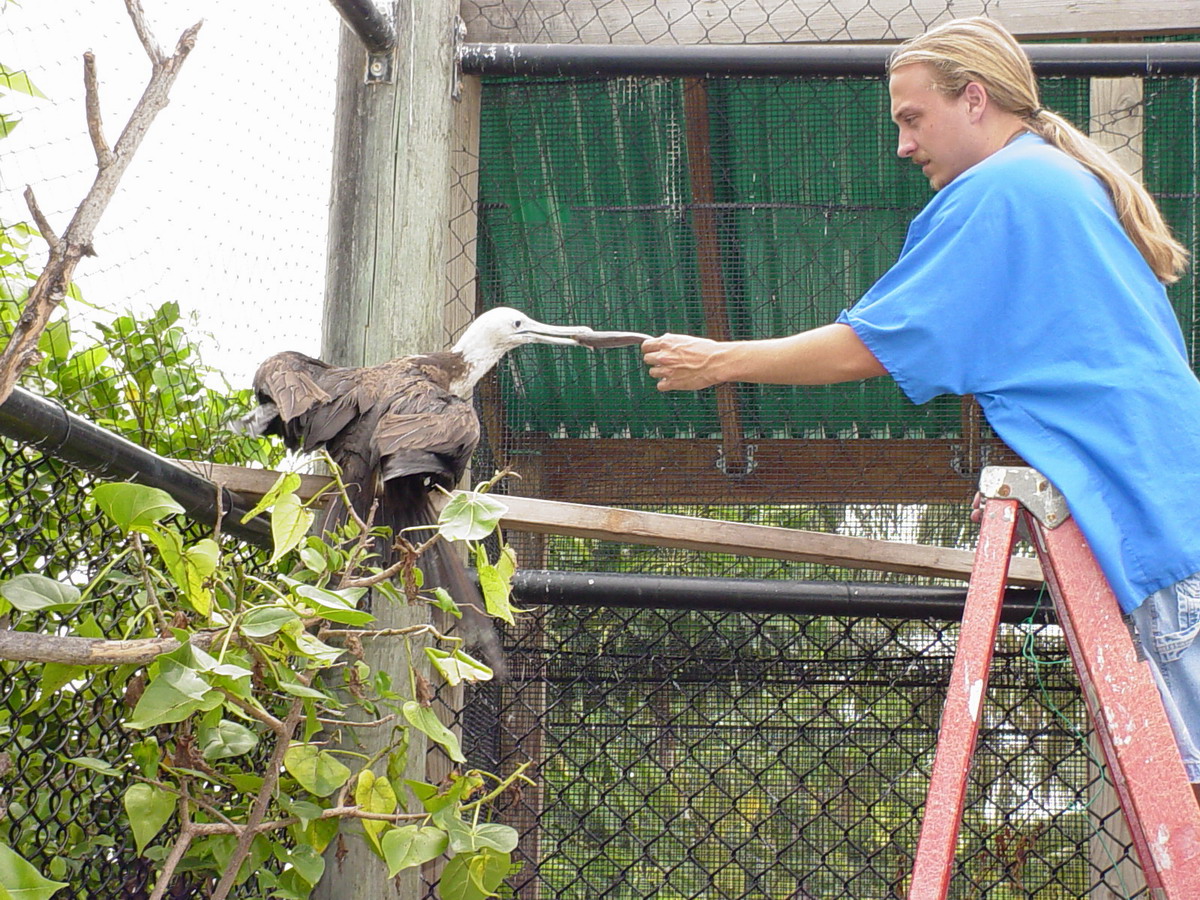
Darlene ran a pelican rehab center with her husband, Harry, in Pelican Harbor Marina. They had just recently moved their operations from a tool shed to an actual building. My mother, always an animal lover, started volunteering. By the time I was in the fourth grade, she was bringing me along.

Harry and Darlene’s work was not limited to pelicans. One December night I came home to a new family member – a baby skunk. My mother had not been able to find a home for it, but my father was adamant – no skunks in the house. My mom named her Petunia, and wouldn’t you know it, Petunia and my dad fell in love. Petunia got a Christmas stocking with carrots and broccoli a few weeks later.

Growing up at Pelican Harbor Seabird Station was a special experience for me. I did not have many friends. And my mother’s passion was infectious. As “the kid” I got to do the fun stuff – climb trees to rescue entangled pelicans, sit on the pier and scan the horizon for birds. It was my sanctuary, too.

I started at Miami Beach High School in 2002. I still remember how excited I was to get my driver’s license – not to go joy-riding with friends but to pick up injured seabirds all around Miami.

When I was a junior, my mother got a call to go pick up 25 pelicans injured in Hurricane Dennis up the coast. We filled our Kia Sportage with supplies for other centers devastated by the hurricane, and brought back all those pelicans to raise here. My mother was so proud to make a real difference to the community here – to contribute to keeping Miami a safe place for wildlife.

I went away for school – biology, of course – but came back in the summers to work.

I remember one call from a teacher in Liberty City asking us to come pick up turkeys – turkeys! – in the school parking lot. I thought she must be mistaken, but I trekked out there and sure enough, there were two turkeys in a day care center parking lot.

I caught the female first. That one was easy, but the male saw what was coming and was not about to go quietly. He was a strong one. And the most embarrassing part?

After putting him in the crate, I looked up to see a long line of 5-year-old faces laughing hysterically at my takedown by turkey.

When I finished my master’s degree, I came back to Pelican Harbor Seabird Station, and to my mother’s dream.

By then she was the executive director of the station, with big plans for a bigger facility. She was also president of the National Wildlife Rehabilitators Association and was training rehabilitators as far away as the U.S. Virgin Islands.

We were also the recipient of about 40 birds contaminated in the Deepwater Horizon oil spill

Last year, we took in 1,665 animals of 128 species – more than 20,000 animals since the Seabird Station opened in that old tool shed.

We have also had some great adventures, rescuing pelicans from the most unlikely places: the Miami International Airport short-term parking lot, the pool deck of the Canyon Ranch hotel – during a tropical storm, and the clothing-optional Haulover Beach (the pelicans fit right in)!

In November 2010, my mother got her second – and terminal – cancer diagnosis. She passed away Aug. 6, 2011, and I was elected executive director on Aug. 7, 2011.

I write this article for her. Miami and its wild residents were so tremendously special for her. They gave her life and purpose. And in turn, her love for this place was passed down to me.

It was January 1926 when we moved to Miami.

Daddy, Dr. George D. Conger, had graduated from the University of Tennessee Medical School and brought mother, Annie Laurie Thomas Conger, and my sister and me to the promise of Miami.

I had just turned 4 and my sister, B. Anne Conger (later Cooper), was only 5 months old. My parents bought a 40-foot wide piece of property on Northwest 28th Street near 22nd Avenue. They paid $9,000 for it. They were completing an apartment building when in September the Great Hurricane of 1926 devastated Miami. The roof was blowing off as we sought shelter next door.

Later we heard that my aunt, Grace Thomas, who was only 16, had tied herself to a telephone pole to keep from being blown away. While living on 28th Street a neighbor, James Donn, had planted royal palm trees along the street. He started Exotic Gardens in 1914. By the time we moved from there, I was 9 and was the same height as the trees. Today those trees seem to reach to the sky. Christmas 1929 we cut down our Christmas tree from a field on 36th Street, between 16th and 17th avenues.

By this time Daddy bought another piece of property on 28th Street with 50-foot frontage for only $1,000. I attended Comstock Elementary until we moved to 35th Street near 17th Avenue. I went to Andrew Jackson Elementary, then next door to Andrew Jackson Junior High. By the time I was ready for high school, they expanded the junior high to a high school. I was in the first graduating class of Andrew Jackson Senior High in 1939.

By that time there were seven Conger children, all of whom graduated from Jackson High School. The family included Anne Conger (Cooper), G. Drew Conger, Mary Conger (Johnson), Laurie Betty Conger (Cauthen), Phyllis Conger (Hotham), and Merle Conger.

Allapattah was a great place to grow up. The area along 36th Street had some thriving shops – a dry goods store, which later became Jackson/Bryon’s, the Allapattah 5 and 10 with its creaky floors, Live & Let Live Drugs, the Style Shop, Coral Cotton, Smith Drugs, Firestone and Bill Ross’s Frosty Freeze. Later there was a Royal Castle and a Food Fair. Church was an important part of the neighborhood; the Congers were active members of the Allapattah Baptist Church community.

Our memories included movies at the Regent and Dade theaters and vaudeville shows at the downtown Olympia and Miami theaters. As a senior in high school, I went horse backing riding in Greynolds Park for PE, near a pineapple farm.

The best memories were driving with daddy on his house calls. We drove to the far reaches of Dade County. At the end of 17th Avenue at 79th Street there was a huge tree in the middle of the street, north of that was a dirt road. He drove as far west as the White Belt Dairy or to Hialeah where there was a hotel, started by pioneer John DuPuis, near the Hialeah waterworks station at Red Road. Baby deliveries were done at home, it cost less money and people often paid the doctor for services with services or goods.

Miami had so much to offer. There were Conger family picnics at Greynolds Park and Haulover Beach. As a young adult, my sisters and I would take the bus downtown to go dancing at the Frolics on Biscayne Boulevard at about 14th Street, where we saw Harry James perform for 50 cents.

About that time my baby brother, the eighth Conger child, Thomas, was born. While I was attending University of Miami in the cardboard buildings, we went to USO dances at The Pier on South Beach, the best place ever. It was here in 1942 that I met the love of my life, Val Dziewguc Dayton.

He was sent to northern Africa because of the war but we wrote letters. I graduated from UM and then spent months trying to find a medical school as there were none in Florida at that time. Schools were busy educating the men for the war. I attended the University of Mississippi (Ole Miss) medical school for its two-year program and completed my medical degree at University of Tennessee. Val completed his pharmacy degree from Ole Miss, returned to Allapattah to run Conger Clinic Pharmacy in the office building my father had built on 35th Street, east of 17th Avenue.

It was across the street from the beautiful home he had built for his family in the mid 1930s. It was two stories with beautiful oak floors, a wraparound porch with a terra cotta-tiled floor and an imported Cuban barrel tiled roof. By 1952 I completed my internship at Mount Sinai on Miami Beach and was housed in the old Nautilus Hotel. I joined Daddy’s practice in the 35th Street building as Dr. Helen Conger Dayton.

By then we also had our four wonderful children and we moved into a new house on 30th Street and 21st Avenue. I practiced medicine and delivered babies at Edgewater Hospital on Northeast 49th Street just off Second Avenue, and was one of the first doctors at North Shore Hospital. Daddy and I practiced medicine in Allapattah until the 1980s.

By then there were 21 Conger grandchildren. Today there are 24 great-grandchildren and 5 great-great-grandchildren. All together, there are 40 Conger family members who call Florida their home.

In May 1946, at age 7, my mother and father brought me from Toronto, Canada, to Miami to save my life. I had a chronic lung condition (from birth). I was so sickly I weighed only 35 pounds.

The wonderful weather in Miami made me healthy in no time. My parents, Mamie and Ben, had given up their family, friends, home and job to make me well. They knew no one in Miami. My father was a hotel bell captain and he got a job at the Roney Plaza Hotel in Miami Beach.

The Roney Plaza was “the hotel of the day” in the U.S.A. There was no Disneyland or Disneyworld or Las Vegas or Atlantic City. The wealthy and celebrities of every kind kept the Roney completely booked from December to May. From June to November, Miami and Miami Beach became a ghost town. There were no tourists and visitors coming here and many of the local citizens went to North Carolina or farther north to get away from the tropical hot weather and hurricanes.

In those days we had one to two hurricanes every summer, but they weren’t officially named until 1953 and only with girls’ names. We were so ignorant of the danger of a hurricane that in 1947 my father drove home on the McArthur Causeway from work on Miami Beach during the “eye” and had to practically swim from downtown Miami to our apartment. Then he had to walk across a large front yard in the dark.

The next morning when we looked out at all the destruction, there were multiple “live wires” laying all over the yard – it was a miracle nothing happened. Because my father worked in the hotel business, he often had to work weekends until 8 p.m. My mother and I would go downtown on Sunday morning (there were no malls yet) – go to the movies at the Olympia movie theater (now the Gusman Theater) – eat dinner in the Walgreen’s basement across Second Avenue – then walk through Bayfront Park (there was no Bayside) and go to Pier 4 and watch the fishing boats come in. My father would pick us up on Biscayne Blvd at 9 p.m. – perfectly safe.

In 1952 my parents bought a brand new house made from Dade County pine for $9,000 with monthly mortgage payments of $39. In those years no one in Miami even locked their homes or their cars. I went to Shenandoah Elementary, Shenandoah Junior High and Miami High School – go Stingarees!!! I was captain of the Flagettes with the marching band at Miami High.

Every New Year’s Eve Miami put on the Orange Bowl parade along Biscayne Boulevard and up Flagler to the courthouse – this was the only nighttime parade in the entire U.S.A and I marched in it all three years of high school. The college national football championship game was played in the Orange Bowl every year on New Year’s Day and the entire country got to envy our beautiful, bright and usually sunny weather. We performed in the half-time extravaganza each year.

In the spring of my junior year, the band’s majorettes and Flagettes were invited by the Cuban government to participate in the Spring Festival in Havana. We spent five days there and enjoyed the Prado, the Malecon, Morro Castle and more. It was there that I learned to love Bolero music. I went on to Jackson Memorial Hospital School of Nursing and experienced a fantastic nurse’s training.

I graduated in 1959. My first paycheck was $249 take home for two weeks. I met my husband, Rudy, on a blind date in 1957. He had come to Miami in 1942 to recuperate from rheumatic fever and eventually became an excellent athlete. When he was 16, he had rowed from the mainland to Key Biscayne (before the Rickenbacker Causeway was built) just before a hurricane hit. Key Biscayne had been a mango plantation and there was a dilapidated barn still standing that Rudy had to climb up onto the rafters to keep out of the rising flood waters.

One of our favorite ways to end our dates was to go to “watch the submarine races” (who remembers what that meant) at Crandon Park Beach – perfectly safe. Then Rudy would make a mad dash to get me back to my dormitory by my midnight curfew listening to Moon Over Miami played by the DJ, Rick Shaw, on the car radio.

We married in 1958. Our four children, Mark, who passed away in 1997, Lisa, Val and Gene are all native Miamians. Because our children’s early years were in the ’60s and ’70s, they learned another language from their neighborhood friends and classmates and today they are fluent in Spanish.

My husband became a psychiatric nurse at the VA Hospital, one of our daughters is a nurse and we have four more members of our extended family who are nurses – that profession has served our family well.

Our family has always enjoyed boating, fishing, scuba diving and also camping in the Everglades. My husband, who passed away in 2010, loved the Everglades so much that anyone who went hiking with him would be the lucky recipient of a walking seminar about the plants, trees, birds, alligators and survival in the Everglades.

My brother, Scott just retired as a city of Miami police officer after 28 years served.

We have watched Miami change into a major metropolitan city with a wonderful diversity to be embraced and enjoyed.

My Miami story began on March 24, 1944, when my father’s B-24 Flying Liberator, the “Thunder Bay Babe,” was shot down while on a mission to bomb the railroad marshaling yards at Steyr, Austria. Flak hit one of the bombs over Mostar and the plane exploded. Out of a crew of 10, my father was one of the four survivors.

He was captured by the Germans and interned at Stalag 17-B in Krems, Austria. In April 1945, he was liberated by advance units of Gen. George Patton’s Third Army. After 13 months of captivity he was sent to Miami Beach to regain his health.

My mother had moved to Miami Beach in 1944 to recover her health after a battle with rheumatic fever. She was working as a telephone operator when she met my father on a blind date.

Six weeks later, on Oct. 18, 1945, they were married at St. Patrick’s Church in Miami Beach by Father Francis Dunleavy.

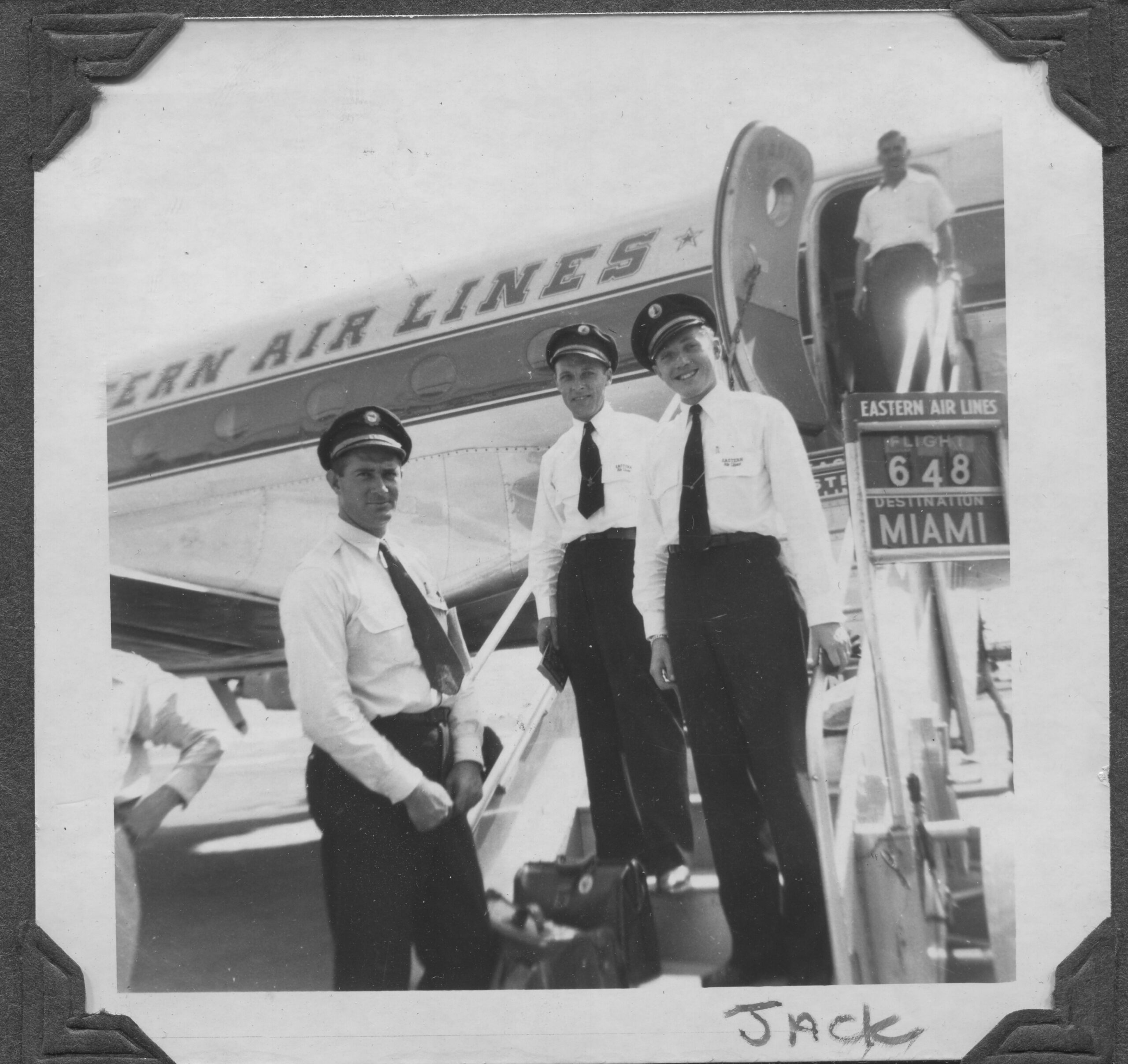
They moved to a small cottage in Coconut Grove across the street from the fire station. My father worked for Burdines, Morgan Pianos on Biscayne Boulevard, Truly Nolan and then Eastern Airlines. My parents moved to Hialeah, to a small flat-roof house by the race track. My dad’s supervisor at Eastern Airlines wrote a letter to the phone company asking if they could install a phone line to my parent’s neighborhood. My dad was a flight attendant and his supervisor needed to reach him by phone.

My father had served as an altar boy in his youth and was very familiar with Latin. During his time as a POW, he studied foreign languages and became fluent in German, French and Spanish. Capt Eddie Rickenbacker, the president of Eastern Airlines, heard about this young flight attendant who spoke fluent Spanish and made sure my dad was part of the flight crew that accompanied him on his tour of South America. My dad also served as an interpreter.

My maternal grandmother, Gladys Long, moved to Miami in the late 1940s. She got a job with the Dade County Building Department and worked on the 15th floor of the old courthouse. The Dade County Jail occupied the upper floors of the courthouse.

My father taught me how to drive a stick-shift car in the Woodlawn Cemetery. He said we could not hurt anyone there.

I was born Oct. 11, 1951, and my parents Jack and Valerie Newman adopted me through the Catholic Charities Bureau.

My mother, an only child, depended on my pediatrician, Dr. Wesley Nook, for advice on how to raise me.

I recently attended Dr. Nook’s funeral at Plymouth Congregational Church in Coconut Grove. He was 100 years old.

The first house I remember living in was at Oak Avenue in Coconut Grove. I went to kindergarten in an old stone building in Peacock Park. I walked to Coconut Grove Elementary School to attend the first grade. I remember going to Liles Pharmacy, the Florida Pharmacy in the Engle Building and best of all, the Krest Five & Ten store next to the elementary school.

In the late 1950s, my father got a new job as a traveling salesman for Northan Warren Co., selling nail care products and cosmetics to women.

We moved to a new house at 8770 Caribbean Boulevard in Whispering Pines. This was our first house with central air conditioning! I rode my bike with friends to Perrine Elementary School.

We had been going to St. Mark’s Lutheran Church in Coral Gables, but there was a disagreement over the building of a new sanctuary and many of the members left, including my parents.

We now attend Christ the King Lutheran Church across the street from the old Parrot Jungle. The founding pastor was the dynamic Carsten Ludder. George Williamson, owner of Williamson Cadillac, also a member, made sure that Pastor Ludder always had a bright red convertible Cadillac to drive.

We used to cook breakfast at Matheson Hammock Park or go swimming at the protected pool. My favorite beach was Tahiti Beach, with its floating raft that had a great diving board.

In the early 1960s my father was promoted to regional sales manager and we were transferred to Atlanta. The Northan Warren Co., had been sold to the Chesebrough Ponds Co. I attended Margaret Mitchell Elementary School. I will never forget that school because I was sitting in class taking a Weekly Reader test when another teacher walked into our classroom and whispered something to our teacher. The date was Nov. 22, 1963, the day President Kennedy was assassinated.

I eventually graduated from Stetson University in 1975. I shared the bathroom and the telephone with William Bryan Brock III and Louis Wolfson III, who both still live in Miami.

After graduation, I found a job as a “fuel allocation engineer” at the Shell gas station on Le Jeune Road across the street from the National Airlines hanger.

I returned to Christ the King Lutheran Church and was a member for almost 25 years. My grandmother and I could usually be seen in the same pew every Sunday. One day, Jim Harris, the personnel director of the Dade County Department of Corrections and Rehabilitation, called and asked me if I was still interested in a job. On April 13, 1976, I was hired as a correctional officer to work in the county jail system. I had many interesting assignments: housekeeper, booking desk, courts, transportation, training bureau supervisor, firearms instructor, operations, supervisor of Ward-D at Jackson Memorial Hospital and shift commander at the Women’s Detention Center. I was appointed to the board of directors of the Dade County Police Benevolent Association. Sometime later, Nelson Perry, then president of the PBA, asked me if I would be willing to serve as the chaplain.

I did not feel that I was qualified but he assured me that all I would have to do is open the meeting with a short prayer. This began the happiest 18 years of my life.

I retired in 2006, after 30 years of service to Miami-Dade County’s citizens.

I love Miami and never plan to move away.

No matter where I go – whether to Versailles, Vizcaya, St. Patrick’s Church, the Biltmore Hotel, Fairchild Tropical Botanic Garden or Lincoln Road, I have wonderful memories of living in Miami.

It was a cold, snowy, winter day in 1967 when, while sitting in my junior high geography class in South Philadelphia, I first read about this tropical paradise called Florida.

The book told of beaches, palm trees, alligators, the Fountain of Youth and Bunny Yeager. I knew then that I wanted to be there, but being 14 at the time, the dream was repressed.

We had Atlantic City, where my parents and their parents vacationed, but the ocean water was cold even in June.

In 1973, while attending Temple University, the dream of going to Florida bubbled up.

Maybe it was the movie Midnight Cowboy, or maybe it was because it was December, but I got on a Greyhound and headed for Miami Beach.

When the bus dropped me on the corner of 17th Street and Washington Avenue, I looked up and saw Temple Emanu-El. I returned to Philly and two years later, in August 1975, I packed my bags and transferred to the University of Miami.

My first job was as a doorman at the Mimosa, where I parked cars for the rich and a little famous. It was 75 degrees in December and, as I worked and people were giving me money to park their cars and open their doors, I saw the bus pass by that Ratso Rizzo had been riding on in the movie, and it was carrying more escapees from the Northeast. I rented a “kitchenette” at the oceanfront Betsy Ross Hotel for $400 a month in the summertime, including a phone, electric and maid service. This was too good to be true!

I left in the winter because it went up to $400 a week. From there I lived in a garage apartment on North Bay Road where I would watch the Bee Gees drive back and forth to their recording studio in a nice Cadillac.

In May 1980, I went to Israel again for 10 days. When I returned to Miami, the Mariel Boatlift had happened, as well as the riots. I remember walking home down Lincoln Road in the 1980s from the only club on Ocean Drive, The Carlyle, and fearing for my life.

During the riots, I drove tourists back and forth from the beach to the airport watching the city in flames.

There were so many great places to eat on Miami Beach at the time. I still have the cholesterol and triglycerides to prove it. There was Wolfie’s, Pumpernicks, the Concord, Rascal House, the Famous, the Embers, and Curry’s.

My favorite was the King David Deli on Washington Avenue. There were several kosher butchers in Miami Beach and the bakeries were unreal.

I remember dancing at The Forge to the Bee Gees, and even took my mother there when she visited from Philly. I remember going to the Marco Polo Hotel and the Wreck Bar, where greats like B.B King and the Staple Singers performed to a small audience. I caught the tail end of an era.

I continued my education all along the way, earning a second bachelor’s in criminal justice from Florida International University in 1981. I began working as a counselor for Douglas Gardens Community Mental Health Center on Lincoln Road.

From 1985-86, I studied and worked in Israel and returned again to Miami Beach. This time I brought my parents with me and they lived on Miami Beach enjoying the weather and thawing out from 70 years of living in Philly.

I believe the move increased their years. They both attended what was an active Jewish Community Center on Espanola Way.

It was the 1980s and the celebrities returned with Miami Vice and Scarface.

I was star struck once again and chatted with Don Johnson, Philip Michael Thomas, and spoke with Mickey Rourke while he trained at the Fifth Street Gym.

I completed a second master’s and then a doctorate in psychology in 1997 from the Carlos Albiezu University. I became licensed as a psychologist in 2001 and have had a practice in Miami Beach since then.

It’s great to see the rebirth of the Jewish community with new synagogues, kosher restaurants, and a soon-to-be Jewish Community Center, for which I’ve waited 37 years.

I’ve been to 30 states and 15 countries – but I always find myself coming back to Miami Beach. Must be in the stars.

After being discharged from the Navy in 1947, I went back to Deland in Central Florida to stay with my parents. After three months of adjusting to civilian life, I made plans to enter Embry Riddle School of Aviation, based at Opa-locka Airport, to get an aircraft and engine license. Serving in the Navy as an airplane mechanic made me aware that I liked working on airplanes.

When I arrived in Miami to enroll, the classes were filled until late 1951. I enrolled for the 1951 class and returned to Deland. A close friend, Dr. Garwood, dean of men at Stetson University, advised me to get a degree while waiting. I followed his advice and graduated with a degree in business administration in 1951.

I married my college sweetheart, Marilyn Pitts, who also graduated in 1951, began aviation school and started working part-time for Loffler Brothers Oyster House in Coral Gables. I traveled to work on a Cushman motor scooter, while my wife used our 1947 Chevy to get to her job with Lindsley Lumber. Later, she worked for the state of Florida and retired in 1991.

In the 1950s, 36th Street was the main road at Miami Airport. Eastern and Pan Am each had their own terminals on 36th Street, and National Airlines had their hangars on the east side of Le Jeune Road across from the airport.

It seemed like there was a Royal Castle on every corner offering five-cent hamburgers and five-cent birch beers in cold glasses. There was a mom-and-pop restaurant close to the Seaboard Rail Station on Seventh Avenue named the “Shrimp Place.” Dinner was 75 cents and included the entree, 2 sides, bread, drink and dessert – and the shrimp were fresh-caught.

After finishing my class at Embry Riddle, I was employed by Pan American World Airways and retired in 1991. When Pan Am moved their maintenance department to New York, I worked for Eastern Airlines for four years until Pan Am moved back to Miami and recalled me.

In June of 1952 we joined Riverside Baptist Church, then on Ninth Avenue and First Street in downtown Miami. We are still members of Riverside Baptist Church, which is now located in Kendall.

Having been a scoutmaster while in college, I agreed to work with a group of boys from fourth through 12th grades. This group was called Royal Ambassadors, or R.A.’s . In addition to mission education, the boys learned canoeing, cooking, games, sports, crafts and nature study. I still work with these boys. My wife worked with the girls in a group called Girls in Action. They did mission education and crafts and games, also.

In 1953, we purchased our first home in Virginia Gardens, a five-minute commute to Pam Am. It was a three-bedroom, one-bath new home with a garage for $11,000. We put $385 down and paid $80 a month. Needing more space, we relocated in 1960 to Westchester, where we bought a home on a one-acre lot. We still live there.

As church attendance grew, it became necessary to think about building a larger sanctuary. The old sanctuary had been built in 1922 and was renovated after the 1926 hurricane. Under Dr. James Parrish, the church began construction on the new sanctuary in 1958 and finished in July 1959. The new building was beautiful, with a tall steeple and green and white furnishings inside.

On the way home from Sunday evening church service, we would stop at the Krispy Kreme doughnut shop on Southwest Eighth Street and purchase a dozen fresh, hot doughnuts. With our three children in the car, they were all gone by the time we arrived home.

By the end of 1970, attendance at Riverside Baptist was very low. Many members had moved to unincorporated Dade County, where new homes were available. The church building was sold downtown, and property was purchased on Southwest 104th Street. We had our first service in the new building on Easter Sunday, April 10, 1977. Last fall, the church celebrated its 90th anniversary.

Translate »