fbpx Skip to content
Named Best Museum 2022 by Miami New Times

Although my mother, the former Edith Leibowitz, was born in New York, she graduated from Miami Beach High in 1942. So it was only natural that she and my father, Marvin Kuperman, would move to Miami following their marriage in 1946.

I was born in Victoria Hospital (which no longer exists) in 1948. We lived in a small one-bedroom apartment in what is now the heart of Little Havana.

In 1950 we moved into a “huge” two-bedroom, one-bath house with a Florida room in a new development called Coral Gate (purchase price – $10,000.00). The development consisted almost entirely of young baby boomers and their families. No one had air conditioning so everyone kept their front door open since all houses came with screen doors which allowed for cross ventilation and which invariably remained unlocked the entire day. (Needless to say, no one had alarm systems!)

My sister, Debbie (Debra), was born in 1951, which initially was exciting until it became apparent that she was going to permanently reside in and basically take over my bedroom.

My mother didn’t have a car in the early fifties so we walked almost everywhere. Nearby was Margaret Ann, a large grocery store on the corner of Southwest 32nd Avenue and Coral Way, the new Sears Roebuck on Coral Way, and of course all of the stores on Miracle Mile.

On the northwest border of Coral Gate stood the Coliseum, which housed a large bowling alley (at which my parents bowled regularly) with adjoining athletic fields. Every Saturday at 1:00 p.m. an air raid siren which sat on the top of the Coliseum began blaring for several minutes.

I attended Auburndale Elementary where I majored in misbehaving. I still managed to win the fourth grade spelling bee and was also one of the fastest kids in school in the shuttle run.

A large segment of the Coral Gate kids took a city bus home from school each day and all of us would spill out of the bus at the Southwest 18th Street and 32nd Avenue stop. We all purchased bus cards which cost $1.50 for 30 fares and which the driver would punch holes in. Between the ever-increasing hole punches and our stuffing the cards in our pockets, they became frayed and tattered within a week or two.

Two or three mornings a week we had Home Milk delivered to our doorstep by our milkman. Every once in a while he gave us blocks of ice to play with (which quickly melted), as well as wooden milk crates. In the afternoons (especially in the summer) the Good Humor Man in his starched white uniform would drive up and down every street broadcasting music from his truck in order to market a variety of ice cream. I also remember lady truck drivers who regularly delivered laundered cloth diapers to those families with babies.

After school we played baseball and football right in the middle of the street. Every once in a while we got into trouble when a stray baseball bounced off of someone’s car.

At a young age, my father began taking me to watch the “original” Miami Marlins play at the old Miami Stadium. The Marlins were a Triple A team playing in the International League, which played U.S. teams as well as teams from other countries, including the Havana Sugar Kings. We were once very fortunate to attend a game in which the late great Satchel Paige pitched.

In the late ‘50s the kids in my neighborhood began collecting Topps baseball cards which came in a small wrapper and also included a piece of bubble gum as thin and hard as one of the baseball cards. We would “flip” the baseball cards off a wall and keep whatever cards our card landed on. Incredibly, it also became popular in our neighborhood to attach our cards to the spokes of our bikes with clothespins which resulted in the bike making loud clicking sounds when we rode. I still get nauseous thinking about all the Ted Williams, Mickey Mantle and Willie Mays cards that got shredded in our bikes.

My grandparents owned a small apartment building on South Beach and we would visit them almost every Sunday. We often walked to the beach where we swam in the crystal clear waters of the Atlantic Ocean. On other occasions my grandfather and I would walk to the Clevelander Hotel armed with a pickle jar and fishnet to catch guppies in the small waterways which lined the hotel.

Some of the restaurants that we frequented were the Big Wheel drive-in located just south of Coral Way on Southwest 32nd Avenue, the Red Diamond Inn on Lejeune Road, Harvey’s Restaurant on Flagler Street, as well as Wolfie’s and the Famous Restaurant on Miami Beach. A special treat was a trip to Fun Fair on the 79th Street Causeway. All of these restaurants closed decades ago.

In the summer I spent many days playing baseball and other sports at the Boys Club on Southwest 32nd Avenue and Dixie Highway. Almost every summer, my family went on a “stay-cation” to the Colonial Inn Motel on Sunny Isles Beach. Not only did the motel have a low diving board, it also had a high diving board, both of which are unheard of in today’s liability conscious society. We used to run off the high dive with legs flailing, screaming “Geronimo!” and hope that we didn’t land on any unwary swimmers. In those days, all females, regardless of their age, were required to wear bathing caps.

Although Miami is now a bustling, culturally diverse, cosmopolitan city, I sure enjoyed being a kid in the simpler, slower paced Miami of the fifties.

My wife, Mayita, and I live in Pinecrest. After practicing law in Miami for more than 40 years, I see retirement in my future. Although our son lives in California, my daughter and her family live nearby. My granddaughter is the fifth generation of my family to call Miami home.
I wanted to spend my retirement entertained with a million things to do each and every day. My husband Steve, on the other hand, wanted to spend his retired life in the sun, fishing for permit. He said, “Key West.” I said, “New York.” I was determined to remain in New York, and Steve was just as determined to move to Florida.

Steve hated the cold and the sleet and the snow. And he loved fishing and baseball.

Steve and I visited Florida on vacation in 1957, and we stayed at the Nautilus Hotel. Even the names of the hotels conjured up visions of far-away, exotic lands — Casablanca, Sans Souci, Marseilles, Fontainebleau, Eden Roc, and Seville.

In 1972, my aunt rented an apartment next to the Diplomat Hotel where, each night, famous stars performed, and she would take us to her favorite restaurants: Rascal House, Pumpernik’s, Corky’s, and the ever delicious Tivoli.

In the end, I gave in — with a compromise. We would move to South Florida but not to Key West.

So in 1994, we moved into the same building on the beach where my aunt lived, next to the waiting-to-be-imploded Diplomat Hotel. I soon discovered that the heat didn’t bother me at all, and having a pool where people congregated and created friendships certainly helped us quickly get used to our new home.

Strolling down Lincoln Road years ago, when the middle of the street was still open to traffic, was always thrilling. And Steve and I loved Hialeah Park, the race track where thoroughbreds ran and beautiful flamingos fed along the ponds in the sculptured gardens. The elegant betting area bore no resemblance to any race track we had ever been to; Hialeah was a gem of mahogany-sculptured paneling that conjured up old-fashioned splendor and always made me feel out of place making a two-dollar bet.

I liked to visit Fairchild Tropical Botanic Garden because not only were the gardens colorful and fragrant, but otters frolicked in the small pond there. Steve and I always enjoy visiting the Biltmore Hotel, in Coral Gables, where we walk around the immense swimming pool and recall that Johnny Weissmuller and Esther Williams swam there. The GableStage theater, housed at the Biltmore, offers memorable performances that each season garner awards.

Steve enjoys sporting events, and he followed Tiger Woods on the greens of the Doral Country Club, and on Sunday afternoons we would go to Joe Robbie Stadium, now known as Sun Life Stadium, to watch the Miami Dolphins play.

Miami also has wonderful museums, such as the Bass and the Wolfsonian. One of the most astonishing exhibits I ever saw was a display at the Bass Museum: a kitchen, living room, and a garden all made out of beads; even the kitchen sink and faucets were made from beads.

The Holocaust Memorial on Miami Beach always brings me to tears. Secluded in a garden and surrounded by sculptures depicting the horrors of the concentration camps, a giant hand emerging from the exhibit’s center. The hand itself is covered with naked, emaciated bodies climbing up to the wrist, evoking the horrors and the sadness of the millions lost.

I still love the old, Art Deco buildings of South Beach, now renovated into chic boutique hotels. Latin music erupts from Gloria Estefan’s restaurant on the west side of Ocean Drive. On the beach side of the street, we always would stop to admire the sand sculptures. I miss the artist who created these fanciful cities out of sand stretching a quarter of a block in length and lasting perhaps for months. After a while, he would start all over, a new creation from nothing, but now he, too, seems to be gone for good. Also gone — and sorely missed — is that fabulous panoramic mural on the wall of the Fontainebleau Hotel depicting an Eden-like garden; it always felt as if we were driving right through the arch and into the hotel.

I used to love the fatty corned-beef sandwiches at Rascal House, and now at Jerry’s Famous Deli, and I revel in the tastes of Chinese food at Christine Lee’s.

When Steve and I moved to South Florida, I found all the things I really wanted: serious, great theater and musicals, better than what is offered on Broadway.

Better yet, my children now live in South Florida, too, and heaven, in the shape of my grandchildren, came with them. Now I wouldn’t want to live anywhere else. I read somewhere that you are truly lucky if you live near a beach. Well, then we are all very lucky to live in South Florida, surrounded by beautiful beaches.

From my windows, the ocean is a stunning aquamarine mural. “Florida? You must be kidding!” has turned into “Florida? I am sure glad I live here!”

My sojourn to South Florida started before I moved here in 1957. My sister and brother-in-law were here from New York on a winter vacation on December 26, 1947. The metropolitan area of New York had a snowstorm of 26 inches in a 24-hour period. It was a record then and may still be to this day. My sister called my father to find out the conditions and my father told them to stay in Miami, the city was paralyzed, no transportation, nothing was going on. They decided to stay and move permanently to South Florida. They came back to gather their personal belongings.

I started coming down in 1950 when my nephew was born. I went to jai alai every night and sat in the balcony for 50 cents. Back then jai alai was the place to be, especially on a Saturday night. The highlight of my trip was when we would go to Leonard’s La Peña on Bird Road, where I think the Palmetto Expressway is today. The menu, if I am not mistaken, was a shrimp cocktail, steak or lobster, stuffed baked potato and, for dessert, hot apple pie with a slice of American cheese — all for $3.95 (plus tip).

I moved to Florida in 1957, a day after the New York Yankees lost to the Milwaukee Braves in the World Series. My parents followed me one month later. They bought a house one block north of the Tamiami Trail and Southwest 60th Avenue. There is an elementary school called Fairlawn, which also had a park with a baseball field. Playing there one day I was recruited by a team that was practicing. They mentioned a league they played in at Shenandoah Park off Southwest 22nd Avenue and 19th Street and asked me if I wanted to join their team. Naturally I said yes. It was a church league and I played for St. Matthew’s Lutheran one year and Shenandoah Baptist the following year.

My first job in Florida was at the Food Fair warehouse on Northwest 71st Street and 32nd Avenue. I believe at the time they were the largest supermarket chain in South Florida. Other supermarkets at the time were Margaret Ann and Kwik Chek, which eventually merged with Winn Dixie, their main competition. Other stores came and went such as Grand Union, Albertson’s, and Shell on Northwest 58th Street. Publix was not as prevalent around South Florida in those days, but of course they have come a long way since then.

In 1960 I bought a hardware store on Northwest 183rd Street and 7th Avenue. The Palmetto Expressway only extended from the Trail (Southwest 8th Street) to Golden Glades. They used to call the Palmetto “Dead Man’s Highway” since there were no overpasses, or very few. You had to drive way below the speed limit to avoid accidents since very few cars stopped or slowed down at the intersections. I think within a year they started building overpasses at key streets which opened the area to residences and businesses immediately.

Some familiar and favorite restaurants through the years were Gold Star Deli on the Trail, just east of 62nd Avenue, the Great Gables on Ponce and the Trail, The Pub (with Whitey the host) on Coral Way, Royal Castles all over, Shorty’s BBQ, Captain’s Tavern, and Frankie’s Pizza on Bird Road, which is still there under family ownership. Dressel’s Dairy Farm on Milam Dairy Road had rides for the children and the thickest malt shakes anywhere.

Miami Beach in the ‘50s and ‘60s was second only to Las Vegas in live entertainment — from Roberta Sherwood and Don Rickles at Murray Franklin’s to Charlie Callas and Shecky Greene at the Deauville Star Theatre and Buddy Hackett and Joan Rivers at the Diplomat. Movie theaters included the Miracle on Miracle Mile, the Tower on the Trail, the State and Claughton theaters.

I have been happily married to my wife Elaine for 52 years (45 for her and seven for me – our joke). We have three children (and one grandchild) and, 45 years on, still live in our house off Miller Road and Southwest 92nd Avenue.

I was an avid tennis player for 30 years and dazzled many courts such as the Dadeland Inn, Marlin Racquet Club, Kendalltown and Courts at the Falls until my shoulder and knees finally gave out.

In between all this I enjoyed a long and successful career in real estate, where our company built, developed and managed warehouses, retail strip centers and private residences, mostly between Bird Road and Southwest 120th Street, and also along South Dixie Highway and Kendall Drive out west, when it was largely undeveloped. It has been a great ride. Thanks for the memories, South Florida (Miami).

In 1951, I was young and it was the summer of my junior year in high school. I left St. Louis to join my older brother, a waiter at Martha Raye’s nightclub. It seemed to me to be an interesting life and he had agreed, after some pleading, to let me join him – as long as I worked and paid my own expenses. So, after apparently every possible stop in Kentucky, Tennessee, Georgia and Florida, my non-air conditioned Greyhound bus arrived in Miami Beach and I saw, for the first time in my life, the ocean, framed by palm trees, sand and the just rising sun — and I was hooked.

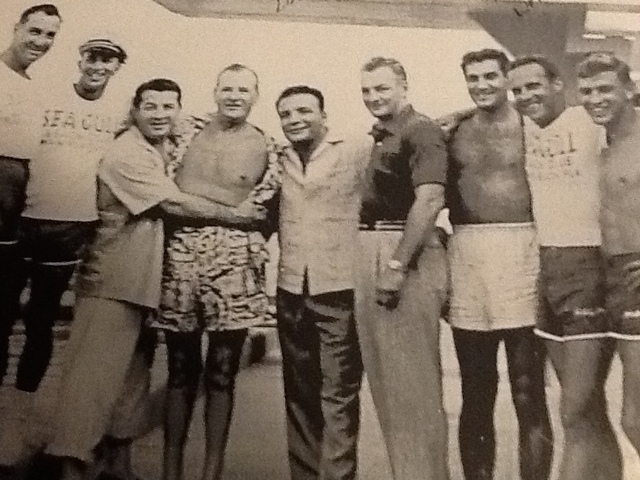
My brother lied about my age and my “several years” of experience to get me a union card and a job as a busboy. My “experience” consisted of an hour or so of practice carrying dishes and glasses piled upon an up-turned coffee table. From the late ‘40s through the ‘50s and ‘60s the Collins area between 20th and 25th Streets was one of the liveliest in Miami Beach. Martha’s Five O’Clock Club was on the corner of 20th and Collins; Collins and 22nd housed “Wolfies,” the quintessential New York delicatessen. The Grate, the Pin Up, the Place Pigalle and the Night Owls clubs were within blocks; the Embers restaurant and Dubrow’s cafeteria were nearby; Junior’s deli and the old Roney Plaza hotel were just off 23rd Street. The 22nd Street public beach, between the Roney and the Sea Gull hotel, was well known by natives for its homosexual clientele, both male and female, and occasional bewildered tourists, wondering just what they had stumbled on to. My daytime job was working for three dollars a day and tips as a “cabana boy” at the Sea Gull, handing out towels, setting up beach chairs and umbrellas, keeping an eye on guests in the pool and ocean and selling them on the local water ski schools, hand-woven palm hats, Monkey Jungle tours, scuba lessons and other “opportunities” for which, if they bought, I received a one percent commission.

In the 1950s, the Five O’Clock Club was a popular, small nightclub offering two shows a night and three on weekends. The club was named for dispensing free drinks to anyone still at the bar at 5:00 a.m. The 5:00 a.m. sessions were populated primarily by after-work waiters, waitresses and musicians from other clubs, an occasional hooker and sometimes, a celebrity or two. The club had a three-drink minimum and, if you didn’t order food at the 6 p.m. dinner show, you paid a separate cover charge. The experienced nightclub goer nursed a glass of wine, paid the minimum or cover and never, ever ordered food from what was one of the worst kitchens on the Beach. Martha’s was where I learned to maneuver trays of dirty dishware through narrow aisles of tiny, tourist-filled tables and sometimes helped the bartender water down the bourbon, scotch and rye. I also learned that the “snowbirds,” particularly those who had perhaps had a drink too many, were often easy marks for inflated bar tabs. Martha’s was a lesser club, not as big or flashy as Copa City, the Beachcomber or the Latin Quarter but, when Martha was on the bill, it catered to loyal locals and aging movie-going tourists who remembered her from her ‘30s and ‘40s Hollywood musical comedies and who appreciated her off-color comedy routines and very considerable talent as a jazz pianist and vocalist. The five o’clock shows also featured lesser comics, male or female vocalists on their way up, or down the showbiz ladder and, sometimes, a movie-star friend of Martha’s.

I sometimes frequented the Rockin’ MB lounge which featured saxophone duos, drums and no-name vocalists, performing from an elevated “stage” behind the narrow bar. The band played mostly tunes like Bill Haley’s “Rock Around the Clock,” always at full volume. The sound cast out on Collins from late night to early morning and the entrance sheltered a large, bored gatekeeper, seated on a stool, who casually checked IDs and denied entrance to nobody. The offices above the MB also housed a phone-filled “wire room” handling bookies’ action. This was still Meyer Lansky/Al Capone/pre-Kefauver Miami and the horse parlors, “private” casinos and bolito shops had not yet been shut down as consequence of the crusading senator’s traveling hearings on crime and corruption (Kefauver’s first hearing was in Miami in 1951). What wasn’t legally wagered at Hialeah or Gulfstream on the horses or at dog tracks on the greyhounds or at jai alai frontons was gambled with bookies in cabanas by the pool at the ocean front hotels — like the one at the Sea Gull.

The Rockin MB’s clientele, like that at the Sea Gull and other beachfront hotels, were mostly young tourists, often female, in groups of twos and threes — secretaries, teachers and office workers, down from East Chicago, Indiana, Cleveland or other cities up north lured to Miami Beach by the airlines and hotels advertising “3 days and 2 nights (or 7 days and 6 nights) of sun and fun” on the “American Plan” where airfare, hotel, and most meals were included in the package. For example, in the 1950s you could stay at the Di Lido or Shore Club and other ocean-front hotels for less than $27 a day and for an additional $25 get breakfast and dinner. The American Plan became very popular in the 1960s and its utilization by mega-hotels like the Fontainebleau and Eden Roc with in-house nightclubs and New York/Hollywood level shows and entertainers marked the beginning of the end for clubs like Martha’s as well as the bigger entertainment venues.

I met celebrities besides Martha — had my picture taken with Jake LaMotta and Rocky Graziano at the Sea Gull, parked a car for Elizabeth Taylor and Eddie Fisher, made sure Irving Berlin’s jock strap and bathing suit were dry for his morning dip, and was able to finance my “other” education at the University of Miami — thanks to Miami Beach and the generosity of tourists.

South Miami Heights — it brings a smile to my face. I wish the kids of today could have had the childhood we had — it was so simple.

Dad was the first of the six Sinclair brothers to move from Massachusetts to South Florida. Mom and Dad moved to Miami in the late ’50s, where they rented an apartment across the street from the Orange Bowl. I was born soon after at Jackson Memorial Hospital; I think the entire bill for the birth was about $115.

We lived in the aptly named Orange Bowl Court Apartments, and when a game was played in the OB, Dad and other OB Court renters made a few dollars parking cars on the premises. Four of my uncles followed, they worked in Doral and later settled with their families in Broward County.

Soon they heard of homes being built 25 miles south, starting at only $11,000. They packed their bags and moved south, to everyone’s dismay — it was just so far away!

Our new home was situated directly across the street from South Miami Heights Elementary. The house was a terrazzo-floored, jalousie-windowed single-family home with three bedrooms, two baths, and a turquoise eat-in kitchen with a nook where the whole family sat for every meal. Best friends Nancy and Linda were my constant companions. We went from kindergarten through high school together.

Some Saturdays, Linda and I walked up to 7-Eleven story for their famous Icee drinks, and we got the jumping beans candy for free. Food Fair, Mike’s drug store, and the pediatrician’s office were all within a mile from our homes. Where everyone shopped, they were known by name. We cannot forget the Cutler Ridge Cinema, and the Saturday morning matinee, for 10 cents.

My dad Ray was a sign painter and worked for Richards and Grant’s department stores. Later, he got a job on with Miami-Dade’s Parks and Recreation Department and retired 25 years later as the county sign painter, back when signs were actually hand-painted. He moonlighted doing his favorite thing, playing the drums. He played the drums with various bands throughout South Florida over the years, both paid and unpaid. Dad was one of the few people I have ever known who truly enjoyed his work. He vowed he would die with drumsticks in his hands, and when he died in 2008, we made sure he took them with him.

My Mom Sarah was a waitress at a few local spots, but most memorable for me was the Bowl-0-Mat, on 87th Avenue and U.S. 1. Sometimes, she would take me along and send me over to the roller skating rink during her shift. I LOVED that.

As a teen, I joined Dad and his guitar-playing friends and their families in a weekly bowling team; it was lots of fun. In between, having four more children, Mom later worked at Palmetto Golf Course where, during the summer, she would load us into her green Chevy station wagon with all our friends and we’d hang out at the pool all day.

The days were long and after breakfast, bed-making and washing the dishes, we were sent outside to play — no TV for us. Give us a ball and a bottle cap and we played for hours, a rock scratched upon the sidewalk and you now have hopscotch.

At 4 p.m., my brother Ray and his friends Lee and David would start humming, “Nah nah nah nah na, BATMAN!” and the three of them would run off into one of their homes to watch.

Our year of seventh grade at Cutler Ridge Junior High was great. Then, for eighthh grade, we were tangled up in politics — integration had begun. We would now be bused into Goulds, the neighborhood east of the highway just south of our neighborhood. National TV reporters were in town, police were everywhere, and accusations, threats, and emotions ran high.

Impromptu schools began popping up; some white parents didn’t want their kids going to Goulds for schooling. Classroom assignments and bus routes were received and I was to be at the corner for bus pick-up early Monday morning. The weekend before school started was hectic. My friends called to tell me they were not going to school, none of them. I, being a very shy, awkward, freckle-faced pre-teen, was scared to death to be alone at a new school with no friends, so I begged my mom to let me stay home. She, the all-knowing mother that she is, said, you will go to school and you will be just fine. Yes, I went. Mom was right; we were fine. We developed some great friendships and learned a lot about different cultures.

To this day, we remain close to our childhood friends, although most have moved away. I am sad when I go through the neighborhoods and see no one — no kids playing, no neighbors in the yard talking, no bicycles ….

My friends, you don’t know what you are missing.

In 1924, Jo and Frank “Spud” Murphy came to Miami from Port St. Joe in the Florida Panhandle. Originally, they were both from Alabama.

My grandfather is nicknamed Spud, after Irish potatoes. He got an offer for a better job as a bookkeeper to move to Miami. They bought a house in Allapattah and my grandfather took a job with Mill’s Rock Company. In those days, rock pits were blasted using dynamite. In a freak accident, there was a premature explosion and the owner, Robert Mills, and several workers were killed. After this happened, Ed Mills, one of the Mills brothers, took my grandfather in as partner. This became a longtime, well-known, road-building business known as “Murphy and Mills.”

In 1923, Rilla and Tom Murrell decided to move to Miami from Alabama to escape the cold and come down to the wonderful weather and easy-going lifestyle. They bought a house in Miami Springs and opened a beauty salon and barber shop together on the circle. My grandfather, Tom, also became the first postmaster of Miami Springs. My grandparents lived in that house until they passed away. My grandmother always grew a wonderful vegetable garden. Men and women would come from all over to have their hair done by my grandmother.

My grandparents all weathered the 1926 hurricane. Back then, they did not have the knowledge of hurricanes like we do today. My grandfather Murphy was stuck out in the storm at a gas station.

My mother, Ann Murphy Murrell, was born in 1931 at Jackson Memorial Hospital in the Alamo Building, which is still there as a historical site. When she was born, that was the only building at Jackson. She went to Miami Jackson High School and was a majorette in the marching band. After high school, my mom attended the University of Miami.

My father, Lee Murrell, was born in 1930 at his family home. He went to Miami Edison High School where he played football and ran track. He played back in the days when they wore leather helmets and facemasks. They did not even know what a mouth piece was. Can you imagine — they traveled around Florida by plane to play other high school teams?

After high school, he also attended the University of Miami. That is where my mom and dad met; a mutual friend introduced them. They dated for a while and then were married in the First Baptist Church of Allapattah.

My mom worked as a secretary before becoming a housewife. My dad worked for Holsum bakery with his own delivery route. Then in the 1950s, they bought property in North Miami at 131st Street and West Dixie Highway. They bought a Carvel ice cream franchise and built a Carvel shop. This was the beginning of their first business. My parents were living in Allapattah at the time, so to be closer to the Carvel, they bought a piece of property in North Miami and built their first home.

In the 1960s, they sold the Carvel store then went across the street and opened an ice cream and hamburger place called Lee’s. This became the new hangout for the North Miami kids. After owning Lee’s for a few years, the long hours were just too much while raising four kids. My father sold Lee’s and started M&M; Landscaping.

In the meantime, he went to the Lowe Art Museum to take a metal sculpting class as a hobby and also went to Coconut Grove in the 1960s to take a class to learn to make jewelry. Well, a hobby became a business. He was making jewelry and metal sculptures and selling them at arts and crafts shows. He stopped making the jewelry, but he still has his metal sculpture business, Copper Creations by Lee. Now, 45 years later, he is still doing art shows and selling online at Etsy. When anybody asks my dad where he is from, he still says, “My-am-uh,” like a native.

My mother and father had four children. The two oldest were born at Mercy Hospital, and the two youngest at North Shore. We were raised in North Miami when it was just a small town where everyone knew each other. We would ride our bikes everywhere and loved hanging out at Haulover Beach and Greynolds Park. We loved going to eat at Pumpernick’s, and then we would go to the First Baptist Church of North Miami. All four of us graduated from North Miami Senior High; we were true “Pioneers”!

Some of us still live here, and some have moved on. My parents have seven grandchildren, who were all born in Miami. My father has one great-granddaughter. We are University of Miami Hurricanes and Miami Dolphin’ fans. When the Marlins came to Miami, we became big fans of them, as well. My mother was one of their biggest fans, going to almost every game. After the games, we would go to Rascal House to enjoy dinner. She had a room in her home dedicated to all three sports teams. My parents always loved Miami, and my mother believed going to the beach could cure anything.

I have written this story in memory of my mother, who always wanted to write this story. Sadly, she passed away July 29, 2013, so I used her notes to write this piece.

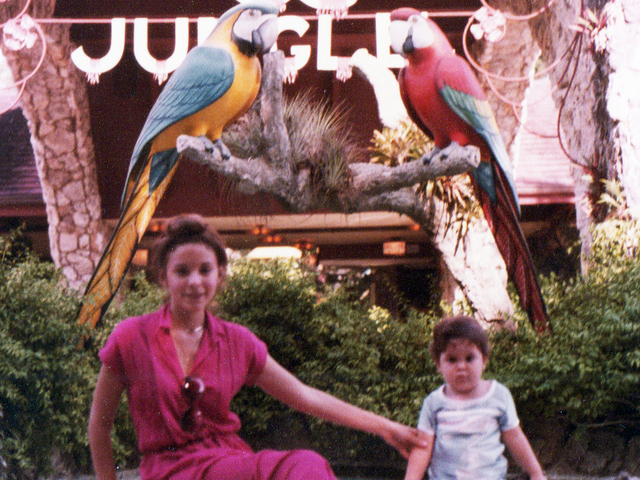
I was born in Nicaragua. I lived there until I moved to Miami in 1979 when I was 19 years old. I moved with my daughter; she was almost 2 at the time.

From the moment I moved to Miami I felt at home. My sisters were living here. The first time I came to Miami from Nicaragua, I was 5 years old and I loved it; my memories from it when I was a child were beautiful. And I came often with my parents from Nicaragua. When I moved here, I was acquainted with the city. My sisters living here also helped a lot.

When I was 12 years old, something terrible happened: I lost my father, Julio C. Martinez. He died here in Miami while I was living in Nicaragua. It was a sudden death and it was really difficult. I was very close to him, so it was hard on me. I’ve always been a happy and cheerful person, but in my heart I had that sense of void, that sense of missing my dad, that grief. It is because of that great loss that I do what I do, and that’s why I share this with you.

My daughter went to school here at Carrollton School of the Sacred Heart, which she loved. When she was in high school, I decided to go back to school myself. I started at the south campus of Miami Dade College, and now I teach a class there on world religions.

At Miami Dade, I chose psychology to be my major, and then I applied to different schools and was accepted at the University of Miami. I went there and took a class in world religions, which I loved, so I took on another major, religious studies.

There I took a class that really attracted me, called “Death and Dying.” I realized I needed it for my own sense of loss. It was very healing.

When I was in Nicaragua, I didn’t have counseling or support groups, or books to help me cope with my grief. I had my family and my Catholic religion customs at the time to wear black and white. There was no music, no TV and no going out because I was mourning. But at my young age, I did not understand what was happening.

When I finished at UM with a double major in psychology and religious studies, I started the graduate program on gerontology at Florida International University and then went to St. Thomas University for a certificate on loss and healing.

Now I help people cope with grief, including immigrants who suffer from a loss of homeland, traditions and language.

Since I moved here, 30-something years ago, Miami has grown so much. A place that I like to go to is Brickell Avenue near downtown Miami. It’s beautiful, and I love to see how downtown Miami has grown. Mary Brickell Village, and now the Design District — it’s so cosmopolitan.

I’m proud to have accomplished my purpose in this amazing city. Miami is such a warm city. And being Hispanic, with so many Hispanics here, I feel at home.

My family moved to Florida in December 1944 just after war was declared. I was 15 at the time.

This was a time when World War II soldiers were being sent to Florida for training purposes. They occupied many hotels on Miami Beach. A couple of years later, I would become a junior Red Cross hostess and go to many dances with servicemen.

Lincoln Road on Miami Beach was a very glamorous place at that time — lovely shops, beautifully dressed women, who in the winter would bring out their furs and jewelry. In the summer, stores like Saks Fifth Avenue would have great sales because there were no tourists around.

My best girlfriend, Pauline Lux Steadman, was the niece of Polly and Baron de Hirsch Meyer, so we would go to their cabana at the Roney Plaza, which was the place at the time.

Upon graduation from Miami Beach High in 1943, I worked at the Office of Censorship in Miami. After about a year I left and went to work at the Miami Air Depot. Since transportation was difficult at the time, however, I left to work at a military store on Miami Beach, where I met my husband, who was in the Army.

He was a musician. After he left the service, he worked with a small band at the Blackstone Hotel and from there went on to the Famous Door, Copa City, Beachcomber, Martha Raye’s Five o’clock Club and The Vagabond Club, all known nightclubs at that time.

He went under the name of Al Foster. He also composed songs for two University of Miami sketchbooks and worked at WTVJ Television with Steve Condos, half of the dancing team with brother Nick Condos, who was married to Martha Raye at the time.

Before my children were born I worked as a dancing instructor, model, cigarette girl and hostess. We saw many entertainers who were just starting out who later would become big names in show business.

Unfortunately we had to leave Florida to move up North, but after several years, I later returned in 1973. Not only were my mother and sister still in Florida, but I had sand in my shoes and had to return.

Miami will always occupy a special place in my heart. My beloved grandmother spent such a great portion of her life here that the two are now synonymous in my mind. She had impeccable taste, which means Miami is the second-greatest city in the world; of course, our native Petionville, Haiti, comes in first.

My grandmother passed away April 2, 2012. I know she is in a better place now. The nationalist in her wanted to reach eternity via Haiti. Since that was not meant to be, Miami opened its arms – as always. It is where her remains are interred.

With a smile brighter than all the lights on Ocean Drive, my grandmother was the city personified. She wrapped her head in colorful scarves, reminiscent of Miami’s golden age, pulsing with the roar of turquoise and chrome convertibles. She loved the Fontainebleau for its Old World glamor and once-upon-a-time elegance.

My grandmother’s Miami was quite similar to our native country. Many friends gathered on her porch on Sunday afternoons to enjoy lodyans – a form of storytelling drenched in humor.They reminisced and laughed about old times back home. Most of her friends spoke only Creole, even if they had lived in the States for decades.

Her front door stayed open all day – as it did in long-ago Haiti. Restaurants that sold food cooked like back home, if not better, were just around the corner from her house. The grocery stores’ shelves were stocked with the ingredients she used to buy in Haiti’s open-air markets. Miami was her second Haiti. When back home was not accessible – because of various coups d’état and other inconveniences, Miami was her sanctuary.

My grandmother’s last visit to Haiti was in late 2009. She was thrilled to see the house in which she planned to spend what remained of her life. She had spent years sending money for builders to make her house just so. She was ready to move in the fall of 2009.

When she flew home to begin the rest of her life, friends and neighbors received her as though she had never left. Just as they did in Miami, everyone gathered at her house for marathon conversations and tasty food.

But the longer my grandmother stayed in Haiti, the more she pined for “home” – meaning Miami.

Three months after arriving in Haiti, she decided she had lived so long in Miami that perhaps she could not live anywhere else, including her birth country. She flew back to Miami on Jan. 10, 2010.

Two days later, a devastating earthquake struck Haiti, killing hundreds of thousands. She sobbed for the lost lives. I sobbed with her, but took comfort in the fact that she had returned just in time; she might have been among the still-unaccounted-for victims. That would have destroyed me.

As stories poured in about the quake’s aftermath, the utter destruction, the chaotic medical situation, my grandmother wept in silence. Her South Beach smile dimmed. Not even Miami could console her.

She mourned the fact that she could no longer return to her other, sometime home. She mourned the loss of long-ago Haiti – the Haiti that pulsed with turquoise and chrome convertibles, the lush and Miami-green Haiti, the Haiti she knew as a child. She was secretly grateful that her adopted city’s arms were always ready to envelop her. Miami had become her own private Haiti.

Five months before my grandmother passed away, she was admitted to University of Miami hospital. With each passing day, she became more and more frustrated about having to be in a hospital bed. She was accustomed to living life standing up. She detested the hospital gown, and wanted instead to wear her colorful wardrobe that reminded me of the sea, sunshine and coral reefs.

She told the doctors to send her home. By “home” she meant both Miami and Haiti. The intensive care unit was drab. It lacked vibrancy. It lacked life.

My grandmother has been gone two years now. I will always owe Miami a debt of gratitude for opening its arms to welcome my grandmother for as long as she wanted to be here. Whenever I come to the city, I sense her presence in the air. Everything she loved about the city is still here: the Fontainebleau, the banyan trees, the blue-blue water that hems the coast.

And just as my grandmother did when she was alive, I go to stores where only my native language is spoken. I eat Haitian food morning, noon and night. (I’ll admit I love Cuban cuisine just as much.) I visit Libreri Mapou and chat with the friendly owner and customers who cannot get enough of Haitian literature. Each visit makes it clear to me why my grandmother loved Miami so.

Perhaps one day, the city will claim me, too.

Living in Detroit’s bustling Lebanese community in the 1940s was very predictable -unless you were Joe and Mary Thomas, two of Miami’s pioneers from our nation’s largest Lebanese population.

The top priority then was doing everything to help our war effort. Two of Mary’s brothers went overseas, and the youngest died seven months later on the Pacific island of Morotai as part of Gen. MacArthur’s island-hopping campaign toward an attack on Japan.

To this day, I carry a dog-eared article about my uncle George from the “War Page” of the Nov. 20, 1944, Detroit News as a reminder of his ultimate sacrifice for our freedoms.

He was also the person who introduced my mother to my father. Joe’s tool-and-die job at the Hudson auto plant was converted to armament production. He won a glowing commendation from the Navy Department for developing a system to recycle damaged artillery from the field, which enabled him to get needed weapons back on the front much quicker.

After the war, Mary and Joe were married and began raising a family. Mary grew up on the second floor of her father’s grocery store and helped Joe open their own store. Unlike their parents, both from Lebanon, they decided they did not want their children working in the auto plants or the family store.

Upon hearing great things about Miami from their close family friend John Yunis, they headed south in 1955 and first lived in an apartment house he owned across from the Orange Bowl.

They later bought a house nearby on Northwest Third Street. Their oldest children attended Citrus Grove Elementary and Junior High, and ultimately Miami High. Mary’s father had refused to let her take a scholarship to a local college, despite being at the top of her high school class in Detroit. His old-country attitude was that education was a waste of time, especially for women, who should work in the family business.

This great disappointment shaped Mary’s No. 1 life goal: Do everything possible to give her children the maximum possible education. Joe, who briefly attended the University of Detroit but could not afford to continue, agreed.

As a result, one of their greatest accomplishments was that all five of their boys became doctors: two college professors with Ph.D.s, two orthodontists and one optometrist. The total of 16 different undergrad and graduate degrees for their five boys made up for the two college degrees they were not allowed or could not afford to pursue.

Besides raising and educating her five boys, Mary’s second life was dedicated to helping found and develop in 1973 Our Lady of Lebanon Church, which was established in the old Food Fair market on Coral Way. Joe converted the check-out counter to an altar so the first Mass could be held on Dec. 30, 1975.

When the church was struggling to generate income to pay off its mortgage, Mary suggested a weekend festival, as they had in their Detroit church. With their grocer backgrounds, Mary and Joe went to the farmers market to get fresh fruits and vegetables. She then organized a group of women who worked nonstop for a week to make homemade Lebanese food and treats. She was able to convince many local business people and others to make contributions for the fair, including live music.

The first festival in 1978 was a great success, and since then it has expanded to include arts and crafts, folkloric dances, and other fun activities. The 36th annual Lebanese Festival will be held Jan. 25-27, 2013, and it is the top moneymaker for the church. Approximately 5,000 Miamians and visitors enjoy it each year, but few know who the brainchild was behind it.

Mary was also the founder and first president of the Ladies’ Guild at the church in 1974. She continued her work at the church for decades until her health deteriorated.

Among the many accolades she received from the church and the national Maronite Church was the Silver Massabki Award in 1976. It is given to members of the parish “who have contributed extraordinarily of their time, talent and treasure” by the National Apostolate of Maronites.

In March 2011, she was able to attend a special Mass at the church honoring her and other founders.

Meanwhile, Joe became a general contractor and achieved his dream of building the family home on a two-acre mango farm in Pinecrest where Mary, now 91, lives. Joe died a happy man in 1998 on his 84th birthday in his dream house with his five boys and Mary at his side.

If you were to ask him or Mary about their greatest accomplishment, their answer would be very simple: “Five boys, five doctors!”

Translate »