fbpx Skip to content
Named Best Museum 2022 by Miami New Times

I was born in the city of San Pedro, California. Our family is very large and of Mexican descent. I was the youngest of four children. We grew up in a Catholic parochial school. Then I chose to further my education.

I was the only one in my family who went to college. And I was the only one who decided I did not want to follow the routine that everybody did in the city where I came from, which is basically working on the docks and in the shipyard.

In my third year of medical school, I found that gastroenterology was a field of medicine I really enjoyed. Afterward, I applied for fellowships including the hepatology program at the University of Miami. And that’s how I landed here in 1988.

I spent two years in that program and then proceeded to apply for a GI fellowship and was accepted at the University of Florida in Jacksonville. I did my two years of GI training from 1992-94 in Jacksonville and then returned to Miami in 1994 to join the digestive medicine associates group.

Coming from a Mexican-American family, the traditions that people in Southern California have in relation to the Latino population is extremely different than what I felt here in South Florida.

In California, prejudice and racism is subtle but it’s present. Here, I think there’s a tremendous sense of unity and a sense of being proud of your heritage. There was an exposure to Latin culture and all parts of Latin America, especially the Cuban population.

It was something that I never had a flavor of in California. I realized how much I liked that.

Unfortunately, in Southern California, growing up in the society that my parents grew up in, they were so tormented about being Mexican American that many of them chose not to speak Spanish to their children because they didn’t want them to go through the ridicule that they grew up with.

So despite the fact that my grandparents spoke no English, most of the grandkids could not communicate with them because the parents did not speak Spanish to us.

I felt that was a tremendous disadvantage. Here in South Florida, if you don’t speak Spanish, you’re at a disadvantage.

That was my desire for actually staying in South Florida. I felt that the Latin community was extremely strong and I felt a kinship to staying in South Florida and learning all about culture in the Latin community.

I thought it was an intriguing and a wonderful experience. I’ve always studied Spanish in school. I was the only one in my family who wanted to be able to speak and communicate with my grandparents and all my family, including my family in Mexico.

I learned Spanish in school and I forced my parents to teach it to me and fortunately, when you immerse yourself into a society where they only communicate to you in Spanish, you learn it very quickly.

Fortunately or unfortunately, the accent I now have after 23 years in South Florida is very different than the accent that a Mexican American would have. I’m told this relentlessly when I go home to visit my family.

I do miss the California weather. I miss the terrain. I miss the mountains, the deserts that California offers. But the advantages that South Florida has are something that I chose to take. And that’s why I just decided to live here after 1990.

I currently live on the beach. I lived in Kendall for a few years but was fortunate to purchase a home many years ago on the beach, which I decided I wanted to renovate.

I’m very happy living on the beach at the present time. It’s not in Miami and it’s not in South Beach, but it’s in between. I feel very protected and secluded and I love the environment on the beach.

I work in Miami Lakes, at Mercy Hospital and at the University of Miami. I love my job and I love working with my patients here in South Florida.

The Latin community is very emotional. They’re very drawn to making sure that their loved ones are taken care of. I take pride in what I provide patients, the ability to understand the disease process in a way and to the degree that they feel they understand what may be going on.

I have worked hard to get where I am in my life. I feel that never stopping and never holding back on any dream you may have or desire you want to do, is important. And it doesn’t stop.

Once you’ve reached your goal, you can go on to something else. So after being in medicine, being a physician since 1985, I realized that doing other things in life are important. I recently went back to school and I completed a business degree at the University of Miami. I was able to attain an MBA in Health Sciences and I finished that in 2012.

It was extremely rewarding and it was a goal. I think anybody, Hispanic or not Hispanic, can reach his or her goals in life. That doesn’t mean that they can’t continue and go on in life and attain new things.

When people ask me if I love a person romantically, I kind of laugh. I laugh because I’m sort of having an affair. I love my Venezuelan wife, whom I met in Miami. But, truth be told, I am already in love with something else — the city of Miami.

My love has drawbacks. She’s quite vapid at times, moody, a big tease, spoiled, prone to unpredictable outbreaks and often doesn’t speak the same language. She also constantly finds ways to try my patience and push my most sensitive buttons. But like the girlfriend you try to break up with over and over and over again, just when you are ready to permanently push the “sayonara” button, she kisses you on the cheek.

That’s the city of Miami. That’s the city I love.

I have lived in seven places during my lifetime. Miami is now tied with Hanover, New Hampshire, as the place I have resided in the longest. I can’t think of two diametrically opposite places to live. But somehow, as much as I loved my time in New Hampshire and everything it still represents, there is no way I could leave my current home.

As a Jew from New England who went to high school in the ’80s, I had two very different perspectives about this city. One was the perspective I got from visiting my relatives who, like many other northern Jews’ relatives here in South Florida, were old and a little too predictable. I therefore saw Miami, at least when I visited, as the world’s largest retirement home.

Then there were the images captured in the hit TV series Miami Vice. The opening theme song conveyed it all — Miami had rhythm, pink flamingos, fast cars, beautiful people, lots of drugs, was a fashion trendsetter, and everyone spoke in some type of slick code. Oh, and the party never ended.

As I got older, I started getting the feeling that the only thing better than watching Miami Vice on TV was seeing it in living color. As for all the retirees, well, I was hoping they wouldn’t be in front of me on the golf course.

I can pinpoint the moment I decided to move to Miami. Everything in life happens for a reason — at least that’s what I would like to think. I hated my public school teaching job in Nashville and couldn’t wait for a change in scenery. Then I was invited to Miami in February 1999 for a college friend’s wedding.

The wedding was awesome. There were beautiful women, great food, drinks and dancing until the early hours of the morning. Families had their kids up on the dance floor past midnight. I wasn’t “in Kansas anymore,” that’s for sure. But the wedding alone wasn’t enough to seduce me.

I remember driving home from the wedding about 4 a.m. with the convertible top down. The next day I went to the beach and played tennis at Flamingo Park. In February.

Prior to that weekend, Miami had always been a tourist town to me, as well as my idea of the good life. I was single, in the early stages of my teaching career, and a tennis and golf junkie. Why not be a full-time tourist in the place that matched my ideal lifestyle?

The choice was already made.

I have now lived in Miami for more than 14 years, and I am still figuring out what this place is all about. There is nowhere like it in the United States, and perhaps on Earth. Maybe that’s why I love it so much. Like that crazy but intoxicating lover, she is never the same person two days in a row.

There are memories from my time here that would have been absolutely impossible to match anywhere else. For the sake of avoiding a novel of “only in Miami” stories, I will mention only two.

I will never forget my first visit to the Orange Bowl. I wasn’t much of a Canes fan at the time, but my immediate reaction was, “Man, this place is the largest outdoor frat house I’ve ever been to.” This was just after parking right in the middle of someone’s well-cut lawn and getting some weird Miami-style sandwich from the same guy. As the game progressed, I realized two things: one, the fans were nuts about the Canes; and two, anyone rooting for the opposing team was in for some zealous retribution.

The second memory is the scene on Calle Ochoa few evenings before the Kerry-Bush election in 2004. Before I moved to Miami, I never really thought about the political dynamics here, and that was probably just as well. There was a John Kerry campaign headquarters right next to La Carreta on Eighth Street. Right across the street from it, however, was Versailles.

The scene was surreal. I don’t speak a lot of Spanish, and I couldn’t really understand what anyone was screaming. But whatever it was, it wasn’t a bunch of pleasantries. I have never seen such political fervor. Reality TV at its finest.

Although my mother, the former Edith Leibowitz, was born in New York, she graduated from Miami Beach High in 1942. So it was only natural that she and my father, Marvin Kuperman, would move to Miami following their marriage in 1946.

I was born in Victoria Hospital (which no longer exists) in 1948. We lived in a small one-bedroom apartment in what is now the heart of Little Havana.

In 1950 we moved into a “huge” two-bedroom, one-bath house with a Florida room in a new development called Coral Gate (purchase price – $10,000.00). The development consisted almost entirely of young baby boomers and their families. No one had air conditioning so everyone kept their front door open since all houses came with screen doors which allowed for cross ventilation and which invariably remained unlocked the entire day. (Needless to say, no one had alarm systems!)

My sister, Debbie (Debra), was born in 1951, which initially was exciting until it became apparent that she was going to permanently reside in and basically take over my bedroom.

My mother didn’t have a car in the early fifties so we walked almost everywhere. Nearby was Margaret Ann, a large grocery store on the corner of Southwest 32nd Avenue and Coral Way, the new Sears Roebuck on Coral Way, and of course all of the stores on Miracle Mile.

On the northwest border of Coral Gate stood the Coliseum, which housed a large bowling alley (at which my parents bowled regularly) with adjoining athletic fields. Every Saturday at 1:00 p.m. an air raid siren which sat on the top of the Coliseum began blaring for several minutes.

I attended Auburndale Elementary where I majored in misbehaving. I still managed to win the fourth grade spelling bee and was also one of the fastest kids in school in the shuttle run.

A large segment of the Coral Gate kids took a city bus home from school each day and all of us would spill out of the bus at the Southwest 18th Street and 32nd Avenue stop. We all purchased bus cards which cost $1.50 for 30 fares and which the driver would punch holes in. Between the ever-increasing hole punches and our stuffing the cards in our pockets, they became frayed and tattered within a week or two.

Two or three mornings a week we had Home Milk delivered to our doorstep by our milkman. Every once in a while he gave us blocks of ice to play with (which quickly melted), as well as wooden milk crates. In the afternoons (especially in the summer) the Good Humor Man in his starched white uniform would drive up and down every street broadcasting music from his truck in order to market a variety of ice cream. I also remember lady truck drivers who regularly delivered laundered cloth diapers to those families with babies.

After school we played baseball and football right in the middle of the street. Every once in a while we got into trouble when a stray baseball bounced off of someone’s car.

At a young age, my father began taking me to watch the “original” Miami Marlins play at the old Miami Stadium. The Marlins were a Triple A team playing in the International League, which played U.S. teams as well as teams from other countries, including the Havana Sugar Kings. We were once very fortunate to attend a game in which the late great Satchel Paige pitched.

In the late ‘50s the kids in my neighborhood began collecting Topps baseball cards which came in a small wrapper and also included a piece of bubble gum as thin and hard as one of the baseball cards. We would “flip” the baseball cards off a wall and keep whatever cards our card landed on. Incredibly, it also became popular in our neighborhood to attach our cards to the spokes of our bikes with clothespins which resulted in the bike making loud clicking sounds when we rode. I still get nauseous thinking about all the Ted Williams, Mickey Mantle and Willie Mays cards that got shredded in our bikes.

My grandparents owned a small apartment building on South Beach and we would visit them almost every Sunday. We often walked to the beach where we swam in the crystal clear waters of the Atlantic Ocean. On other occasions my grandfather and I would walk to the Clevelander Hotel armed with a pickle jar and fishnet to catch guppies in the small waterways which lined the hotel.

Some of the restaurants that we frequented were the Big Wheel drive-in located just south of Coral Way on Southwest 32nd Avenue, the Red Diamond Inn on Lejeune Road, Harvey’s Restaurant on Flagler Street, as well as Wolfie’s and the Famous Restaurant on Miami Beach. A special treat was a trip to Fun Fair on the 79th Street Causeway. All of these restaurants closed decades ago.

In the summer I spent many days playing baseball and other sports at the Boys Club on Southwest 32nd Avenue and Dixie Highway. Almost every summer, my family went on a “stay-cation” to the Colonial Inn Motel on Sunny Isles Beach. Not only did the motel have a low diving board, it also had a high diving board, both of which are unheard of in today’s liability conscious society. We used to run off the high dive with legs flailing, screaming “Geronimo!” and hope that we didn’t land on any unwary swimmers. In those days, all females, regardless of their age, were required to wear bathing caps.

Although Miami is now a bustling, culturally diverse, cosmopolitan city, I sure enjoyed being a kid in the simpler, slower paced Miami of the fifties.

My wife, Mayita, and I live in Pinecrest. After practicing law in Miami for more than 40 years, I see retirement in my future. Although our son lives in California, my daughter and her family live nearby. My granddaughter is the fifth generation of my family to call Miami home.

I wanted to spend my retirement entertained with a million things to do each and every day. My husband Steve, on the other hand, wanted to spend his retired life in the sun, fishing for permit. He said, “Key West.” I said, “New York.” I was determined to remain in New York, and Steve was just as determined to move to Florida.

Steve hated the cold and the sleet and the snow. And he loved fishing and baseball.

Steve and I visited Florida on vacation in 1957, and we stayed at the Nautilus Hotel. Even the names of the hotels conjured up visions of far-away, exotic lands — Casablanca, Sans Souci, Marseilles, Fontainebleau, Eden Roc, and Seville.

In 1972, my aunt rented an apartment next to the Diplomat Hotel where, each night, famous stars performed, and she would take us to her favorite restaurants: Rascal House, Pumpernik’s, Corky’s, and the ever delicious Tivoli.

In the end, I gave in — with a compromise. We would move to South Florida but not to Key West.

So in 1994, we moved into the same building on the beach where my aunt lived, next to the waiting-to-be-imploded Diplomat Hotel. I soon discovered that the heat didn’t bother me at all, and having a pool where people congregated and created friendships certainly helped us quickly get used to our new home.

Strolling down Lincoln Road years ago, when the middle of the street was still open to traffic, was always thrilling. And Steve and I loved Hialeah Park, the race track where thoroughbreds ran and beautiful flamingos fed along the ponds in the sculptured gardens. The elegant betting area bore no resemblance to any race track we had ever been to; Hialeah was a gem of mahogany-sculptured paneling that conjured up old-fashioned splendor and always made me feel out of place making a two-dollar bet.

I liked to visit Fairchild Tropical Botanic Garden because not only were the gardens colorful and fragrant, but otters frolicked in the small pond there. Steve and I always enjoy visiting the Biltmore Hotel, in Coral Gables, where we walk around the immense swimming pool and recall that Johnny Weissmuller and Esther Williams swam there. The GableStage theater, housed at the Biltmore, offers memorable performances that each season garner awards.

Steve enjoys sporting events, and he followed Tiger Woods on the greens of the Doral Country Club, and on Sunday afternoons we would go to Joe Robbie Stadium, now known as Sun Life Stadium, to watch the Miami Dolphins play.

Miami also has wonderful museums, such as the Bass and the Wolfsonian. One of the most astonishing exhibits I ever saw was a display at the Bass Museum: a kitchen, living room, and a garden all made out of beads; even the kitchen sink and faucets were made from beads.

The Holocaust Memorial on Miami Beach always brings me to tears. Secluded in a garden and surrounded by sculptures depicting the horrors of the concentration camps, a giant hand emerging from the exhibit’s center. The hand itself is covered with naked, emaciated bodies climbing up to the wrist, evoking the horrors and the sadness of the millions lost.

I still love the old, Art Deco buildings of South Beach, now renovated into chic boutique hotels. Latin music erupts from Gloria Estefan’s restaurant on the west side of Ocean Drive. On the beach side of the street, we always would stop to admire the sand sculptures. I miss the artist who created these fanciful cities out of sand stretching a quarter of a block in length and lasting perhaps for months. After a while, he would start all over, a new creation from nothing, but now he, too, seems to be gone for good. Also gone — and sorely missed — is that fabulous panoramic mural on the wall of the Fontainebleau Hotel depicting an Eden-like garden; it always felt as if we were driving right through the arch and into the hotel.

I used to love the fatty corned-beef sandwiches at Rascal House, and now at Jerry’s Famous Deli, and I revel in the tastes of Chinese food at Christine Lee’s.

When Steve and I moved to South Florida, I found all the things I really wanted: serious, great theater and musicals, better than what is offered on Broadway.

Better yet, my children now live in South Florida, too, and heaven, in the shape of my grandchildren, came with them. Now I wouldn’t want to live anywhere else. I read somewhere that you are truly lucky if you live near a beach. Well, then we are all very lucky to live in South Florida, surrounded by beautiful beaches.

From my windows, the ocean is a stunning aquamarine mural. “Florida? You must be kidding!” has turned into “Florida? I am sure glad I live here!”

My family and I arrived in Miami from Cuba in October 1956 and that was the start of my lifelong love for all things American.

I have so many wonderful memories from that time, but a few stand out. The first Halloween and those sweet mallow pumpkins. Royal Castle hamburgers, eating roasted peanuts at Bayfront Park, visiting Crandon Park Zoo, and my sister and I taking turns sitting on my dad’s shoulders to see the Orange Bowl parade.

My parents tried to enroll me in first grade, but the school thought it best to have me begin in the fall of the following year since the term had already started and I didn’t speak English. It turned out they were right.

My mother used that year to have me practice reading and writing in Spanish and I learned English from my cousin, neighborhood kids and television. I Love Lucy, Sky King, Mighty Mouse, Captain Kangaroo and The Mickey Mouse Club were my favorites. By the time I started Riverside Elementary in the fall of 1957 I was completely fluent in English. We later moved near the Orange Bowl and I transferred to a brand new school, Citrus Grove Elementary.

In the summer, we would visit the playground at the stadium in the morning and watch amateur baseball games played there in the evening. We kids didn’t care about the game, only about the snow cones sold there.

At the corner of our block was a drugstore where we could get candy for a penny and a vanilla or cherry Coke for a nickel. You could buy a lot of sweets with just a quarter.

I remember all the kids in my neighborhood getting their hula hoops and my sister and I having to wait until the end of the week when my dad got his paycheck. That Friday evening we finally got our hoops, but when we returned home all the other kids put their hoops away and wouldn’t play with us.

My dad told us not to worry and play by ourselves, but that was boring. Then magically, as people leaving the stadium walked by, one man stopped and offered me a quarter to show him how I used my hoop. I put on a show and earned my quarter. All the other kids ran as fast as they could to get their hoops.

To this day, when reminiscing about the innocent fun we had as children, I remember my yellow hula hoop.

My sojourn to South Florida started before I moved here in 1957. My sister and brother-in-law were here from New York on a winter vacation on December 26, 1947. The metropolitan area of New York had a snowstorm of 26 inches in a 24-hour period. It was a record then and may still be to this day. My sister called my father to find out the conditions and my father told them to stay in Miami, the city was paralyzed, no transportation, nothing was going on. They decided to stay and move permanently to South Florida. They came back to gather their personal belongings.

I started coming down in 1950 when my nephew was born. I went to jai alai every night and sat in the balcony for 50 cents. Back then jai alai was the place to be, especially on a Saturday night. The highlight of my trip was when we would go to Leonard’s La Peña on Bird Road, where I think the Palmetto Expressway is today. The menu, if I am not mistaken, was a shrimp cocktail, steak or lobster, stuffed baked potato and, for dessert, hot apple pie with a slice of American cheese — all for $3.95 (plus tip).

I moved to Florida in 1957, a day after the New York Yankees lost to the Milwaukee Braves in the World Series. My parents followed me one month later. They bought a house one block north of the Tamiami Trail and Southwest 60th Avenue. There is an elementary school called Fairlawn, which also had a park with a baseball field. Playing there one day I was recruited by a team that was practicing. They mentioned a league they played in at Shenandoah Park off Southwest 22nd Avenue and 19th Street and asked me if I wanted to join their team. Naturally I said yes. It was a church league and I played for St. Matthew’s Lutheran one year and Shenandoah Baptist the following year.

My first job in Florida was at the Food Fair warehouse on Northwest 71st Street and 32nd Avenue. I believe at the time they were the largest supermarket chain in South Florida. Other supermarkets at the time were Margaret Ann and Kwik Chek, which eventually merged with Winn Dixie, their main competition. Other stores came and went such as Grand Union, Albertson’s, and Shell on Northwest 58th Street. Publix was not as prevalent around South Florida in those days, but of course they have come a long way since then.

In 1960 I bought a hardware store on Northwest 183rd Street and 7th Avenue. The Palmetto Expressway only extended from the Trail (Southwest 8th Street) to Golden Glades. They used to call the Palmetto “Dead Man’s Highway” since there were no overpasses, or very few. You had to drive way below the speed limit to avoid accidents since very few cars stopped or slowed down at the intersections. I think within a year they started building overpasses at key streets which opened the area to residences and businesses immediately.

Some familiar and favorite restaurants through the years were Gold Star Deli on the Trail, just east of 62nd Avenue, the Great Gables on Ponce and the Trail, The Pub (with Whitey the host) on Coral Way, Royal Castles all over, Shorty’s BBQ, Captain’s Tavern, and Frankie’s Pizza on Bird Road, which is still there under family ownership. Dressel’s Dairy Farm on Milam Dairy Road had rides for the children and the thickest malt shakes anywhere.

Miami Beach in the ‘50s and ‘60s was second only to Las Vegas in live entertainment — from Roberta Sherwood and Don Rickles at Murray Franklin’s to Charlie Callas and Shecky Greene at the Deauville Star Theatre and Buddy Hackett and Joan Rivers at the Diplomat. Movie theaters included the Miracle on Miracle Mile, the Tower on the Trail, the State and Claughton theaters.

I have been happily married to my wife Elaine for 52 years (45 for her and seven for me – our joke). We have three children (and one grandchild) and, 45 years on, still live in our house off Miller Road and Southwest 92nd Avenue.

I was an avid tennis player for 30 years and dazzled many courts such as the Dadeland Inn, Marlin Racquet Club, Kendalltown and Courts at the Falls until my shoulder and knees finally gave out.

In between all this I enjoyed a long and successful career in real estate, where our company built, developed and managed warehouses, retail strip centers and private residences, mostly between Bird Road and Southwest 120th Street, and also along South Dixie Highway and Kendall Drive out west, when it was largely undeveloped. It has been a great ride. Thanks for the memories, South Florida (Miami).
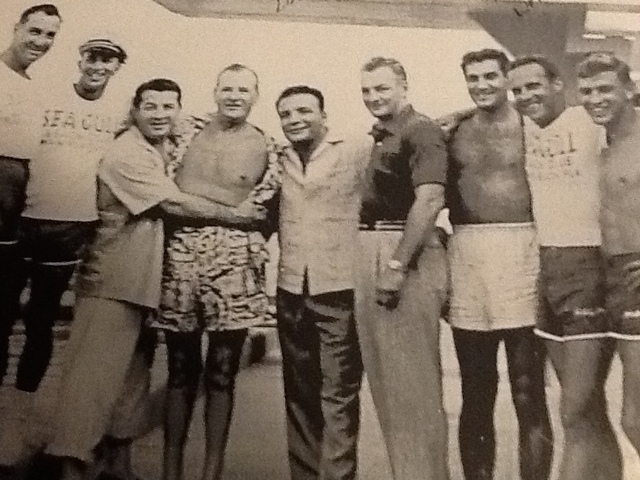
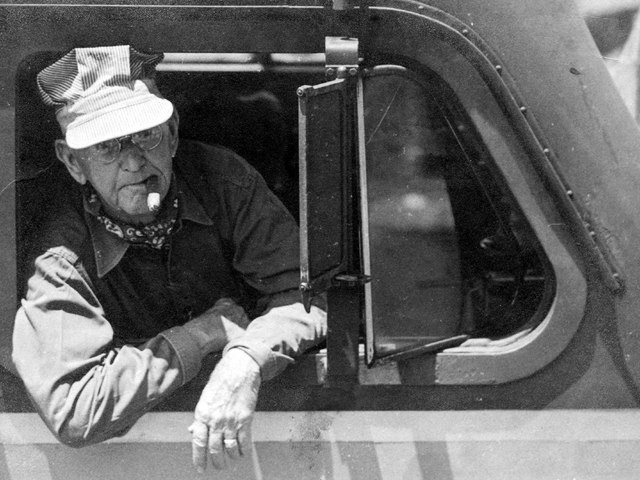
In 1951, I was young and it was the summer of my junior year in high school. I left St. Louis to join my older brother, a waiter at Martha Raye’s nightclub. It seemed to me to be an interesting life and he had agreed, after some pleading, to let me join him – as long as I worked and paid my own expenses. So, after apparently every possible stop in Kentucky, Tennessee, Georgia and Florida, my non-air conditioned Greyhound bus arrived in Miami Beach and I saw, for the first time in my life, the ocean, framed by palm trees, sand and the just rising sun — and I was hooked.

My brother lied about my age and my “several years” of experience to get me a union card and a job as a busboy. My “experience” consisted of an hour or so of practice carrying dishes and glasses piled upon an up-turned coffee table. From the late ‘40s through the ‘50s and ‘60s the Collins area between 20th and 25th Streets was one of the liveliest in Miami Beach. Martha’s Five O’Clock Club was on the corner of 20th and Collins; Collins and 22nd housed “Wolfies,” the quintessential New York delicatessen. The Grate, the Pin Up, the Place Pigalle and the Night Owls clubs were within blocks; the Embers restaurant and Dubrow’s cafeteria were nearby; Junior’s deli and the old Roney Plaza hotel were just off 23rd Street. The 22nd Street public beach, between the Roney and the Sea Gull hotel, was well known by natives for its homosexual clientele, both male and female, and occasional bewildered tourists, wondering just what they had stumbled on to. My daytime job was working for three dollars a day and tips as a “cabana boy” at the Sea Gull, handing out towels, setting up beach chairs and umbrellas, keeping an eye on guests in the pool and ocean and selling them on the local water ski schools, hand-woven palm hats, Monkey Jungle tours, scuba lessons and other “opportunities” for which, if they bought, I received a one percent commission.

In the 1950s, the Five O’Clock Club was a popular, small nightclub offering two shows a night and three on weekends. The club was named for dispensing free drinks to anyone still at the bar at 5:00 a.m. The 5:00 a.m. sessions were populated primarily by after-work waiters, waitresses and musicians from other clubs, an occasional hooker and sometimes, a celebrity or two. The club had a three-drink minimum and, if you didn’t order food at the 6 p.m. dinner show, you paid a separate cover charge. The experienced nightclub goer nursed a glass of wine, paid the minimum or cover and never, ever ordered food from what was one of the worst kitchens on the Beach. Martha’s was where I learned to maneuver trays of dirty dishware through narrow aisles of tiny, tourist-filled tables and sometimes helped the bartender water down the bourbon, scotch and rye. I also learned that the “snowbirds,” particularly those who had perhaps had a drink too many, were often easy marks for inflated bar tabs. Martha’s was a lesser club, not as big or flashy as Copa City, the Beachcomber or the Latin Quarter but, when Martha was on the bill, it catered to loyal locals and aging movie-going tourists who remembered her from her ‘30s and ‘40s Hollywood musical comedies and who appreciated her off-color comedy routines and very considerable talent as a jazz pianist and vocalist. The five o’clock shows also featured lesser comics, male or female vocalists on their way up, or down the showbiz ladder and, sometimes, a movie-star friend of Martha’s.

I sometimes frequented the Rockin’ MB lounge which featured saxophone duos, drums and no-name vocalists, performing from an elevated “stage” behind the narrow bar. The band played mostly tunes like Bill Haley’s “Rock Around the Clock,” always at full volume. The sound cast out on Collins from late night to early morning and the entrance sheltered a large, bored gatekeeper, seated on a stool, who casually checked IDs and denied entrance to nobody. The offices above the MB also housed a phone-filled “wire room” handling bookies’ action. This was still Meyer Lansky/Al Capone/pre-Kefauver Miami and the horse parlors, “private” casinos and bolito shops had not yet been shut down as consequence of the crusading senator’s traveling hearings on crime and corruption (Kefauver’s first hearing was in Miami in 1951). What wasn’t legally wagered at Hialeah or Gulfstream on the horses or at dog tracks on the greyhounds or at jai alai frontons was gambled with bookies in cabanas by the pool at the ocean front hotels — like the one at the Sea Gull.

The Rockin MB’s clientele, like that at the Sea Gull and other beachfront hotels, were mostly young tourists, often female, in groups of twos and threes — secretaries, teachers and office workers, down from East Chicago, Indiana, Cleveland or other cities up north lured to Miami Beach by the airlines and hotels advertising “3 days and 2 nights (or 7 days and 6 nights) of sun and fun” on the “American Plan” where airfare, hotel, and most meals were included in the package. For example, in the 1950s you could stay at the Di Lido or Shore Club and other ocean-front hotels for less than $27 a day and for an additional $25 get breakfast and dinner. The American Plan became very popular in the 1960s and its utilization by mega-hotels like the Fontainebleau and Eden Roc with in-house nightclubs and New York/Hollywood level shows and entertainers marked the beginning of the end for clubs like Martha’s as well as the bigger entertainment venues.

I met celebrities besides Martha — had my picture taken with Jake LaMotta and Rocky Graziano at the Sea Gull, parked a car for Elizabeth Taylor and Eddie Fisher, made sure Irving Berlin’s jock strap and bathing suit were dry for his morning dip, and was able to finance my “other” education at the University of Miami — thanks to Miami Beach and the generosity of tourists.

I’ve visited Miami often over the past 20 years, sleeping on friends’ couches, perusing thrift stores, gorging on ceviche, watching the ever-changing crowd along Ocean Drive.

But it wasn’t until 2009, when I stepped outside all comfort zones to research my book, Fringe Florida, that I got an inside glimpse into the diverse and quirky glory that defines Miami.

My research trip was a whirlwind of interactions with everyone from python owners to nightclub promoters. I kicked it off with a day at a swinger’s convention at a hotel downtown, where waiters in guayaberas served drinks to randy nude couples. Fringe Florida is a book about the state’s unusual and sometimes illicit subcultures. In Miami you didn’t have to dig too deep to find Middle Earth.

But as with any major project, many valuable experiences fall to the floor in shaping the final piece. At the time, I was still exploring the notion of juxtaposing Miami’s 1980s cocaine glory days against its modern party drug scene. My impressions of the earlier period were colored by documentaries such “Cocaine Cowboys” and of course, the Hollywood fictions of “Miami Vice” and “Scarface.” All cast the era as violent, but glamorized by easy money and the hedonistic excesses that go along with it.

In search of remnants, I checked into the Mutiny in Coconut Grove. The Mutiny once served as a party palace for drug lords and home to many who sniffed a daily diet of the white powder that fueled the local economy. Nearly 30 years later the Mutiny had transformed into a sleepy sleek condo-hotel. All that remained of the wilder days were second-hand stories. Tips in blow, coked-up residents lighting $5 bills and then climbing balcony to balcony to escape the smoldering fire.

On a walking tour of pastel Deco South Beach, a fellow tour-goer confided he lived at the Mutiny in the day. A tan fit man in his 60s wearing designer jeans, he spoke of all-night parties and nude women running down his hallway. “It was like living in an upscale brothel,” he said. More important, his former Coconut Grove home was a set for – what else, a handful of “Miami Vice” episodes.

I later cruised by the modern three-story house shrouded by lush palms and live oaks. No Don Johnson loafing around in white linen suits and sockless loafers, just a flock of bright blue peacocks wandering the streets, interlopers from a distant land not unlike me.

I tarried through a long list of drug lore sites, real and Hollywood.
In Bal Harbour I strolled the jetty beside the Harbour House condo tower where cocaine smugglers Jon Roberts and Mickey Munday once put up women who acted as lookouts for law enforcement patrols.

On this bright October day, the white sandy beach was nearly empty and the refurbished condo tower appeared lifeless. A vintage runabout cut through the teal waters of Haulover Cut. I imagined someone behind the condo’s glass eyes watching it through binoculars. The illusion faded when a New York condo owner fishing for snook said he knew nothing of the tower’s infamous history.

Too many of the sites were drive-bys with no opportunity for interaction. The banks of Biscayne Boulevard which once laundered millions; gritty Jones Boat Yard where corrupt police raided a boat loaded with 400 kilos of coke as the crewmen jumped overboard and drowned; luxurious mansions of former kingpins in gated communities beyond reach.

By definition, the site of the “Dadeland Mall Massacre” would be available. Many consider what happened on a sunny afternoon in 1979 the start of Miami’s cocaine turf wars. Two men armed with machine guns jumped out of a panel van and sprayed Crown Liquors with bullets, killing a rival drug kingpin and his bodyguard and injuring the store clerk. After a white-knuckle drive in rush hour traffic, I arrived at Dadeland Mall to discover the liquor store had been swallowed by Saks 5th Avenue during a mall renovation.

Miami’s bad-boy glamour was an illusion cast by Hollywood and revisionist history. The world of Miami’s cocaine titans may have been an oyster, but there was no pearl, only a prickly shell that in short order began to smell foul.
As for the modern club drug scene, in the time I spent inside the velvet-roped hot spots, I found trending drugs that spanned the letters of the alphabet: Special K, X, and G. Not so different than you’d find in a nightclub in any major city. At the time, the most distinctive drug culture revolved around pill mills. I visited one. They sent me to a walk-in MRI clinic down the street.
In hindsight, I’m not sure what I expected to find. The cocaine era was a dark time and one that continues to haunt. My Miami friends say tourists still ask where to score an 8-ball.

It wasn’t until I joined the lunchtime crowd at Mac’s Club Deuce that my disillusionment gave way to an appreciation of what Miami had become. Except for the neon gracing its wall, courtesy of the “Miami Vice” crew, it looks like a set from a Damon Runyan novel. Dark and smoky with the original red laminate serpentine bar, Club Deuce has had few alterations since it opened in 1926. The bar’s real treasure is the spell of friendship it casts. Before I finished a screwdriver, I met everyone.

The longhaired fashion photographer wearing more silver bangles than I thought humanly possible who worked on his laptop to be able to write off his drinks. The young businessman in a starched shirt unbuttoned enough to show a white undershirt. A blustery former cop who ranted about Obama. An Ecuadorian pottery wholesaler who for years in the 1980s wouldn’t leave his home at night much less venture to South Beach — three men with a gun and a machete had mugged him outside a club. “It was extremely dangerous on South Beach,” he said. Now he lived there and wouldn’t dream of moving.

Mac Klein, Club Deuce owner, was 95 when I met him and looked as if he could take a man 20 years younger. He was wearing an unbuttoned Hawaiian shirt; his glasses were thick and black. He didn’t talk much, but kept reemerging from the back with memorabilia. The bar’s original menu. A flier for the “Miami Vice” wrap party. A thank-you note from the cast. A dog magazine featuring his champion Doberman pinschers. Sensing my love of dogs, he insisted that I keep the magazine, which I now treasure.

My drug scene exploration may not have turned up the type of fringe I sought for my book, but I have no regrets aside for the credit card debt I racked up. And on any trip, I make a point to duck into Club Deuce and say hello to my friends, whoever they may be that day.

I moved to Miami after returning from my Fulbright Scholar Program in 2002. The same muggy air, car horns, heat that I left in the Philippines greeted me as I walked out the doors of Miami International Airport.

The cab driver spoke to me in Spanish and I understood everything he said, but I was slow to respond. I had spent the last year speaking Tagalog, a language full of Spanish words after 300 years of colonization. When I instinctively replied to him in Tagalog, he just kept on, unfazed, in Spanish.

My job at the University of Miami started right away. For the first year, I lived in Kendall, or “Kendalia” as I liked to refer to it. It took more than an hour in rush-hour traffic to get to and from the Coral Gables campus. In Manila, traveling five miles from Quezon City to Makati had taken an average of two hours each way. Now, instead of getting anxious, I could let go of the frustration and instead spend time listening to the Latin stations, dancing in my car and practicing Spanish.

In 2009, I moved to a neighborhood along Coral Way, a historic urban boulevard that runs through Miami from Brickell Avenue to 37th Avenue. My house had been built in 1939 along with other bungalows and mission revival-style homes. Everyone on my street spoke Spanish almost exclusively.

My casita stood between two houses of the sadme style, and within these houses lived viejas. On the right, there were three widowed sisters — Marta, Olga and Paula. On the left was Elsa, also a soltera. The women were best friends, and I’d see them on the sidewalk in front of my house, sometimes laughing together, sometimes shouting in anger. Right away, they befriended me, a single woman much younger than they were and never married. They called me China even though I told them, “Yo soy Evelina, la Filipina. No soy China.” They laughed at me, calling me China anyway.

Elsa was a small and quiet widow. From afar, I never knew how she was feeling, but face to face, I could see it in her eyes and in the path of her delicate wrinkles. Every day I would notice her standing by the chain-linked fence in her front yard, watching the street, waiting for the mail, and talking to passersby.

One afternoon I brought her a mango from my tree.

I can hold a polite conversation in Spanish, but when it gets malalim — deep — I mix my languages. Sometimes Tagalog comes out when I mean to speak Spanish, or vice versa.

Elsa recounted the story of her life to me at her kitchen table. She had suffered bouts of depression since she came to this country. Never in Cuba, only in this country. She wouldn’t even say it — the United States of America. Solomente en este pais, pero nunca en Cuba. These days she felt nervous constantly. Everyone she loved had died — su mama y papa, su esposo y hermana. Seven years ago, her husband and sister had died months apart. Though she had the abuela sisters, who took her everywhere, and a daughter in Boston, she couldn’t calm her nerves. The noise of her memories crowded her head, kept her up at night.

We sat for a long time. She picked up the mango, smelled it, and handed it to me. “Que rico,” she said.

I told her she needed a novio. She laughed.

When I married last year, Elsa quickly took to my husband, who spoke absolutely no Spanish. They exchanged words each day. She sneaked up behind me one day to tell me my husband was a good man. “Y guapo tambien,” I told her jokingly. Yes, yes, he’s handsome, so be careful, she said, women will try to take him away from you. She gave me a look. I told her I’d be careful. No mujer would come between us. We laughed and then she told me she liked my dress. A moment passed, and she said, “Tu esposo es una buena persona.”

Last month, when my husband and I came home from a trip, nobody was standing at Elsa’s gate. On the fence and the trees nearby, someone had posted “No Parking” signs.

“Something’s wrong,” I told my husband.

“It could be anything,” he said.

For days, the neighborhood was quiet. The abuela sisters were nowhere to be seen.

One day soon after, my husband came home and told me he had found out what happened to Elsa.

“Who told you?” I asked him.

“Olga.”

“What did she say?”

“I don’t know. It was in Spanish. But she was talking, talking, talking and she went like this.” He put his hands together and leaned his head on them with his eyes closed. “And then I said, ‘She died?’ And she said, ‘Sí, sí, sí.’”

Elsa was not the first to pass away since I moved into this casita. There was an old man across the street during my first year. And last year, Marta, one of the abuela sisters, died of a brain tumor. Now Elsa. I like to think the spirit of these viejas are circling the bamboo, the mango and the avocado trees, whistling love songs, blessing us from afar. I like to think they are a part of a Miami that will never die.

They have taught me that you don’t need the right words, or even the same language, as long as you are willing to sit with one another and listen.

Miami will always occupy a special place in my heart. My beloved grandmother spent such a great portion of her life here that the two are now synonymous in my mind. She had impeccable taste, which means Miami is the second-greatest city in the world; of course, our native Petionville, Haiti, comes in first.

My grandmother passed away April 2, 2012. I know she is in a better place now. The nationalist in her wanted to reach eternity via Haiti. Since that was not meant to be, Miami opened its arms – as always. It is where her remains are interred.

With a smile brighter than all the lights on Ocean Drive, my grandmother was the city personified. She wrapped her head in colorful scarves, reminiscent of Miami’s golden age, pulsing with the roar of turquoise and chrome convertibles. She loved the Fontainebleau for its Old World glamor and once-upon-a-time elegance.

My grandmother’s Miami was quite similar to our native country. Many friends gathered on her porch on Sunday afternoons to enjoy lodyans – a form of storytelling drenched in humor.They reminisced and laughed about old times back home. Most of her friends spoke only Creole, even if they had lived in the States for decades.

Her front door stayed open all day – as it did in long-ago Haiti. Restaurants that sold food cooked like back home, if not better, were just around the corner from her house. The grocery stores’ shelves were stocked with the ingredients she used to buy in Haiti’s open-air markets. Miami was her second Haiti. When back home was not accessible – because of various coups d’état and other inconveniences, Miami was her sanctuary.

My grandmother’s last visit to Haiti was in late 2009. She was thrilled to see the house in which she planned to spend what remained of her life. She had spent years sending money for builders to make her house just so. She was ready to move in the fall of 2009.

When she flew home to begin the rest of her life, friends and neighbors received her as though she had never left. Just as they did in Miami, everyone gathered at her house for marathon conversations and tasty food.

But the longer my grandmother stayed in Haiti, the more she pined for “home” – meaning Miami.

Three months after arriving in Haiti, she decided she had lived so long in Miami that perhaps she could not live anywhere else, including her birth country. She flew back to Miami on Jan. 10, 2010.

Two days later, a devastating earthquake struck Haiti, killing hundreds of thousands. She sobbed for the lost lives. I sobbed with her, but took comfort in the fact that she had returned just in time; she might have been among the still-unaccounted-for victims. That would have destroyed me.

As stories poured in about the quake’s aftermath, the utter destruction, the chaotic medical situation, my grandmother wept in silence. Her South Beach smile dimmed. Not even Miami could console her.

She mourned the fact that she could no longer return to her other, sometime home. She mourned the loss of long-ago Haiti – the Haiti that pulsed with turquoise and chrome convertibles, the lush and Miami-green Haiti, the Haiti she knew as a child. She was secretly grateful that her adopted city’s arms were always ready to envelop her. Miami had become her own private Haiti.

Five months before my grandmother passed away, she was admitted to University of Miami hospital. With each passing day, she became more and more frustrated about having to be in a hospital bed. She was accustomed to living life standing up. She detested the hospital gown, and wanted instead to wear her colorful wardrobe that reminded me of the sea, sunshine and coral reefs.

She told the doctors to send her home. By “home” she meant both Miami and Haiti. The intensive care unit was drab. It lacked vibrancy. It lacked life.

My grandmother has been gone two years now. I will always owe Miami a debt of gratitude for opening its arms to welcome my grandmother for as long as she wanted to be here. Whenever I come to the city, I sense her presence in the air. Everything she loved about the city is still here: the Fontainebleau, the banyan trees, the blue-blue water that hems the coast.

And just as my grandmother did when she was alive, I go to stores where only my native language is spoken. I eat Haitian food morning, noon and night. (I’ll admit I love Cuban cuisine just as much.) I visit Libreri Mapou and chat with the friendly owner and customers who cannot get enough of Haitian literature. Each visit makes it clear to me why my grandmother loved Miami so.

Perhaps one day, the city will claim me, too.

Translate »