fbpx Skip to content
Named Best Museum 2022 by Miami New Times

In 1937, most all the southern old timers pronounced Miami as MI-AM-MA, but I had a distant cousin, Rose Lobree, who was a member of the social coterie of the last empress of China, in Shanghai, and visited Miami for occasional winter seasons. She pronounced it MEE-AH-MEE, as did others in her social group.

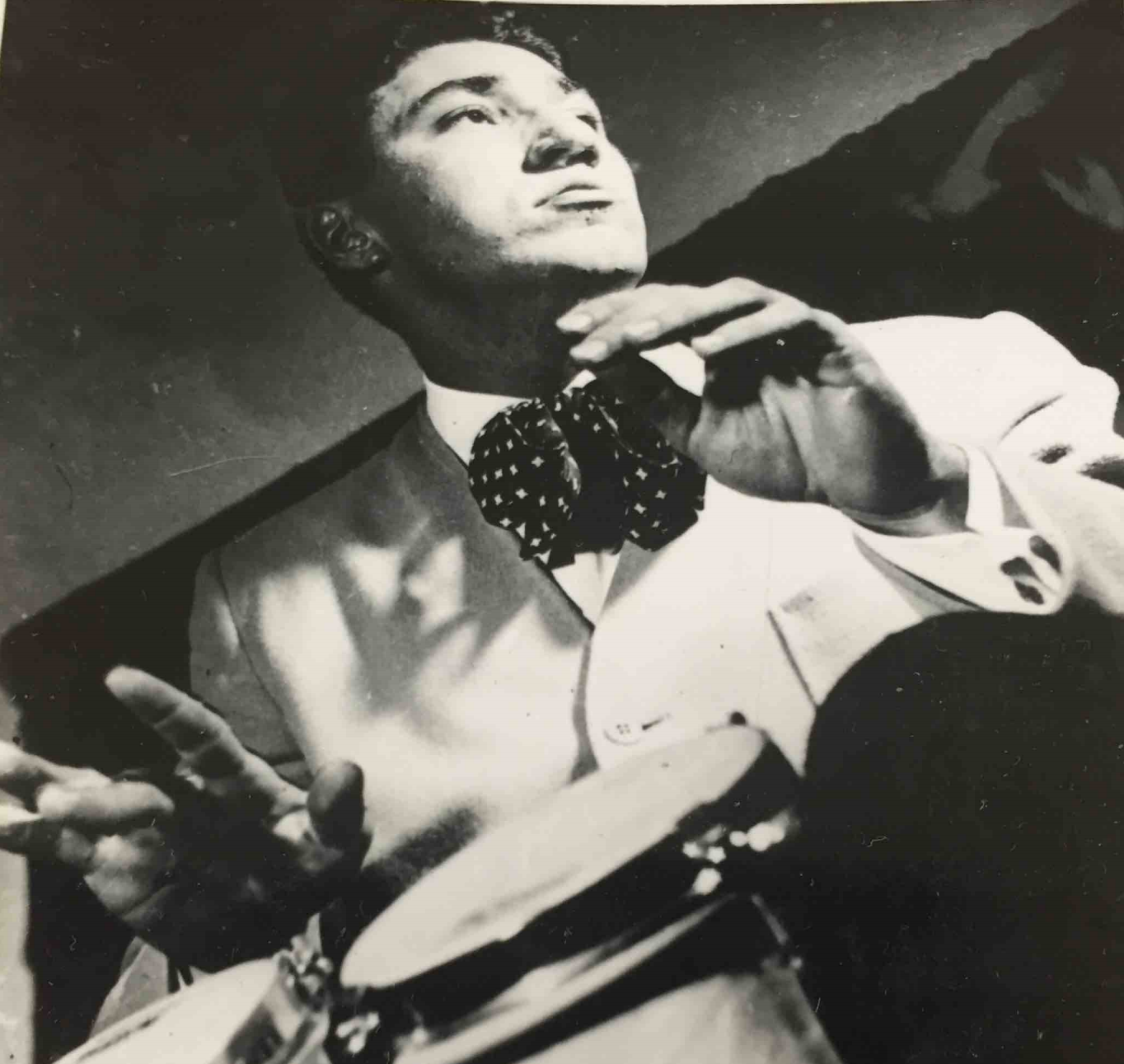
At age 12, in 1937, I first learned to play snare drum as a member of the Miami Beach American Legion Junior Drum and Bugle Corps, who met every afternoon, after school, in the softball stands at Flamingo Park.  Such groups became very popular in Miami after the fabulous Miami American Legion Drum and Bugle Corps, Harvey Seeds Post, won national championships. That group brought further fame to our city with its stirring rendition of “Moon over Miami” in military style, played in major cities, nationwide.  They wore white horse-riding uniforms with high, black leather boots and WWI chromium-plated steel helmets, tipped at a rakish angle and gleaming sharply in the sun.  They marched and played at a fast pace and their appearances were heavily attended.

I practiced diligently and, in seventh grade, was accepted into the Ida M. Fisher (named after Carl Fisher’s mother) High School band.  Upon completion of the new building next door, the school name was changed to Miami Beach Senior High School.  Our outstanding band director was Felix McKernan who led us to first place designations year after year in both state and national competitions.

One day I was called to the director’s office and was introduced to a stranger, Rollo Laylan.  Rollo, it turned out, was the “Old Drum Gold Drum” award winner that year and was the drummer with the famous Paul Whiteman Orchestra, playing at the Roney Plaza Hotel, Miami Beach.  Rollo was in “delicate health” as was said in that day, and his doctors said his health would be well served if he moved to Miami.  Rollo, along with Gene Krupa, formerly Benny Goodman’s drummer, had written and published the first manual for dance band drum set, so Rollo decided to open a studio to teach drums in Miami. He chose me as his first student.   

In the ensuing years I played drums in small groups in just about every hotel from Fifth Street to Lincoln Road as most hotels had a dance and a band one night a week for guests and friends.  The hotels cooperated in alternating band nights so there was a dance most every night at one hotel or another and it was all free.  In due course I joined the Miami Musicians’ Union and played in fancier venues.  One job was as drummer with the Jose Tomasio All Cuban Orchestra at the Miami Jai Alai fronton.  We wore white uniforms with crimson sashes as we led the cesta-armed players in the opening parade each night around the playing field. 

Then came WWII and the Army took over one hotel after another to billet soldiers for basic training for the Army Air Corps. They learned to march on what had been the Miami Beach city golf course.  In 1943 I was 18 in May, graduated Miami Beach High School in June, was drafted into the Army in July and then shortly found myself in the teeth of The Battle of the Bulge in Belgium, France and Germany, in the 106th Infantry Division. But that begins a long story for another time.
This is the story of a true Miamian, our father.  He would speak of his city using the Indian pronunciation, MI – AM – MA.  There are eight of us, all born in this town.  As second generation, we say MI – AM – MI.

Richard Sanborn Hickey, our father, was not born in Miami.  He was born in Schenectady, New York, on March 8, 1921.  His parents moved from Schenectady to Miami, a booming town of opportunity.  Two brothers, Robert and John would later complete the family.

The family lived downtown on Northwest 5th Street, a block away from Miami Field.   It was on this field that the Orange Bowl would be built.  (Construction began in 1935 and was completed in 1937 at a cost of $340,000.)  The first game on the field was the Bucknell Bison vs. the Miami Hurricanes.   It was called the Festival of the Palms.

When the boys were old enough, Grandmother hired a woman to stay with the children and she opened a woman’s garment shop on Flagler Street.  Grandfather was in real estate. Business was booming.  

Bicycles were the popular mode of transportation.  The boys could be seen riding back and forth south to Kendall Drive (a dirt road that ended at 87th Avenue). On February 15, 1933, the boys decided to take a ride down to Bayfront Park.  It was there that they joined the crowd to hear the president-elect, Franklin Roosevelt, speak.   Instead they witnessed the attempted shooting of the president-elect.  A man named Guiseppe Zangara shot five people, fatally wounding Anton Cermak, the mayor of Chicago.  FDR was unharmed.

One summer Dad broke his arm.  When the cast was removed, they found he favored his arm and would not use it.  The doctor told Grandfather to find a pony and get him riding.  “He will have to use his arm.”  Grandfather bought a pony and Dad named him “Tony.”  Tony spent his days living on the land south of town on the corner of Kendall and U.S 1.  (Shorty’s BBQ stands there now.)  Grandfather would drive the boys to Kendall where Dad would hop onto Tony and ride back downtown and then return south.  The doctor was right; Dad once again began using his arm.

School for the Hickey boys was downtown.  Gesu Catholic Church offered school from grades 1 through 12.  It was perfect for the family as it was close to Grandmother’s shop.  

It was in the fourth grade that Dad made a new friend, Sonny Capone.  Every morning Sonny arrived in a black limo. Then every noon the limo would bring Sonny his own special lunch.  Sonny invited Dad to eat with him inside the limo under the protection of Sonny’s bodyguards.   Grandfather explained to Dad the need for bodyguards.  That lasted for a year until Sonny was transferred to St Patrick’s school on Miami Beach.    

Music was a very important part of the Hickey household.    They formed their own little band, practicing in the garage.  During the high school years the “Dick Hickey Melodiers” were introduced to Miami.  They played all around town – dance nights at the Coral Gables Country Club, special occasions at the Redlands Country Club, sock hops held atop the Gesu School building. They played before the movies at the Gusman Theater.  Grandmother played the piano, Robert the sax, Dad on clarinet and cousin Ted Gardinier on the bass.    The going rate of pay was around eight or nine dollars.   Dad got two dollars and the others divided the remainder amongst them.  The band era lasted throughout the college years.    

Summers for the Hickeys were often spent driving north to visit the family.  At night they would pull off to the side of the road and pitch a tent.  Motels were few and far between.

After high school, there was no question that the University of Miami was the one and only school for Dad.   He was a Hurricane, through and through.  To help pay his tuition, he began waiting on tables in the school cafeteria, ushering at the theater on 41st Street and playing with his band.  A boxing scholarship was available.  He began to make a name for himself as a Hurricane athlete.   His brother, Bob, asked him why he was taking the beating when there was a music scholarship available.   And so his music took over.

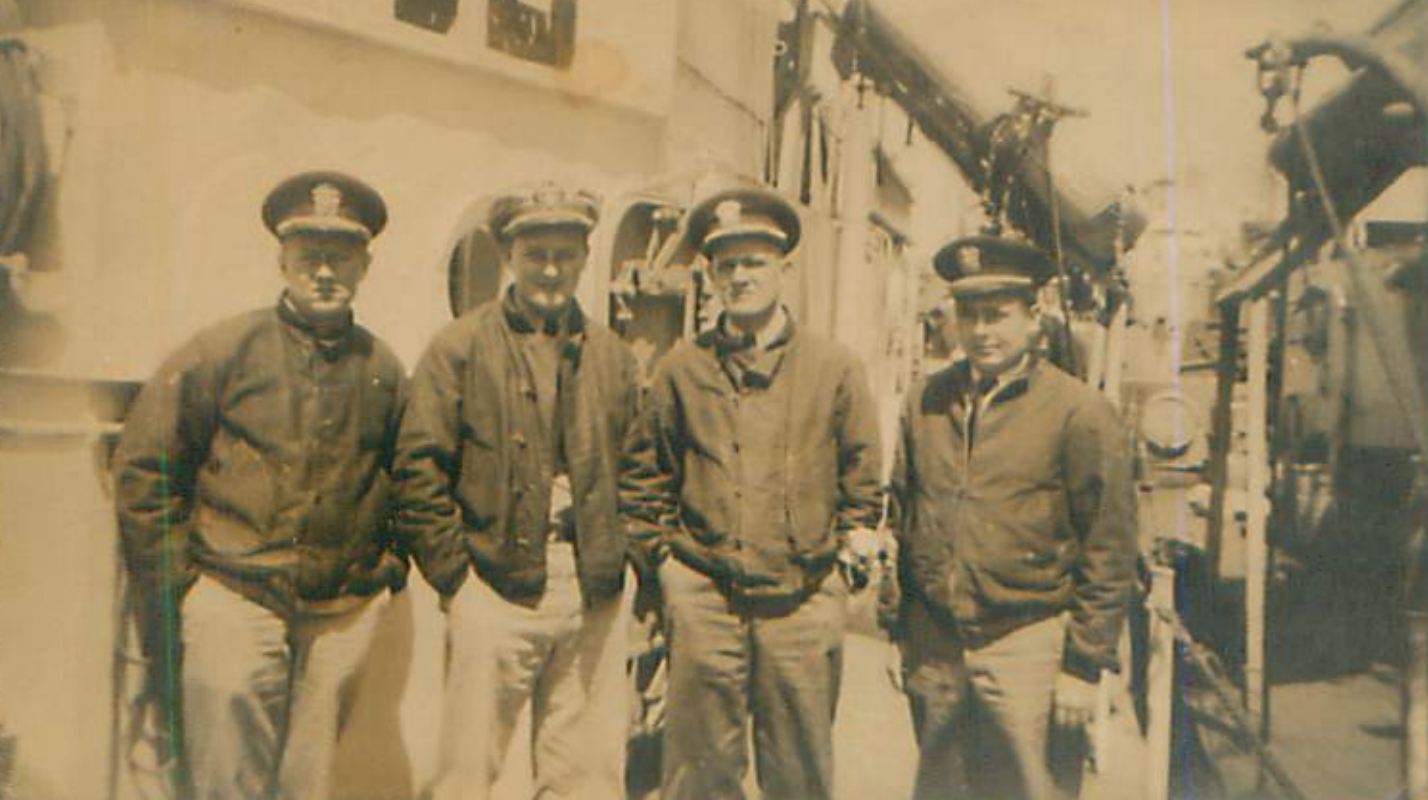
Upon graduation, the U.S. Navy was waiting. Dad immediately went into officer’s training at Columbia University.  It was 1944 and D-Day was looming. He made it through the European and Pacific theaters, receiving numerous commendations.   He returned home when the war ended and obtained his law degree at University of Miami, graduating with honors in 1948.

He met our mother at (where else) a beach party.  This is Miami, right?  One date and he said, “I am going to marry that woman.” And so he did.  That’s where the eight of us began to enter the picture.

Dad opened his law practice in the DuPont Building and practiced in state and local courts. In 1963, he began serving as a municipal judge.  After eight years, he was a county court judge. In 1978, he was appointed to the circuit court bench where he remained until he retired in 1988.

Our father, a true MI – AM – MA boy, lived 91 years in his beloved city.

It was 1991, and my father-in-law, David Berg, was still a hard-working kosher butcher in Hillcrest, Queens. My mother-in-law, Elka Berg, worked tirelessly beside him, though they were 79 and 69, respectively.

That winter, my husband, Allen, decided to buy them tickets to Miami Beach and book them into a suite at the Saxony, complete with a kitchen so Mom could continue to cook the simple, healthy foods Dad, who had a high sugar count, was allowed on his limited diet.

“Use them or lose them,” Allen told my in-laws. “The tickets are paid for and there are no refunds.” So off to Miami Beach flew David and Elka Berg; it was the first winter vacation they enjoyed since their arrival in America in 1949.

After a week, we got a phone call.

“Everything alright?” Allen said.

“Fine,” said Dad. “The sun is shining, the weather is a balmy 80 degrees. We’re walking on the boardwalk. In fact, we bought an apartment down here.”

Now, my in-laws are wonderful people. In fact, Dad started his own successful butcher business from nothing when they arrived in New York. But they’d never even considered buying any real estate in all the years they rented store space and their apartment on the lower East Side. So this was a startling development indeed.

My in-laws came home that spring, worked in the store all week and spent weekends in the summer in a bungalow in the Catskills, just the way they had for over 30 years.

Winter rolled around and off they went to sunny Miami. By this time, Allen had to see just what they purchased. So en route home from a trade show in Atlanta, he detoured to Miami Beach to surprise his parents. Unfortunately, it turned out that Allen was the one who was surprised. And not so pleasantly.

The apartment Mom and Dad bought was on the top floor of a three-story low-rise building on the corner of 41st Street and Collins Avenue – the busiest intersection in Miami Beach. Not only could you hardly hear yourself talk over the constant noise of the traffic below, but there were buckets all over the place collecting the water from the leaks on the roof. Oy! Dad was nursing his bout of walking pneumonia with tea and honey, and Mom was continually emptying the buckets filled with rainwater.

After getting Dad to the doctor to cure his pneumonia and trying to convince his parents to move, Allen came back to New York with promises that the roof was going to be fixed by next winter and all would be well. Ha!

After another spring, another summer, and another fall, winter arrived and my in-laws departed.

“How’s it going?” asked Allen during his daily calls to his folks.

“Fine, fine. Everything’s great!” Dad assured him.

But Allen didn’t live with his parents for 21 years without learning anything. And there was another trade show in Atlanta. Perfect time to check things out.

Another season. Same scenario.

At that point, my husband decided, enough is enough. Tower 41 loomed invitingly across the bridge and Allen was convinced his parents would enjoy spending their winters there.

Somebody up there likes us. Allen found an apartment in Tower 41 on the 15th floor overlooking the pool, Indian Creek and the ocean. Perfect!

Now, how to convince my in-laws to move there? After all, Dad was a very proud man who would never accept his son’s financial help. So Allen told Dad that he wanted the apartment as an investment and they should use it during the winter until 120 years, with G-d’s help.

“It’s too fancy,” said Dad.

”Can you afford the maintenance?” asked Allen.

“Yes. No problem,” he replied.

“Good. When you’re in the elevator no one knows how much money is in your pocket. Please, you pay the maintenance and I’ll have a good investment.”

And that’s exactly what we did.

My in-laws enjoyed 12 wonderful winters in Miami Beach in a clean, safe building. We had peace of mind knowing they were doing well every winter and welcomed them back to New York every spring thrilled that they both looked so good and were thriving in Miami Beach.

In October 2004, my father-in-law passed away and Mom started to fade. That summer, while Mom was in New York, we renovated the kitchen and two bathrooms, hoping she’d enjoy the newly refurbished apartment. But we were deluding ourselves. Mom was lost without Dad to lean on and that winter was the last one she spent in Florida. From then on, Mom stayed in New York, fading in front of our eyes year by year for 10 years.

For a few years, we rented the apartment for the winter months. Finally, just a few years ago, we decided to use it a week here, a week there. Every time we came down, we’d renovate it a little more, refurbish some of the furniture and purchase new pieces. We kept the 60-year-old needlepoint picture Mom made in the bungalow colony all those summers ago, reupholstered the dining room chairs and replaced the couch and coffee table. We painted the walls and changed the kitchen cabinet doors and hardware. Got rid of the dated aqua carpeting and replaced it with shiny white porcelain tile.

This year, we really made it our own. I stayed in Miami Beach January and February while Allen went back and forth to New York to take care of his business.

Who knew we would end up loving the apartment we bought for my in-laws 22 years ago? Who knew how we would be so blessed to enjoy Miami Beach in our retirement years in the very same building that gave my in-laws so much pleasure.

Overtown was not always named as such. We referred to our location by street numbers rather than by destination. You lived on 7th Street or whatever the number was. We did have named areas such as Opa-locka, Liberty City and Coconut Grove but I do not remember hearing of Overtown until many years later. My family lived on the south end and this was good for walking downtown but very tiresome when it came to schools and the majority of our friends.

My brother and I began our education at a small wooden house across 3rd Avenue where the owner had built a shed over a cement slab. I stayed there until the teacher went before the school board and appealed my case to go directly to third grade because she was not accredited. I was tested and admitted to Douglass primary school. Thankfully it was near the high school so the big kids in the neighborhood walked me there daily. I graduated from Booker T. Washington High School.

Our houses were all wood and mostly three rooms. When my uncle next door had electric wiring installed, he allowed us to run an extension cord through the back window and we had an electric refrigerator!  Before then, the ice man brought a large block of ice that sat in the top of the ice box for cooling. We had kerosene lamps for lighting and kerosene for cooking.

Baths were taken in tin tubs in the kitchen because there was no room in the tiny cubicle on the back porch where the toilet was. The kitchen sink was the only sink. Being within walking distance of downtown was a treat. Some Saturday mornings we were given permission to go downtown.

The 5-and-10 cent stores were our destination. McCory’s, Kresge and Woolworth were our stores. However, we were not allowed to sit at a counter and eat or try on clothes. We were still happy children. Our churches were definitely our sanctuaries. We worshiped, socialized, studied and learned how to live in our society. Each year Dorsey High (Northwestern) and Booker T. Washington played a football game that excited the whole community.

The parade was second only to the one that was hosted by FAMU. That was the venerated Orange Bowl Classic and black people came from far and near to see the parade and attend the game. The finest clothes were bought and the hairdos were highly accentuated for this event. Some very famous people attended, performed on the Beach and then came back to sleep and stay in our area because they were not allowed to stay in the Beach hotels.

Our daddy had a car and from time to time he would take us for a ride on Collins Avenue to look at the hotels. Mama was scared to death for us to go but Daddy promised to drive slowly and not look directly at anyone. We only wanted to see the big, beautiful, glitzy hotels and refresh our dreams of one day going in to sleep and not work. We mostly shopped in the stores around us.

From time to time on Saturday the trucks of Native Americans would come in to shop. We were always afraid of the “Indians” because of their dress and the fact they were so silent. We stood outside on the sidewalk until they left the stores. If we went over to the poultry market, we were given free chicken feet if they were available.

The first TV I ever saw was mind-boggling to me. I could not understand where the images came from and the fact that the owner had also bought a sheet of multi-colored cellophane to give it color further confused me. Even our hotels, The St. John, The Mary Elizabeth and the new Carver did not have such a marvelous invention as a TV. Things have changed. Only the good aroma of the barbecue place remains the same.  

Charmed and excited by the October sunshine, the brightness of the buildings, the freshness of the breeze, his first sight of the ocean and Biscayne Bay and the freedom and mobility of his new bicycle, the boy cautiously ventured south from his new home at Northeast 43 Street toward the city, a little farther each day, finally reaching the corner of Flagler Street and North 2nd Avenue where his excitement peaked at the sight of the magnificent A.I. Dupont Building. These wonders were almost too much for a country boy.

Too soon the war began to change this scene: burning ships on the ocean horizon, marching soldiers on the streets of Miami Beach, sailors, soldiers and airmen all over Flagler Street.  The area north of the Prince Valdemar, a super yacht beached by the 1926 hurricane and later converted to an aquarium, was occupied by other, more benign navy facilities where my high school lady of the time served clerical duty. Other buildings in the area such as Sears & Roebuck, the Jewel Box night club, Betty’s Lobo Lounge and the Club Bali were not affected until after the war.

Further south, the venerable Bayfront Park provided the favorite Sunday afternoon stroll which nearly always ended with a visit to the “tour boat” and sport fishing boat docks where the day’s catch was on display and sometimes sold to penny-wise ladies anxiously clutching their purses. A short stroll west past Caesar LaMonaca’s bandshell brought one to Biscayne Boulevard which was the route for the famous Orange Bowl Parade; twelve blocks farther west stood the Orange Bowl stadium itself which provided Friday night football entertainment furnished by any two of the county’s six high school teams. The most popular of these was the annual Thanksgiving Day rivalry between the Miami High Stingarees and the Edison Red Raiders. I saw many of these games from my seat in the trumpet section.

We cannot leave downtown Miami without taking in a Saturday night movie at one of the many theaters; the Olympia, the Paramount, the Miami, The Capitol, the Royal and the Embassy, all of which have been made redundant by neighborhood cinemas. The movie was almost always followed by a window shopping tour of Flagler Street where wonders such as the bejeweled, carved onyx elephant in the Duval Jewelry window were transfixing. All of this with a Dairy Queen cone in hand. Had this been a weekday we might even have dropped in to the large, marble, bay-view blocking library in the park at the foot of Flagler Street. An evening drive across the MacArthur causeway brought a display of the Miami skyline which was dominated by the Everglades Hotel and the News Tower. This tower was the home of the Miami News, long ago absorbed by the Miami Herald and, in the wake of the Castro revolution, was to become the center for aid to Cuban refugees. This fact alone is the reason this building still graces our skyline rather than joining the Everglades and McAllister hotels in photographs of Miami building past.

In spite of some grumbling to the contrary, it is generally agreed that Miami has benefitted from this influx of bright, energetic and ambitious people. Some professionals, such as doctors, suffered long delays in re-establishing themselves in their professions because of the lengthy licensing process. Now, 50 years later, one is amazed at the prominence of Cuban expatriates in all the professions. This must be counted as a major plus for South Florida as a whole.

My first awareness of the UM School of Medicine came in 1950, when my then-wife, a UM graduate, and I innocently crashed the inaugural party at the Coral Gables Country Club. Our table mates were cordial and unquestioning. It was a very nice party and portended much in my future life for, as it turned out, the beautiful young lady whom I married in 1961, entered the UM Medical School in 1962, graduating in the class of 1966. From relatively modest beginnings, the school has grown to become an important institution in many fields such as ophthalmology, oncology, spinal cord injuries and care for premature infants. The county is fortunate to claim such an outstanding institution. 

The University of Miami as a whole has attained a worldwide standing since its reemergence on its present campus in 1947. I say reemergence because many of us remember attending classes in what was then known as the “cardboard college.” This hiatus in the university’s fortunes was brought about with the crash of 1926 when most of the university’s assets, which consisted mostly of pledges, went away with such promises. The post-war surge brought on by the returning veterans and the GI Bill gave UM and most other schools in the US the boost they needed.

In 1947, construction was begun on the Rickenbacker Causeway to connect Virginia Key and Key Biscayne to the mainland. This addition to South Florida continues to be the most important in the history of the area in spite of its inauspicious beginning of being populated with “starter” houses by the Mackle Company. Young professionals with vision eagerly snapped them up at $13,000, later increasing in value tenfold as multi-million dollar mansions appeared on the island.

The Cuban Missile Crisis of the early sixties was the closest that the Cold War came to directly affecting Miami. The very real danger of the affair has only become apparent with modern, post-Cold War revelations and it is just as well. I think we might have been frightened to near panic had we been aware at the time. Remnants of the temporary short range missile installations are still visible along some roads in very South Florida and the upper keys. South Florida has been a focal point for military installations since the Spanish-American War of the late 1890s. I hope we have seen the last.

Many who read this will say, “What about such and such? He didn’t mention so and so.” It was never my intention to touch all bases, only those which lay in my personal memory. Someone else can write their own memories. 

This ends my South Florida saga for now. Perhaps I will be encouraged to bring it up to date someday, but most of the continuing story will already be lived and remembered by the current generation of new, native Miamians and immigrants. In the meantime, this country boy is 86 years old and regrets that he will not be around to record the future stories of casino gambling, the expanding importance of the Port of Miami, the ascendancy of Miami as an important center for research in medicine and plant biology and the burgeoning center for trade with Cuba when the nation is finally opened. What a plethora of current memories and memories yet to come! I wish I were 40 years younger.

In June of 1949, I graduated from high school in Manhattan, NY. My mother and father wanted me to go to college in the New York area but since I had a couple of friends who were going to the University of Miami, I insisted go there.

In September of 1949, I arrived at the U. I registered late so all the dorm rooms were filled. I had to live off campus. I found a nice little apartment on 22nd Avenue, just off of SW Eighth Street on what is now Little Havana. My rent was $50 per month.

Since I spent a lot of time on Miami Beach, I decided to live on the Beach starting my second year at the U. I stayed at the Boulevard Hotel on Dade Boulevard (not the one that is now on Ocean Drive). It cost $100 per month but there was no air conditioning. It was only a few blocks from all the nightclubs such as the Beachcomber, Copy City, and Circos. A lot of the showgirls from those clubs also lived at The Boulevard. I dated one for a few years.

The other big night club was Lou Walters’ Latin Quarter, which was located on Palm Island. In those days, all the big stars such as Dean Martin, Jerry Lewis, Frank Sinatra and Tony Bennett performed in those clubs. The clubs were only open for the winter season, which was November until April.

Most of the hotels on Miami Beach also closed for the summer. I found a hotel on Ocean Drive that was one of the only ones that stayed open all year. It was the Winter Haven Hotel and I paid $30 a month (that’s a dollar a day) for a window unit air-conditioned room.

I did this each year until I graduated. Six months at the Boulevard and six months at the Winter Haven. After graduation, I decided to stay here rather than go back to New York. My parents had already retired and also moved to Miami Beach. They ended up living here for the rest of their lives.

Soon after I graduated, a friend came down from New York to visit me. We went to a few of the clubs on Miami Beach, one of them being the Rocking MB. Since we both spent all of our money that night, I told my friend not to worry because I was expecting a check from my company the next day. I was working as a salesman.

When I went to the mailbox the next day there was no check but there was a piece of mail addressed to me. I opened it and there was a membership to the Diners Club. I had forgotten that I saw an ad in Esquire Magazine for The Diners and that I applied for it. That was the first credit card. There was no American Express, Visa or MasterCard yet.

Well at least we could eat.

At the time there were no plastic cards like today. It was a little book that listed all of the places in the whole country that accepted the Diners Club. The front cover had your name and membership number. We looked in the book under Miami and there were just a few places that took the Diners Club. I saw a great steak house that I knew of named The Robin Hood. It was on 36th Street and Biscayne Boulevard, which is now a Shell Gas Station. So we went there and each had a great steak dinner with a couple of drinks each. The check was under $15 and that included tax and tip.

I was now ready for an apartment and I had a friend who was a builder. He had just finished a 10-unit apartment building right on the water in a place called Harbor Island, North Bay Village. My friend lived on the first floor and I took the apartment on the second floor at the end right on the water. My rent was $150 per month and I stayed there for 10 years, all at the same rent. At that same time a place called the Racket Club just opened right across from me.

North Bay Village became the nightlife area at that time. The clubs could stay open until 7 a.m. Also starting in 1954, the big hotels came into being on Miami Beach. The Fontainebleau opened first, then came The Eden Roc followed by The Deauville, The Carillon, The Americana and also the original Diplomat Hotel in Hollywood Beach. As they all had large nightclubs, all the big stars played in those six hotels. That spelled the doom of the standalone clubs like Copa City and others.

As the bars and clubs had to close at 4 a.m. on Miami Beach, all of the entertainers and club people who wanted to party gravitated up to North Bay Village. There was one called the Bonfire, which was a great restaurant and later at night became a club. Another place was the Harbor Lounge & Black Magic Room.

Because they only served drinks and no food; when their customers got hungry they went to the Bonfire. There was an open area patio at the Harbor Lounge not being put to use, so a restaurant was put in that space. My friend was hired to build a kitchen and dining room. The restaurant was named The Place For Steak. A steak dinner included a great salad and a baked potato. That’s all they served at first. But they had two sizes. The junior steak dinner cost $2.95 and the senior was $3.95.

At first, they were only looking for a late crowd so the dining room opened at 11 p.m. Russ, my builder friend, and I were served the first two steaks. As the place became very popular, they expanded the dining room, got rid of the Black Magic Room and opened at 6 p.m.

At that time, I was doing quite well financially, so I bought my first new car.

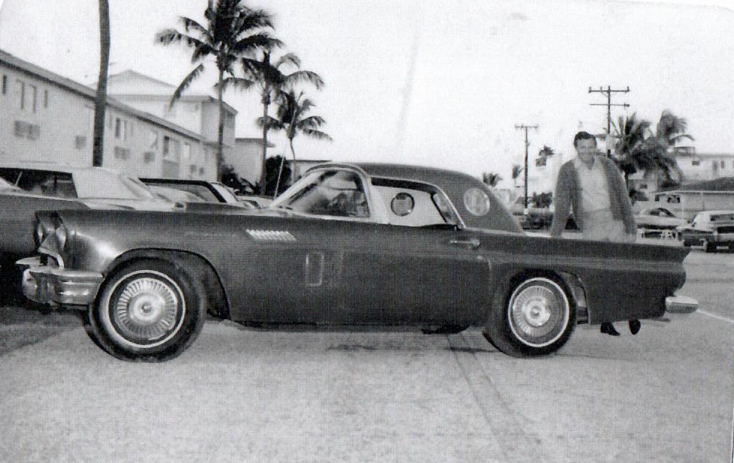
It was a 1957 two-tone Cadillac Coupe De Ville. It cost me $5,000 and was one of the first cars to have built-in air conditioning. I also got a second car. It was a 1957 Ford T-Bird. I wish I still owned it, as it is now worth a lot of money.

I was born in Coral Gables Hospital on Douglas Road.

As a young girl, I remember Douglas as being a horrible road filled with bumps and holes. The problem was that Douglas Road was the dividing line between Coral Gables and Miami. Neither city wanted to repair “their half of the road.” It was finally fixed when the road became a county road.

My father had come from Georgia with his family, and my mother had come from North Carolina with her family. Both families had come to Miami to provide a better life for their family. My mother and father met and got married in January 1942.

We are members of the Miami Zoo and every time we visit the zoo, my mind goes back to the Crandon Park Zoo. As a child, the Crandon Park Zoo was an enchanting place to visit. Not only were there the animals, but it had a train and a carousel and little boats in the water that we could drive!

My father died March 1, 1951, from the effects of juvenile diabetes. I was eight, and we lived with various relatives so that my mother knew that we’d be safe while she was working.

The house we lived in with my aunt and uncle was wood frame covered with coquina rock. One of my favorite memories was of a hurricane season. My father (before he died), my uncle and grandfather had worked for a company called City Ice Products. The plant where the company made blocks of ice was solidly built so when a hurricane threatened, we moved in with all the other families — bringing quilts, blankets, flashlights and portable radios. For a 9-year-old, it was marvelous adventure.

My childhood of moving from family to family helped me learn to love Miami’s many aspects. I went to Coral Gables Elementary and remember you could rent horses at what used to be the bus station downtown. I went to Olympia Heights Elementary in West Miami, when there wasn’t much past the school if you drove west on Bird Road. I also went to Curtiss Elementary in Miami Springs, where our house backed up to a huge field where we used to sit and watch carnivals setting up.

When I was in the ninth grade, our mother thought we could be alone for a short time so we rented one side of a duplex in Coral Gables. Right down the street was The Coliseum, which during my childhood was an ice skating rink and then a bowling alley. Imagine Miamians ice skating! None of us were very good. An apartment building is there today with a large Publix on the ground floor.

Shenandoah Junior High, which I attended in the seventh, eighth and ninth grades, was a three-story building. I remember as a seventh-grader that I was petrified of the huge building and that I had to climb to the third floor for classes.

The dream of my life was to attend Coral Gables Senior High School like my cousin did, and I did, for my sophomore and junior years. It was during my sophomore year, while some friends and I were eating lunch off campus at our favorite “dive,” that we heard the news that Buddy Holly and the Big Bopper had just been killed in a plane wreck. We were devastated.

My family moved again during my senior year and I graduated from Southwest Senior High School in 1961. We might have been the first complete graduating class. I knew I would not be able to go to college, and there was no Miami Dade College yet. So I took shorthand and typing to get a job. My student counselor got me an interview with The Keyes Company, a real estate company in downtown Miami. As they say, the rest is history.

We got paid on the 15th and the last day of the month. My monthly net was $161.48. Bus fare downtown was $20, and I gave my mother $100 a month to help with expenses. What was left, I would splurge and have lunch at the Walgreens cafeteria on Flagler St. opposite the Olympia Theater.

I’d taken three years of Spanish in high school and when Cubans started arriving, I was the only person in the company who spoke any Spanish. I got all the calls. “Habla muy despacio,” I would say.

Another memory was standing on the 19th floor of the Ferre Building where our office was located on Biscayne Boulevard to watch train after train full of army equipment and soldiers heading through Miami to prepare for the Cuban missile crisis.

The Keyes Company is where I met my husband, Fred. Our first date was to the Playboy Club and, of course, that doesn’t exist anymore. We saw Frank Sinatra at the Fontainebleau and Danny Thomas at another hotel. I felt like I was living the dream life.

My husband’s first wife, who passed away in 1959, was Cuban, leaving their three children. Her mother, “Mama,” came from Cuba to help Fred, and when we were making plans for our wedding, we realized that our Coconut Grove home, with only 3 bedrooms, wasn’t big enough. So we added a fourth bedroom. “Mama” lived with us for 23 years until her passing in 1989. We adopted our fourth child in 1971. Now we have eight grandchildren.

Fred and I have been lucky enough to travel and see beautiful places all over the world. But when we come back to Miami we look at each other and say “Why would anyone not want to be here?”

My husband and I are both bilingual. We love that we are able to enjoy the diversity of our city. We embrace daily the changes to our city. When I think of Miami as my city, I think about Gloria Estefan who was interviewed once and they asked her if she was Cuban. Her answer was, “No, I am a Miamian.”

Thank you, Gloria Estefan for understanding what it is to be a Miamian. I was born here and I would never want to live anywhere else. Why would I?

It was 1936 at the tender age of 6 that I was introduced to Miami on a family vacation to Miami Beach.

Our hotel was on Ocean Drive overlooking the swaying palm trees and the ocean beyond. It was love at first sight. Little did I realize this beautiful place would play a major role in my life. We returned five years later, in 1941, from our home in Sioux City, Iowa.

We settled in Miami Shores in a rental, now on the historic register, on Northeast 94th Street, and later purchased a home closer to the bay. We were unfamiliar with Florida winters and basked in the glory of going to the beach in December. On the other hand, 1941 was a cold winter, and with no heat, we sat very close to the fireplace. Solar panels on the roof were the only source of hot water. Air conditioning — what was that?

I attended William Jennings Bryan Junior High School in North Miami, which seemed like the end of civilization. Kids came from everywhere, including Ojus and Opa-locka. If you misbehaved, punishment was swift, and if kept after school, it was a long walk home via the FEC railroad tracks.

Miami Shores was a great place for children with its community house and playground. Many afternoons were spent there. They even had their own football team. There were camp facilities at Greynolds Park, and my Boy Scout troop would play games defending the tower on the mound there.

During these war years, there was a shortage of fuel and transportation so our bicycles did fill the need. We rode everywhere, from Greynolds Park to Miami Beach to see the German prisoners from World War II at Bal Harbour or to the hotel section to see our troops in training.

Another principal form of transportation was Miami transit bus #11. If we weren’t going to the Rosetta Theatre in Little River to see the double feature and partake in a Royal Castle 10-cent hamburger and 5-cent birch beer, we would take bus #11 to the Olympia Theater downtown to see the vaudeville shows there. No trip was complete until we went to the Walgreens lunch counter for a black-cow float and a visit to Jahn the Magic Man store.

Our wanderings required a little cash, but you could go Mr. Griffing’s farm in North Miami and hoe pineapples for 50 cents an hour. I had the good fortune of having a Miami Daily News route of about 90 customers. The paper was so thin it could be folded into a biscuit and thrown into the yard or bushes. The down side was that you actually had to go and collect the 50 cents a week directly from the customers and face the wrath of a misguided toss. I got to keep 10 cents; the rest went to the paper. I eventually saved enough money to buy a motor scooter, which made delivery much easier.

At age 13, having a motor scooter opened new horizons and no part of town was unreachable. Of course, having a motorized vehicle required cash for fuel (when available) and maintenance. Fortunately, another employment opportunity presented itself. My friend Eddie’s parents had a cabana at the McFadden Deauville. I, being a frequent guest, got to know the staff, which subsequently resulted in an offer of employment. The position required that I be there at 7 a.m. and rake the beach, open the cabanas and pull out the furniture, then bring a supply of towels to those in attendance. Afterward, I attended to the locker room for the dispensing of towels there. On slow days, this allowed me the freedom to wander about the old hotel and to swim in the Olympic-size pool with its 10-meter diving platform.

By now, I was attending Miami Edison High School and proudly consider myself one of the “Over the Hill Gang.” The highlight of the year was the Edison (Red Raiders) game against Miami High in the Orange Bowl. This involved taking bus #11 downtown and then walking a couple of miles to the stadium. The demeanor was much more joyous coming rather than going home as we never won a game.

At age 16, automobiles entered the scene. Now, having a full-fledged driver’s license, we were out to buy a car — not just an ordinary car but a “hot rod” with a V8 engine, preferably a ’32 Ford roadster. Once having acquired such a vehicle, the fenders were removed along with the muffler. When challenged at a stop light, we would spin the rear wheels when the light changed, peeling off in a mad dash down busy streets to demonstrate our power and lack of fear.

The major airport attraction was at Dinner Key where Pan American landed its amphibian airplanes on the bay and taxied to the terminal, which is now city hall. The bay was a huge source of entertainment. It provided access to the spoil islands, where we would often camp overnight. On occasion, we would venture south to the Ragged Keys in South Bay in a small sailboat. Both lobster and mosquitoes were in good supply.

One of my favorite outings was a trip to Key Biscayne before the causeway. I recall climbing in the remains of the movie set for They were Expendable, filmed there in the 1940s. We would wander about the coconut plantation and swim in Hurricane Harbor without another soul around.

In 1947, dramatic changes began to occur in my life, all for the better. Upon graduation from Edison, I was enrolled at the University of Florida. After four years of college and two years in the military, I returned to Miami a married man to a community that was already in the throes of change. I settled in my old neighborhood, and now after 74 years, live just two blocks from my original home in an area that was once my paper route. To say things have changed is a massive understatement. I embrace the change and the diversity of our community. I no longer care for race cars but still love the bay.

Miami will never be the same as it was in those days, but it may be better in many ways. I cherish the fact that I was able to enjoy Miami in those early times and trust that my great-grandchildren will enjoy their city as I have, most likely in different ways.

My grandfather, Harold Griffin, moved to the magic city in 1925 and he left on the heels of the 1926 hurricane. His recollections of his time planted the seeds that would inspire my parents to begin a new branch of our family tree on the island paradise of Key Biscayne.

After serving in the Navy during WWII and graduating from the University of Virginia, my father, Richard Welsh, was accepted to the University of Miami law school. My mother, Helene Griffin Welsh, was up for the move to a tropical paradise.

In 1951, my parents left Roanoke, Virginia, and moved into their first Mackle home on Ridgewood Lane on Key Biscayne. The Mackle brothers were early developers in Key Biscayne, selling small beach homes to retirees and WWII vets. My aunts recall fond memories of walking to the beach on sandy streets lined with palm trees bursting with coconuts. They provided magnificent shade all over the island and especially the beach.

In the early days of Key Biscayne, many residents made calls from a phone booth at Vernon’s Drug Store, the information hub of the island. There were no hospitals on the Key, but we had medical care from a husband and wife team who made house calls.

As the population grew, our tropical secret spread and so did construction of hotels. Presidents Kennedy and Nixon were among the high-profile guests, giving our island exposure in the press. President Nixon would purchase a home that would be known as the winter White House, complete with a helicopter pad. As kids, curious tourists would ask us daily for directions to see this presidential attraction.

The Sheraton Royal Biscayne Hotel, painted in bright pink and lime green motif, stood out, and reggae music poolside would draw you in. The Eagle’s Nest bar at the Silver Sands Beach Resort was a popular hangout where you could enjoy a cold drink and listen to musicians play tunes that went perfectly with sunshine or moonlight and rolling waves.

My sisters Megan, Erin and I grew up on Harbor Court. The surrounding blocks were lined with friendly and diverse families that would introduce me to what true community means. It was common to see children roaming carefree and barefoot from house to house where parents looked out for each other and we sampled Cuban, Southern, Italian and kosher meals at each other’s homes.

Key Biscayne must get acknowledgment for some of the all-time best dishes in Miami. Breakfast at the Donut Gallery was the way to end a long night out or start your day. A “Ted Special” is still a meal many will travel to get because it is so perfectly the comfort food of Key Biscayne. Meeting friends at Vernon’s Drug Store with the fountain shop and lunch counter that made mouthwatering grilled cheese and scrumptious shakes was always a treat. One of the original Sir Pizza restaurants, a weekend must, is still going strong. On special occasions, we would go to the English Pub at the Jamaica Inn. It had fresh baked bread, prime rib and pewter engraved mugs for regular beer drinking patrons.

The Key kept us insulated, and growing up we had to travel to the mainland to have McDonald’s, see a movie or go to a mall. Children were encouraged to learn to swim at an early age. Swimming was essential to take part in all of the water activities such as boating to secret spots for “bugs” (lobsters) and then heading for the flats and sandbars to tie up and share the spoils of the day. Before docking the boat, we would head to the glassy water behind the Key Biscayne Yacht Club to get in a ski run. I have great memories of too many of us standing anxiously on the rickety dock covered by mangrove shade to wait our turn to ski a loop before the sun set.

We were known as the Key Rats at Coral Gables High School and we were proud of our unique nickname, even though it is more a lifestyle than a name.

My father, Dick Welsh, passed away in June 1997 after a successful law practice and too short of a retirement. My mother, Helene Welsh, is still a resident of Key Biscayne, now living there for 64 years. My sister, Megan Welsh Andrews, a learning disabilities specialist, opened The Achievement Center in 1985 and is a beloved and active member of the island with her husband, Frank. My niece, Alexandra Andrews, is a third-grade teacher at St. Agnes Academy on the Key, and my nephew Justin, a recent graduate of FSU, lives in Nashville where he plays in the successful band Just like Brothers and works in the music industry. My sister Erin Welsh Abplanalp lives in Issaquah, Washington, with her husband, Craig, and three amazing children, Sage, Willow and Colt, who visit and enjoy the Key Rat reunions.

I am very fortunate that my parents had amazing foresight to choose such a spectacular island to raise their children. I have grown up in such a special community that I still feel such a strong connection to. As I drive over the bridge to the Key, I’m always in awe of the natural beauty surrounding me.

The MapQuest website ranks Hialeah as “the densest American city in terms of population not to feature a skyscraper,” and WalletHub rates it as 96th on its list of the hundred best and worst U.S. cities for an active lifestyle. But when I was a kid growing up there during the 1950s and ‘60s, the city was full of open areas that beckoned a boy to play.

When I was a toddler, I used to stand at the screen door of our house at 130 West 18th Street and watch the trains roll down the Seaboard railroad track three blocks to the north. There was nothing but the gravel street and a big field between us. Fascinated, I’d watch the action for so long that I’d leave a puddle by the door from my wet cloth diaper, so I’ve been told.

Beyond the tracks were some factories, and beyond the factories some greyhound kennels and a stockyard. When the wind was from the north, we could hear the dogs barking and smell the cattle. One day when I was older, there was a jailbreak from the stockyard, and dozens of cattle escaped, running wild through the streets of the city. We first became aware of the situation sitting in our classroom at St. John the Apostle School late that morning when a steer ran down East 5th street followed closely by a police car, lights flashing. We broke out laughing until our principal, Sister Consolata, came on over the P. A. to say that recess had been canceled due to the danger. Recess canceled? Not funny at all! Some of the cattle had to be shot, and for three or four weeks afterwards, I would bike a few blocks from my house to stare in awe where a dried pool of caked and cracking blood stood gradually dissolving in a storm drain on Red Road.

Yeah, Hialeah was a wild place, and there was plenty of room for a kid to play. The closest was right next door in “The Lot,” where there was a single wobbly wooden basketball goal on the west side and a raggedy baseball diamond on the south end. The football field went from home plate to the ficus tree in left field.

Of course, more and more houses were being built every year, but there was still a lot of open space. One of these open areas was a big isosceles triangle of low land bordered by 19th Street and Bright Drive that became a boggy acre during periods of rain. That was the place to go to catch frogs. We’d keep some tadpoles in a bucket by the back stoop until they smelled and Mom would make us dump them out. Once, I got it into my head that I’d walk across the swamp on the stilts that Dad had made for us. I got about five strides in before I realized that I was sinking deeper and deeper into the muck just before keeling over into the muddy water. Mom was not happy about that, although she’d had three brothers growing up and understood a lot about boys and the trouble they get into.

Another place that remained undeveloped for a long time was a four-block area north of the 9th Street city waterworks. Although owned by the water department, the land was unfenced and mostly empty, so that was another place to have fun. At about 12th Street was “The Swing.” Somebody had shimmied way, way up a big eucalyptus tree and attached a long rope with a big knot at the bottom you could sit on. You’d climb out onto the horizontal branch about seven or eight feet up and have a friend heave the knot your way. You’d catch the rope, sit on the knot with the help of your fellow branch-mates, and swing in a fabulous arc, feeling the G-force compress and then lighten in your chest as you reached the point farthest from the tree. On the return, you could have the kids on the branch catch you and set up a new rider, or you could just enjoy several decreasing arcs till you dragged your foot, stopped, and threw the rope back up for the next swinger.

There were a couple of other things you could do by the waterworks, too. There was a big, grassy, flat-topped mound, “The Hill,” that apparently had something to with the water system. The Hill was great for sledding down on pieces of cardboard, and since Dad sold appliances, we could always get him to bring home some refrigerator boxes. We could be just like those kids up north, with all their fancy snow. At the base of the hill were stacks of big water-pipe sections in which we could play hide-and-seek. But there were lots of other places we could play that.  There was only one Hill.

Another place that was late to be built on was a block of trees and underbrush between West 2nd and 3rd avenues. The vegetation was so dense that you could stand on the 20th Street sidewalk, grab a branch of Florida holly, get a foothold on a trunk, climb up, and travel by tree all the way across the block, not touching down till the sidewalk on 19th. Of course, you’d get holly sap all over your clothes. Once again, Mom not happy, but it was worth it, and in her heart, she understood.

The best place, though, was my own secret retreat on that same block. I’d go there only by myself, park my bike a little way in, climb my particular tree, sit there and think, on the shore of the wide world alone—lost in reverie, surrounded by the wilds of Hialeah.

Translate »