Skip to content
Named Best Museum 2022 by Miami New Times

My Miami story began the day my KLM flight touched down from Cuba at Miami International Airport.

I was traveling alone in 1961 at the age of 11. I was going to some unknown destination, which turned out to be an orphanage in Colorado, arranged by Operation Pedro Pan. I was reunited with my mother and two younger sisters almost two years later in Miami (we were some of the lucky ones).

We moved into an old wooden house near Shell’s City. I was enrolled at Edison Junior High in the seventh grade in 1963, and later I went to Beach High (Miami Beach High School). My mother was now a single mom raising three kids in a new country with a new language.

My first job was delivering The Miami News around Lemon City and Little River. Adjustments had to be made to my bicycle by installing a wooden “banana basket” to the handlebars to accommodate the heavy load from the newspapers. It felt as if I were peddling a Buick. My introduction to mobile journalism drastically ended the day my bike fell apart into several pieces and I had to walk back home in the rain carrying the wheel and frame in one arm and the chain and handlebars in the other. No more banana basket. I was 14.

Fortunately, I was told about a couple of jobs in the restaurant business. One job was as a dishwasher at Junior’s Restaurant on Biscayne Boulevard; the other as a busboy at Jumbo’s Restaurant on Northwest Seventh Avenue. Unfortunately, I was fired from both jobs the same day. Clearly, it was time to find a different line of work.

Another job came up where I was allowed to take the company car home. That was great news because my family needed a car. The pest control company was on the beach. I was hired as a “pest control specialist.” I was the only employee and was told to come back the next day so they could show me around the “company car,” a ’56 rusted four-door Packard.

The windows did not roll down and the car had no air conditioning, making the smell from pesticides and other chemicals suffocating. I sprayed the Seacoast Towers on Collins Avenue, and for the first time —as bad as it was —the family had a car. Nobody bothered to check my driver’s license. I didn’t have one. My mother must have fainted the day I got home behind the wheel of my new, smelly, beat-up company car. I was 15 years old.

We hung out at pool halls, dance halls, movie theaters and food joints in North Miami and Miami Beach. Congress pool hall and Bowlerama come to mind. I will never forget the Paramount Theater, where we skipped school to see A Hard Day’s Night. No more short hair for me after that.

Flirting with girls up and down Collins Avenue became an art form; we cruised past the Neba Roast Beef restaurant, Scotty’s Drive-In and The Castaways. I remember getting my first Beatles haircut from the master known as Evan at a cost of $5. Among our favorite eateries were Parham’s, Royal Castle on 71st Street, Tony’s Fish Market, Nathan’s, Fun Fair, the Bonfire, The Place For Steak, and Jilly’s when we were a little bit older.

We watched Wayne Cochran lift the roof off The Barn. The Hialeah Municipal and all the armories were great venues that showcased Miami’s local bands like NRBQ, the 7 of Us, The Kollection, and many others whose memories are kept alive in Jeff Lemlich’s book, Savage Lost. Man, Miami rocked!

We grooved at Coconut Grove’s first head shop owned by the now legendary Michael Lang, one of the brains behind Woodstock. He had learned from his experience organizing the Miami Pop Festival in 1968 at Gulfstream Park in Hallandale. It headlined a not-too-well-known band called the “Jimmy Hendrix Experience.”

Finally, I found a real job at a well-known auto-rental and leasing firm in Miami with a large fleet of vehicles and a high-end clientele. Driving around and picking up people at the airport was part of my new job. I took a new car home every night. I remember pulling up to the “love-ins” at Greynolds Park in a new convertible every weekend, which made me extremely popular — a rich hippie. The job lasted almost three years. I knew it was only a matter of time until the U.S. armed forces’ Selective Service System would come knocking and drafted me into the U.S. Army. I was almost 19.

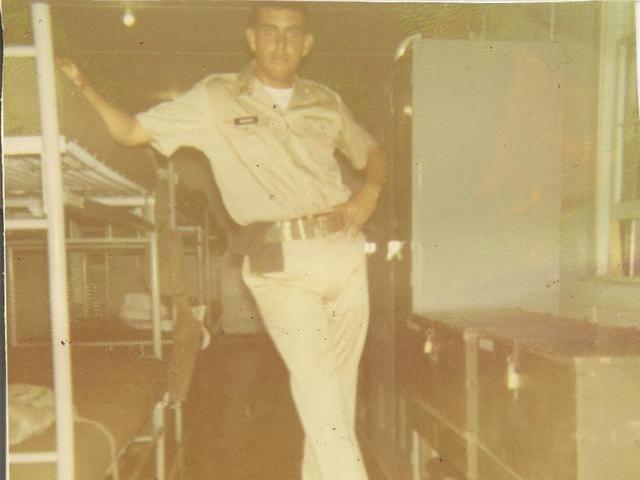
I was very lucky to have been permanently stationed in one of the most beautiful places on earth, Ft. Ord on the Pacific Coast Highway in the Monterey Peninsula of California. The Santa Ynez Mountains climbed up from Big Sur. There are not enough colors in an artist’s pallet to duplicate the sunsets I was lucky enough to see along the Pacific Ocean from my ocean-view Army barracks.

San Francisco was a short hop away from Ft. Ord, and on the weekends we hung out at The Haight (not what I expected) and saw a lot of the bands you only heard on the radio. I was having a great time, but sadly the ’60s were coming to an end and so was my Army obligation.

I had choices to make. “Going Back To Miami” was playing over and over in my head, and I knew in my heart what I had to do. It was time to come home. I have no regrets.
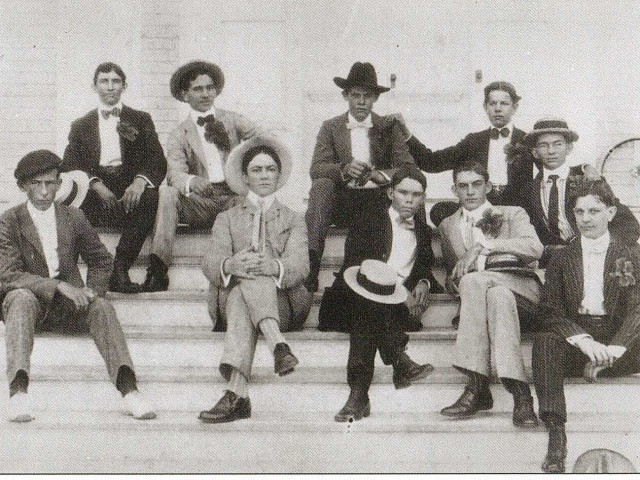
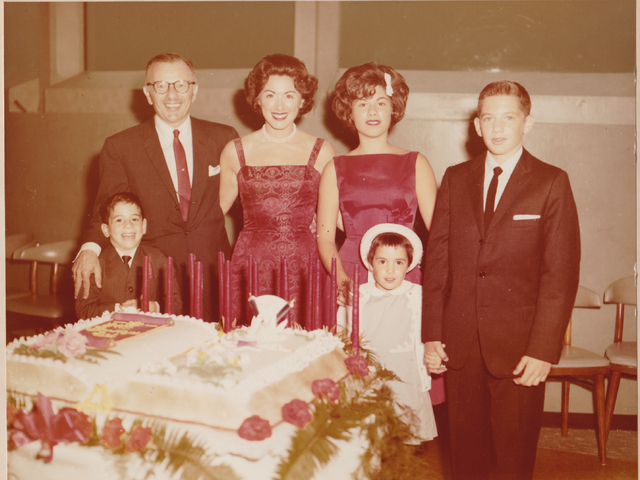
My grandfather and other family members were Miami pioneers, having arrived in 1895 from Crescent City, Florida.

My grandfather, T. N. Gautier, was one of 500 signatures needed for Miami to incorporate as a city. He was also the first school superintendent for Miami. His grocery store, Miami Groceries, was listed in the one page 1902 telephone directory as “T.N. Gautier Groceries, dial 9.”

My father, T.N. Gautier, Jr., was part of the Miami “Dirty Dozen.” I have no clue what those guys did. I do know that they were a young group of successful businessmen in Miami back in the day.

I was first introduced to Miami at my birth in Victoria Hospital many years ago. Victoria was a small 30 to 40 bed hospital on Northwest Third Street and Ninth Avenue.

My first real memory of Miami was the Labor Day hurricane of 1935. It hit without warning, as there were no TV hurricane advisories back then. I was 3 years old, but not afraid of hurricanes because I was 3 years old. My dad came home from his job at Burdines during the eye of the storm. During the lull, my family walked through a vacant lot behind our house to Flagler Street where we weathered the hurricane at fire Chief Henry Chase’s two-story concrete block house. It was a fortress against the storm. The Chase’s house was next to Fire Station #3. For me, the highlight of that day was seeing the roof of the Dempsey’s house fly off and sail away. Of course, that was not the highlight for the Dempsey family.

I attended Riverside Elementary School from first to sixth grade. Shoes were optional and many of the kids didn’t wear shoes, and I, “Shoeless Joe,” was among the many. However, I did wear shoes to church and weddings.

We lived five blocks away from Ada Merritt Junior High. It was an easy bike ride for me. Our Ada Merritt boys’ teams won the Dade County Soft Ball Championship every year for our three junior-high years.

The old Miami Orange Bowl was half a mile away from our house. My dad and I would walk there to watch the Miami Seahawks. The Seahawks were a professional franchise in the All-American League. They had an All-American running back named “Bullet” Bill Daley and a lineman named Gene Ellenson who graduated from Miami High and ended up a coach at the University of Florida. Those two men were the only redeeming players on the Seahawks team. Sadly the team eventually folded due to lack of paying fans.

My mother Claire Gautier was a soprano soloist at Trinity Methodist Church in downtown Miami. I was used to her practicing on our piano at home and took her talent for granted. But because I loved football my mother became my hero when she sang at the wedding of Army’s All-American quarterback Arnold Tucker in the mid ‘40s.

The Mackle Company, later to be known as the General Development Corporation, changed the dynamics of home building in Miami as they provided affordable housing for hundreds of families. They developed Key Biscayne and built the Key Biscayne Hotel. They also built other developments, including Ascot Park and Westwood Lakes.

My job for The Mackle Company was titled “Industrial Expeditor and General Coordinator,” which technically translated into…GOFER! When I left Mackle to answer the call of the U.S. Army, the Mackle Brothers gave me a watch that they had engraved, “Joe Good Luck Mackles.” The watch is still ticking to this day. It’s like the houses that they built — still being used.

Fast-pitch softball was another thriving sport. It was an outdoor sport and Miami being hot did not stop fans from going to various city parks to watch the games. This, of course, was before TV and air conditioners. The softball games were an evening of entertainment for people of all ages.

I pitched in all of the city parks, but the one I remember most is Moore Park. There was a man there who went to every game. His name was Scotty. He was a one-man cheering section and encourager to all the players. He knew every player’s name and called it out when they were up to bat. I could always hear him with his Scottish accent yelling out when I got to home plate, “Hit a homer, Joe!” Eventually many thousands of people in Miami welcomed air-conditioning and TVs, and didn’t go out at night to watch fast-pitch softball in the heat and hard benches. It was a gain for them and a death knell for fast-pitch softball.

In 1956, I had the privilege of being one of the coaches for Miami’s Little Major League. The team represented Miami for the Florida state championship held in St. Petersburg. We won the state title. Several on that winning team went on to be baseball stars, including Steve Hertz, who went on to play for the Houston Astros and Eric Wanderon who played baseball for Miami High and received a scholarship for both football and baseball at the University of Miami. Tommy Shannon, a pitcher for our team, got a scholarship to the University of Florida as a baseball pitcher and quarterback for the Gators.

Miami is my hometown, where I grew up and met my wife Miriam. It is where my daughter and son were born and went to school. Living in Miami taught me about living through hurricanes, traffic, hot weather and mosquitoes. Miami, to me, was a great city to grow up in.

I was born at Coral Gables Hospital in 1948. My mother was from Brooklyn, my father from Morriston. He was a CPA, in the Giller Building on the Beach, at the exit off the Julia Tuttle Causeway onto Arthur Godfrey Road. He said that every day when he drove across the causeway, he marveled at the beauty around him.

We lived in the Gables – first on Alhambra Circle where the UM fraternities were, and the athletic field and tennis courts. We played touch football and tennis there on weekends; no one bothered us. Then my family moved to the corner of Old Cutler Road and Santurce Avenue, into a one-story ‘50s house, now replaced by a mansion too big for the property.

There was only vacant land across the street, east of Old Cutler. I asked my father why nobody built there, and he said that it was too close to sea level; it would never be developed. Now it’s Cocoplum. Temple Beth Am was surrounded by vacant land. When they built Dadeland, my parents said that no one would live that far out.

Matheson Hammock was quiet and uncrowded—no Red Fish Grill. We swam at the Venetian Pool. On Sundays my dad would get bagels and lox at Sam and Carl’s on Red Road at Sunset. Across the street was the Holsum Bakery, with that wonderful smell. South Miami was small and sleepy, like a village. Sometimes we went to Pumpernik’s and Wolfie’s on the Beach — the best pastrami sandwiches I’ve ever tasted.

One of my father’s clients was the Melaleuca Motel on Collins Avenue, and when I was little we stayed there in the summer – two rooms and a cabana. The ocean, the beach, the pool, eating out, lots of other kids – I loved it.

I went to first and second grades at Sunset Elementary, then to West Lab at UM (my mother put me on the waiting list when I was born). I had a friend who would take me to his country club in the Gables, and defiantly introduce me as “my Jewish friend Joel.” Nobody reacted, but we all knew that there were Jewish and non-Jewish country clubs, and restricted hotels. Most were more subtle than the one with the sign that said “Great Views, No Jews.”

I road my bike to Ponce Junior High, racing up and over the bridge on Granada. In ninth grade I took drama because there weren’t any tests, and after a few silly skits in class, my teacher, Mrs. Firestone, cast me as the lead in the school play. When I tried to get out of it she said that her class wasn’t a democracy. It was my tipping point.

Everything I’ve done since has involved public speaking – debating in high school and college, moot court in law school, writing speeches in D.C., and then appellate law. Mrs. Firestone wouldn’t remember me, because she was just doing her job — being a teacher – and unfortunately, I never told her.

Gables High was all white, with the first Cuban students from the first wave of immigrants. My world was all white. I remember “White” and “Colored” water fountains, public restrooms, and beaches. Virginia Key Beach, for the “Colored People,”was beautiful, and my friends and I were welcome there.

I drove the ’56 Chevy that my father gave me when he bought his burgundy Mustang; it took all my strength to turn the wheel. My friend Larry and I would drop off our dates and go to the Royal Castle on the highway around 22nd Avenue, and eat four or five of those small hamburgers with the soft buns and the little pieces of cooked onions, and drink birch beer.

A favorite hangout was the Hot Shoppes Drive-In off U.S. 1 at Bird Road. We took our dates to the Flick Coffeehouse on Ponce near the university to hear folk music. Movies were at the Miracle, Gables and Riviera Theatres. Next to the Riviera were Spec’s Music and Swenson’s Ice Cream.

Some of my friends had ski boats, which we took out on weekends. At that time you could water ski anywhere you wanted. During the Cuban Missile Crisis there were military convoys everywhere. Our teachers taught us to crouch under our desks with our arms over our heads in order to survive a nuclear attack.

In tenth grade English they announced on the public address system that President Kennedy had been shot. My first political campaign was Miami Mayor Robert King High’s run for governor. We took a small plane to Tallahassee that was held together by bubble gum. It was terrifying.

The public schools in South Florida were among the best in the nation; some of the smartest people I’ve ever known went to Gables; fortunately for me it had a great debate team; and Gables and Miami High had two of the best football teams in the country. In 1965, the game between Gables and Miami High drew 48,000 people to the Orange Bowl. Miami High’s 14-7 win ended our 28-game winning streak. It was devastating.

When I left for college I had no intention of coming back. The place was sleepy and Southern and in many ways prejudiced. But it had changed radically when we decided to move back from D.C. 15 years later to raise our family. It was becoming a center of art, sports, commerce and finance – bilingual, international. It had acquired a buzz that still buzzes. And the lawyers here are as good as the best lawyers anywhere—in particular my colleagues for 25 years at Podhurst Orseck. I’ve never regretted coming home.

In the 1940s, my father Joseph Lanteigne Sr., worked at the Grain Federation League grain elevators on the docks in Albany, N.Y. My mother, Elizabeth Lanteigne, was a nurse at Albany Hospital.

Each morning, after returning home from working the night shift, Mom would turn on our black-and-white television set to watch the Arthur Godfrey show, which was broadcast from the Kenilworth Hotel on Miami Beach. Watching the sunny skies and the palm trees swaying in the ocean breezes fill the television screen, my mother would say, “This is where we are going to live.” After several bitter winters, our family packed up and moved to Miami in 1957.

My dad was employed with Dade County Parks Department at Matheson Hammock Park, and my mother worked for Dade County Juvenile Court and Domestic Relations in Miami. In the late 1980s, my mother was honored by the Juvenile Court, the only nonjudicial staff member to be so recognized. After more than 30 years of service, my parents retired from Dade County.

It was at our first residence, an apartment on Southwest 27th Avenue and Fourth Street, that my sister Andrea and I first experienced living in the South. It began when we took our first bus ride into downtown Miami on bus route No. 14.

My sister and I got on the bus and began to walk to the back of the bus. The bus driver instantly stopped the bus and in an aggressive tone told us to sit in front of the white line. That was just the beginning. Later that day we saw separate seating at the dime-store lunch counter, and separate drinking fountains and restrooms.

After my parents purchased a two-bedroom home on Southwest Fifth Street and 28th Avenue, we would go to Toby’s Cafeteria at Eighth Street and Beacom Boulevard for dinner on Friday nights. Afterward, we would go grocery shopping at the Kwik Chek Food Store on Eighth Street and sometimes visit Velvet Kreme Donut Shop for an evening treat.

I was an acolyte at the 8 and 11 a.m. services at Holy Comforter Episcopal Church, located on Southwest First Street and 13th Avenue. Between services, Father Garret would take me to Tyler’s Family Restaurant on Flagler Street for a hot Danish pastry.

I attended Miami Senior High School and graduated in June 1960. I believe that the graduating class was more than 1,300 students, which was the largest high school graduating class in the state of Florida at that time. My sister attended Citrus Grove Junior High School and then Miami Senior High School, graduating in June 1962.

Miami High was a wonderful experience back then. The school’s architecture allowed for the Miami breezes and the noise from the planes passing overhead to flow into the classroom.

The auditorium was the home of high-energy pep rallies for games against rivals Jackson, Coral Gables and Edison high schools. The Orange Bowl football stadium hosted more than 40,000 students and family members for the annual Thanksgiving evening football game between Miami High and Edison.

In the summer of 1957, I applied for my first job, at the Dade County School textbook distribution center and warehouse on Southwest 22nd Avenue and Fourth Street. This is where I spent my summer days during my high school years. I also worked in the evenings at the Coral Gables Country Club.

Living and growing up in Miami during the late 1950s and early 1960s was full of wonder. In the winter, we’d wait for the big black vultures’ annual arrival to roost at the Dade County Courthouse from their summer home in Ohio. That was a sign that the Burdines department store Christmas carnival was going to be set up on the roof of the downtown store soon.

On Saturday evenings, we’d often eat dinner at the Shrimp Place on Northwest Seventh Avenue. We’d stand outside hoping to be able to see the Russian Sputnik in the evening sky. I remember the excitement felt when our first space shot was successful. Even more exciting was when our first astronaut in space, Alan Shepard, lifted off from Cape Canaveral. That was an era of great American pride.

The later 1960s and 1970s had their share of history in Miami. There were political conventions held in Miami Beach that sparked civil-rights and anti-war demonstrations. Miami faced many civil-rights demonstrations during that time period, which greatly changed our community, as did the later arrival of the refugees from the Mariel boat lift.

Shortly after the assassination of President John F. Kennedy, I enlisted in the United Sates Army. While in the First Infantry Division at Fort Riley, Kansas, I volunteered as part of the division’s advance to Vietnam.

When I returned home, I became an internal auditor at the First National Bank of Miami. Later, Southeast Banking Corporation was incorporated and I was asked to transfer and become one of the first employees of Southeast.

My passion for banking began. In 1969, I attended Miami-Dade Junior College, and then transferred to Florida Atlantic University, graduating with a degree in accounting in March 1972. I returned to work at Southeast Banking Corporation in 1974, and it was there I spent the last 20-plus years. I retired in 2013 as president of Mercy Credit Union, located in Mercy Hospital.

My wife Linda Blondet Fondas Lanteigne graduated from Immaculata-La Salle High School in the 1960s. She knew as a child that she wanted to be a teacher. Linda graduated from the University of Miami with her degree in education. Her first marriage took her to the Bahamas where she taught for 15 years.

When she returned to Miami, Linda began teaching first grade at St. Brendan’s, then Blue Lakes, Coral Reef and Kenwood elementary schools. For the last seven years, Linda has been a first-grade teacher at Pinecrest Elementary School.

For the past 18 years, we have lived in our High Pines 1952-vintage home. The first several years, we spent long hours remodeling to ensure we could retire in our home. We were always careful to maintain the integrity of the original house. We now spend most weekends taking care of our tropical garden. Lots of time is spent with Pee-Wee and Chi-Chi, our special Quaker parrots, and Buddy, our faithful Maltese dog.

Miami has gone through major growth and dramatic changes. There is still no place better to see the blue sky and feel the warm, gentle winds. When asked where we are from, with pride we say Miami. Miami is an unbelievable place to call home.

My mother hanging on to the top of a telephone pole is one of my earliest memories of South Florida. It lingers in my mind some sixty years later. Soon after we moved here from up north, a hurricane blew through. My father was away on business, so it was just my mother, my two younger sisters and me.

We were lucky to have long-time Florida residents as neighbors, so we did whatever they told us to do to prepare. We made it through the storm with little damage, but, as usual, we lost power, and telephone. The power came back on in a day or two, but the telephone didn’t.

Over the next week, everyone else on our street got their telephone service back, but ours was still out. Using a neighbor’s phone, we’d call every day, only to be told to be patient. Finally, after about ten days, I watched with amazement as my short, slim mother (I was only eleven, but already taller) shinnied up the telephone pole. Wrapping one arm around the pole in a kind of “death hug,” she used her free hand to reconnect the wires into the main line.

From her perch she sent me back into the house to make sure the telephone worked before she came back to earth. One try and she managed to get it connected. No one from the telephone company ever came.

That definitely “low-tech” repair job was accomplished many years before women would be seen wearing hard hats and working on telephone lines. My mother’s climb provided a telephone that still worked when she moved out of the house thirty years and many hurricanes later.

I grew up in Miami Shores beginning in the mid-1940s, a beautiful place to live where you can still view Biscayne Bay today, as you could then. I went to Miami Shores Elementary School and have fond memories of the teachers and my friends, some lifelong friends. I remember our teachers who were special, such as my first-grade teacher, Mrs. Gonzales, and the Easter Parade for our class. My fourth-grade teacher, Mrs. Dees, played classical music for us during rest time after lunch. We sometimes drew pictures to interpret the music.

I took ballet, tap, and toe dance lessons in a home studio where many young people took lessons. We had our dance recitals on the stage of the Shores Theater. We went to the movies there every Saturday morning.

I learned to swim at the Miami Shores Country Club. There was an Olympic-size pool with a high-dive and low-dive boards. It took great courage just to jump off the high dive! Miami Shores did have one real Olympic swimmer, Shirley Stobs. Her swimming specialty was the butterfly stroke. The pool has since been removed to expand parking and a water park has been built on the north side of the main clubhouse.

It wasn’t necessary to swim when I had a water adventure around the third or fourth grade. My friend had a grandmother who lived in a house on Biscayne Bay, just south of Miami Shores. They had a small boat dock. Toni and I tried a little fishing off the dock. After a while, I got a nibble on my line that kept getting stronger and stronger. I pulled and wound and finally landed the fish on the dock. It was a baby sand shark! It was thrown back into the water.

Brockway Memorial Library opened in Miami Shores in 1949, made possible through funds donated by industrialist George A. Brockway. I often felt like I had read my way through all the books in the children’s section and can remember checking out stacks of books during the summer months. A couple of years ago the library requested donations of Miami Shores historical items so I donated my Miami Shores Troop 39 Girl Scout badge sash with earned badges. Troop 39 members started with the Brownies in the first grade, continuing with the Girl Scouts into junior high school. In scouting our troop visited places in Miami such as Greynolds Park, Camp Mahachee, Parrot Jungle and Matheson Hammock. Our last farewell to Troop 39 was a weekend hotel stay on Miami Beach.

We had our meetings after school at the Miami Shores Community Church, the longest established church in the community and near the school. Many of us rode our bicycles to and from school. I rode my bicycle to school starting in the first grade. Miami Shores Elementary was a little over a mile from my house. I continued to ride my bicycle to Horace Mann Junior High School in the first year or two.

In 1948 I participated in a pet and doll show at the Miami Shores Community House. I didn’t win any prizes but someone took a photo that was published in a newspaper. It was spotted by Mrs. Carnegie Cline who later taught me modeling and drama. She was also involved with the Miami Daily News Youth Roundup of Dade County. I got to know the youth editor of the paper and was involved with many of the Roundup activities. I had the opportunity to model in fashion shows at the Burdine’s Tea Room and The Surf Club, ride floats in the Orange Bowl parades and meet famous people like Olympic champion Pete Desjardins at the Deauville, movie star Preston Foster and some of “the little people” who starred in The Wizard of Oz.

The Cuban revolution was taking place while I was at Miami Edison Senior High School. I remember hearing the news announcement on the radio that “Batista has left the island of Cuba.”

After graduating, I went off to college, and then moved to Atlanta, Georgia, but made visits home for brief periods. In recent years I’ve been to Miami for extended periods. When I referred to the Miami News building in downtown Miami, no one knew what I was talking about. It wasn’t until I went to an Art Basel 2012 exhibit in the Freedom Tower that I learned the Miami News building had become the Freedom Tower. Miami-Dade College unveiled the adjacent Pedro Pan sculpture to mark the 50th anniversary of Operation Peter Pan, which resulted in over 14,000 unaccompanied children sent from Cuba to the United States.

I’ve enjoyed subsequent visits to the tower for special exhibits. I learned that a year after this Spanish renaissance revival tower was built it was damaged during Miami’s1926 killer hurricane and was rebuilt twice. It was donated to Miami Dade College in 2005 by a local developer. It’s a tribute that Miami has saved this U.S. National Historic Landmark that stands tall as a reflection of the city’s history while new development grows around it by leaps and bounds.

Suddenly there is fire in the treetops along the turnpike. The sidewalk is carpeted with orange petals and the Poinciana preens itself above the jacaranda’s demure lavender feathers and the frangipani’s pink and yellow pastels. The calendar doesn’t tell us it is time for our yearly Poinciana Walk, but the world does. While we go for the sake of the trees, the homes in the Gables that they guard and grace have become characters in a never-ending story.

On one of our earliest peeking-through-the-Rangoon Creeper days in the French Village, we stumbled onto the storybook house at the southwest end of the block of chateaus. Double garage doors and peeling white paint abutted the perfectly restored wall and manicured yard we had been admiring. A diminutive arch with a black iron gate opened out diagonally to the corner of the street from a postage-stamp herb garden. Above and below, casement windows hinged inward, screens offering only the filmiest filter. The wavy glass panels of the butler’s pantry cabinets were clearly discernible from where we stood outside. Farther down the walk, a vase of fresh flowers bloomed in the window, and next to it a gray top-knotted head was turned toward the flickering screen across the room. We were mystified and mesmerized by the house, a vestige of the neighborhood’s 1920s legacy. We ached to get inside.

Then, one afternoon, we rounded the corner to hear the sounds of pans scraping through the kitchen’s casement window. Pungent garlic and onions sizzled on an unseen stove top, and plates clattered on an imagined table. Two shadowy figures floated in the lampless kitchen, one seated and one busy in the evening light lingering along the freckled street, while a gray head watched at her post, as always, next to the flowers in the living room window.

Months later, as we paced back and forth along the length of the house, by now the object of fantasy and imagination, two wiry little ladies appeared in the open door and looked out at their stalkers. The tiniest one, with delicate bird fingers, pushed open the wrought iron, screen-covered door and smiled at us. Her face was encircled with a white cottony halo and the parchment skin on her face creased into smile lines from her eyes to her chin. The woman behind her seemed younger, more serious and stern, or just responsible and justifiably wary. “Hello ladies,” The snowy one spoke. “Are you enjoying your walk?”

We were nearly speechless. For all our wishing, we weren’t prepared for this sprite to actually speak to us.

“Oh, yes. This is our favorite street. Yours is our favorite house.”

“We think it is pretty special, this house. That’s why we have stayed here all these years. Of course, the Realtors won’t give us any peace. They come by here nearly every day.”

“You aren’t going to sell it are you?” Our simultaneous question belied fears of contractors and realtors circling like vultures.

A little giggle slipped into the pixie’s voice. “Would you sell paradise?”

The taller woman reached out for the handle of the iron door and began drawing it toward her and closing the little doll lady inside. “Enjoy your walk.” She gave a tiny wave, her open palm nearly as papery as her face. A walk in paradise.

Today, perhaps because we had already walked on many streets, we drove to Cotorro Avenue, turning in from the northern end of the French Village block. Maybe if we had been on foot, the awareness would have come gradually. Instead, we were shocked to find the Garlic Sisters’ house standing naked on the sidewalk. The grizzled hedge, ripped from the ground, exposed ancient pipes and spigots that had quenched its thirst for perhaps as many years as we were old. The Florida honeysuckle vine that circled and wound and draped luxuriously over the garden wall was now twisted dry and gnarled in the side yard under piles of debris, boards and nails and chunks of plaster.

Tears blurred our vision, but we scarcely hesitated to duck through the arch and tiptoe gingerly around the rubble that had once been a garden, to French doors, standing open in the back. We stepped through onto original tile floors, terra cotta cool, and looked up to a black, wrought iron chandelier dangling above. Straight ahead, the wood paneled front door, directed a turn into the living room where a TV antenna wire dangled onto the floor.

Off the front hall, a door stood open to the kitchen where black and white tiles checkered the floor. In the empty butler’s pantry, wooden drain boards, grooved and stained, sloped down to an old porcelain sink with iron faucet and knobs still intact. On the drain board stood a vase of flowers, once fresh cut carnations, daisies, and spider pompoms, now drooping with curled and wilted petals. Not the stuff of potpourri, but of memories.

A simple ribbon circled the vase, its color indistinguishable. A florist card stuck out from a stiff plastic stem. The envelope was addressed to Virginia O’Dowd, 1032 Cotorro Avenue, Coral Gables, Florida. Dreading to see what the message would say, fearing a get well wish or sincerest sympathy, my hands shook as I turned over the card. The typed letters read: Happy Birthday, with Love.

Outside, a child’s riding toy rumbled by, a stroller wheel complained and young women’s voices drifted up through the pantry casement. Neighbors. Maybe they would think we had no right to be there, to find the flowers, to sniff for garlic, to walk over dining room tiles the sisters’ feet had crossed and re-crossed until they wore a pattern in the stone, to listen for the echo of a little birdlike chirp. “Enjoy.” So we left the French door just as we had found it, passed through the garden wall, and whispered an apology to Virginia for not somehow leaving her flowers in the open window.

My mother Myrtis Virgina Bell came to Miami in 1913, her birth year, from Polk County. Charles and Virginia Bell, my grandparents, worked in a phosphate mine there.

In Miami, they successfully built houses in the Shenandoah area. They had two more children, Jack and Donald, before they divorced, leaving the three children for Virginia to raise.

Charles retired after building projects like the Miami Shores Country Club. Virginia struggled through the roughest part of the Depression. She sold crystalized citrus peels, avocados, or anything she could think of to provide income.

Virginia never learned to drive. Charles taught my mother Myrtis to drive the family car. She would drive her father to work, and then drive her mother on her errands, and then drive back to pick up her father.

She died at 98 in 2011, having retired from the University of Miami at 65 with the last mechanical typewriter on campus.

My first memory of my baby sister, Joan, was on my third birthday. We were introduced in Victoria hospital; she was born on the same day as I.

I started school at Riverside Elementary. I loved the Norman Rockwell setting, and looked forward to school. We moved into our new house at the edge of the Everglades: Southwest 63rd Avenue and two blocks off Flagler Street. I enrolled in Kinloch Park School for the third grade. It was a complete change. Most of the boys didn’t have shoes and they all had to establish a pecking order over me.

There was one classmate who rode the same school bus and delighted in throwing me out of whichever seat I picked. I learned to escape to our small community and still look on the neighbors as extended family. Originally, it was a planned neighborhood, with cast-iron lampposts and sidewalks.

The noises at night were a lot different than city sounds. There was a winter home for the circus, a hit-and-miss motor supplied the power for pumping water to the few houses scattered in the neighborhood, and early Sunday morning, a big cast-iron bell on the top of West Flagler Baptist Church would start ringing, summoning everyone to church. The original building had a baptismal pool behind the pulpit where I was baptized. My best buddy, Bruce, married his wife there, with me as his best man.

My mother attended Shenandoah schools in town but graduated with the first class of the new Miami Senior High School. My sister and I attended Kinloch, Citrus Grove School and Miami High.

My dad James Posey Boyer with only one ear drum was 4-F (classified unfit to serve in WWII). But he went to work as a machinist, first in Trinidad and later in Cuba. He helped establish U.S. military bases there at the beginning of the war. He and my mom opened a sundry store on the ground floor of a Masonic hall on Northwest 15th Avenue and First Street.

The Orange Bowl Stadium was just down the street. As a kid, I worked there after the games, picking up empty glass Coke bottles, where I got five cents for each crate. Competing with other kids, you really had to hustle to earn two bucks.

As kids, we camped out and fished on Key Biscayne, and even built a driftwood shelter on Fair Island. We could ride the bus all the way to the jetties for 10 cents. There were hundreds of vacant places for beach parties. In the summer, some hotel rooms were a buck a night. A birch beer and hamburger at Royal Castle was only 15 cents.

My dad used to take the family to Old Cutler, break an oyster-filled branch off a mangrove bush, build a fire, and roast it until the oysters opened. He would get us up early, catch a few fish and cook them on an open fire, for breakfast on the beach. Fish was a large part of my family’s diet. I now realize it was readily available and cheap.

I had a paper route, and I used a chicken crate to carry the papers. I started at 52nd Avenue and Flagler and went north to the Tamiami canal, all the way to the Flagler Street Bridge and Milam Dairy Road with only 110 customers.

Every year we made a trip to Pompano to find a Christmas tree, imagining them standing upright, because all the short needle pines were bent over to the west from the constant wind off the beach. Several times during the war we heard about a ship being torpedoed and on fire, and we would go to the beach to watch.

I got my first bike at 9 and gave it away after high school, when I had to report for basic training. The USAF 435th was activated at the beginning of the Korean War. I dream about those times in early Miami, and for sure I lived through the greatest time in history, in the greatest town God ever created.

She died at 98 in 2011, having retired from the University of Miami, at 65 with the last mechanical typewriter on campus.

My first memory of my sister was on my third birthday, being introduced in Victoria hospital, to my baby sister, Joan born on the same day as I. I remember being taken across the street from our apartment, in 1935, to spend the night in a bigger building; because a storm was coming; and then sleeping through the whole thing.

I started school at Riverside Elementary. I loved the Norman Rockwell setting, and looked forward to school. We moved into our new house at the edge of the Everglades, Sixty-Third Avenue and two blocks off Flagler St. I enrolled in Kinloch Park School for the third grade. It was a complete change.

Most of the boys didn’t have shoes and they all had to establish a pecking order over me. A couple of the more infamous attending were the Cash brothers; and the one who made my life the most miserable was later known as Long John Fulford. He rode the same school bus and delighted in throwing me out of whichever seat I picked.

I learned to escape to our small community and to love our in their small houses, and still look on the neighbors as extended family. Originally, it was a planned neighborhood, with cast iron lampposts and sidewalks. They never paved the streets because of the crash in 1929.

The noises at night were a lot different than city sounds. There was a winter home for the circus, a hit-and-miss motor supplied the power for pumping water to the few houses scattered in the neighborhood, and early Sunday morning, a big cast iron bell on the top of West Flagler Baptist Church would start ringing, summoning everyone to church. The original building had a baptismal pool behind the pulpit where I was baptized pre-teen.

My best buddy Bruce married his wife there, with me as his best man. My mother, Myrtis Virgina Bell, attended Shenandoah School and High school in town but graduated with the first class of the new Miami Senior High School. My sister and I attended Kinloch, Citrus Grove School, and Miami High.

My dad, James Posey Boyer, (with only one ear drum), was 4-F; but he went to work as a machinist, first in Trinidad and later in Cuba. He helped establish US military bases there at the beginning of the war. He and my Mom opened a sundry store on the ground floor of a Masonic Hall on NW 15th Ave and 1st street.

The Orange Bowl Stadium was just down the street. As a kid I worked there after the games, picking up empty glass coke bottles, where I got 5 cents for each crate. Competing with other kids, you really had to hustle to earn 2 bucks.

As kids, we camped out and fished on Key Biscayne, and even built a driftwood shelter on Fair Island. We could ride the bus all the way to the Jetties for 10 cents. There were hundreds of vacant places for beach parties. In the summer some hotel rooms were a buck a night. A birch beer and hamburger, at Royal Castle, was only 15 cents.

My dad used to take the family to Old Cutler, break an oyster- filled branch off a mangrove bush, build a fire, and roast it until the oysters opened. He would get us up early, catch a few fish and cook them on an open fire, for breakfast on the beach. Fish was a large part of my family’s diet. I now realize it was readily available and cheap.

I had a paper route, and I used a chicken crate to carry the papers. I started at 52 Ave. and Flagler and went north to the Tamiami canal, all the way to the Flagler Street Bridge and Millan Dairy Road with only 110 costumers.

Every year we made a trip to Pompano to find a Christmas tree, imagining them standing upright, because all the short needle pines were bent over to the west from the constant wind off the beach. Several times during the war we heard about a ship being torpedoed and on fire, and we would go to the beach to watch.

I got my first bike at nine and gave it away after high school, when I had to report for basic training. The USAF 435th was activated at the beginning of the Korean War. I dream about those times in early Miami, and for sure I lived through the greatest time in history, in the greatest town God ever created.

The year was 1950. My parents, Bernice and Eddie Melniker, came to Miami because my dad had purchased a drive-in movie theater, the Coral Way Drive-In.

They settled in at the Brickell Point Apartments, right on the river, and I was enrolled in the Lear school, then located on West Avenue in Miami Beach. It was not long before they purchased a new home on Hibiscus Island, where they remained until 1985, when they sold it and moved to Morton Towers.

My dad had always been a member of and involved in the Variety Clubs in different communities, so it was only natural that he would look them up here in Miami. At that time, they were the sponsors of Variety Children’s Hospital, and their main goal was to raise funds to maintain the hospital. This was in the days when polio was prevalent and the hospital played a large part in the program here in our community.

Since my mom was no longer working, as she had for so many years in her parents’ business, she was looking for something to fill up her time. When she met the ladies of the auxiliary, or as they called it in those days, “The Women’s Committee,” a perfect match was found. She was a very shy, southern lady, who had never set foot in any type of organization, but magic happened.

Her life became dedicated to this cause and she went head first into the task. This was her goal and a shining star was born.

Her first effort was to start up the Candy Stripers, young teenage girls who would become volunteers at the hospital. The red and white stripes appeared all over the hospital and were soon an integral part of the hospital’s volunteer staff.

Later, while serving as president of the organization, she traveled all over the state and even became president of the State Hospital Volunteer Organization. But her heart was always here in Miami and her efforts continued. How wonderful it was when the hospital expanded and became known as “Miami Children’s Hospital,” well known all over the world.

When she and my dad traveled around the world attending Variety Club conventions, she was always called to speak regarding the volunteer process, and she was a pro at this. The ironic part is that before moving to Miami, when her brother, Harold, lived with them, he was a major part of the ham radio community, speaking to people all over the world and particularly instrumental in offering their services when there were natural disasters. He would be talking to someone in Australia, she would come into the room and he would offer her the microphone to say hello to them, but she ran from the room in extreme distress and shyness. Hard to believe, because as the years progressed and her work with the hospital increased, if there was a microphone anywhere around, she would have it in her hand. I remember that we may have put one in her casket when she died.

Her accomplishments were amazing. She planned, hosted and presented many affairs and events, but probably the best one and her favorite was the “Golden Harvest” luncheon at the Fontainebleau, which she masterminded for 37 years. I know this because I worked along with her. She created the program, wrote the plans, produced and directed this affair, and then allowed me to host the event. They were glamorous, spectacular, fashionable affairs and they brought in the most prominent socialites to attend and participate in the fashion shows. As time went by, they included an adjunct to this famous luncheon, calling it “Golden Harvest Queen of Hearts,” and each year they would honor a special lady from the community.

By now, you might be wondering where my dad was during all this. Well, he was Mr. Miami Beach. Having gone from the theater business to banking, he made his mark with just about every organization in town. Walking down Lincoln Road with him was an adventure in itself, and it seemed everyone he passed was a customer at his bank. First, there was Mercantile at 420 Lincoln Rd., then Pan American at the Roney Plaza, then SunTrust, which was the last before his retirement. But the word retirement did not fit with either of my parents. He played golf at many courses, cards at the Elks club, but never leaving his true love for the Variety Clubs and their many projects helping children. He died in January 1986, at the age of 85.

They were a gorgeous couple attending so many social events, but always wearing proudly their banner of services to Miami Children’s Hospital. These memories will linger forever with me, and if you happen to visit the gift shop at the hospital you will see my mom’s plaque on the wall just by the door. The last “Golden Harvest Queen of Hearts” was held in November 2000, and at the next monthly meeting, Dec. 20, they gave her a big cake.

While at this luncheon, she was already speaking about plans for the next event for November 2001. One week later, she passed away in her sleep, with no fanfare, just a quiet goodbye. So, the curtain went down, the lights dimmed, but her special talent and dedication to something in which she believed so magnificently will remain.

The road trip began in northeastern Pennsylvania and ended in Miami, Florida, in August of 1985.

The plan was two years of grad school at UM for my spouse and then back home.

Seemed like a doable plan. We took an apartment at Red and Bird Road. We walked to Allen’s Drugstore for breakfast. Walgreens and Piggly Wiggly were there to make life easy.

The semester began at UM. Kenton was a teaching assistant as well a doctoral candidate. He was engaged in scholarly activities. I explored.

Kenton came from a dance and musical family; his brother had moved to Miami years earlier and operated a dance studio at 114th and Bird Road.

Teaching at the dance studio provided additional income and involvement in the arts. I did a stint at their reception desk for a short time, passed out samples in a supermarket and did telemarketing at the Coconut Grove Playhouse, transitioning to special events. Great fun and interesting people.

When Thanksgiving rolled around we found ourselves having dinner outdoors in a garden. We marveled at the streets lined with palm trees. (Still do!) Shortly thereafter, wearing shorts, I sang “Here comes Santa Claus” with other parade goers on Sunset Drive in South Miami. I enthusiastically drove out-of-town visitors around — the beaches, Coconut Grove, Calle Ocho, Dadeland Mall and the Everglades.

In anticipation of the move to Miami I had subscribed to the Miami Herald, voraciously reading about this temporary home. The thing that I found to be particularly intriguing was an article about a new project which would provide studio space for artists to work. It was called the South Florida Art Center and it was located on Lincoln Road in Miami Beach.

I had a degree in art education but had worked in retail management in Pennsylvania for ten years. There were no art classes in my small mining town high school. No art lessons; my first visit to an art museum was as a sophomore in college. I yearned to be an “artist.”

So off I went to find this “Lincoln Road” which surely, I thought, would be made of yellow bricks!

The street was sluggish, devoid of any references to our idea of the energy depicted in Miami Vice. Empty cavernous storefronts, small haggard businesses. Disquieting.

I remember sitting in a temporary office. Across the desk was a woman named Ellie Schneiderman, an incredible visionary willing to do the deed no matter what it took. And the deed was to give artists a place to work in commune with each other and the community. It was a dingy and dark loft space and I was scared to death. By the time the interview had ended I was officially an artist at the South Florida Art Center!

Over ten years I changed studio spaces three times. I exhibited at the Art Center and many venues in South Florida, the Northeast, as well as Costa Rica and California. The South Florida Art Center had become my art school. The other artists were integral to my growth as an artist. We shared, critiqued, tossed ideas around and socialized with like-minded new friends who offered many different perspectives and cultural histories. In those early days we literally owned “The Road.” It was magical.

I was also blessed to have several mentors during this time. One, an accomplished printmaker, taught me many techniques, offered advice and shaped my view of the importance of process in the making of art as integral to the completed piece.

Another introduced me to the tradition of hand papermaking. I had no clue that paper could be made in one’s back yard or indoors in a studio, your laundry room or your kitchen counter (on a smaller scale), using fabrics and plants to produce the pulp necessary to make sheets of paper. After learning and creating my own paper pieces I actually traveled to Costa Rica to exhibit and participate in a workshop where we made paper from local plants.

Kenton enjoyed his UM days as well as teaching and performing dance. He participated in the dance segment presented by Disney for a Super Bowl game. Definitely a fun time.

These were but a few of our wonderful experiences. It has been a glorious time for us.

Kenton did complete his studies at UM and began to teach as an adjunct at Barry University, St. Thomas University, UM, Miami-Dade and Florida International University.

After almost 30 years I guess we’re staying.

Coincidentally, this year is the 30th anniversary of the South Florida Art Center, now known as ArtCenter/South Florida.

I continue to make art in a studio in the Bird Road Art District and Kenton is a professor of philosophy at FIU.

Translate »