fbpx Skip to content
Named Best Museum 2022 by Miami New Times

Stories of families separated and reunited, of language difficulties, of nostalgia for the old country, of countless vicissitudes, but also of triumph, success, happiness: all immigrants share very similar stories, and mine is no different.

My mom, dad, sister, and I lived in Marianao, Havana, in a huge home with my uncle and aunt, who had a very successful pharmaceutical business. My dad and his brothers owned two auto-parts stores. We were happy.

On that fateful New Year’s Day 1959, when I was just 5 years old, our lives and those of countless other Cubans were forever changed. Two years later, my sister would leave Cuba for Canada – the first exodus of our small but close-knit family.

The next year, Castro officials would call up my dad in the middle of the night and offer a one-way ride to Miami on the African Pilot in exchange for the keys to his business and his car. This was the modus operandi for the Castro government. They would play your desire to leave the country against your assets.

If a person had a business or any other substantial asset, government officials would tap them to see if they were willing to make a deal. There was no halfway – you gave them everything you owned in exchange for the ticket out. You had to hand everything over at a moment’s notice; you did not have a chance to select some things you might want to keep or give to your relatives – it was all or nothing.

My dad took them up on the offer in order to pave the way for my mom and me to join him. A church group from New Jersey sponsored my dad and moved him to Orange, New Jersey, where he worked as a school janitor to earn enough money to prove to the U.S. government my mom and I would not be a public burden.

After enduring an extensive “inventory” of all our belongings by the government (where they would catalog everything you owned before you left and come back to check it again the day before your departure to make sure you didn’t give away, sell, or get rid of anything).

Mom and I left Cuba for Mexico City on a Cubana de Aviacion flight in late October 1965. After four months, in what seemed to me to be a paradise of food, clothing, entertainment – all available for the buying without the “libreta” (the notebook where the government keeps track of your food allotments), we traveled to Orange, New Jersey, in the dead of winter, to join my dad.

My mom and I had not seen him in over four years. We all had to get used to each other again. We lived on the third floor (a semi-attic) of a three-family home. There was only one room which was divided by a sheetrock partition; I slept on the couch and my parents on the bed on the other side. Still it was wonderful to be together again. But painful memories remained on our island – my aunt and uncle were still there with no hope of leaving.

I was enrolled in school midyear and had a very hard time with the language. I was forced to repeat the fifth grade again because the principal didn’t think I could make it in the sixth grade with my poor English. I recall the teacher dictating sentences in English for the class to write down. It was a terrible feeling not to understand a single word and seeing all the kids writing and my own page a complete blank!

Despite this setback, the unfamiliar-yet-beautiful snow, the cold winter, and the long walks to and from school, I learned English quickly. I passed the fifth grade in only four months and was promoted to sixth grade. But I was always teased because of my accent and the way I dressed. There were no Hispanics in my town and my classmates didn’t even know where Cuba was!

Every summer we visited Miami Beach for two weeks (no SoBe then!) and stayed at the White House Hotel. I fondly remember a little restaurant on Washington Avenue that served black beans and avocado salad (something we rarely saw in New Jersey).

We used to go for drinks to the Doral’s Starlight Roof on Collins, we went swimming off Lummus Park on Ocean Drive, and attended concerts at the Sportatorium in Hollywood (now the BankAtlantic Center).

I attended Berkeley Secretarial School in East Orange and got a job with Exxon Corporation in Florham Park. After a year, I moved down to Miami with my aunt and uncle, who had been able to leave Cuba via Spain by turning over their house and business to the government, in the same way my father and countless others had done before.

My parents moved down the next year and we all lived in an apartment in Hialeah – together as we had been so many years ago in my beautiful Havana.

Wonderful, beautiful, sunbright Miami! – the weather, the smells of Cuban food, the chatter on street corners, the royal palms dancing in the breeze. Here, so close to our homeland, life is pleasant and the dream of going back to Cuba one day that much better defined. I will go back one day.

My sister never moved back to Miami. She made her life in Montreal until she passed away in 2008. My mom and dad are also gone, as are my aunt and uncle.

I made my life here, married, and had two wonderful sons who are now 27 and 25. I offer my eternal gratitude to this great country that offered us a safe haven and that continues to open its arms to so many. There are many days when I look at the shimmering blue skies and remember the sky over my house in Cuba, the palm trees, the trips to the beach, the durofrios (little frozen juice cubes).

On those days, I drive over to Little Havana to get a colada and a pastelito and to hear some good old-fashioned “Cuban” Spanish. I take a deep breath, and for a moment, I am back home.
In the winter of 1937, when I was 5 years old, my grandparents took an apartment in Miami Beach for the winter.

The apartment was on the corner of Española Way and Meridian Avenue. Our family was from Youngstown, Ohio, and we would drive down for a visit and spend a few days on the beach like any other tourist. That was my first long car trip, and I fell in love with Miami Beach. Along with my brothers, Bert and Bob, and our parents and grandparents, we all had fun at the beach. That was something I can never forget. It was fantastic.

My earliest recollection of Miami Beach was in that winter. We lived there for a few years and then moved to an apartment at 15th Street and Euclid Avenue, where we spent the war years. I vividly remember seeing the soldiers marching up and down the street singing, as they counted cadence, during their period of basic training. The entire city had been converted to a large Army base, and we lived right in the middle.

I attended the Lear School on Bay Road for a couple of years, then in third grade switched to Central Beach Elementary. Then it was on to Ida M. Fisher Junior High across the street, and then next door to Beach High, where I graduated in 1950.

During my early years in Miami Beach, the west side of Ocean Drive was lined with recently built hotels. They all had front porches with chairs facing the ocean so that the patrons could sit, relax and enjoy the gentle ocean breeze while on their vacation. Lifelong friendships developed among the fellow tourists who chatted on the porch.

Ocean Drive, with its beach of golden sand, was “combed” freshly each morning by beach boys who had a chair concession every hundred yards or so along the beach. Our special spot was under a clump of three Coconut Palm trees on the beach at 14th Street. For a dime or so, you could have a beach chair set up foruse all day. Another quarter got you and your group some towels and a large umbrella planted nearby to provide shade from the broiling sun. Sunburns were frequent, and unwary visitors suffered much pain if they didn’t take proper precautions by taking the blazing sun in small doses.

Teams of lifeguards would protect the occasional bather in trouble, and each lifeguard station had a lifeboat that was used for more serious emergencies. This setting made Miami Beach a picture-perfect place to spend a vacation.

Flamingo Park provided outdoor sports venues of all types for natives and tourists alike. Baseball diamonds, tennis courts and a jungle gym kept a sports enthusiast busy from dawn to dusk. The older folks had shuffleboard and horseshoes to keep them entertained. The park also had a football stadium used by the Beach High Typhoons. Free concerts were held often, and the park was the central attraction outside of the beach scene.

Lincoln Road, today’s equivalent of an upscale shopping mall, was meticulously manicured and lined with Royal Palm trees. The Beach and Lincoln Theatre provided the latest in movie entertainment.

Miami Beach at the time was a city of less than 10,000 permanent residents that swelled to an estimated 50,000 or more during the winter season. The “season” was considered to last from November through March. Because of the extreme heat in summer, most commercial establishments would close during June, July and August. A few businesses would remain open with skeleton crews to accommodate the people who remained. In those days, even the permanent residents would leave town in the summer, leaving Miami Beach a virtual ghost town.

While about a hundred hotels had been built, all in close proximity to the beach, the city council had wisely reserved the beach along Ocean Drive be used for the public. There was also a 12-story height restriction on all buildings. The city of Miami Beach was fairly small, linking together several islands. The main island extended to 87th Street, where the village of Surfside began.

The east side of Washington Avenue from First Street to Lincoln Road housed block after block of small, mostly family-owned businesses — bakeries, food stores, restaurants, delicatessens and butcher shops. Most of these shops were owned by Jewish people who had found that a good living could be made catering to the permanent residents, as well as the tourist population.

In 1950, my grandparents built a fabulous home at 45th and Pinetree Drive just north of the Firestone property on Indian Creek. We could look across the creek and see the ocean from our living room. This view was spoiled somewhat when the Eden Roc Hotel was built.

While growing up, we spent a lot of time fishing in the Everglades, picking grapefruit and just sightseeing. It was a great time that I shall never forget.

Hopefully, some of my friends will see this article and recall with me those happy times.

I moved to Miami Beach in 2009 from Naples, Florida, with my boyfriend, in search of better career opportunities.

I grew up in Massachusetts, however, and lived in Massachusetts until 2005. When I first moved to Miami Beach, I was not a happy camper. It took me a while to adjust to the craziness of South Beach. I couldn’t find my comfort zone and was intimidated by the whole “party” scene.

I didn’t have a true understanding or love for Miami Beach, until I started working for the Miami Design Preservation League. Since starting my position at MDPL, I have learned about the history and culture of Miami Beach. I continue to learn about the Art Deco, MiMo, and Mediterranean Revival historic buildings and architecture and about all the passion and hard work that went into saving these gorgeous buildings that surround my home and office.

My appreciation for these architectural gems grows every day. I feel so lucky to live in such a beautiful place.

MDPL has allowed me to become more involved within my community. I am able to meet people that live and work in Miami Beach. I’ve learned that although Miami Beach is a huge tourist attraction, it is also a small community of residents.

I’ve never lived in a place in which people are so passionate about their community. The residents of Miami Beach care about Miami Beach’s image, its businesses, its organizations, and about each other. They want it to be a safe place, a beautiful place, and a place people want to live and visit.

I feel settled in Miami Beach now. I have made wonderful friends. I am in love with the design and art scene of Miami and Miami Beach. I am a regular at Second Saturday Art Walks in the Wynwood District (the food trucks are a bonus).

I LOVE the Design District, too! I stroll down Lincoln Road every weekend and often have breakfast at Books and Books. I have become a HUGE Heat fan (don’t tell my friends and family back in Boston).

I love spending afternoons at South Point Park and sometimes splurging for dinner at Joe’s Crab Shack afterwards. I LOVE being a car ride away from the Keys, a boat ride away from the Bahamas, and only a short three-hour plane ride away from my friends and family back in (freezing cold) Boston.

I have developed a love for Cuban food and I cannot live without my cafe con leche each morning! I always take my visitors to dinner on Espanola way (its a hit every time). I take my young visitors to the Everglades for a Florida adventure they will never forget. Miami Beach is always a hit for my guests. I have developed a true love for Miami/Miami Beach and the WEATHER!

Miami Beach is my home now. I look forward to many years living and working here.

My family moved to Kendall in the fall of 1975. Both from Ohio, my parents settled here with a pioneer spirit, building a home together in an old pine tree forest at a time when the area felt like it was at the edge of civilization.

A reserve filled with Dade-County pine trees now surrounded them— these tall, skinny trees are covered with red and brown bark plated like paper scales and have tufts of evergreen needles that flourish at the top.

Early settlers built their homes from these pines because they believed them to be strong and capable of withstanding hurricane winds, in addition to being termite resistant due to their high sap content. My parents felt that “high pines” was desirable as it was supposed to fare better than most areas from flooding if Miami was ever struck by a major storm.

They bought the house from an Irish builder on a handshake, and opted for an English Tudor style design. My dad installed his own solar heating system for the pool, circulating the water through black piping on the roof, which was considered innovative for its time and featured in the Miami Herald Tropic section.

The warm tropical climate lured a succession of friends to visit from up north, so having a heated swimming pool was an exotic addition. The first order of business was to ensure that I could swim, so I was enrolled in “water baby” classes—I learned to swim before I knew how to walk.

I attended Leewood Elementary and would walk to school every day. My mother would accompany me to and fro, and when I got a little older I was permitted to ride my bicycle. She would quietly trail behind me until she was confident of my skill and I was then allowed to commute to school on my own.

The area was ripe for development with sidewalks and small homes starting to appear, yet the moment retained so much possibility and opportunity. The pine tree lots were expansive and the generous space predicated the sprawl of urban growth. It was the emptiness that was full. This was the era of magical realism, where childhood was still immersed in innocence and dreams, the excavations of invented worlds abound.

When not in school, I would spend endless days venturing out into woods with neighborhood kids, finding a clearing for forts which we would construct from discarded plywood sheets and old particle board cabinetry, making ladders of 2x4s, furnishing the hide outs with contractor bucket seats and holding court.

Traversing the soft needle carpet beneath my feet, my footsteps padded and dowsed yellow with pollen and sticky sap speckled every surface I made contact with. The edge of the woods was populated with towering cane sugar plants that had downy razor sharp leaves, leaving a stream of paper cuts on my legs in the wake of a mad dash of tag and game playing.

What kind of future could I dream about? I would always lose myself in thought, my head full of possibility and reveling in freedom — definitely a sign of my artistic temperament. Rays falling fast across the sky designating it was time I head home. My mom would be anticipating our return, hair matted hot with sun and retaining the wild airs of adventure. I remember the light had these mysterious ways of southern light, gathering itself together and suddenly dissipate.

The passage of time brought with it inevitable changes. This was a rapidly shifting suburban environment and development was encroaching, and with it came more trouble, incidents of crime were reported, and these occurrences indicated the transformation.

Someone tried to coax a young child into their car after school, a sign of times to come. I negotiated my way into middle school, and the internet became more prevalent as outdoor activities lost their appeal. My parents sold their green Karman Ghia because it didn’t have seat belts. Things were forced to change, to become something new and something different.

The early 80s also brought turbulent times — the Mariel boatlift with its Cuban mass exodus and heartache, the drug trafficking, and the abduction of Adam Walsh forever scarred the landscape of our childhood. Miami had its edge, Miami Vice and South Beach and its lively pursuits of pleasure and the pulse of constant culture, but this atmosphere was not for me. I left Miami to attend college up north, with the assumption that I would not return for a long time.

I was home with my family when Hurricane Andrew hit in 1992, and our house was one of the only ones in the area that withstood its powerful and destructive winds. That Irish builder had designed the house so the doors would swing out- not in, which would prevent the interior corridors from being blown through.

When we woke up the next morning after Andrew, our home was one that was not emptied of its contents. The majestic pine tree forest, or what was left of it after development, was decimated. Those treasured moments of solitude in the woods, and how it provided me with a childhood full of discovery and revelation still remains firmly anchored in my mind.

I was born in Havana, Cuba on July 4th 1956, and came to Miami in January of 1962.

For years I thought I came to Miami as part of the Freedom Flights, until I later discovered that those flights did not start until 1965. As young as I was, I remember boarding the plane with my mother and father and my four siblings.

I sat on my mother’s lap and my father carried my baby sister, making room for two more passengers. At a time when so many parents were sending their children to the states alone and out of harm’s way, my mother did not waiver. She later told me when I was older that she told my father, “we all leave together, or we don’t go,” and so we did.

My father was 38 and my mother 34 when they arrived in Miami. How courageous they were to leave their homeland with nothing but the clothes on their backs and a couple suitcases of belongings. I am certain they struggled but I don’t ever remember going to bed hungry or not celebrating Christmas. How they managed I don’t know.

Shortly after we arrived, my mother took in three young teens sent alone to Miami. The first, my cousin, was later reunited with his parents. The second was our next door neighbor’s son-in-law, who was the eldest but cried the most having left his new bride behind.

He, too, was reunited with his family shortly after living with us. The third eventually married my oldest sister Mary. We lived in a two-bedroom home near the Allapatah area. I don’t remember being cramped but I do remember covering ourselves with the curtains one very cold January in Miami.

My father, a successful salesman in Cuba, took the first job he could find. He made fudge in a candy store in downtown Miami. I wish I could remember the name of the place. I would watch my dad through the large glass window, making fudge in his chef’s hat. We got to enjoy some of the leftovers at the end of his work day.

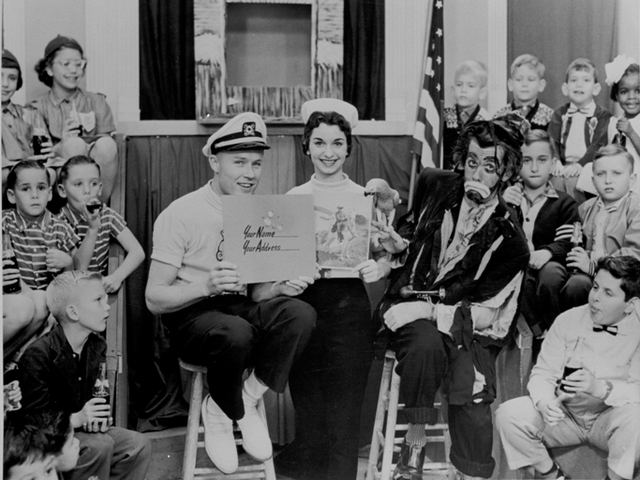
Before arriving in Miami, the Fourth of July did not have much significance other than my birthday. I don’t know what year exactly but I recall all of us sitting on the hood of my dad’s car watching the fireworks at Northside Shopping Center, while “Skipper Chuck,” Chuck Zink, emceed the event. You can just imagine the excitement of my birthdays going forward. We used to have so much fun. It was an event I looked forward to annually.

My parents and my oldest sister have passed away. The rest of us, with our respective families, live in Kendall. I have lived here since 1977. A lot has changed in 34 years. There were mostly strawberry fields in what now is a vibrant community. I live here with my 16-year-old son, David. He attends Belen Jesuit Preparatory School, which is celebrating its 50th anniversary in Miami this year.

I wonder at times what it would have been like if I had remained in Cuba. What would have become of our family there? Would we have been able to remain together? My parents never returned; they would not go as long as the Castro regime remained in power. In the spirit of their beliefs, I have not returned either to the place I was born. Maybe one day I will, but without a doubt Miami is home and it always will be.

Thank you Mami and Papi for your sacrifice and, most of all, your love.

Miami and Dade County in the late 1970s and early 1980s had a different atmosphere and environment than they have today.

Truth be told, I was a vastly different person then, too. In those days I was a full-time undergraduate student (living off-campus) at Barry College (which became a university in November 1981) before it grew west of North Miami Avenue. Bob’s Subs, with the best cheese steaks and onion rings around (and, conveniently enough, cold beer), was still across the street from Barry then, at Northeast 115th Street and 2nd Avenue.

I had neither a car nor a phone and was all but penniless — a thrift-store denizen –so I worked part-time as a bartender, a cook and/or a waiter in just about every restaurant around: Lum’s, Pizza Hut, Prime Steak House, The Round Table, Red Lobster, Watsons Family Restaurant, The Jockey Club, Miami Shores Country Club. Most of those establishments have been renamed, changed, or simply closed.

Next to Lum’s (near Northeast 125th Street and West Dixie Highway) was the Pieces of Eight Lounge, my favorite local bar. It, too, has changed, appropriately enough, into a family planning clinic. Around the corner stood Grand Union, an all-night supermarket, where a broke college student, up all night doing homework, could walk at 3:00 a.m., simply for someplace to go.

Without a car but still a “carouser,” I walked everywhere at all hours: to and from work, school, or the Trailways bus station near Northeast 163rd Street and Biscayne Boulevard. I enjoyed walking. Once I walked home from Coral Gables, and thrice from Ft. Lauderdale Beach. (I still enjoy walking but now own a vehicle.)

My fondest memories of Miami and Dade County are of those times I spent walking. Most often it was late at night. The streets were deserted. The sea breeze, without the sun’s heat, would have died down, and stillness prevailed. The trees, many draped with Spanish moss, were like statues.

As powerful and pervasive as the city seemed during the day — people bustling about, noise from traffic — when the late-night hours came and I’d walk through North Miami and north Dade neighborhoods, I’d get an overwhelming sense of the Everglades, the swamp, residing patiently beneath the brassy urban development’s then deceptively thin veneer. The swamp was perceptible. It seemed like a living organism, an abundantly powerful life force, nonplussed by the concrete and the humanity covering it, casually waiting to reclaim its own.

It’s clear that I never really bonded with the city itself, but rather with the land on which the city stood, and the natural environment that surrounded and permeated the land. It was all so abundantly alive and present, regardless of the city that had been built on it.

It seemed that nothing that humanity could do — no roadways, no stone buildings, no canals slashed through the land — could suppress the swamp that, if not constantly held back, would quickly and inexorably break through and devour all that humanity had built, in a lot less time than humanity had taken to build it.

Yet it was so peaceful. For all of its latent power and authority, the swamp didn’t seem threatening — not like the ocean which, with its hypnotically immense majesty, seemed liable to snatch the city from existence with one convulsion. No, the swamp seemed to have a patient, harmonic personality. It was massive, yet finely balanced: an unfathomably complex mathematical equation, trillions of factors in a constant state of flux and yet perpetually attuned with the organic whole.

The more time I spent walking through southeast Florida, the more I marveled at the swamp’s immeasurable capacity, its abundance, complexity, harmony. It was like a song no human being could write, a portrait no human being could render, or an idea no human being could conceive, simultaneously and symmetrically consuming, producing, and providing.

That is all gone, of course. This land is no longer “mine,” and I’m no longer this land’s. The city, with its tall mountains and expansive plateaus of concrete, steel and glass, seems to have dug into the swamp’s heart with quests for commerce and a continually burgeoning population, all of which seem to have erased the swamp’s former beauty. Given the city of Miami’s prominence as the Caribbean basin’s commercial capital, the city will likely only grow.

But to this day–nigh on 35 years later–I’m still spellbound, not by the city of Miami, but by my memories of the land on which it’s built. Since I first moved to this town in 1979–more accurately, since I first moved to southeastern Florida in 1970–a lot has changed, both about the town and about me. I’ve traveled across the seas and around the globe, and I’ve lived all over the country. I’m older–more emphatically, no longer young–and tired, and not so innocent anymore. Similarly, the city of Miami and Dade County have grown huge and become much more crowded: pervasive, overpowering, dominating the land.

But when I see the pink and white cumulonimbus clouds billowing skyward in the east in the morning, and the seemingly endless saw grass plain stretched out to the horizon, and the scrawny Florida pines silhouetted against the red sky at sunset; when I walk the old, North Miami neighborhoods, feel the stillness–quiet, finally, in the wee hours–and recall, rather than still hear, the swamp quietly whispering behind it; when I smell that damp smell that once seemed to hold and to affirm everything, my fondest memories come rushing back, and I bask in the imagery of 35 years ago, when the land beneath the city and the atmosphere surrounding the city still sweetly breathed the promise held ever true in my heart.

Spanglish.

I do not know when I first heard that word, but it pretty much summarizes how I feel about growing up in Miami during the 1970s and ‘80s.

To me Spanglish is not just a mixing of English and Spanish; it is the mixing of two diverse cultures. It is a culture unto itself.

In the 1970s, I lived on 13th Street, five blocks away from Calle Ocho. It was a working class neighborhood — mostly lower-income families living in two-bedroom duplexes. Every morning, I walked to Auburndale Elementary, past Woodlawn Cemetery, La Lechonera, and Velvet Cream Doughnuts. In other parts of the country, I would have played with kids named Mary or John, but in Miami, my playmates had names like Maria and Juan.

At the end of the day, when we were called in for dinner, I would eat beef stew, while my friends had carne con papas. “Ay Mami” and “Oh Mom” translated to the same desire to stay outside ” cinco minutos mas,” or five minutes more.

My mom picked up eggs and milk from Farm Stores; my friend’s mom called it La Vaquita. Because it was a working class neighborhood, both parents worked in many homes. Those of us who came home to empty houses were welcomed into homes with an abuela present, who made sure you got an afternoon snack, did your homework and stayed off the roof.

I took cultural differences for granted. Spanglish was how we understood one another. It blurred the lines between languages and gave us common ground so we could get on with the business of being kids.

Summers are long when you are a child, but in Miami summer lasts most of the year. I spent my weekends with the neighbor’s grandchildren exploring Bill Baggs Cape Florida State Park, also known as El Farito because of the historic lighthouse. We searched for hermit crabs and sea slugs. We were sunscreen-free with sand baked on to our bodies. We climbed onto picnic tables, ate sandwiches wrapped in foil, and drank water out of a thermos before heading back home to play a few more hours outside.

Other times, I spent weekends with a dear friend who had moved on from our neighborhood. Those Saturdays consisted of all day in the pool and backyard barbecues. We did this all year, never thinking that in September and October kids elsewhere were wearing sweaters. For kids growing up in Miami, shorts and T-shirts were a way of life.

If my brother had extra pocket money he hoisted me on the back of his bicycle, and took me to the Machine Shop to play pinball, or sometimes to the Coliseum, a gorgeous old bowling alley off 37th Avenue. The bowling alley changed over the years, and eventually was torn down and a Publix now occupies the site.

We sneaked into the Gables movie theater on more than one occasion. If we were lucky and my mom had time off, she would take us to the Venetian Pool in Coral Gables. I eventually was married there in my 20s.

In the 1980s, Central and South Americans and Haitians became part of the Miami landscape, bringing a new dimension of diversity to a city that already had many identities. The city and its people became media targets.

Miami was the poster child for violence and racial tension. I remember watching Channel 10 news and the broadcasters talked about the violence that was taking place in the streets. I didn’t understand what was going on back then.

Talk of cocaine cowboys and images from the television show “Miami Vice” began to show up everywhere. I did not know this version of Miami. My version of growing up was more like the PBS show “¿ Qué Pasa, U.S.A?” I did not grow up surrounded by violence, I was not afraid to play outside. The only time I ever heard gunshots was when some of the men in the neighborhood shot off their rifles to ring in the New Year.

We moved for a year to Birmingham, AL. It was the first time I experienced the change of seasons; We had a bigger house, I lived in a better neighborhood, and I went to a good school. But I felt like I was missing something. It felt strange to be surrounded by Marys and Johns. It felt strange not to smell café Cubano and sazon criollo wafting from the neighbor’s house in the morning and evening. It felt weird not to communicate in Spanglish.

We moved back after only a year, and the missing pieces fell back into place. I caught up with my old friends and life resumed its normal Spanglish rhythm.

To this day, even though I understand Spanish completely, I speak Spanglish. I have been lucky to travel as an adult. I love the hospitality of the Deep South, the romance of Paris and the hustle and bustle of New York. However, Miami is my heart and its Spanglish culture will always be my home.

My name is Alex Sturman, and I am sharing with you a glimpse in the life that took place in the summer of 1957 when I was a nine year old in a family of six.

We were living in Charleston, S.C., where I was born. My father was a ‘travelling salesman’ at the time. He would pack up his company station wagon with restaurant supplies and take off for a week or two, covering most of South Carolina.

I’m sure that he was ready for a change when my uncle gave him a call to join him in Miami. My father decided to pack up the family and join his two brothers in business down in Miami.

The business was owning and operating lunch stands and trucks that serviced construction sites such as the Fontainebleau Hotel along Miami Beach. My Uncle Ben started the business a few years earlier and by 1957 he saw a chance to get his two brothers, Coleman and Nathan, to come down and work with him in beautiful Miami. The business was called Hadacal’s Mobile Canteen.

It was August 28th, 1957. My father, brother Philip and I packed up our 1953 Studebaker Champion Starliner, hooked on a U-Haul trailer and headed for Miami. My mother Ruth and sister Anita would join us once we got settled. My oldest brother Joey left for Miami a few months earlier and rented a house with our cousin Dave Hill. They were both nineteen at the time. Dave would later own the Taurus restaurant in Coconut Grove during its heyday in the ‘70s and ‘80s.

There was no I-95 back then. We drove all the way down using US1 and A1A. My father drove and Philip sat shotgun. I sat in the back with our two myna birds, Heckle and Jeckle. When we hit Hollywood, I kept sticking my head out the window looking for John Wayne. My father laughed. I didn’t know that this was a different Hollywood. We made it to Miami and pulled into the Chelsea Court Motel, made up of small cottages located on Biscayne Boulevard.

The car stopped, and once the dust settled I could see these shirtless, shoeless kids looking into the car window. They were my cousins Max, Annie Kay, Ina Rae and Martin. They were my Uncle Nathan’s kids that I was meeting for the first time. Max and I would later attend the University of Miami and become architects.

The next day my brother Joey had to run errands and asked if I would like to join him. He had a 1947 Hudson with an in-dash radio that was the size of a present day boom box. As he ran errands, I would sit in the car, windows down with the smell of horsehair padded seats and listen to the radio on a beautiful sunny day.

I remember the songs that played as I waited. They were “Honeycomb,” by Jimmie Rodgers, “Bye Bye Love,” by the Everly Brothers, and “Diana,” by Paul Anka. I was hearing these songs for the first time ever that day. To this day, whenever I hear any one of those songs, I am a nine year old back in that old Hudson, so excited about this new life in Miami that I am about to begin . . . and what a beautiful day.

Miami seemed so new back then. Everything was clean and freshly painted. It was as hot as it is today, but I never complained. The uniform of the day was shorts, sneakers and no shirt. No one wore shirts back then. The only air-conditioned buildings were the drug store and movie theater.

No such thing as graffiti and the only thing that kept an intruder out of your house as you slept was the latch on the screen door. There was no need to protect your property, because everyone respected each other and a break-in was unheard of. And as you slept, the oscillating fan kept you cool. It felt so good when the fan made its sweep and got back to you.

Trips to Miracle Mile and Lincoln Road were always family events. We would put on shirts, eat at the local cafeteria, and Mother would shop. I always remember the sky being sunny and bright as you looked through palm trees that were everywhere.

From Pogroms to Palm Trees: Rose Weiss, “The Mother of Miami Beach”

How does it feel to be the granddaughter of a Pioneer Family In a word—unique!

It would be a colossal understatement to say being born in Miami and growing up in Miami Beach has been spectacular, but how that all happened is the real story, and it all started with my grandmother, Rose Sayetta Weiss.

“Rosie,” as she was known, immigrated with her family to Brooklyn, New York, from the small village of Mizrich, on the Russian/Polish border. Jews there lived under the oppressive rule of the Czar, and going to America was every family’s dream.

The Sayettas settled in the East Side, and eventually Rosie married Jeremiah Weiss. They had three children: the oldest my Aunt Malvina Liebman Gutschmidt, an educator and author, My father, Milton Weiss, a lawyer and banker, and my Uncle and Godfather, Eugene Weiss, a podiatrist.

Rosie suffered from allergies and asthma and was advised by her doctor to move South. Luckily for me, she chose Miami Beach. In 1919, she arrived, and it’s safe to say the City was never the same.

I remember her as being formidable in stature as well as personality. She immediately became active in politics and attended every city council meeting for 40 years. The City Fathers called her the “eighth councilman.”

While raising her children and then directing her grandchildren, she managed to organize the first Red Cross, found the PTA in Beach schools, design and sew the Flag for the City of Miami Beach and raise five million dollars in War bonds, more than any other woman in the State.

I pity the person who ever tried to say no to my grandmother, and there weren’t many who did. During the Thanksgiving and Christmas Holidays, she convinced the local merchants to donate food and clothing for poor families.

She would take my cousin Wolf (who was 10 at the time) and make the deliveries in her four door green Chevrolet. On her car was the decal of a Rose, and the Police knew when they saw that rose, not to ever ticket her no matter where she parked. If only I still had that car and decal!!!!

I’m told that when my Father announced he would marry my Mother (Ceecee Alexander), Rosie was skeptical of the blonde bombshell as a future daughter-in-law, but after two grandchildren and lots of brisket dinners they became friends.

Grandma Rose loved to babysit my sister and me. Our outings included the Parrot Jungle, The Rare Bird Farm, Crandon Park Zoo, and Pigeon Park, which is now Bayside.

At home she made up endless stories about a fantasy town called “Catsville” and played Opera and classical music all the time. As a result, I became a music lover and a Mario Lanza groupie in the first grade!

Grandma Rose had strong opinions and was very protective of her family. She made it clear that she disapproved of women wearing trousers and smoking in public. When I went to Europe after graduating from Beach High, she cautioned me to have a good time, but not to talk to any strangers; I didn’t always take her advice.

Rosie was nicknamed “The Mother of Miami Beach.” Her friend Carl Fisher once said that it was his money but her spirit that built the city. She died at 88, and whoever said that one person can make a difference certainly knew my grandmother. Miami Beach continues to be my home and I’m proud that my family tree is a Palm.

“Tey, mire esos hombres con esos sombreros tan chistosos. … Tey, yo quiero ir ahi.”

“Tey,” I said to my grandmother. “Look at those men wearing funny hats. … I want to go over there,” I excitedly pleaded.

“Please, take me over there, please, pretty please, I want to see what’s over there. Look at those cars with angels and stars. It is so pretty in there with all the lights. The tall skinny dancing palm trees adorned with sparkling lights. I want to see the Christmas tree, the stars and all the colorful magical lights.”

As I marveled, our bus arrived, and she would grab me by the hand and say, “Let’s get in, watch your step, let’s go home and get some rest.”

We were at this bus stop after my grandmother had worked another long day cleaning and cooking in one of Miami’s opulent homes. I went with her the days I had no school and my single mother worked, to that house with the courtyard, the tennis court, the pool and a giant poodle I loved to play with.

A week went by and here we were again at my favorite bus bench, waiting, and I was hoping this time Tey would take me over there, to “The Beautiful Place,” the magically adorned building. I may have insisted a little too much this time because I will never forget her reply.

“We cannot go over there, you cannot go in there, do you hear me, do you understand?” she shouted.

“Por que?” Why? I asked.

“Because over there is a place where only rich people can go; they are different than us.”

“What do you mean?”

“Ese es un lugar para los TUFOSOS!” That is a place for the snobs.

My tearful eyes looked up at her hoping to understand what she meant by rich and TUFOSOS.

I loved being with my pretty grandmother. She was strict but she was also funny, kind and loving. She would tell me I was beautiful and covered my body and face with hugs and kisses.

I loved going inside the majestic homes and I daydreamed of the day I, too, would live in a fancy home, near or on the bay or beach. I took in my grandmother’s sad and tired eyes with no light, no hope, and no shine.

I insisted, “Please take me over there.” But here comes the bus. She said, “Let’s get in, watch your step, let’s go home and get some rest.”

The years have gone by, my grandmother is now up in the sky, and our world has changed so much that I am perplexed when I think of where my family comes from and all the possibilities for the future.

She was from the countryside of El Salvador, an orphan raised by aunts and uncles, and shuffled from home to home. I only learned her story later from my mother. My grandmother was only granted a second-grade education, and when she was 12 years old, she was hired to clean other people’s houses — the homes of the “tufosos.” It was in these homes of the “tufosos” that my grandmother became an exceptional cook and she mastered European cooking such as apple turnovers, yams, cheese tarts, and various types of stews and quiches. It was because of her gastronomic talent that she was later hired by an American diplomat who arranged for her to come to the United States, first to Boston but settling in my beloved Miami.

I was born in Miami, raised in the suburbs of North Miami, have loving and generous parents and stepparents. I was privileged to go to private school. I have a graduate degree and a well-established career. I now own a beautiful South Florida home, steps away from the beach and the bay.

The beautiful and enchanted place I have been talking about is a ritzy mall called Bal Harbour Shops. When I was a child, security guards and valet parkers wore pompous uniforms that now seem silly. Their hats with feathers, which I found so funny and enchanting as a child, resembled royal guards’ headdresses. The cars that were led by angels and stars are gaudy Rolls-Royce and Mercedes-Benz.

Now that I am grown, with privilege and abundance, every time I drive in my convertible sports car by Bal Harbour Shops, I get an uncomfortable feeling in the pit of my stomach. It is a fleeting feeling that goes away as soon as the light changes. I emphasize drive by because to this day, I have never been in there. Perhaps it is loyalty to my grandmamma, my own limited beliefs or my simple sensibilities. But to this day, “Not in there … not in there. …” I was told I cannot go over there.

Translate »